Investment pledges, a new trade pact and regional commitments
President Ferdinand Marcos Jr. returned to Manila on Friday, November 20, after three days in Shenzhen, China, for the 33rd Asia-Pacific Economic Cooperation (APEC) Economic Leaders' Meeting. He said business talks had produced P41.1 billion in investment pledges with the potential to create more than 7,000 jobs, while a separate initial $87 million commitment from Chinese manufacturer C&U Group would fund the first phase of a planned bearings factory in Batangas.
Contents
- Investment pledges, a new trade pact and regional commitments
- What did the investment talks produce?
- How could the business plans affect energy and transport?
- What does the Philippines-Chile agreement change?
- What did Marcos ask APEC leaders to do?
- Why did the leaders discuss oceans and older people?
- What other investment and technology ideas remain at an early stage?
- How did the meetings fit into the APEC gathering?
- Key Points
The visit also brought the signing of the Philippines' first bilateral free trade agreement with a Latin American country. Marcos and Chilean President José Antonio Kast Rist formalized the Comprehensive Economic Partnership Agreement (CEPA) on November 19, as leaders discussed regional trade, artificial intelligence, clean energy and the movement of workers and skills across borders.
Marcos' aircraft landed at Villamor Air Base in Pasay City at 6:01 p.m., according to his arrival statement. Another account put the landing at 5:01 p.m. The pledges announced after the trip cover several sectors, but the government has not given a timetable for when each project will be built or how many jobs each one will create.
What did the investment talks produce?
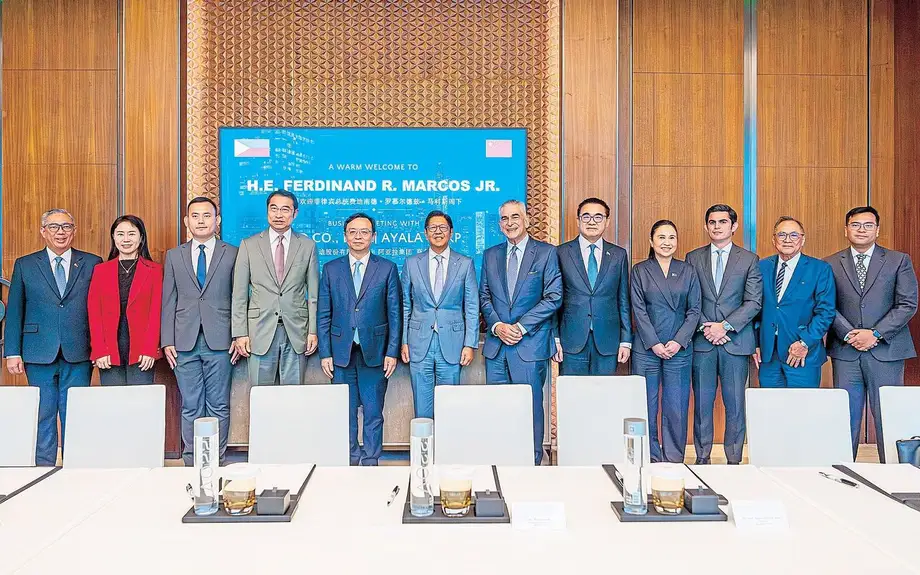
The P41.1 billion in pledges followed an executive roundtable with TCL Group, Huaxin Building Materials Group, Shenzhen Grandsun Electronic and PCON International. Marcos said the companies discussed expansion plans and opportunities linked to Philippine manufacturing priorities. He described the commitments as signs of investor confidence and said the engagements aimed to expand production, modernize factories, increase exports, strengthen local industries and transfer technology.
The P41.1 billion figure is separate from C&U Group's initial $87 million commitment. C&U plans a fully integrated factory for bearings and bearing components on a 20-hectare site in Alitagtag, Batangas. Bearings are parts that help machinery and vehicle wheels move smoothly by reducing friction. The first phase covers the planned facility, which Marcos said could become the company's largest production base outside China and its only manufacturing site in Southeast Asia.
The combined potential of more than 7,000 jobs applies to the broader investment pledges, not to a published job estimate for each company. Marcos said the government would work to turn commitments into employment and opportunities for micro, small and medium enterprises. The details that would show how quickly investment becomes hiring, such as construction schedules and production start dates, have not been announced.
How could the business plans affect energy and transport?
Marcos met Ming Yang Smart Energy Group Chairman Zhang Chuanwei to discuss planned investments in offshore wind infrastructure. Offshore wind farms use turbines placed in the sea to generate electricity. The talks concerned projects that the government said could support the clean energy transition and long term energy security. The parties also discussed a proposed operations and maintenance center and the possibility of developing more renewable energy services locally. No project cost or construction schedule was given.
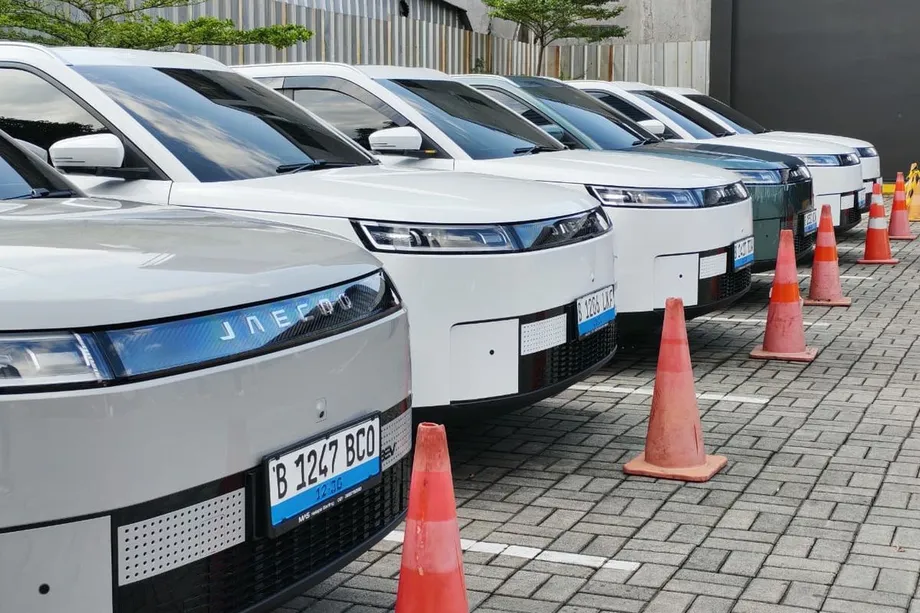
Marcos also met BYD founder and chairman Wang Chuanfu, with Ayala Corporation Chairman Jaime Augusto Zobel de Ayala and ACMobility chief executive Jaime Alfonso Zobel de Ayala at the meeting. They discussed BYD's plans in the Philippines and ways to develop the domestic electric vehicle industry. The stated ambition is to attract technology and investment as well as bring more electric vehicles to the country; no specific BYD investment amount was disclosed.
Marcos said policy changes had made the Philippines more attractive to foreign investors, even as businesses face global economic uncertainty and rising prices. In remarks about supply security, he said the country would not return to the exact situation of February 27, 2026, regarding oil, petroleum products and food. The trip's economic message was that investment in local production could help the country rely on a wider range of suppliers and build more capacity at home.
What does the Philippines-Chile agreement change?
The CEPA is the Philippines' first bilateral free trade agreement with a Latin American nation. A free trade agreement reduces barriers between markets and can give exporters more favorable access to sell goods and services. Under the pact, almost all Philippine exports to Chile are expected to receive duty free treatment. That includes electronics, machinery, desiccated coconut, carrageenan, processed tuna and other manufactured and agricultural products. A duty is a tax charged on some goods entering a country.
The Department of Trade and Industry expects improved access for Philippine agricultural products, seafood and electronics. Chile, the world's largest copper producer, may also be a partner for Philippine semiconductor and electronics industries that use copper and other industrial inputs. The agreement aims to support investment, technology exchange and supply chains as well as trade in finished goods.
Philippine-Chile trade reached $143.5 million in 2025, according to Chilean trade authorities. That figure gives a sense of the existing relationship the pact is intended to grow. Marcos and Kast also discussed critical minerals, energy and maritime ties. Marcos raised the Philippines' interest in joining the Comprehensive and Progressive Agreement for Trans-Pacific Partnership, a wider regional trade pact.
Trade Secretary Cristina Roque said the agreement would open opportunities for exporters and strengthen manufacturing. Marcos described the pact as a new route for trade between the two countries. Its practical effects will depend on companies using the new market access and on the agreement's implementation.
What did Marcos ask APEC leaders to do?
At the leaders' meeting, Marcos backed open trade and a rules based trading system. He pointed to the Philippines' economic gains and expanding network of trade agreements, and urged leaders to recognize one another's educational and professional qualifications. Recognition can make it easier for people with credentials earned in one economy to work in another, although each government still sets the rules for professions such as health care and engineering.
Marcos also presented the ASEAN Digital Economy Framework Agreement to APEC leaders. The framework is intended to support digital trade and cooperation among Southeast Asian countries. He urged the region to make affordable digital tools and artificial intelligence available to micro, small and medium enterprises, which often have fewer resources than large companies to adopt new technology.
The official APEC AI Initiative sets a regional agenda for 2026 to 2030. It calls for secure, accessible and reliable AI systems, cooperation to build skills and capacity, and investment in resilient digital and energy infrastructure. It encourages voluntary reviews of each economy's readiness and the effects of AI, as well as public private partnerships that can help smaller businesses adopt the technology.
The initiative also identifies AI literacy, workforce training and public understanding of responsible use as priorities. APEC economies are encouraged to review progress each year, with a final review in 2030. Marcos' call for AI that earns public trust and is governed through compatible, human centered approaches sits alongside that regional work. The framework encourages cooperation while recognizing that economies can take different approaches to AI policy.
Why did the leaders discuss oceans and older people?
Marcos said the region's oceans provide livelihoods for fishing communities and serve as trade routes. He called for their protection under international law, including the United Nations Convention on the Law of the Sea. The convention sets rules for how countries use and manage the sea. For the Philippines, which depends on maritime trade and fishing, ocean safety and sustainable fishing connect directly to food, jobs and the movement of goods.
Marcos also backed collective action against illegal, unreported and unregulated fishing. Those terms describe fishing that breaks rules, is hidden from authorities or is not properly reported. Such practices can make it harder to manage fish stocks and protect the income of legal fishing communities.
APEC leaders discussed population aging, with the region projected to have more than 300 million older people by 2050. Marcos said the care economy could create jobs and that Filipino health workers and caregivers were ready to help meet regional demand. The care economy includes paid services such as health care and support for older people. The figure points to a large future need for workers, but the meeting did not announce a specific regional hiring scheme or target.
What other investment and technology ideas remain at an early stage?
Marcos said discussions had begun about a possible partnership with SpaceX to develop rocket launch sites in the Philippines. He explained that the country's position on the western edge of the Pacific could be useful for launches heading east over the ocean. He also said the talks were only beginning and gave no project details, agreement or timetable.
Marcos addressed protests over Pax Silica, saying there were no specific provisions, no signed deal and no discussions on an agreement. He said the proposal would not include data centers and was being considered for New Clark City in Tarlac. These comments separate a proposal under discussion from the company investment pledges and the signed trade pact announced during the trip.
The investment roundtable and the C&U plan have more defined amounts than the early SpaceX discussions, but pledges still need to be translated into projects. The government has not provided a full breakdown of the P41.1 billion by company, nor a schedule for when the broader commitments will move into construction or operation.
How did the meetings fit into the APEC gathering?
China hosted the meeting in Shenzhen under the theme "Building an Asia-Pacific Community to Prosper Together." The priorities included open trade, the digital economy and AI, regional connections and wider inclusion. APEC brings together 21 member economies, which account for around 61 to 62 percent of global gross domestic product. The forum's agenda therefore links regional policy discussions to a substantial share of world economic activity.
Marcos' trip followed the Philippines' hosting of the ASEAN Summit and Related Summits in Manila. In Shenzhen, he also met New Zealand Prime Minister Christopher Luxon, Vietnamese President Tô Lâm, Mexican President Claudia Sheinbaum and Peruvian President Keiko Fujimori. He backed Viet Nam's hosting of APEC in 2027 and discussed maritime affairs and food security with Tô Lâm.
With Fujimori, Marcos discussed a proposed Philippines-Peru Joint Trade Commission and cooperation on environmental protection and disaster risk reduction. He also welcomed the reopening of Peru's embassy in Manila and the appointment of its first resident ambassador to the Philippines in two decades. With Sheinbaum, he discussed trade, investment and cultural exchanges, building on historical ties between the two countries.
The gathering's trade and technology agenda was set out before leaders arrived in Shenzhen summit coverage. Marcos' reported results now add Philippine business pledges and the Chile pact to those regional discussions. Together, the announcements span immediate trade access, planned factory and energy projects, and broader cooperation on skills, AI and supply chains.
Key Points
- Marcos said business talks in Shenzhen produced P41.1 billion in investment pledges with the potential to create more than 7,000 jobs.
- C&U Group separately committed an initial $87 million for the first phase of a planned bearings and components facility in Batangas.
- The Philippines and Chile signed the country's first bilateral free trade agreement with a Latin American nation on November 19.
- Talks with Ming Yang concerned offshore wind infrastructure, while discussions with BYD covered the electric vehicle industry.
- APEC's 2026 to 2030 AI initiative calls for cooperation on trustworthy AI, skills, smaller businesses and resilient infrastructure.
- Marcos said potential SpaceX launch site discussions were at an early stage, and that no Pax Silica agreement had been signed.