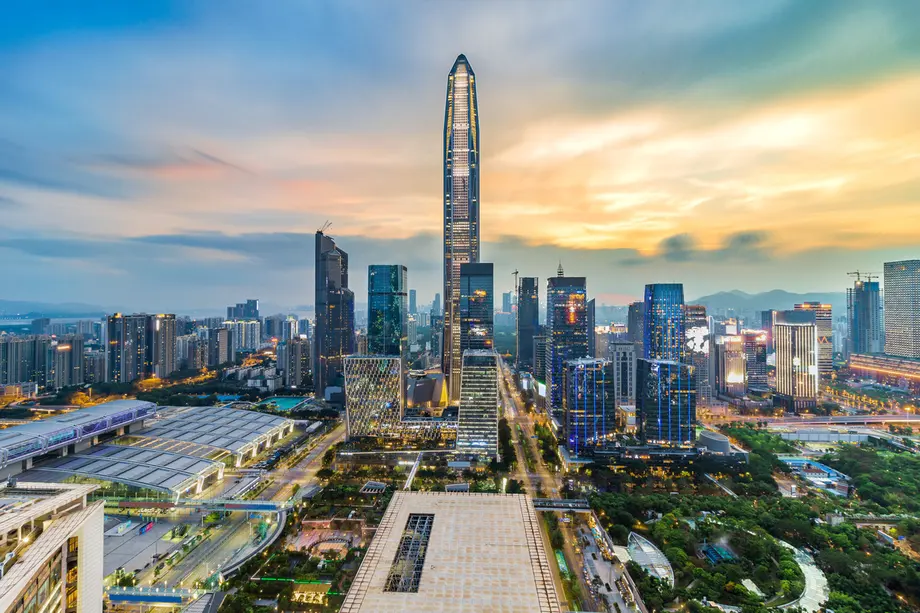
Economic Agenda Meets Major Power Diplomacy
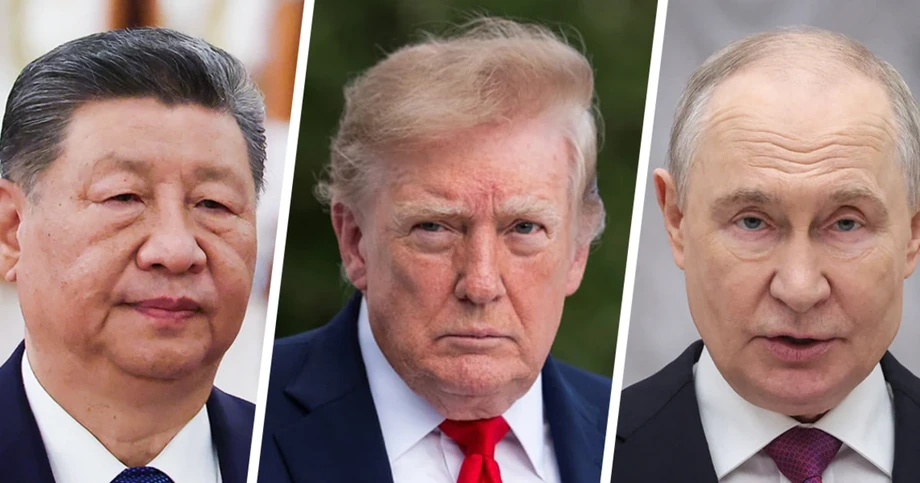
China will host the 33rd APEC Economic Leaders' Meeting in Shenzhen on November 18 and 19, 2026, with artificial intelligence and trade cooperation at the centre of its agenda. A planned meeting between Chinese President Xi Jinping, US President Donald Trump and Russian President Vladimir Putin will bring nuclear weapons discussions to the sidelines of the economic gathering.
Contents
- Economic Agenda Meets Major Power Diplomacy
- What China Wants From the Shenzhen Declaration
- Why Shenzhen's AI Experience Matters
- Trade Figures Show the City's Regional Stakes
- Businesses Begin Work Before Leaders Arrive
- Three Presidents Plan Talks on the Sidelines
- Taiwan Sends a Technology Industry Veteran
- Guangdong Prepares Venues and 43 Visit Routes
- Dates and Travel Changes to Watch
- Key Points
White House spokeswoman Olivia Wales confirmed that the three presidents would meet and said Trump wanted to discuss reducing the number of nuclear weapons, among other topics. The announcement adds a major diplomatic encounter to a summit where China hopes to secure agreement on a Shenzhen Declaration covering trade, connectivity, the digital economy and AI.
Xi will chair the leaders' meeting and deliver a speech. He is also scheduled to give the keynote address at the opening of the APEC CEO Summit on November 17. The leaders' gathering has the theme of building an Asia Pacific community and promoting common prosperity.
Shenzhen enters the meeting with substantial commercial ties to the region. Mayor Li Yun said its trade with other APEC economies grew 40% compared with a year earlier in the first nine months of 2026 and accounted for nearly 70% of the city's total trade. About 147 Shenzhen companies will participate in the business summit on November 17 and 18.
Chinese Foreign Ministry spokesperson Mao Ning said Beijing wanted practical results across the economic agenda and agreement among leaders on the proposed declaration. For businesses, the discussions concern access to markets, technology and data. For residents, the summit will also mean temporary road controls and longer metro operating hours.
What China Wants From the Shenzhen Declaration
China is seeking a common direction for regional cooperation as protectionism and restrictions on technology complicate trade. The proposed Shenzhen Declaration would set out areas where APEC economies can work together, including AI applications and the digital systems that increasingly support business across borders.
Wang Yiwei, director of the Institute of International Affairs at Renmin University of China, described a shift from cooperation centred on roads, ports and compatible rules toward connections built around computing power, data and algorithms. Computing power is the processing capacity needed to train and run AI systems; algorithms are the instructions those systems use to process information.
Wang said economies need not adopt identical AI regulations to cooperate. China's approach includes wider access to AI applications and cooperation between public institutions and private companies, presenting a route that differs from US and European approaches.
APEC decisions generally depend on consensus and are not legally binding. Wang said a declaration could establish a shared direction toward openness, while technology barriers and protectionism would remain practical obstacles. Governments would still need to turn broad commitments into individual policies, projects and arrangements.
Why Shenzhen's AI Experience Matters
Shenzhen is bringing local experience with AI legislation, algorithm filing and pilot programmes for ethical review to the wider discussion. Algorithm filing involves submitting information about certain algorithms to regulators. Ethical review examines how a technology may affect people and whether safeguards are needed.
Examples from six technology companies based in industrial parks operated by Futian Industrial Investment and Service Co., Ltd. show the range of applications already under development. Their work covers judicial services, life science research, healthcare, railway infrastructure, digital tools for businesses and cybersecurity.
Local companies are also developing applications adapted to education, healthcare and agriculture using large AI models. These are systems trained on substantial amounts of data that can be adapted for particular tasks. A tool built for a hospital, for example, serves different needs from one designed for a farm.
Those examples give the summit's AI discussions a practical focus: how to make useful applications available across economies with different industries, resources and rules. China's proposal for cooperation without identical regulatory systems addresses that challenge, while Shenzhen's filing and review programmes provide local examples of oversight.
Trade Figures Show the City's Regional Stakes
Shenzhen's commercial figures explain why its government is treating the meeting as more than a diplomatic event. Alongside the 40% increase in trade with other APEC economies, Li said Shenzhen companies made $4.1 billion in actual investment in those economies during the first nine months of 2026. That represented more than 60% of the city's outward investment.
The shares reveal how closely the city's business activity is tied to APEC. Nearly seven out of every ten units of Shenzhen's trade value involved other member economies, while more than six out of every ten units of its overseas investment went to them.
Shenzhen also recorded 33.2 million visitor trips from other APEC economies over the period. The figure counts trips rather than individual people, so repeat visits contribute to the total.
Li said the city would pursue opportunities under the priorities of openness, innovation and cooperation. His plans include closer alignment with international trade rules and easier movement of goods, capital, technology, talent and data. He also described work to improve services for overseas visitors in entry procedures, transport, payments, education and healthcare.
The mayor identified integrated circuits, AI, robotics, electric vehicles and biomedicine among industries Shenzhen wants to develop. He also pointed to quantum technology, interfaces connecting brains and computers, and intelligent machines that interact with the physical world.
Businesses Begin Work Before Leaders Arrive
The fourth meeting of the APEC Business Advisory Council opened in Shenzhen on November 14. More than 60 business delegates representing all 21 APEC economies were scheduled to spend two days discussing regional economic integration, or ways to make trade and investment work more smoothly across borders.
Chinese Vice Premier He Lifeng attended the opening and called on the council to support the goal of an Asia Pacific community through regional cooperation, innovation and connectivity. He also met some council representatives to discuss deeper economic and trade cooperation.
The council meeting and the CEO Summit give companies opportunities to discuss commercial priorities before and during the leaders' gathering. The roughly 147 Shenzhen companies taking part in the CEO Summit will meet executives from major businesses in China and overseas.
Guangdong has already hosted APEC's first senior officials' meeting, a forestry ministers' meeting and a meeting of ministers responsible for small and medium sized enterprises during the year. Wang Xi, a member of the Guangdong provincial Party standing committee and deputy head and office director of the provincial APEC preparation group, said those events had tested the province's service arrangements.
Three Presidents Plan Talks on the Sidelines
The White House confirmation of a Trump, Xi and Putin meeting introduces an agenda extending well beyond trade and AI. Wales identified reducing nuclear weapons as one of Trump's intended subjects, placing arms discussions alongside the economic meetings in Shenzhen.
Xi is also expected to hold bilateral meetings with foreign leaders. China has not yet published a complete attendance list or detailed schedule for the three presidents' talks, and the full text of the proposed Shenzhen Declaration has not been released.
Leaders from Canada, Australia, Mexico, Indonesia and other Asia Pacific economies are expected to attend, as is Philippine President Ferdinand Marcos Jr. New Zealand has confirmed that Prime Minister Christopher Luxon will participate.
Japan's government has announced that Prime Minister Sanae Takaichi will travel to Shenzhen, making her first visit to China since taking office. A bilateral meeting between the Chinese and Japanese leaders is considered highly unlikely. Tokyo has also requested a meeting with Putin during the gathering.
South Korean Foreign Minister Cho Hyun said a meeting between North Korean leader Kim Jong Un and Trump in Shenzhen or Beijing was unlikely. The planned meeting involving the US, Chinese and Russian presidents is therefore the clearest announced major power encounter on the summit's sidelines.
Taiwan Sends a Technology Industry Veteran
Taiwan has chosen Acer founder and Honorary Chairman Stan Shih as its representative, following the appointment of Stan Shih announced on November 11. Shih, 81, previously represented Taiwan at the 2007 APEC summit in Sydney and returns after 19 years.
APEC uses the term economies rather than countries for its 21 members. Taiwan participates under the name Chinese Taipei and sends an appointed representative rather than its president because of Beijing's objections. Shih will attend as President Lai Ching-te's envoy, rather than as an Acer representative.
Taipei has called for equal treatment, dignity, safety and access to all meetings, citing the arrangements governing its participation since joining APEC in 1991. Beijing says Taiwan's attendance must follow its one China principle and the relevant APEC provisions and practices.
The disagreement makes access to meetings a concrete concern for Taiwan's delegation. Shih's technology industry background also places an experienced business figure at a gathering where AI and digital cooperation are central subjects.
Guangdong Prepares Venues and 43 Visit Routes
Wang Xi said on November 14 that preparations were complete. This will be China's third time hosting APEC and its first in 12 years. Core venues include the Shenzhen International Exchange Center, Shenzhen Bay Cultural Square and Qianhai International Conference Center, alongside locations prepared for bilateral meetings.
Guangdong has arranged 218 places to visit across 43 routes. Shenzhen's two representative routes focus on Qianhai and Nanshan, connecting the summit programme with areas associated with the city's commercial and technology activity.
Organisers are using AI and other digital technologies in reception services and city visits. Planned tools include intelligent navigation, translation, digital customs clearance and scheduling. These arrangements make the summit itself a practical setting for some of the technologies on its agenda.
Preparations also involve adapting existing venues, encouraging greener travel and incorporating Chinese and Lingnan cultural traditions into venue decoration, performances and dining. Services cover arrivals, accommodation, transport, medical care and interpretation, with supporting arrangements for communications, weather information, public health and security.
Dates and Travel Changes to Watch
Shenzhen residents will face temporary traffic controls in parts of Futian, Luohu and Nanshan from November 17 to 19, between 7 a.m. and 10 p.m. Authorities say restrictions will be introduced at particular times and on particular road sections rather than through blanket closures.
Traffic managers plan to use intelligent command systems and live traffic data to adjust controls as conditions change. Shenzhen Metro will extend operations by one hour, until midnight, from November 16 through November 19.
The main dates bring business discussions, leaders' meetings and transport changes into the same week:
- November 14: The APEC Business Advisory Council meeting opened, and Guangdong officials announced that preparations were complete.
- November 16 to 19: Shenzhen Metro is scheduled to operate until midnight.
- November 17: Xi is scheduled to address the opening of the APEC CEO Summit.
- November 17 and 18: The CEO Summit takes place, with about 147 Shenzhen companies participating.
- November 17 to 19: Temporary road controls apply in parts of Futian, Luohu and Nanshan.
- November 18 and 19: APEC leaders meet in Shenzhen to discuss regional cooperation and the proposed declaration.
For local companies, the week offers direct contact with regional business leaders. For commuters and visitors, the immediate changes are more practical: roads may be restricted at different times, while metro services will run later.
Key Points
- Shenzhen hosts the APEC leaders' meeting on November 18 and 19, 2026, with AI, trade and digital cooperation on the agenda.
- China seeks agreement on a Shenzhen Declaration setting a shared direction for regional cooperation.
- The White House has confirmed planned talks between Trump, Xi and Putin, with Trump seeking discussion of nuclear weapons reductions.
- Shenzhen's trade with other APEC economies rose 40% in the first nine months of 2026 and represented nearly 70% of its total trade.
- About 147 Shenzhen companies will participate in the November 17 and 18 CEO Summit.
- Taiwan has appointed Acer founder Stan Shih as its envoy while seeking equal access to meetings.
- Temporary road controls run from November 17 to 19, and metro services will operate until midnight from November 16 to 19.