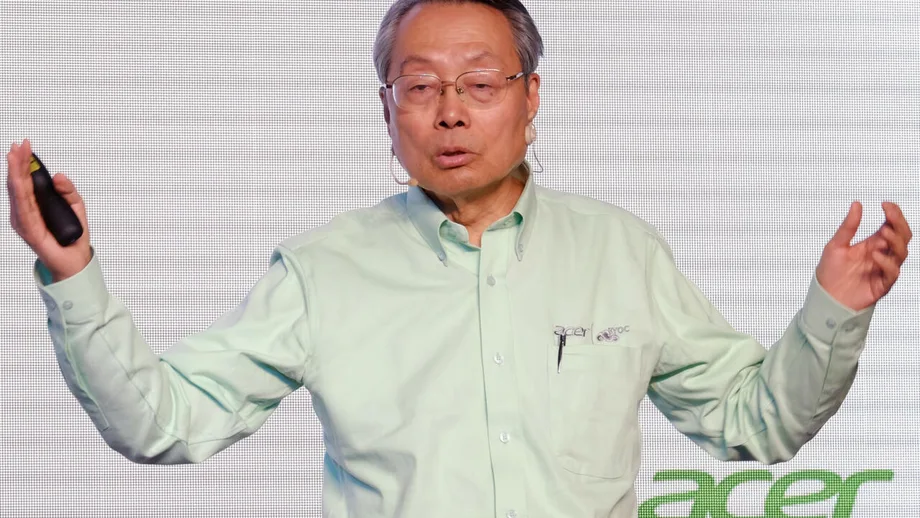
Stan Shih returns to APEC after 19 years
Taiwan President Lai Ching-te has chosen Acer founder and Honorary Chairman Stan Shih to represent him at the November 18 to 19, 2026, APEC Economic Leaders' Meeting in Shenzhen, China, placing an experienced technology executive at the centre of a dispute over Taiwan's participation.
Contents
- Stan Shih returns to APEC after 19 years
- Why Taiwan sends an envoy rather than its president
- Taipei and Beijing disagree over the rules
- An emailed invitation revives an old dispute
- Earlier meetings offer practical experience
- Why Lai chose a technology entrepreneur
- AI and chips shape Taiwan's message
- Meetings outside the main summit matter
- The dates leading to Shenzhen
- Key Points
The Presidential Office announced the appointment on November 11. Shih, 81, previously represented Taiwan at the 2007 summit in Sydney. His return comes as Taipei insists that China, this year's host, must allow Taiwan's delegation to attend all meetings with equal treatment, dignity and safety.
In its November 11 announcement, the Presidential Office cited Taiwan's 1991 accession memorandum of understanding as the basis for participation. Spokesperson Karen Kuo said Taiwan is a full APEC member economy and that its participation follows established practices, independently of Beijing's one China principle.
China's Taiwan Affairs Office presented a different position, saying Taiwan's attendance must follow that principle as well as APEC memorandum provisions and practices. Beijing claims Taiwan as its territory; Taiwan's government rejects that claim and says the island's people should decide their future.
The appointment gives Taiwan a representative with experience in both international business and APEC diplomacy. It also brings practical questions about meeting access and contact with other delegations into focus just one week before the leaders gather.
Why Taiwan sends an envoy rather than its president
APEC, the Asia-Pacific Economic Cooperation forum, has 21 members. It calls them economies rather than countries, an arrangement that allows Taiwan to participate under the name Chinese Taipei. Taiwan joined in 1991, alongside China and Hong Kong.
Beijing's objections mean Taiwan's president does not attend the leaders' meeting. Taipei instead appoints a representative, usually a former official or business executive, to speak on its behalf. Shih will therefore lead the delegation as Lai's envoy rather than as an Acer representative.
APEC is one of the few international bodies in which Taiwan holds full membership. Its members work by consensus, meaning they seek agreement together rather than deciding issues through a majority vote. Their conclusions are generally not legally binding, but the meetings provide opportunities to discuss trade, technology and economic cooperation.
For Taiwan, the gathering also offers access to senior officials from other economies, including the United States and Japan. Conversations outside the main sessions can help its delegation explain policies and maintain relationships even when formal diplomatic channels are limited.
Taipei and Beijing disagree over the rules
Kuo said APEC economies had repeatedly agreed that all members should participate on an equal footing. The Presidential Office called on China to fulfil its responsibilities as host and honour its written assurances, ensuring Taiwan can take part in all meetings in an equal, dignified and safe manner.
Taiwan Affairs Office spokesperson Zhang Han said Beijing would handle Taiwan's participation according to the one China principle and the provisions and practices of the APEC memorandum of understanding. Zhang described attendance as possible if those practices were followed.
Zhang stated Beijing's condition for participation:
As long as these practices are followed, Chinese Taipei may attend meetings.
Zhang did not directly answer questions about whether Chinese officials would interact with Shih or how Beijing viewed Taiwan's contacts with other delegations. Those arrangements remained unspecified as the summit approached.
The disagreement concerns the basis on which Taiwan takes its seat. Taipei points to rights held by a full member economy under the 1991 accession arrangements. Beijing places attendance within its political position on Taiwan.
An emailed invitation revives an old dispute
Foreign Minister Lin Chia-lung said China sent Taiwan's summit invitation by email instead of arranging for an official to deliver it personally. Taiwan's Foreign Ministry protested what it described as unequal treatment. Lin also confirmed that Taiwan's participation name remained Chinese Taipei.
The method of delivery carries political weight because of earlier summits hosted by China. In 2014, a Chinese official personally delivered Taiwan's invitation. Taiwan was then governed by the Kuomintang, which favours closer relations with Beijing.
In 2001, Taiwan stayed away from the summit after China faxed its invitation and rejected Taipei's choice of representative. Chen Shui-bian of the Democratic Progressive Party was president at the time. The precedent explains why Taipei is paying attention to both the invitation process and the treatment of its chosen envoy.
The current dispute follows US calls for equal access in November 2025, when Washington urged China to guarantee full participation for all 21 APEC economies. Taiwan's concerns then covered security and access throughout the host year's meetings, not just the leaders' summit.
Earlier meetings offer practical experience
Taiwan has already sent three officials at ministerial level to APEC related meetings in Nanjing, Hong Kong and Suzhou this year. They included Labour Minister Hung Sun-han and Finance Minister Chuang Tsui-yun, whose participation proceeded without incident.
Hung described the treatment of Taiwan's delegation after returning home. He said China had provided Taiwan with rights equal to those of other members and credited efforts made to secure its participation.
Hung, Taiwan's labour minister, described the delegation's experience:
did not encounter any situation of being belittled in our conference participation
Those meetings give Taipei recent experience of attending APEC events during China's host year. The leaders' gathering will bring a different level of political attention, with Shih representing Lai and seeking opportunities to speak with senior delegations.
Taiwan's demand for equal treatment therefore reaches beyond receiving an invitation. It concerns the delegation's ability to enter meetings, take part in discussions and conduct the exchanges that make attendance useful.
Why Lai chose a technology entrepreneur
Shih's selection brings together business experience, familiarity with APEC and a career closely tied to Taiwan's technology industry. The Presidential Office highlighted his work taking Taiwanese brands into global markets and improving the international competitiveness of its information technology sector.
Shih founded Acer in 1976 with his wife, Carolyn Yeh, and other partners. He later served as its chief executive and chairman. Building an international computer brand gave him experience of selling products, managing overseas relationships and competing beyond Taiwan's domestic market.
In 1992, Shih proposed the smile curve theory. In simple terms, it argues that businesses can earn more value from research, design, branding and services than from assembly alone. The idea helps explain his longstanding interest in how Taiwan can contribute more than manufacturing capacity to global industries.
His first APEC appointment is documented in the Presidential Office's 2007 appointment announcement, issued on August 15 that year by President Chen Shui-bian's administration. It cited international recognition including Time's Asian Heroes selection in 2006 and BusinessWeek's Stars of Asia recognition in 2004.
Shih's earlier APEC participation included advocacy for reducing the digital divide, the gap between people who can use digital technology and those who cannot, and for greener supply chains. His second assignment comes 19 years later, when artificial intelligence has become a major subject of regional economic discussion.
AI and chips shape Taiwan's message
The Presidential Office said Shih understands artificial intelligence, the digital economy and technological innovation, subjects APEC has focused on in recent years. China's priorities for the host year include openness, innovation and cooperation, with discussions expected to address AI, digital trade and the reliability of supply chains.
These subjects connect directly with Taiwan's role in making semiconductors and AI servers. Semiconductors are the chips that process and store information in computers and other devices. AI servers use powerful chips to run the systems behind many artificial intelligence services.
People familiar with preparations described three goals Lai had set for Shih: make Taiwan's views heard internationally, highlight its importance in the semiconductor supply chain, and convey its commitment to regional peace and prosperity. They also described plans to explain Taiwan's policies and deepen cooperation with other APEC members.
Shih has previously argued that overseas semiconductor investment extends Taiwan's industrial reach while its central research capabilities remain at home. His recent interests also include smart healthcare, cultural technology and greener transport. He has experimented with AI assistants through a small company of his own, bringing a personal interest in the technology alongside his experience in computer manufacturing.
The common thread is Taiwan's effort to explain how its businesses fit into an economy that crosses borders. Chips, servers, research and services depend on connections among suppliers and customers in several places. More dependable supply chains mean those connections can continue working when trade conditions or production plans change.
Meetings outside the main summit matter
Taiwan's APEC envoys commonly use the gathering to speak with senior members of delegations from friendly economies, including the United States and Japan. Shih's business background offers a way to discuss practical economic interests while representing the president.
Lien Hung-yi, a diplomacy professor at National Chengchi University, described meeting and talking with representatives from other economies, including arranging discussions alongside the main program, as another responsibility or expectation for Taiwan's envoys.
The choice of Shih also follows a change from Lai's first two years in office, when Presidential Office adviser Lin Hsin-i served as his APEC representative. Lin declined the 2026 assignment for health reasons.
For the delegation, useful exchanges could cover industrial cooperation, technology policy and economic ties. Lai's stated aim in the official announcement is to bring Taiwan's perspectives and experience into discussions of global trade and economic development.
The dates leading to Shenzhen
The announcement leaves a short preparation period before the summit. Lai and Shih are scheduled to speak at a delegation press conference at the Presidential Office on November 12 at 10:30 a.m.
The calendar places the leaders' meeting at the end of several days of related activity:
- November 11: The Presidential Office announces Shih as Taiwan's representative.
- November 12, 10:30 a.m.: Lai and Shih are scheduled to address the delegation's press conference.
- November 14 to 18: Related events, including the Concluding Senior Officials' Meeting and the APEC CEO Summit, are scheduled.
- November 18 to 19: The APEC Economic Leaders' Meeting takes place in Shenzhen, Guangdong province.
The immediate task is to turn the appointment into effective participation. Taiwan wants Shih to present its economic priorities, maintain international contacts and attend under the equal treatment arrangements cited by the Presidential Office.
Key Points
- Acer founder Stan Shih, 81, will represent President Lai Ching-te at the November 18 to 19 APEC leaders' meeting in Shenzhen.
- Shih previously served as Taiwan's APEC envoy in Sydney in 2007.
- Taiwan cites its 1991 accession arrangements as the basis for equal participation. Beijing says attendance must follow its one China principle and APEC practices.
- Taipei wants China to honour written assurances covering equal treatment, dignity and safety.
- Foreign Minister Lin Chia-lung protested an invitation sent by email rather than delivered personally.
- Taiwan's delegation plans to focus on its international voice, technology supply chains, and regional peace and prosperity.