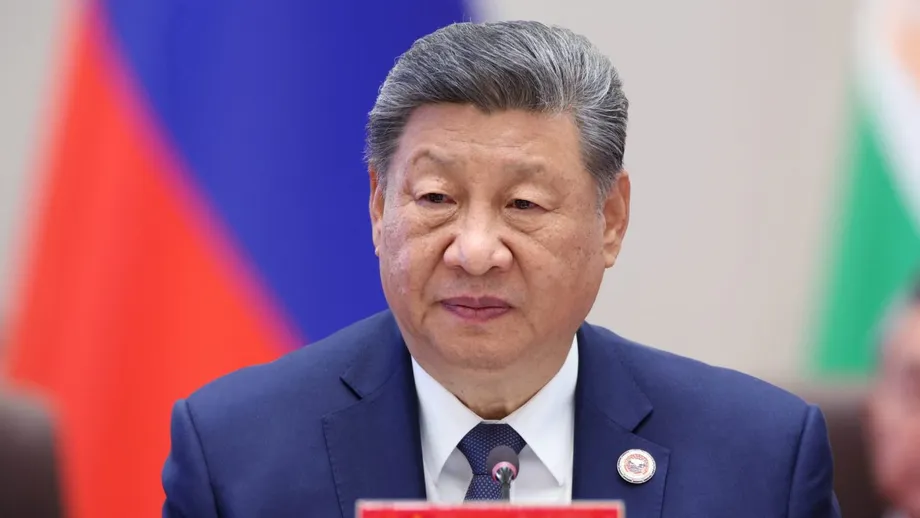
A divided picture before Taipei's first mayoral debate
Shen Po-yang leads Taipei Mayor Chiang Wan-an by 45% to 41% in a telephone survey of 1,115 registered city residents conducted on October 20 to 22 and October 25. Yet 48% expect Chiang to win another term, compared with 35% who expect Shen to win, exposing a gap between whom voters support and whom they believe will take office.
Contents
- A divided picture before Taipei's first mayoral debate
- Why the two polls point in different directions
- Supporting a candidate and expecting a winner
- Women, younger voters and the undecided
- Where the 2022 electorate is moving
- Chiang balances city duties and campaign pressure
- Shen puts policy and neighbourhood visits first
- The debate and the remaining campaign calendar
- Past results show how much Taipei has changed
- Key Points
A second survey, conducted online from October 21 to 25, puts the candidates in the opposite order: Chiang has 48.6% and Shen 41.1%. The competing results place the capital's election under particular scrutiny before the first televised debate on October 31 and voting on November 28, 2026.
Chiang, the incumbent from the Kuomintang (KMT), acknowledged the pressure during an October 28 radio interview alongside his wife, Shih Fang-keng. He described the contest as the most intense election he had faced and said he would use publicity, rallies and direct contact with residents to encourage supporters to vote.
Shen, the Democratic Progressive Party (DPP) challenger, also focused on turnout. Responding to his narrow lead in the telephone poll, he said surveys were a reference point and stressed that his weaker standing on expected victory made getting supporters to polling stations especially important.
The immediate contest therefore has two fronts: persuading residents who remain undecided and making sure existing supporters actually cast ballots. The figures on party loyalty, age and previous voting choices show why both campaigns are treating the final month as competitive.
Why the two polls point in different directions
The telephone poll gives Shen a lead of four percentage points, while the online poll gives Chiang a lead of 7.5 points. Both cover much of the same period in late October, but they reach respondents through different systems.
The telephone survey used landline and mobile telephone sampling frames, with telephone numbers selected through random changes to their final digits. It interviewed 1,115 Taipei residents aged 20 and above and adjusted the results to reflect the electorate's distribution by sex, age and administrative district. Another 264 people declined interviews.
The survey published a margin of sampling error of plus or minus three percentage points at a 95% confidence level. That describes the uncertainty associated with sampling a population rather than interviewing everyone. A precise assessment of the uncertainty around the gap between two candidates requires attention to how that difference is calculated.
The online survey collected 1,462 valid responses from members of an existing database identified as Taipei residents aged at least 20 across the city's 12 districts. Invitations went out through text messages and email. The sample was selected in proportions across groups and weighted by sex, age, district and education.
Its organisers published a margin of error of plus or minus 2.56 percentage points at a 95% confidence level. Recruitment from a membership database also makes the composition of that database relevant to understanding the result.
Political commentator Wu Ching-yi compared five October surveys and counted three with Shen ahead and two with Chiang ahead. Commentator Huang Wei-han reached the same three to two split in his comparison. Their assessments describe a contested race rather than agreement around a single leader.
Supporting a candidate and expecting a winner
Chiang leads on expected victory in both detailed surveys. Alongside the telephone poll's 48% to 35% result, the online survey finds that 51.3% expect Chiang to win and 40.9% expect Shen to win. Wu said Chiang led this measure in all five polls she examined.
A support question asks respondents whom they intend to choose. An expected victory question asks them to predict the collective decision of other voters. A person can support Shen while believing Chiang has the stronger organisation or broader electoral base.
The telephone poll illustrates that split within the DPP itself: 24% of its supporters expect Chiang to secure another term. Across all respondents, 16% could not judge who would win.
Shen said a sense that victory was unlikely could discourage supporters from voting. His response was to urge people to turn out on November 28, continue visiting neighbourhoods and listen to residents rather than set strategy simply by following survey results.
Women, younger voters and the undecided
Shen's strongest demographic results in the telephone poll come from women and people under 40. Among women, he has 47% support against Chiang's 38%, a lead of nine percentage points. Among men, Chiang leads by 45% to 43%.
Respondents under 40 favour Shen by 58% to 33%, a gap of 25 points. Chiang records 44% support in both the 40 to 59 group and the group aged 60 and above, leading Shen in each.
Wu's comparison also found a younger age group favouring Shen in another survey, with 52% support among people aged 20 to 29 against Chiang's 44%. That survey put Chiang ahead among those aged 50 to 59, at 47% against 41%. Wu noted that a further survey produced a different result among the youngest respondents, making the broader pattern more useful than assuming every poll showed the same age split.
Among voters without a party preference in the telephone poll, Shen leads by 40% to 33%, while 26% remain undecided. Across the full sample, 13% have not chosen a candidate. The online survey places the combined share answering undecided, do not know or no opinion at 8.7%.
Those figures give both teams a concrete reason to keep campaigning beyond their party bases. Shen has an advantage among neutral respondents in the telephone survey, but roughly one quarter of that group is still watching the contest.
Where the 2022 electorate is moving
Party loyalty is stronger for Shen in the telephone poll: 91% of DPP supporters back him, compared with 86% of KMT supporters backing Chiang. Among people who say they voted for DPP candidate Chen Shih-chung in 2022, 95% now support Shen.
Chiang retains 75% of respondents who recall voting for him four years earlier, while 18% now support Shen. That gives his campaign a task closer to home alongside its efforts to attract neutral voters: winning back some previous supporters.
Former supporters of Huang Shan-shan are another important group. Huang contested the 2022 election as an independent and received 25.14% of the vote. In the telephone poll, 55% of her former voters favour Shen and 38% favour Chiang.
Current Taiwan People's Party supporters lean differently, with 75% backing Chiang and 16% backing Shen. The two findings show that Huang's previous electorate and today's party supporters have different political preferences. Campaign cooperation between the KMT and the Taiwan People's Party therefore involves reaching people with varied voting histories.
Wu said comparisons across three surveys found more than 53% of former Huang voters supporting Shen. She also identified roughly one fifth of Chiang's previous electorate as either undecided or moving away. Those retrospective answers make the 2022 voting blocs a central focus of the final month.
Chiang balances city duties and campaign pressure
Chiang said he was adjusting his pace while handling municipal affairs and campaigning. His campaign manager, Lo Chih-chiang, described four final month priorities: steadying supporters, challenging the rival campaign's presentation, reassuring Taipei and promoting plans for the future.
The campaign plans to contrast Chiang's record and proposals with Shen's positions, expand media interviews and work with the Taiwan People's Party. Lo also warned that the electoral danger had not passed and urged supporters to vote even when a favourable poll appeared.
The telephone survey supplies a useful measure of Chiang's challenge. While 79% say life in Taipei runs smoothly and 50% approve of his performance as mayor, 41% say they would vote for him. His approval rating is therefore nine percentage points higher than his voting support. His campaign is trying to turn satisfaction with city government into a decision to keep him in office.
The online survey gives Chiang a favourable rating of 44.3% and an unfavourable rating of 32.9%. Shen's corresponding figures are 41.3% and 41.9%. Those questions measure personal sentiment, adding another dimension to the voting and expected victory figures.
Shih is scheduled to begin street and market visits on October 29. During the joint interview, she recalled Chiang remaining calm after losing a job in the United States while facing the possibility of leaving the country and searching for work again. She described him as someone who responds to major challenges by making a plan and carrying it out step by step.
Campaign communications chief Niu Hsu-ting said an October 26 rally had improved supporter morale. Huang Wei-han argued that a poll showing Chiang behind could itself encourage KMT voters to regroup. Political worker Chou Hsuan similarly interpreted the narrow deficit as a potential turnout message for Chiang's team.
Shen puts policy and neighbourhood visits first
Shen's campaign manager, Wu Szu-yao, said policy development would remain the main focus regardless of whether a poll placed him ahead or behind. Some proposals were introduced in July and August, and the team plans to refine them using residents' comments gathered through public speaking events and campaign feedback projects.
Wu said the campaign had visited parks, night markets and shopping districts and would expand vehicle tours across Taipei's administrative districts. Those visits would be paired with proposals tailored to each district, keeping city policy at the centre of Shen's public appearances.
Shen also addressed questions about people declining polling interviews. He said the key issue was which demographic groups refused, rather than simply the size of the refusal figure. Different campaigns could face different patterns, he said, and the composition of those who declined was information his team could not fully know.
Japanese scholar Ogasawara Yoshiyuki assessed Shen as having consolidated about 46% support, with room to grow. That was his judgment of the race. Wu Ching-yi's comparison of three organisations' repeated surveys found Shen gaining between 9.8 and 15.3 percentage points since the middle of the year, while Chiang lost between 8.4 and 16.2 points.
Those assessments help explain the urgency on both sides. Shen is trying to sustain the gains identified in those comparisons, while Chiang is seeking to reconnect with residents who previously supported him.
The debate and the remaining campaign calendar
Chiang said the October 31 debate would move quickly and include several rounds of cross questioning, when candidates put questions directly to each other. He praised Shen's speaking ability and capacity to present detailed arguments on many subjects.
The mayor acknowledged feeling nervous and said city meetings and other engagements had reduced his preparation time compared with four years earlier. He planned to use the final two days to concentrate on preparing.
The next scheduled steps take both campaigns from the debate stage to major public gatherings before polling day:
- October 29: Shih Fang-keng is scheduled to begin street and market campaigning for Chiang.
- October 31: Chiang and Shen are scheduled to meet in the first televised mayoral debate.
- November 27: Chiang's team has secured permission to use Ketagalan Boulevard and Zhongshan South Road for its final evening rally. Shen's team plans an event around its headquarters on Beiping East Road.
- November 28: Voters are scheduled to cast ballots in the local elections.
Shen's campaign has described its planned final events as having a carnival atmosphere. Chiang's team is combining prominent rally locations with neighbourhood visits and repeated warnings against complacency.
Past results show how much Taipei has changed
Chiang won the 2022 election with 42.29% of the vote, ahead of Chen Shih-chung on 31.93% and Huang Shan-shan on 25.14%. This time, polling support is concentrated on Chiang and Shen. Four other candidates together receive less than 1% in the telephone survey.
The earlier results explain why the destination of Huang's former voters matters so much. Her 2022 share represented roughly one quarter of all votes, and the latest telephone poll places a majority of respondents who supported her behind Shen.
Taipei's recent history also includes both comfortable victories and exceptionally close finishes. KMT mayor Ma Ying-jeou won 64.11% in 2002 against the DPP's Lee Ying-yuan on 35.89%. Hau Lung-bin won with 53.81% in 2006 and 55.65% in 2010.
Ko Wen-je changed that pattern in 2014, winning 57.16% against KMT candidate Sean Lien's 40.82% after the DPP stood aside. In 2018, Ko won 41.07%, narrowly ahead of Ting Shou-chung's 40.82%, with DPP candidate Yao Wen-chih taking 17.28%. Ko's winning margin was just 3,567 votes.
For the current candidates, the practical challenge is visible in the latest figures: Chiang needs more of his previous voters and satisfied residents to choose him, while Shen needs to carry his strength among women, younger residents and former Huang supporters through to polling day.
Key Points
- A telephone survey puts Shen Po-yang ahead of Chiang Wan-an by 45% to 41%; an online survey puts Chiang ahead by 48.6% to 41.1%.
- Both surveys find more respondents expecting Chiang to win than Shen.
- Shen leads among women, people under 40 and neutral voters in the telephone poll; Chiang leads in the older age groups.
- Former Huang Shan-shan voters favour Shen by 55% to 38% in the telephone survey.
- The first televised debate is scheduled for October 31, followed by final evening rallies on November 27 and voting on November 28.
- Both campaigns are prioritising turnout while seeking support beyond their established party bases.