A staged collision puts local networks under scrutiny
Taiwan's National Security Bureau has given police specific lists of criminal gangs and private investigation firms suspected of helping China intimidate its critics, bureau Director-General Tsai Ming-yen said on October 22, 2026. The announcement followed charges against five Taiwanese men accused of arranging a vehicle attack on comedian Huang Yi-hao for a promised NT$450,000.
Contents
- A staged collision puts local networks under scrutiny
- What prosecutors say happened to Huang
- Five defendants face charges, not verdicts
- From a comedy routine to two attacks
- Following the money beyond the attackers
- A lawmaker's home was also watched
- Why officials want stronger legal tools
- Earlier attacks show who has been targeted
- Pressure at sea adds another security concern
- Key Points
New Taipei prosecutors allege that a Chinese national known as "K" commissioned the September 11 attack to injure Huang badly enough to prevent him from performing on September 20. Investigators say the operation included tracking his scooter, recording his movements and obtaining his medical information after the collision.
Tsai, speaking before a parliamentary appearance, said those arrested so far were people carrying out operations. The bureau is now examining whether larger criminal networks behind them received instructions and money from the Chinese Communist Party.
Taiwan's government has accused Beijing of directing the attack. The investigation into who commissioned and financed the wider networks remains open. China's Taiwan Affairs Office had not responded to questions about the assault.
The case brings together two concerns for Taiwan: protecting people who criticise China's leadership and tracing the local businesses or gangs that may turn money from abroad into surveillance and violence. Tsai said the bureau's priorities were protecting victims and punishing perpetrators.
Taiwan governs itself and rejects Beijing's claim that the island is Chinese territory. Its officials describe attacks aimed at silencing critics as transnational repression, meaning intimidation that a government directs beyond the territory it controls.
What prosecutors say happened to Huang
New Taipei District Prosecutors' Office alleges that a man surnamed Cheng installed a GPS tracker on Huang's scooter between July and August. GPS equipment uses satellite signals to identify a location, allowing someone with access to the tracker to follow a vehicle's movements.
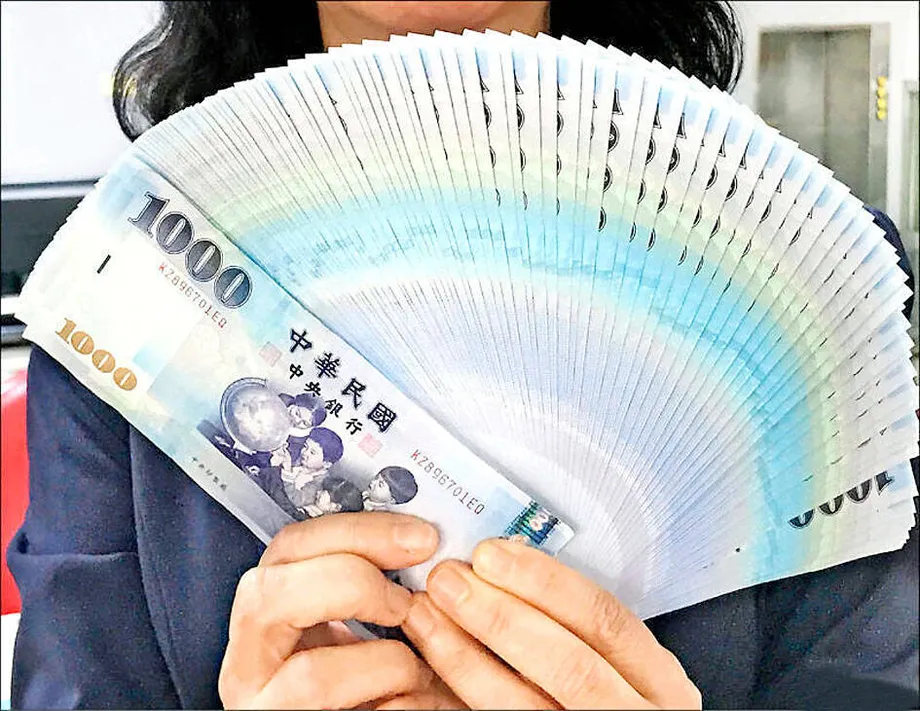
Cheng allegedly collected Huang's home address, vehicle registration number and daily routine, then passed information to K in exchange for an advance of NT$250,000. Prosecutors say Cheng recruited four other men to arrange and carry out a collision.
On September 11, a vehicle struck Huang near his home in New Taipei City. One defendant allegedly filmed the attack from the front passenger seat as evidence for payment. Prosecutors said the driver tried to stop after hearing Huang scream. Huang suffered a contusion to his right pelvis.
The suspects then allegedly offered to help with a traffic accident compensation claim. Through that approach, prosecutors say, they obtained a medical certificate containing Huang's name, date of birth and national identification number, photographed it and sent the image to K.
K allegedly refused to pay the remaining NT$200,000 because Huang's injuries were minor. The promised NT$450,000 payment therefore tied the collection of personal information, the collision and the assessment of injuries to a single alleged commission.
Five defendants face charges, not verdicts
Prosecutors announced the indictments on October 21. The five defendants, identified by the surnames Cheng, Yu, Huang, Fan and Liao, face charges including attempted grievous bodily harm and violations of the Personal Data Protection Act. An indictment formally brings accusations before a court; judges must decide guilt and punishment.
The requested prison terms range from two years and seven months for Liao to five years and six months for Cheng. Prosecutors sought five years for Yu, four years for the defendant surnamed Huang and three years and six months for Fan.
The New Taipei District Prosecutors' Office described the alleged political purpose of the attack in its statement:
This case involves a serious incident in which the Chinese Communist party is suspected of using cross-border suppression tactics to direct lawless elements in our country to suppress dissenting political voices through extreme violence.
The Mainland Affairs Council condemned the assault and said it would strengthen protection against intimidation and violence by hostile foreign forces. Taiwan's Ministry of Foreign Affairs called on democratic partners to oppose violence used to punish political speech.
From a comedy routine to two attacks
Huang had mocked Xi Jinping during a performance at Taipei's Comedy Club, also known as Comedy Plus +, in December 2025. Video of the routine circulated online. His jokes targeted Xi's appearance and policies concerning Hong Kong, COVID-19 and China's property market.
On May 29, two men threw paint and human feces at the club. Prosecutors later charged them with offenses including intimidation and property damage. Investigators alleged that a man surnamed Liu paid a man surnamed Kuo NT$50,000 to carry out the vandalism. Reporting on that case described suspected instructions from an unidentified person in China, while the identity and authority of the person behind the commission remained under investigation.
The club attack and vehicle attack are separate criminal cases. Their sequence shows how the alleged pressure moved from a performance venue to the comedian's movements near his home:
- December 2025: Huang performed a routine mocking Xi at the Taipei club.
- May 29, 2026: Two men allegedly attacked the venue with paint and feces.
- July to August: Prosecutors say a tracker was installed on Huang's scooter.
- September 11: A vehicle struck Huang near his home.
- September 20: Huang was scheduled to perform, an appearance prosecutors say the attackers intended to prevent.
- October 21: Prosecutors announced charges against five men over the collision.
- October 22: Tsai disclosed the wider investigation into gangs and private investigation firms.
Huang said he would continue performing. In a social media post, the comedian explained his approach to writing political jokes:
I write it because it's funny," he said. "If I stop, it will only be because I've got bored of it.
Following the money beyond the attackers
Tsai said local networks involved in such incidents were mostly gangs or private investigation agencies connected to organised crime. The bureau had passed names to police and would ask the National Police Agency to step up action against specific groups.
The National Security Bureau director-general described the central investigative task:
The National Security Bureau is more concerned with whether anyone behind them has been directed and funded by the Chinese Communist Party. How to dismantle the entire criminal group and network is a key focus for us.
The Criminal Investigation Bureau said its inquiry was examining cash flows, organisers and people who liaise with Beijing. It identified surveillance, coercion, assault and attacks using red paint as activities in which local collaborators had been implicated.
Private investigators matter because their work can involve locating people and documenting routines. When those services are used illegally, the information can help an attacker identify where someone lives, when they travel and when they are alone. Huang's alleged tracking and collision illustrate how those stages can fit together.
The National Police Agency held a meeting in September with the Ministry of Economic Affairs, Mainland Affairs Council and representatives of the private investigation industry. Police discussed privacy and national security laws and warned agencies to assess clients carefully.
A lawmaker's home was also watched
A separate case involving Democratic Progressive Party legislator Puma Shen, also known as Shen Po-yang, shows why investigators are examining private investigation businesses alongside gangs. On October 7, Taipei prosecutors indicted four people from the industry over alleged surveillance of his home and issued wanted notices for two Hong Kong men.
The alleged commission was worth NT$360,000. Investigators described a further NT$180,000 subcontract under which workers placed motorcycles opposite Shen's home and fitted them with cameras that could be monitored remotely.
The surveillance allegedly covered the family's routines, including movements involving Shen's young daughter. Investigators examined equipment, phone records and money transferred from Hong Kong. Prosecutors requested a prison term of one year and six months for the alleged principal organiser in Taiwan, Cheng Yung-chin.
The privacy concern extends beyond any single photograph. Repeated observations can reveal a detailed picture of a household: when its members leave, where they go and when children are collected. Prosecutors used the concept known as mosaic theory to explain how many small pieces of information can combine into an intrusive record of private life.
Why officials want stronger legal tools
Tsai said Taiwan's legal framework for countering transnational repression was lacking and supported considering amendments, including changes to the Anti-Infiltration Act. Existing cases have relied on laws covering injury, attempted injury, intimidation, personal data and organised crime.
The Criminal Investigation Bureau warned that paid assault or intimidation can bring penalties under the Criminal Code and Organized Crime Prevention Act, with a maximum of 10 years in prison and a NT$100 million fine. It said the Anti-Infiltration Act could increase penalties where applicable. Those are the bureau's broader warnings about relevant offenses; the five men in Huang's collision case face the specific charges brought by prosecutors.
Liu Yi-cheng, an Asia programme officer at the rights organisation Article 19, said Taiwan lacked a suitable legal tool for defining transnational repression. He argued that authorities needed ways to address the political purpose and possible state involvement behind an assault, alongside the physical harm.
Liu also called for better understanding across enforcement agencies so that threats could be identified before someone was injured. The Supreme Prosecutors Office urged the public to remain vigilant and avoid becoming local collaborators for hostile foreign forces.
Earlier attacks show who has been targeted
Hong Kong singer and democracy activist Denise Ho was attacked by a masked man who threw red paint at her in Taipei in 2019. Bookseller Lam Wing-kee was attacked with red paint in 2020. Some people involved in earlier incidents were linked to groups including the Bamboo Union gang.
Other targets included Aegis, a restaurant that assisted Hongkongers seeking refuge in Taiwan. Men reportedly paid by a Chinese national splashed the restaurant with chicken feces. A gym owned by a Hong Kong democracy supporter was attacked with red paint by two people who arrived from Hong Kong and returned there before police could catch them.
Political commentator Akio Yaita was attacked at a Taichung hotel in July. Prosecutors later brought charges involving an alleged group with Hong Kong gang connections. A suspect was arrested at an airport while attempting to leave Taiwan.
Kuan Chien-chung, head of Lion Movies Culture Company, reported another form of intimidation: people impersonating him and using his phone number to make threats. His company distributed State Organs, a documentary concerning allegations of organ harvesting in China.
Taiwan's Mainland Affairs Council said in October that at least 126 people had been affected by Chinese transnational repression. The reported cases span entertainers, politicians, Hong Kong activists and people distributing politically sensitive films. For those targeted, the consequences include exposure of private information, damage to workplaces and physical injury.
Pressure at sea adds another security concern
Tsai's parliamentary comments also addressed Chinese activity around Taiwan's coast. He said Chinese Coast Guard patrols east of the island had become increasingly routine since Beijing began what it calls law enforcement patrols there in June, often alongside Chinese research vessels.
He expressed particular concern about militia fishing boats appearing east and southwest of Taiwan. Such vessels are civilian boats that authorities believe also serve state security objectives. Tsai said they were more commonly seen in the South China Sea.
Taiwanese officials believe China is practising for a possible maritime blockade by combining military, paramilitary and civilian assets. A blockade would seek to restrict movement to and from the island, placing shipping and access to supplies under pressure.
The US State Department described Chinese actions off Taiwan's east coast as "deeply destabilising" earlier in October. Beijing has repeatedly called its operations "legitimate and lawful" on the grounds that the waters are Chinese, a position Taiwan rejects.
At sea, Taiwan faces overlapping groups of vessels. In the repression investigations, authorities are examining overlapping networks of funders, intermediaries, investigators and attackers. Each demands a response that reaches beyond the most visible participant. Police have urged people who suspect surveillance or experience intimidation to prioritise their safety, preserve evidence and report incidents promptly.
Key Points
- Taiwan's National Security Bureau has given police lists of gangs and private investigation firms suspected of involvement in repression networks.
- Five Taiwanese men face charges over a September 11 vehicle attack on comedian Huang Yi-hao.
- Prosecutors allege a Chinese national known as K promised NT$450,000, with NT$250,000 paid in advance.
- The alleged operation included scooter tracking, a staged collision and collection of Huang's medical information.
- Investigators are examining money, organisers and possible Chinese Communist Party direction behind local networks.
- Tsai supports reviewing Taiwan's legal tools, including possible changes to the Anti-Infiltration Act.
- Taiwan's Mainland Affairs Council said at least 126 people had been affected by Chinese transnational repression.