A Record Budget Meets a Test of Readiness
Taiwan has set out a record NT$1.1 trillion (US$34.5 billion) defense allocation for 2027, exceeding 3% of gross domestic product, as President Lai Ching-te argues that stronger military capabilities are needed to prevent a Chinese attack. The announcement comes alongside a struggle over how to fund domestic missiles, drones and ammunition production, with lawmakers having reduced a separate defense package by NT$470 billion earlier in 2026.
Contents
- A Record Budget Meets a Test of Readiness
- What the Different Budgets Cover
- How the Funding Decisions Unfolded
- Why Local Production Became a Central Issue
- What the Supplementary Proposal Would Buy
- Longer Range Missiles Add Another Layer
- Chinese Pressure Extends East of Taiwan
- American Weapons and Political Uncertainty
- Turning Spending Into Usable Defenses
- Key Points
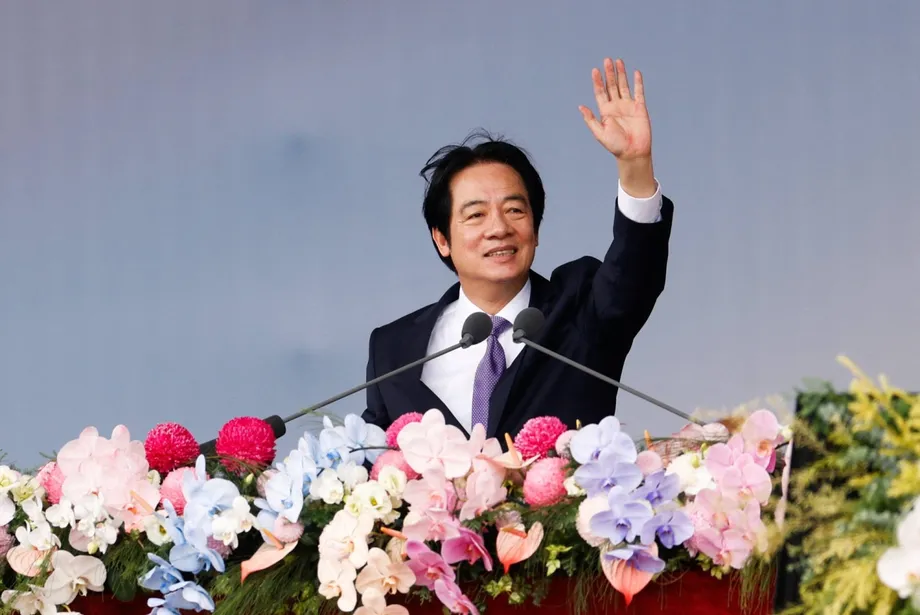
Lai presented his case during Taiwan's National Day address outside the Presidential Office in Taipei on October 10, 2026. For the island's 23 million people, the spending debate concerns both the ability to resist an attack and the capacity to keep military units supplied if access to overseas deliveries is disrupted.
Lai, Taiwan's president, described the purpose of the increase in his speech:
Our aim by increasing investment in national defence is not to provoke, rather, it is to deter war,
The NT$1.1 trillion figure is the announced allocation for 2027. Its final legislative status was not specified in the announcement. Other funding measures are at different stages, including a special procurement law already passed and a supplementary proposal intended to restore projects excluded from that law.
Those parallel budgets reveal the central challenge: Taiwan wants advanced weapons from the United States while also building the factories, repair facilities and reserves needed to sustain its own forces. Buying equipment and keeping it working during a conflict require different kinds of investment.
What the Different Budgets Cover
Taiwan's annual defense allocation, special procurement package and supplementary spending proposal cover different periods and purposes. The 2027 allocation finances defense spending for that year. The special package began as an administration proposal for NT$1.25 trillion covering 2026 through 2033.
The Legislative Yuan, Taiwan's parliament, passed the special defense procurement act on May 8, 2026, with a ceiling of NT$780 billion. That was NT$470 billion, or 37.6%, below the administration's proposed amount. The reduction excluded several domestic production and development projects while retaining arms purchases from the United States.
The opposition Kuomintang (KMT) and Taiwan People's Party cited concerns about inflated spending, the scope of the package and legislative oversight. Their stated objections concerned how the money would be allocated and supervised, while both supported strengthening defense.
The Executive Yuan, Taiwan's cabinet, subsequently proposed an additional NT$145.7 billion for defense beyond the existing 2026 central government budget. The Institute for the Study of War's September 11 update describes that proposal as a way to accelerate domestic procurement and development, including projects removed from the special package.
The supplementary defense request sits within a larger NT$607.6 billion bill whose largest share would support CPC Corporation, the government controlled oil supplier, amid rising energy costs. Its progress therefore depends on legislative review of a wider spending measure.
How the Funding Decisions Unfolded
Taiwan's defense financing changed repeatedly between April and October. The sequence explains why a project removed from one package could later return through another measure.
- April 2026: Lai's administration sought a special defense budget of NT$1.25 trillion for 2026 through 2033.
- May 8: The Legislative Yuan passed a special procurement act with a spending ceiling of NT$780 billion.
- August 27: Lawmakers passed a separate bill for procurement of domestically produced unmanned systems.
- September 3: The Executive Yuan proposed restoring funding for Strong Bow, unmanned systems and ammunition production through supplementary spending.
- September 10: The KMT proposed drone measure was signed into law as a plan covering six years.
- October 10: Lai used his National Day speech to explain the case for increased defense investment.
The August vote and September signing were successive steps in the drone legislation. The supplementary proposal offered another route to fund production sooner and support programs outside that drone plan.
Taiwan had already experienced delays in gaining access to approved military funding. Following the 2025 defense budget freeze, lawmakers released 278 of 279 frozen spending items by June 27, 2025, leaving the indigenous submarine program unresolved. That dispute temporarily restricted NT$90 billion and separately cut NT$8.4 billion.
A freeze keeps money in a budget but requires further approval before it can be spent. A cut removes money. Both can affect schedules for maintenance, training and purchases, even when political leaders agree that stronger defenses are necessary.
Why Local Production Became a Central Issue
The May special procurement law excluded Strong Bow, a domestically produced system designed to intercept ballistic missiles. Strong Bow is part of Taiwan's T-Dome concept, which combines different air defense systems to respond to different threats.
Unmanned aircraft, unmanned surface vessels, equipment to counter drones, ammunition production lines and domestic contract manufacturing projects were also excluded. The omissions affected production infrastructure as well as finished weapons.
Rena Sasaki, a doctoral candidate at the Johns Hopkins University School of Advanced International Studies, argues that Taiwan should combine American arms purchases with local production, maintenance and repair capacity. Her analysis identifies sustained combat capability as the practical measure of defensive self reliance: whether forces can continue operating when outside help is delayed.
Advanced systems such as Patriot air defenses and HIMARS rocket launchers cannot be replaced quickly. Domestic production serves a complementary purpose by supplying ammunition, components and some weapons while helping damaged equipment return to service.
Sasaki also identifies cooperation with American firms such as Anduril as a route to joint development and production. Such arrangements can connect access to technology with efforts to build manufacturing capacity in Taiwan.
What the Supplementary Proposal Would Buy
The NT$145.7 billion supplementary defense proposal includes NT$55.9 billion for unmanned systems, NT$13 billion for seven defense programs, NT$7.3 billion for ammunition and NT$64.5 billion for two classified projects, according to the Institute for the Study of War update.
The unmanned systems allocation represents about 38% of the proposed defense supplement. The two classified projects account for about 44%. Their purposes were not publicly detailed in the update.
Huang Wen-chi, director of the Ministry of National Defense's Strategic Planning Department, said the proposal includes items omitted from the May special budget. These include more than 600 surveillance and reconnaissance drones, more than 40,000 attack drones and more than 100 small drone boats designed to strike targets by crashing into them.
The numbers reflect a strategy based partly on using many smaller systems rather than depending entirely on a limited fleet of expensive platforms. Surveillance drones help locate forces and follow their movements. Attack drones and unmanned boats can threaten targets while reducing the need to put crews directly in danger.
Large orders also require factories, components and trained workers. Sasaki argues that manufacturers need predictable demand over several years to justify investment, while procurement contracts must remain flexible enough to accommodate rapid changes in drone technology.
The same problem applies to ammunition: buying stocks addresses immediate needs, while production lines provide a way to replenish them. Taiwan's supplementary proposal seeks funding for both equipment and the capacity behind it.
Longer Range Missiles Add Another Layer
Taiwan's 2027 defense budget also revealed the Ching Tien I cruise missile, which the Institute for the Study of War update describes as already in service and in serial production. Its reported maximum range is 1,500 kilometers, with a speed of Mach 3, about three times the speed of sound.
A second version, Ching Tien II, is planned to reach 2,000 kilometers and Mach 5. It would use launchers that can move by road, unlike Ching Tien I, which is reported to rely on fixed launch sites. The military had not announced when the second version would enter service.
Mobile launchers can change position, making them harder to locate and attack. Fixed installations are easier to identify in advance. That difference affects whether a missile force can survive an initial strike and remain able to respond.
The institute assesses that the missiles could strengthen Taiwan's ability to retaliate against attacks and threaten airfields, naval facilities and missile bases used by China's Eastern Theater Command, which has primary responsibility for operations involving Taiwan.
This adds another element to Lai's deterrence argument. Air defenses aim to intercept incoming attacks. Longer range weapons aim to make an attacker expect damage to its own military infrastructure. Both approaches depend on systems surviving long enough to operate.
Chinese Pressure Extends East of Taiwan
China claims Taiwan as its territory and has not ruled out using force to take control of the democratically governed island. Lai accused Beijing of using military operations and activities below the threshold of open warfare to change conditions across the Taiwan Strait.
Those activities, often called grey zone pressure, can involve repeated patrols or asserted policing powers that gradually make a contested presence seem routine. The Institute for the Study of War update describes Chinese coast guard deployments east of Taiwan as an example.
Drawing on Starboard Maritime Intelligence data, the update says pairs of Chinese coast guard ships conducted patrols lasting roughly a month from June 1, with replacement pairs arriving on July 4, August 4 and September 4.
At least one coast guard vessel also escorted the Chinese research ship Xiang Yang Hong 03 during a survey east of Taiwan from August 10 through August 31. China's Ministry of Natural Resources said the work gathered seabed geological and topographical information for resource management and territorial planning.
The institute assesses that a continuing coast guard presence could help China initiate a quarantine or blockade with less warning. For Taiwan's defense planners, that possibility connects maritime pressure directly to stockpiles and domestic production: restrictions on shipping could interrupt deliveries of ammunition, spare parts and replacement equipment.
The activity follows the December 2025 military exercises around Taiwan, when American and Japanese surveillance aircraft rapidly adjusted their operations to monitor Chinese forces. Together, the exercises and continuing patrols show why Taiwan's planning extends beyond a single invasion scenario.
American Weapons and Political Uncertainty
Taiwan is awaiting American approval for approximately US$14 billion in weapons sales, including Patriot air defense systems. The United States remains its most important security partner, despite having switched formal diplomatic recognition from Taipei to Beijing nearly five decades ago.
President Donald Trump's suggestion that arms sales could become a bargaining chip in negotiations with Chinese President Xi Jinping has added uncertainty about future support. Taiwan's procurement planning must account for political decisions as well as manufacturing and transport schedules.
Washington welcomed Lai's commitment to peace and stability across the Taiwan Strait. A senior administration official said his National Day speech gave China no justification for aggressive or coercive action.
Lai welcomed dialogue between Washington and Beijing while saying that regional stability must respect Taiwan's right to exist and determine its future. Beijing has rejected his offers of dialogue and labeled him a separatist. China's Taiwan Affairs Office did not immediately respond to a request for comment on the address.
Lai also described Taiwan's intentions in his National Day speech:
We do not seek hegemony, nor do we seek to dominate others,
Turning Spending Into Usable Defenses
Taiwan's record allocation brings the debate from the size of the budget to what the military can actually deploy, repair and sustain. A contract for thousands of drones must become working production lines, delivered equipment and trained units before it contributes to readiness.
Sasaki's analysis identifies dispersed stocks, repair capacity and resilient logistics as priorities because concentrated factories and supply hubs could themselves be attacked. Dispersal means spreading equipment and supplies across locations so that one strike cannot disable an entire capability.
The budget choices also have to work together. Imported air defenses, domestic interceptors, attack drones, ammunition reserves and longer range missiles serve different purposes. Their effectiveness depends on maintenance, training and reliable movement of supplies between units.
The next legislative decision concerns the supplementary bill intended to restore domestic programs excluded in May. Alongside that review, Taiwan faces the practical task of converting its announced 2027 spending into deliveries and readiness while managing uncertainty over American arms approvals.
Key Points
- Taiwan announced a record NT$1.1 trillion defense allocation for 2027, equivalent to more than 3% of GDP.
- Lai said increased defense investment aims to deter war amid Chinese military and maritime pressure.
- Lawmakers capped a separate special procurement package at NT$780 billion, 37.6% below the administration's proposal.
- A proposed NT$145.7 billion defense supplement would fund drones, ammunition and other domestic programs.
- The 2027 budget disclosed the Ching Tien I cruise missile in service and plans for a longer range, mobile successor.
- Taiwan is awaiting American approval for approximately US$14 billion in weapons sales while seeking greater local production and repair capacity.