Smoke disrupts journeys across Indonesia and beyond
Indonesia's forest and land fires disrupted 2,604 domestic flights between August 11 and October 19, 2026, while haze forced the cancellation of 14 international services involving Singapore, according to the Transportation Ministry. The disruption has spread from Sumatra and Kalimantan to airports in Sulawesi, Maluku, North Maluku and Papua.
Contents
- Smoke disrupts journeys across Indonesia and beyond
- How the flight disruption grew
- Why visibility can stop a flight
- Airports in the east face growing pressure
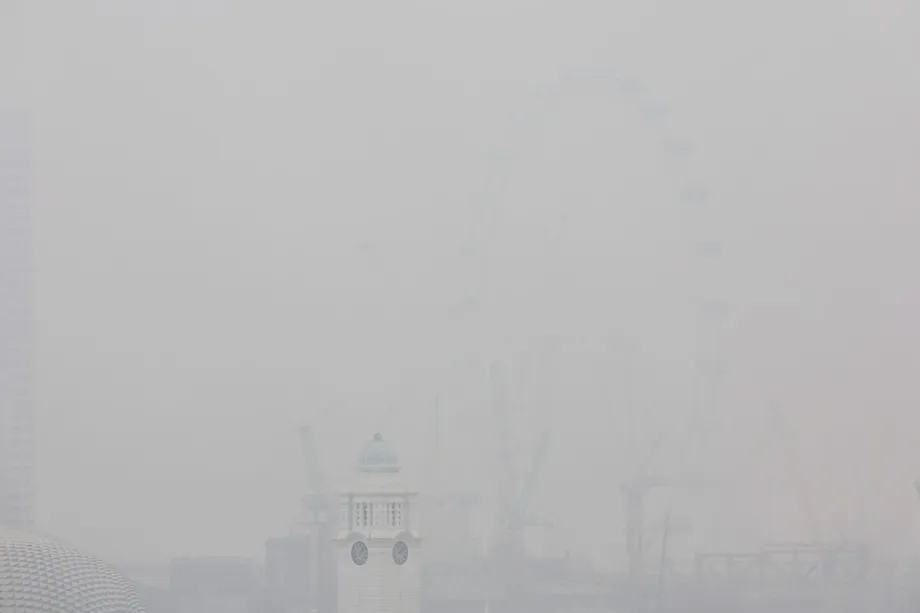
- Singapore and Malaysia lose connections too
- Airline losses reach beyond ticket sales
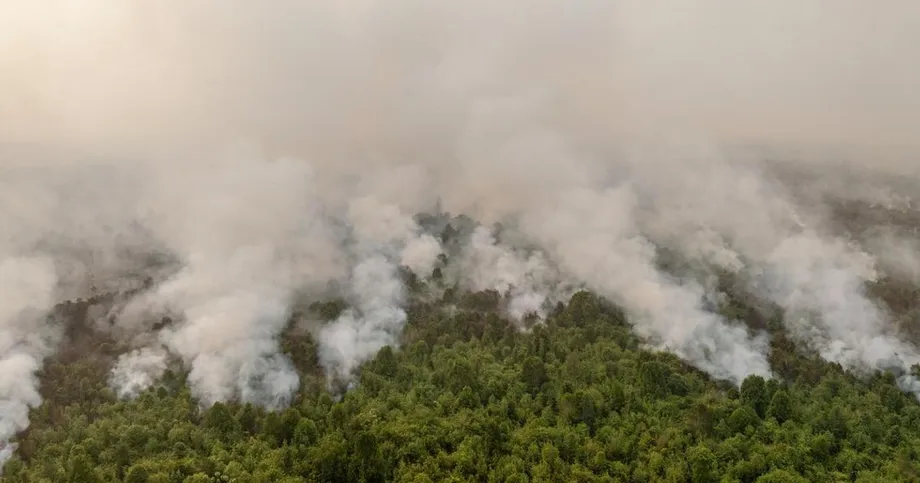
- Fewer hotspots, but fires keep returning
- Smoke also limits the firefighting response
- Families bear the health burden
- Legal action and regional talks intensify
- Key Points
Civil Aviation Director General Lukman F. Laisa said 1,420 domestic flights were cancelled or postponed, 1,129 were delayed, 23 diverted to other airports and six returned to their departure airports. Another 26 were rescheduled to leave earlier. Together, cancellations, postponements and delays accounted for 2,549 flights, almost 98 percent of the total.
The latest count was 146 higher than the 2,458 recorded through October 17. For passengers, the consequences range from waiting at terminals to arriving in a different city. For remote communities dependent on aircraft, cancelled services can also interrupt supplies and access to government services.
Singapore connections suffered directly: 12 flights on return services between Singapore and Pontianak were cancelled from September 12 to 23, followed by two between Singapore and Palembang on October 15. Haze also interrupted Malaysia's Firefly service between Subang and Singapore's Seletar Airport before the airline resumed the route after a suspension lasting about a week.
The aviation disruption is one part of a wider emergency. Indonesia's Health Ministry recorded 283,270 acute respiratory illness cases across seven affected provinces by October 13, while firefighting crews faced smoke thick enough to prevent some aircraft from reaching the fires producing it.
How the flight disruption grew
The Transportation Ministry's successive totals show how the disruption accumulated through October. Its monitoring combines information from airport authorities, airport operators, airlines and air navigation services.
- August 11: The ministry's cumulative monitoring period began.
- September 12 to 23: Haze at Pontianak's Supadio Airport caused 12 cancellations on services connecting with Singapore.
- October 12: The cumulative number of affected domestic flights reached 1,813.
- October 13: The total reached 2,021, including 1,067 cancellations or postponements and 919 delays.
- October 15: Two Singapore–Palembang services were cancelled.
- October 17: The ministry recorded 2,458 affected domestic flights across 29 airports in 17 provinces.
- October 19: The cumulative domestic total reached 2,604.
The increase from 2,021 flights on October 13 to 2,604 on October 19 amounts to 583 additional affected flights, or about 29 percent. Those totals include several kinds of schedule changes, with cancellations and postponements grouped together by the ministry.
Other hazards were disrupting aviation at the same time. Through October 17, authorities separately recorded 20 domestic cancellations attributed to volcanic ash, bad weather and strong winds. Those cancellations were recorded outside the haze total.
Why visibility can stop a flight
Palembang's Sultan Mahmud Badaruddin II Airport provides a concrete example of the safety problem. General manager Ahmad Syaugi Sahab said five flights were delayed during one morning when visibility fell below the airport's minimum operational threshold of 600 metres. Haze had already affected 18 flights there on October 3.
Flight crews need sufficient visibility to complete takeoffs, approaches and landings safely. The operating limit depends on the airport, aircraft and procedures in use. Smoke can therefore interrupt flights at different airports in different ways.
Pekanbaru's Sultan Syarif Kasim airport experienced several of those outcomes when visibility fell to about 600 metres. A Lion Air flight returned to Jakarta, a Citilink flight diverted to Batam, and a Pelita Air aircraft circled five times before landing after conditions improved. At Jambi's Sultan Thaha Airport, eight flights were delayed or rescheduled as visibility dropped from 1,500 metres early in the morning to 800 metres by noon.
Lukman, the ministry official responsible for civil aviation, explained the government's operating priority:
Flight safety and security remain our top priorities. Every operational decision must take into account weather conditions, visibility and safety assessments by the relevant authorities.
Airports in the east face growing pressure
Between October 13 and 17, haze affected aviation across a wider geographical area. Airports named by the ministry included Mutiara SIS Al-Jufrie in Palu, Sultan Babullah in Ternate, Pattimura in Ambon, Mozes Kilangin in Timika and Domine Eduard Osok in Sorong, alongside airports in Pontianak, Pekanbaru and Palembang.
Authorities also placed 16 airports across Papua, Central Papua, Papua Highlands and South Papua under monitoring. They included Sentani, Timika, Wamena, Oksibil, Dekai, Merauke, Tanah Merah and Ewer, as well as smaller destinations such as Manggelum, Yaniruma and Mindiptanah.
Lion Group spokesperson Danang Mandala Prihantoro said at least four flights serving Sorong, Manokwari and Jayapura had been rescheduled. Poor conditions at one airport can affect later services because the same aircraft and crews are needed for subsequent journeys.
On October 16, haze also cancelled 22 pioneer flights, including two cargo services, across the Singkep, Kuala Pembuang, Tanah Merah and Gorontalo coordinator areas. Pioneer services connect places where regular commercial transport is limited. Aviation observer Gatot Raharjo warned that interruptions could reduce supplies of basic goods and push up prices in remote communities.
Singapore and Malaysia lose connections too
Firefly first announced cancellations on October 10 because of low visibility. The affected route links Sultan Abdul Aziz Shah Airport in Subang, near Kuala Lumpur, with Seletar Airport in Singapore. During the suspension, passengers could be moved to Malaysia Airlines flights between Kuala Lumpur International Airport and Changi Airport, subject to available seats.
Seletar's problems extended beyond that route. Sixteen flights were diverted from the airport between October 5 and 11 because of low visibility and haze, according to information attributed to the Civil Aviation Authority of Singapore and Changi Airport Group.
AirAsia's director of Indonesia affairs and strategic communications, Eddy Krismeidi, said its Malaysian operations involving Palembang, Pontianak and Banjarmasin were also affected. The airline postponed a planned trip bringing Malaysian customers to Kalimantan.
Airport operators in Indonesia have been instructed to strengthen procedures for reduced visibility and coordinate with AirNav Indonesia and the Meteorology, Climatology and Geophysics Agency, known as BMKG. Aviation notices inform crews about restrictions and changing conditions. Operators have also been asked to improve terminal information and provide masks for passengers.
Airline losses reach beyond ticket sales
The Indonesian National Air Carriers Association, or INACA, estimated that roughly 500 cancellations during September cost airlines more than Rp 22 billion. The estimate excluded losses to airport operators, airport shops, restaurants, taxis and hotels.
Citilink had the largest number of affected flights in an earlier breakdown covering 10 airlines, with 478. NAM Air followed with 300, Wings Air with 227 and Super Air Jet with 161. Other affected operators included Garuda Indonesia, Batik Air, TransNusa, Lion Air and Sriwijaya Air.
INACA Secretary General Bayu Sutanto said passengers affected by emergency conditions could receive refunds or rescheduling. Lukman also said airlines remained responsible for fulfilling passenger rights under applicable rules. Passengers should check their airline's current arrangements, particularly when a replacement journey uses different airports.
Tourism businesses face a related loss of visitors. Indonesian Tourism Industry Association chairman Hariyadi Sukamdani warned that occupancy in affected areas could fall to 10–20 percent if conditions continued. He said Kalimantan was especially exposed because travel alternatives by land were more limited than along Sumatra's main road corridor.
The Center of Economic and Law Studies estimated economic and health costs of Rp 39.29 trillion to Rp 123.1 trillion for January through August. Within its assessment, losses involving physical assets and economic activity amounted to Rp 29.54 trillion. These are broader estimates covering the fire emergency, while INACA's figure concerns airline cancellations during September.
Fewer hotspots, but fires keep returning
The Forestry Ministry's latest update recorded 487 hotspots assessed with high confidence nationwide at 9 p.m. on Monday, down from 1,104 the previous day. Across six priority provinces, the count fell from 748 to 172.
South Sumatra recorded 64, Central Kalimantan 49, South Kalimantan 40, West Kalimantan 12 and Jambi seven, while Riau recorded none. South Sumatra and South Kalimantan registered increases despite the national decline. Earlier monitoring had shown a sharp nationwide rise from 270 to 1,104, illustrating how quickly conditions were changing.
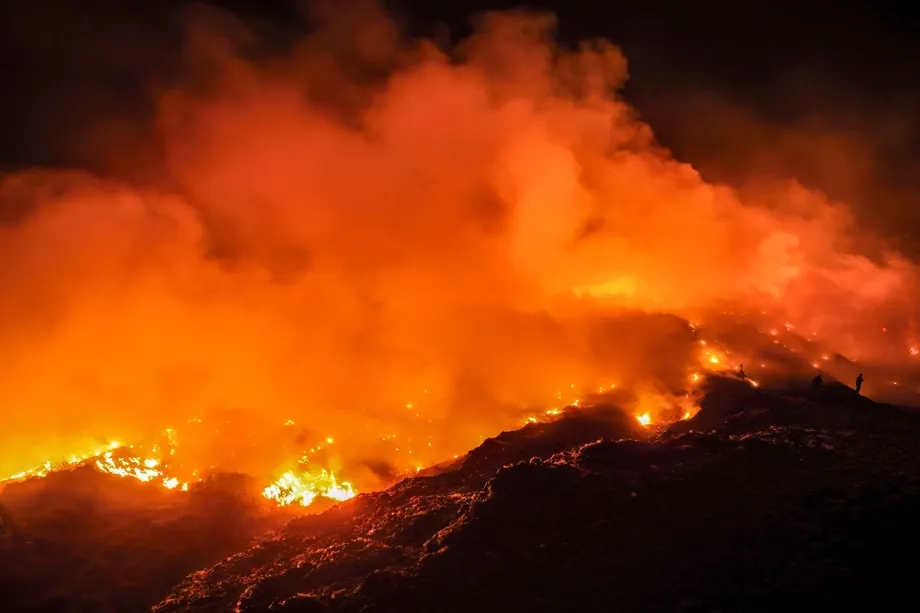
Hotspots are heat detections used to help locate possible fires. Burned area is measured separately. Environmental organisation Satya Bumi estimated that more than 202,000 hectares burned between January and July 2026, 69 percent more than during the same period a year earlier.
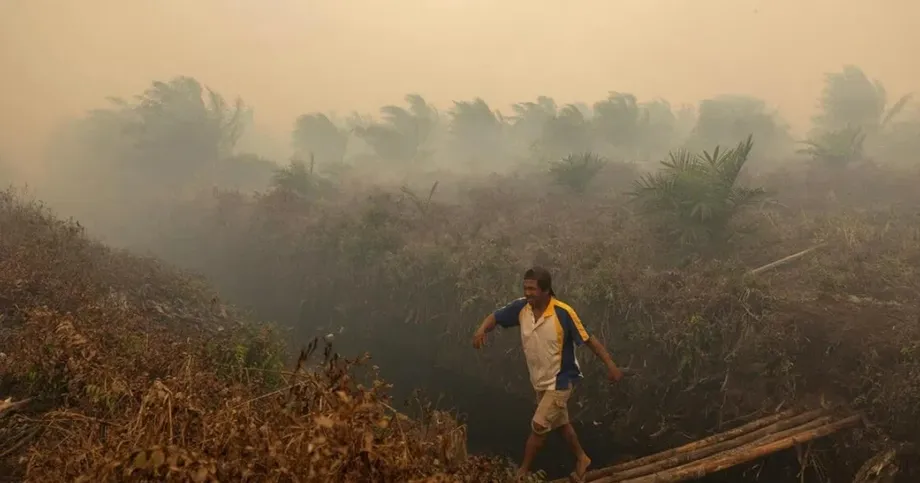
Much of the firefighting challenge lies beneath the surface. Peat is a thick accumulation of partly decomposed vegetation. When dry, it can burn underground, leaving heat that is difficult to reach with water.
Fauzi Rahman, a firefighter aged 27 in Palangka Raya, described the work needed to extinguish it:
Because peat soil is quite deep, we have to completely put out the fire all the way down.
Firefighters near Banjarbaru have tested pipes inserted up to two metres into peat to deliver water and firefighting liquid below ground. Police said one trial lowered underground temperatures from about 120 degrees Celsius to 30 degrees Celsius, with thermal drones used to check for remaining heat.
Smoke also limits the firefighting response
Indonesia's latest response update listed 61 aircraft on standby, including 44 for dropping water and 17 for patrols and weather modification. Separate operational records showed 5,179 water dropping flight cycles from April 20 to October 16, involving 38 aircraft from 11 operators.
Aircraft need safe visibility to navigate, identify targets and release water. Malaysia's Foreign Minister Mohamad Hasan said thick smoke had grounded 34 aircraft involved in Indonesia's response. Remote terrain and limited water supplies added to the difficulty.
Malaysia offered a Bombardier CL-415MP aircraft, three helicopters and roughly 50 personnel. Indonesia had agreed to accept international assistance while assessing individual proposals. The specific Malaysian package was still awaiting Indonesian approval in an October 19 update, following the Malaysian aircraft offer.
Authorities also dispersed about 2.4 tonnes of dry ice over South Sumatra on October 15 and 16, initially focusing on Palembang's airport. Dry ice is solid carbon dioxide. The experiment aims to disturb a temperature inversion, a layer of warmer air that traps cooler air and smoke close to the ground.
During the first dry ice trial, disaster officials reported visibility improving from about 650 metres to 2,800 metres, below their target of at least 5,000 metres. BMKG officials described the method as experimental, with its effectiveness against tropical wildfire haze still under evaluation. The technique targets smoke dispersal, while ground crews and aircraft continue extinguishing fires.
Families bear the health burden
Indonesia's Health Ministry recorded 283,270 acute respiratory illness cases across seven affected provinces by October 13, compared with 113,336 by September 9. More than 60,000 cases involved children younger than five.
Palangka Raya's health office reported a 25 percent rise in acute respiratory infections. Residents described smoke entering homes and volunteers setting up shelters with cleaner air. The search for safe air has become especially urgent for families with children, older people and those already struggling to breathe.
BMKG measurements in Sumatra showed PM2.5 reaching 903.6 micrograms per cubic metre in Palembang and 298.7 in Pekanbaru during severe episodes. PM2.5 means particles no wider than 2.5 micrometres, small enough to travel deep into the lungs.
Malaysia closed schools in affected areas, while Singapore restored subsidised treatment for illnesses associated with haze. Demand for protective equipment also rose: Malaysian medical supplier AA Alive reported oxygen equipment sales up 35 percent, and retailer Courts said air purifier sales increased 600 percent between September 28 and October 12 compared with the same period a year earlier.
The Forestry Ministry also reported that four firefighters died in a national park in Java. Their deaths added to the human cost of a response involving tens of thousands of personnel.
Legal action and regional talks intensify
Singapore's sustainability and environment minister, Grace Fu, said the National Environment Agency would issue notices to seven companies with concessions in Indonesia under the Transboundary Haze Pollution Act. The notices require action against fires and information about prevention. The 2014 law permits fines of up to S$100,000 a day for companies that cause or condone fires producing haze in Singapore.
Fu described the agency's initial findings and the basis for possible further action:
Our investigation so far suggested that some of the haze experienced in Singapore originated from fires on the lands of seven companies in Indonesia.
Prime Minister Lawrence Wong said Singapore was examining which companies might be responsible and considering joint action with other countries. Greenpeace has also alleged links between burning areas and businesses based in Singapore and Malaysia.
Indonesia has expanded its own enforcement response. Following sanctions against 32 companies, the Forestry Ministry said measures included permit suspensions, restoration orders and five permit revocations. Criminal proceedings involved 125 individuals and corporations.
ASEAN raised its haze alert to Level 3, its highest level. Malaysia wants stronger regional arrangements, with Mohamad saying haze falls outside the bloc's existing natural disaster mechanism. The issue is scheduled for discussion at ASEAN meetings ahead of the November summit in Manila. Meanwhile, passengers and communities face changing visibility, interrupted connections and continued exposure to smoke.
Key Points
- Indonesia recorded 2,604 affected domestic flights between August 11 and October 19, including 1,420 cancellations or postponements.
- Fourteen international services involving Singapore were cancelled on Pontianak and Palembang routes.
- Haze affected 29 airports across 17 provinces by October 17 and disrupted services connecting remote communities.
- Indonesia's Health Ministry recorded 283,270 acute respiratory illness cases across seven provinces by October 13.
- Firefighting combines ground crews, aircraft, peat cooling and experimental smoke dispersal, with visibility restricting some operations.
- Singapore is pursuing company investigations, while ASEAN is due to discuss the crisis ahead of its November Manila summit.