Three Budget Years Face Constitutional Limits
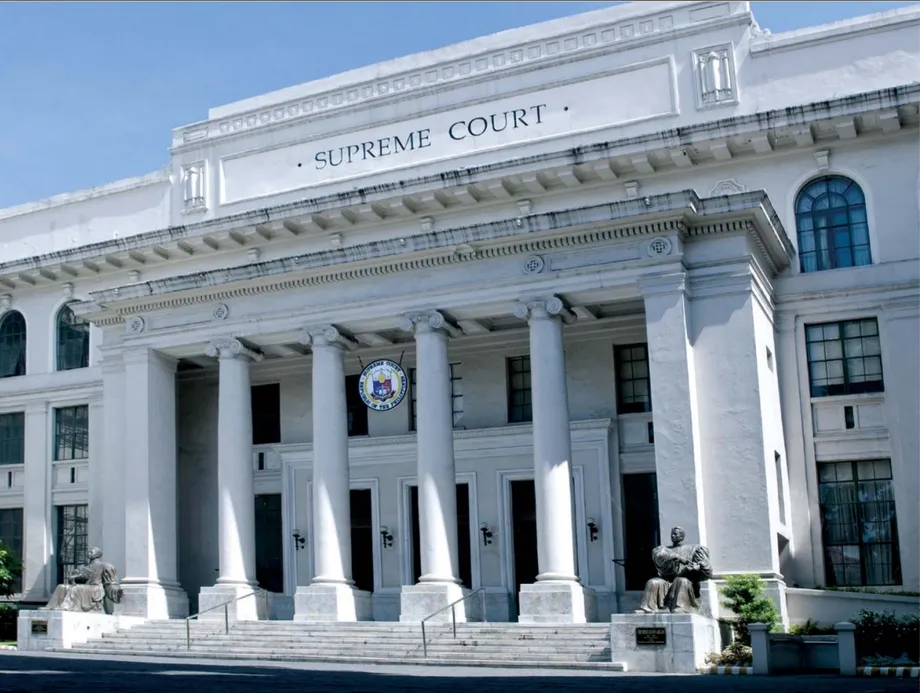
The Philippine Supreme Court has declared the 2024 and 2025 national budget laws unconstitutional over congressional increases of P449.5 billion and P17.99 billion, while blocking two provisions governing standby spending in the 2026 budget.
Contents
- Three Budget Years Face Constitutional Limits
- What the Court Struck Down
- Why Standby Funds Need Spending Rules
- How the 2024 Budget Was Reshaped
- Why SAGIP Was an Illegal Lump Sum
- Four Conditions for Lawful Unprogrammed Spending
- What the 2026 Prohibition Covers
- Congress Must Explain Its Budget Changes
- What Happens to Benefits Already Delivered
- Key Points
The decision, announced on October 20, 2026, and written by Senior Associate Justice Marvic M.V.F. Leonen, addresses both how much Congress can authorize and how much freedom the Executive can have to decide where public money goes after a budget becomes law.
The Court found that Congress increased total appropriations beyond the amounts recommended by the President. For 2024, the increase involved unprogrammed appropriations, or spending authority that becomes available only when specified funding conditions are met. For 2025, it involved the Department of Public Works and Highways (DPWH) Special Road Fund.
The ruling also permanently bars implementation of Special Provisions 1(a) and (b) of Chapter XLIII of the 2026 General Appropriations Act (GAA). The Court found that these provisions gave the Executive unchecked spending authority and lacked adequate rules for deciding which expenditures should come first.
People who benefited in good faith from irreversible programs under the 2024 and 2025 budgets receive limited protection under a legal principle called the doctrine of operative fact. Officials responsible for the disputed spending face a separate question of accountability, which the Court left to the proper tribunals.
What the Court Struck Down
Republic Act 11975, the 2024 GAA, was declared unconstitutional because Congress effectively increased the President's recommended total appropriations by P449.5 billion through unprogrammed funds. An appropriation is legal permission to spend public money for a stated purpose.
Republic Act 12116, the 2025 GAA, was declared unconstitutional because Congress added P17.99 billion to the DPWH Special Road Fund, also pushing total appropriations above the President's recommendation. The 2024 increase was about 25 times the size of that road fund increase.
The Court separately found that a P12.75 billion increase in certain agencies' Special Accounts in the General Fund violated Book VI, Chapter 4, Section 25 of the Administrative Code. That provision prohibits increasing amounts in special budget provisions beyond those proposed by the President.
The three budget years involved different legal actions:
- 2024: The Court granted the petition of the late congressman Edcel Lagman and partly granted the petition of former senator Aquilino "Koko" Pimentel III and others challenging the increase in unprogrammed appropriations.
- 2025: The Court granted the petition of Filipinos for Peace, Justice and Progress Movement, Inc. and others challenging the increase to the Special Road Fund.
- 2026: The Court partly granted challenges by Caloocan City 2nd District Representative Edgar Erice and Mamamayang Liberal Representative Leila de Lima concerning unprogrammed appropriations.
Why Standby Funds Need Spending Rules
Unprogrammed appropriations allow the government to prepare for spending that depends on money becoming available under specified conditions. Those conditions can include revenues exceeding targets or the availability of foreign grants and loans.
Programmed expenditures, by contrast, are part of the government's planned spending supported by its expected financing. The difference matters when collections fall short: the government still has planned commitments to meet, even if some anticipated income fails to arrive.
The Supreme Court said unprogrammed appropriations can remain part of a constitutional budget. In its explanation of the ruling, the Court described the safeguards they require:
Unprogrammed Appropriations are not unconstitutional per se. However, this budgetary item needs clear limits and safeguards to preserve fiscal discipline, transparency, and accountability.
The Court's concern was that weak conditions could let the Executive release standby funds too freely while funding for programmed projects came under pressure. The ruling requires Congress to define both the circumstances that make money available and the rules governing its use.
How the 2024 Budget Was Reshaped
The Bicameral Conference Committee, which reconciles differences between the House and Senate versions of legislation, moved programs, activities and projects from programmed to unprogrammed appropriations during preparation of the 2024 budget, the Court found.
The committee also increased allocations for Strengthening Assistance for Government Infrastructure and Social Programs (SAGIP) and Support to Foreign Assisted Projects. Moving planned spending into the standby category created room on paper within programmed appropriations for increases elsewhere.
The Supreme Court said Congress created artificial fiscal space through those changes. In practical terms, shifting a project to another budget category made the planned spending column look less crowded, even though the government still contemplated paying for that project if the release conditions were met.
The resulting increases involved DPWH basic infrastructure programs, Sustainable Infrastructure Projects Alleviating Gap, the Department of Health's medical assistance to indigents, the Department of Social Welfare and Development's Ayuda sa Kapos ang Kita Program, and the Department of Labor and Employment's Tulong Panghanapbuhay sa Ating Disadvantaged or Displaced Workers Program.
Those allocations connected the budget dispute to infrastructure, medical assistance, income support and work assistance. The Court focused on how Congress arranged and authorized the spending, including whether the changes respected the ceiling set by the President's recommended total.
Why SAGIP Was an Illegal Lump Sum
SAGIP in the 2024 and 2025 unprogrammed funds drew a separate constitutional finding. The Court said it was an illegal lump sum because it allowed the Executive to identify or allocate spending after the budget had become law, exercising powers constitutionally assigned to Congress.
A lump sum puts money under a broad heading rather than settling the necessary spending choices in the law itself. Here, the Court found that too much of the decision about where the money would go was left until after enactment.
The Supreme Court described how SAGIP operated within the disputed budgets:
covert repository of lump sum allocations for DPWH infrastructure like flood control projects.
Flood control projects were therefore among the concrete spending purposes identified in the Court's explanation. The constitutional issue was who made the allocation decisions and whether Congress had supplied sufficiently specific legal authority before the Executive began implementation.
Four Conditions for Lawful Unprogrammed Spending
The Court set four requirements for constitutional unprogrammed appropriations. Together, they require Congress to make standby spending specific, conditional and consistent with the government's financial plan.
- No lump sums: Unprogrammed appropriations must not contain broad allocations that leave the necessary spending choices unresolved.
- Distinct funding conditions: Congress must clearly distinguish the use of new income and additional revenue from sources other than taxes for programmed and unprogrammed expenditures.
- Spending priorities: Congress must prescribe sufficient standards for deciding what receives funding first when an appropriation serves more than one purpose.
- A limited contingency role: Unprogrammed appropriations must fit within the national fiscal program and remain narrow appropriations dependent on specified conditions.
The second requirement gives programmed spending a presumption in its favor. New income should ordinarily support those planned expenditures unless clear and convincing reasons justify placing it under unprogrammed appropriations. The Court identified projects assisted by foreign funding as an example of a possible justification.
Prioritization rules address another practical problem. When several purposes compete for the same conditional funding, Congress must provide standards to guide the choice rather than leaving the Executive with unrestricted discretion.
The national fiscal program is the government's plan for spending and financing. Requiring standby appropriations to fit that plan keeps them tied to the same financial constraints that govern the rest of the budget.
What the 2026 Prohibition Covers
Special Provisions 1(a) and (b) of Chapter XLIII of the 2026 GAA failed those constitutional tests. The Court found that they granted unchecked executive spending authority, violated limits on total appropriations, lacked prioritization standards and partly operated as prohibited lump sums.
The permanent prohibition covers the Senate, the House of Representatives, the Office of the Executive Secretary and the acting secretary of the Department of Budget and Management. They are barred from implementing the two challenged provisions.
The Court's action on the 2026 budget targets those specific provisions. Its declarations concerning 2024 and 2025 address the budget laws themselves, accompanied by limited protection for certain actions already carried out.
Congress Must Explain Its Budget Changes
The Bicameral Conference Committee also faced scrutiny over the scope of its authority and the records supporting its decisions. The Court said the committee may resolve only actual differences between the House and Senate versions of a bill.
The Court found no records of the committee's discussions explaining the disputed budget changes. Its report did not explain increases and decreases in budget items, and the committee submitted no supporting documents for those changes, contrary to House and Senate rules.
For readers trying to follow the public money, those records would show what lawmakers changed and the reasons for doing so. The ruling places the committee's reconciliation work within a defined boundary: resolving disagreements between the chambers, with documentation required by their rules.
What Happens to Benefits Already Delivered
The doctrine of operative fact addresses actions taken under a law before it was declared unconstitutional. The Supreme Court applied it to the 2024 and 2025 budgets, but limited its protection to irreversible programs whose beneficiaries acted in good faith.
In plain terms, the Court recognized that some programs have already produced effects that cannot be undone and that recipients may have relied honestly on government action. That protection is tied to those circumstances rather than automatically covering every expenditure under the two budgets.
The Supreme Court explained the separate position of those responsible for authorizing or carrying out the spending:
It does not shield authors, proponents, or implementors from criminal, civil, or administrative liability unless the proper tribunals explicitly find that they acted in good faith.
The proper tribunals must therefore decide whether the people concerned acted in good faith and whether liability follows. The ruling's explanation does not identify every affected payment or project, or set out a payment by payment recovery process. For beneficiaries, the central condition is the limited protection for irreversible programs received in good faith.
Key Points
- The Supreme Court declared the 2024 budget unconstitutional over a P449.5 billion increase in unprogrammed appropriations.
- The 2025 budget was declared unconstitutional over a P17.99 billion increase to the DPWH Special Road Fund.
- A separate P12.75 billion increase in certain special accounts violated the Administrative Code.
- Two provisions governing unprogrammed appropriations in the 2026 budget are permanently barred from implementation.
- Unprogrammed funds remain permissible with specific allocations, clear release conditions, spending priorities and consistency with the national fiscal program.
- Protection for irreversible programs benefiting people who acted in good faith does not automatically protect officials from liability.