News payments and AI rules face a December deadline
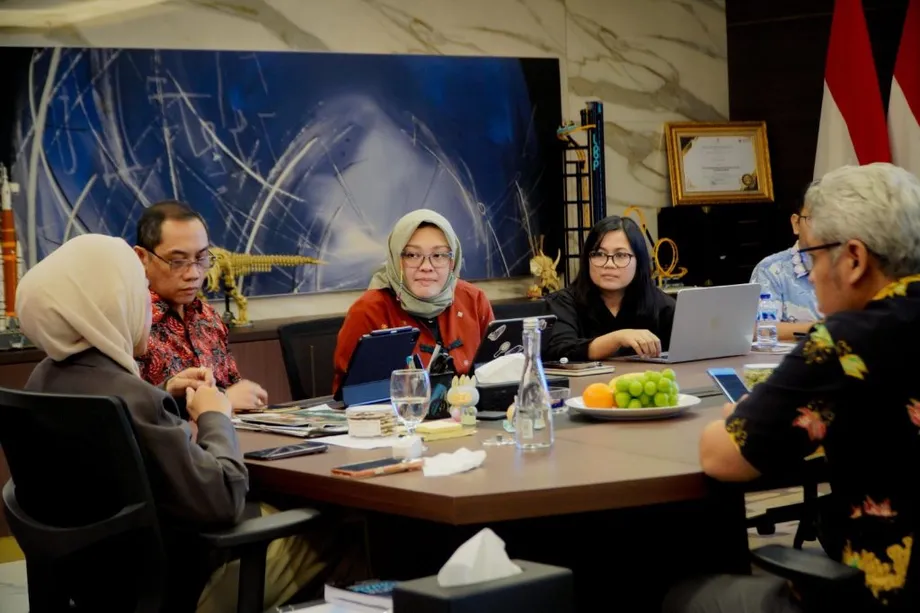
Google, Meta and TikTok challenged Indonesia's proposed copyright overhaul at a parliamentary hearing in Jakarta on November 11, 2026, as lawmakers worked toward bringing the legislation to a plenary session before the parliamentary session closes on December 12. The dispute covers payments for news links and previews, the use of copyrighted material to train artificial intelligence, and responsibility for content uploaded by users.
Contents
- News payments and AI rules face a December deadline
- What the government has put before parliament
- Which uses of news would require payment?
- Google and Meta warn of fewer news links
- Publishers say the traffic model is already weakening
- Who would own work made using AI?
- TikTok seeks a distinction between assistance and generation
- AI training and collective licensing divide the sides
- Platform liability and wider creative rights
- Key Points
The revision of Copyright Law No. 28 of 2014 has a substantial agenda: 1,117 items in the government's formal inventory of issues. Beyond news payments, government officials and lawmakers have agreed on a principle that would deny copyright protection to works produced entirely by AI, while considering protection for works made with human involvement.
For readers, the immediate stakes concern how easily Indonesian news can be found through search engines and social media. For publishers, the argument is about whether the companies distributing and using their journalism should pay for it. For creators and software developers, the bill would help determine when AI use requires permission, disclosure or compensation.
The companies say some provisions could cause platforms to restrict news distribution and make AI development harder. Indonesia's Press Council presents a different concern: publishers are already losing visits and revenue as platforms capture advertising and AI services deliver answers without sending people to news websites.
The legislation remains under discussion. December 12 is the target for taking it to a plenary session, rather than a confirmed enactment date. Lawmakers must reconcile demands for stronger protection of creative work with objections about how the proposed obligations would operate.
What the government has put before parliament
The Directorate General of Intellectual Property, known as DJKI, documented the start of joint deliberations in its October 6 announcement. The government handed its inventory to the House of Representatives Legislative Body and agreed to establish a working committee chaired by Martin Manurung.
The inventory, known by the Indonesian abbreviation DIM, lists points for lawmakers and the government to consider. It contains 558 unchanged items, 91 substantive amendments, 143 proposed deletions, 181 new substantive items and 144 editorial items. The 558 unchanged items represent almost half of the total, while new substantive proposals outnumber substantive amendments by nearly two to one.
Deputy Minister of Law Edward Omar Sharif Hiariej said the revision was intended to bring copyright rules into line with developments in law, technology and public needs. DJKI Director General Hermansyah Siregar said digital uses of creative work required adequate protection for creators, copyright holders and owners of related rights.
At a November 9 discussion, officials organized the work into four main clusters, supported by 736 explanations: technology and AI, royalty governance, protection across creative sectors, and enforcement against digital offences. The timetable developed through several steps:
- July 2026: Details of a draft containing specific AI provisions became public.
- October 6: The government submitted 1,117 inventory items and a parliamentary working committee was formed.
- November 9: Lawmakers and intellectual property officials agreed to accelerate consideration.
- November 11: Google, Meta, TikTok and press representatives presented their concerns at a parliamentary hearing.
- December 12: The parliamentary session closes, with lawmakers aiming to bring the bill to a plenary session beforehand.
Which uses of news would require payment?
The draft would require compensation for aggregating or republishing news, displaying link previews and using journalistic content for AI training. Payments would pass through collective management organizations supervised by the state, which would distribute money to publishers.
A collective management organization collects money on behalf of many rights holders rather than requiring each one to negotiate and collect every payment separately. The proposal would give such bodies a central role in turning digital uses of journalism into publisher income.
Meta's objections focus on draft Articles 29 and 30. The company says payment duties could arise merely because a platform displays a link, brief preview or recommendation, including when a publisher voluntarily posts the link. Meta wants links and previews that do not replace the full article to remain outside those obligations.
The practical difference is straightforward. A link can take a reader to a publisher's website, where the publisher may earn advertising or subscription revenue. A reproduced article or a sufficiently detailed summary can satisfy the reader without that visit. The drafting dispute concerns where payment obligations begin across those different uses.
Indonesia already introduced a presidential regulation in 2024 promoting agreements between platforms and publishers. The proposed revision would place further obligations within copyright law, connecting the distribution of news with rights over the material itself.
Google and Meta warn of fewer news links
Agung Pamungkas, Google's Indonesia government affairs and public policy manager, told lawmakers that charging for news links could limit public access to information. He said the obligations could force Google to halt indexing, reindexing and distributing Indonesian news to local users. Indexing is the process through which a search engine catalogs pages so people can find them.
Meta's Indonesia public policy head, Berni Moestafa, argued that sending someone to an article differs from reproducing or republishing it. He warned lawmakers about the effect on publisher income:
publishers could lose readership traffic as well as potential advertising and subscription revenue
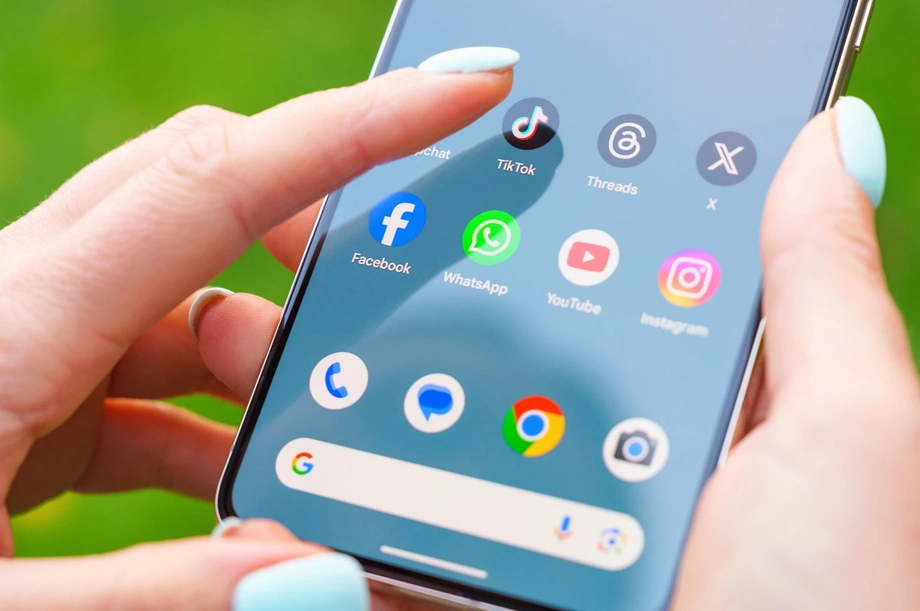
Meta says publishers use Facebook and Instagram to reach audiences and build communities without paying Meta to share their links. Its concern is that mandatory payments would encourage platforms to limit news distribution, leaving publishers with fewer visitors.
Small and regional outlets could be especially exposed, according to Meta, because a reduction in visits would remove opportunities to sell advertising and subscriptions. The company's proposed approach is to preserve free circulation of links and short previews while retaining copyright protection over the articles.
Publishers say the traffic model is already weakening
Dahlan Dahi, who leads the Press Council's commission on digital matters and sustainability, told the November 11 hearing that platforms control about 80% of digital advertising revenue. More than 50,000 media companies compete for the remaining 20%, he said. On those figures, platforms receive four times the share available to publishers collectively.
Dahlan also said referrals from digital platforms to Indonesian news websites had fallen by as much as 70%, while citing another study that found a decline of about 45%. The hearing figures came without a common measurement period or detailed methodology, leaving the scale of the decline difficult to compare precisely.
His argument addresses a change in how people obtain information. Search and social services traditionally helped readers discover an article and then visit its publisher. Generative AI, which produces text or other material in response to a request, can deliver an answer directly inside the platform.
Publishers therefore face two connected risks: restrictions on links could reduce visits further, while answers assembled from journalism could use their work without generating a visit or adequate payment. This explains why preserving referrals and securing compensation are both central to the debate, even though the companies and publishers disagree over how to achieve them.
Who would own work made using AI?
The government and parliament have agreed in principle that work generated entirely by AI would receive no copyright protection because AI is treated as a tool. People using AI to help create a work could qualify for protection if they meet requirements for human involvement.
The draft did not specify how much human involvement would be enough. That threshold matters to people who use AI during writing, visual production, filmmaking or software development, because copyright determines who can control copying and commercial use of the resulting work.
The proposal also includes disclosure requirements for AI use and a prohibition on using AI to imitate a creator's distinctive style. Its scope extends across journalism, photography, films, video games and computer programs.
Hermansyah Siregar, the DJKI director general, described the government's concern about generative AI and human creativity:
The development of generative AI has disrupted the copyright framework,
If unregulated, it could kill human creation.
TikTok seeks a distinction between assistance and generation
Noudhy Valdryno, TikTok's head of public policy in Indonesia, told lawmakers that disclosure requirements should exclude cases where AI merely assists a person rather than fully creating content. His objection places the boundary between human creation and automated production at the center of compliance.
Creators may use AI for translation, editing or improving an image while still making the main creative decisions themselves. TikTok wants the legislation to distinguish those activities from content generated substantially by an AI system.
The bill also addresses manipulation of a person's expression, voice or image, including that of public and religious figures, where the manipulation could damage reputation or dignity. Those proposals put protection against harmful impersonation alongside the debate about creative ownership.
Transparency requirements are developing elsewhere, although their scope varies. The European Union AI Act requires disclosure for certain images, audio and video generated or manipulated to constitute a deepfake, with exceptions for some artistic or satirical works. Indonesia's discussion concerns how broadly its own disclosure duty should reach.
AI training and collective licensing divide the sides
Google argues that mandatory licensing for AI training would be technically unworkable at the scale of models built using billions of web pages and other forms of data. Pamungkas also warned that restricting access to local material could weaken AI systems' command of Indonesian and create difficulties for domestic developers.
The draft allows copyrighted material to be used for AI training under fair use provisions or licensing agreements. Fair use provisions permit specified uses without securing individual permission, while a licence grants permission under agreed terms. How those routes are written would affect which training activities require payment.
Google wants a clear exception for text and data mining, the automated analysis of large collections of material. It also proposes a standard mechanism through which rights holders could refuse AI training, such as instructions in a website's robots.txt file.
Ari Juliano Gema, a lawyer specializing in intellectual property and entertainment, raised concern that the draft appeared to combine commercial AI use with research. Different treatment of those activities would matter to both businesses building products and researchers studying data.
Google separately opposes a centralized blanket licence through a single collective management body for music and news rights holders. It favors voluntary agreements and says a mandatory arrangement could restrict commercial choice, reduce potential earnings and discourage investment. The government, meanwhile, is pursuing greater transparency and accountability in royalty collection.
Platform liability and wider creative rights
Google and TikTok both want safe harbour protections retained. These provisions limit an intermediary's legal responsibility for material uploaded by users when specified conditions are met. Google supports a notice and action process, under which a rights holder raises an objection and the platform responds.
The companies say platforms cannot reliably determine the ownership or licensing status of every upload. The issue affects more than major technology businesses: creators, music users and publishers also depend on predictable procedures for handling copyright complaints.
The wider bill includes proposals for resale rights for visual artists and public lending rights for book authors. Resale rights would allow artists to receive payments from qualifying later sales of their work. Public lending rights concern remuneration connected with books being borrowed through public libraries.
Other proposals cover a royalty endowment fund, stronger collective management institutions, better coordination of royalty data and a mechanism described as dynamic injection to support more agile blocking of piracy websites. Lawmakers are also considering enforcement arrangements aimed at organized piracy.
Indonesia's debate echoes disputes over Australia's news bargaining code and Canada's Online News Act. Meta blocked news in Canada rather than accept payment obligations. Jakarta's proposal adds rules on AI training, disclosure and ownership to the publisher payment debate, bringing several decisions about digital creativity into one legislative process.
Key Points
- Google, Meta and TikTok challenged the proposed copyright changes at a Jakarta hearing on November 11, 2026.
- The government submitted 1,117 inventory items for revising Copyright Law No. 28 of 2014.
- The draft covers compensation for news aggregation, republication, link previews and AI training.
- Platforms warn of reduced news distribution, while the Press Council says publishers already face falling referrals and a small share of digital advertising.
- Government officials and lawmakers agreed in principle to exclude work generated entirely by AI from copyright protection.
- TikTok seeks narrower AI disclosure rules, while Google and TikTok want intermediary liability protections retained.
- Lawmakers aim to bring the bill to a plenary session before the parliamentary session closes on December 12.