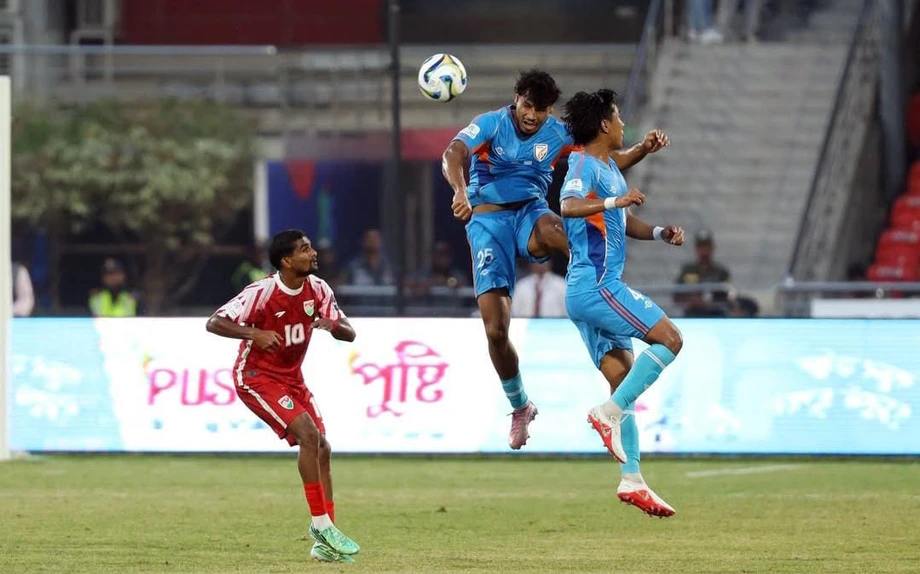
India advance, but Maldives make them work
Suhail Ahmad Bhat scored his third goal in two matches and Priyansh Dubey blocked a stoppage time shot with his face as India beat Maldives 1-0 at the National Stadium in Dhaka on Wednesday, November 11, 2026. The defending champions finished top of Group B with six points and advanced to the SAFF Championship semi-finals.
Contents
- India advance, but Maldives make them work
- Rabeeh creates the opening, Bhat finishes it
- Dubey protects the lead under late pressure
- Seven changes reshape India's starting team
- Possession brings control, but the finish stays tense
- A changing squad limits preparation
- Bhat makes the most of a rare run of games
- Maldives leave without a goal
- Coaches raise concerns over food and hospitality
- The route to November 17
- Key Points
Bhat converted a penalty in the 38th minute after Abdul Rabeeh was fouled inside the area. Dubey then protected that advantage through a difficult finish, denying Maldives the goal that would have ended India's hopes of a second successive victory.
India will face Group A runners-up Bhutan on November 14 at 14:30 IST. Pakistan qualified alongside India with three points, while Maldives departed with no points and no goals from their two matches. The final is scheduled for November 17, leaving India two victories away from a record 10th South Asian Football Federation championship.
Coach Naushad Moosa achieved qualification despite substantial changes to his team and competing demands from club football and India's senior squad, which was in New Zealand for two friendlies. After the match, his attention also turned to food arrangements at the team hotel, with both coaches expressing dissatisfaction over aspects of their stay.
Rabeeh creates the opening, Bhat finishes it
Bhat threatened as early as the fourth minute after receiving a pass from Brison Fernandes, testing Maldives goalkeeper Hussain Shareef near his near post. India needed only a draw to advance, but their early attacking intent showed they were looking for more than the minimum result.
Rabeeh produced the decisive moment by taking possession from Hussain Sifaau Yoosuf. The Maldives defender brought him down inside the penalty area, giving India a penalty and Bhat a direct opportunity from the spot.
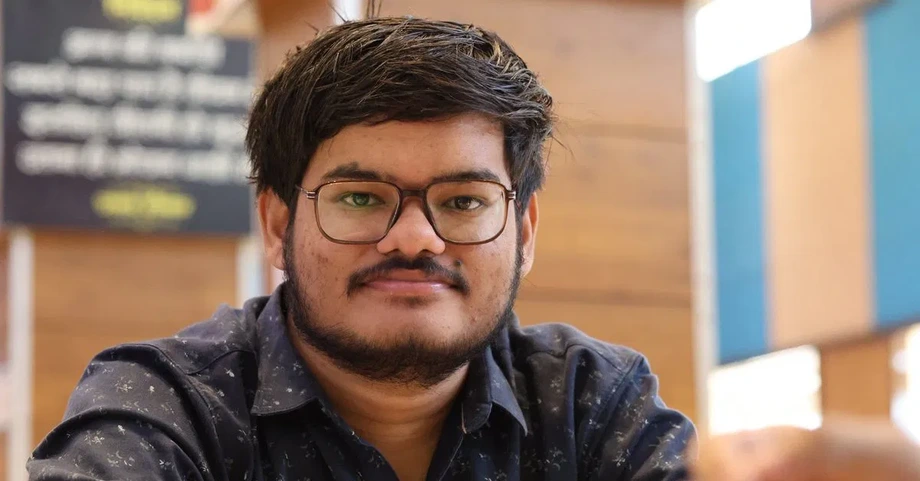
Bhat sent Shareef in the wrong direction and placed the ball into the bottom left corner. His finish supplied the only goal of the match and continued a productive tournament after his two goals against Pakistan.
The forward has scored three of India's four goals in Dhaka, accounting for 75% of their group stage total. Manglenthang Kipgen scored the other in the opening victory. Bhat was also level with Pakistan's Najeeb Ullah on three goals in the tournament scoring list after the Maldives match.
Dubey protects the lead under late pressure
Dubey, selected in place of Arsh Anwer Shaikh, became central to the result as Maldives improved after the interval. Substitute Muzdhaan Hassan helped create opportunities, while Ethan Ibrahim Zaki troubled India's defence as the eliminated side searched for a way back.
Ali Hamdhaan tested Dubey with a free kick in the 79th minute. The goalkeeper saved it, then stopped an effort from Hassan five minutes later. Those interventions kept India ahead as their opponents pushed more players forward.
Zaki had the most dramatic late opportunity. During stoppage time, Dubey rushed off his line and blocked the attempt from close range with his face. India held on for their first clean sheet of the tournament, meaning they completed the match without conceding.
The sequence gave Moosa a better ending than the one he had watched against Pakistan. India again faced pressure late in a match, but this time their goalkeeper ensured it did not change the score.
Seven changes reshape India's starting team
Moosa retained only four starters from the Pakistan match: Abhishek Suryavanshi, Muhammed Uvais, Bhat and Ricky Shabong. The seven changes included Dubey's introduction in goal and a new captain, Chinglensana Singh Konsham, after Bijoy Varghese left to join India's senior squad in New Zealand.
India's starting side also included Khaiminthang Lhungdim, Sandip Mandi, Rabeeh, Macarton Nickson and Fernandes. Uvais contributed to attacks from the flank, linking with Fernandes and helping move possession into the attacking third, the section of the pitch nearest the opposition goal.
Moosa made two substitutions at the interval, introducing Kipgen and Irfan Yadwad for Rabeeh and Nickson. Vishnu PV replaced Bhat in the 65th minute, and Ebindas Yesudasan came on for Fernandes in the 78th.
Yadwad offered another shooting option after coming on, attempting three shots, including one on target. India nevertheless finished without a goal from open play, leaving Bhat's penalty as their only reward for their attacking work.
Possession brings control, but the finish stays tense
India held more than 55% of possession against both Pakistan and Maldives. Moosa's approach used a 4-3-3 formation, with four defenders, three midfielders and three attacking players, and placed value on passing along the ground.
India also pushed their defensive line high up the pitch. Keeping defenders closer to midfield shortened the distance between players and helped them challenge quickly when possession was lost. The aim was to win the ball back before opponents could organise an attack.
Maldives showed how difficult it can be to sustain that control throughout a match. India struggled to turn several opportunities to counterattack into clear chances after taking the lead, allowing the contest to remain within reach of a single equaliser.
Against Pakistan, India had built a 3-0 lead before conceding twice in added time. Their opening win over Pakistan had prompted Moosa to call for better concentration and game management, meaning smarter decisions about keeping possession, controlling the pace and protecting a lead.
Dubey's saves delivered a better result against Maldives, though the late chances showed that India still had work to do in closing matches out. Their two wins produced four goals scored and two conceded, giving them a goal difference of plus two.
A changing squad limits preparation
India's commitments in New Zealand and the Indian Super League have repeatedly altered the group available to Moosa. The Under-23 coach has been managing a younger side in Dhaka while senior national team coach Khalid Jamil oversees the squad facing New Zealand.
Varghese, Muhammad Suhail and Liston Colaco joined the senior group after the Pakistan match. Farukh Choudhary, Noufal PN and Hmingthanmawia Ralte returned to their clubs, while Ronney Willson Kharbudon and Suresh Singh Wangjam missed the Dhaka trip through injury.
Moosa described a wider turnover after the opening game, saying five players returned home, 10 joined and two more left for New Zealand. He said he had only two days to train with the incoming players. A precise, reconciled squad total was not established.
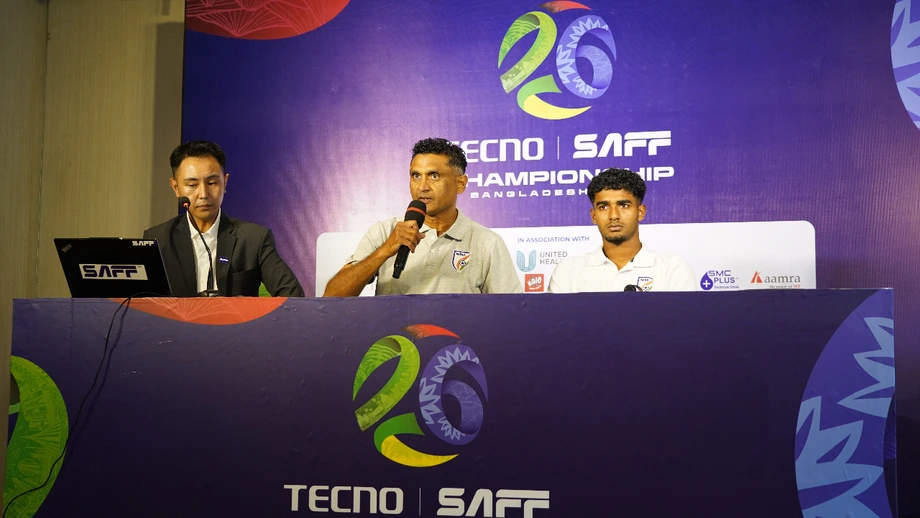
Moosa, India's head coach for the tournament, explained that his focus was on making the available players work together:
As a coach, it's important for me to look for solutions rather than thinking about what's not happening. Whatever I've got, I need to work with that.
Bhat makes the most of a rare run of games
Bhat's three goals in two international tournament matches contrast with his limited opportunities at Mohun Bagan Super Giant. The 21-year-old had made 19 Indian Super League appearances across four seasons, with only one start.
His playing time this season had been especially scarce: five minutes across Mohun Bagan's first five league games. In Dhaka, he has instead been a regular attacking presence and the scorer of both goals that put India ahead in their group matches.
Bhat registered seven touches inside the Maldives penalty area, showing how often he reached the spaces where a striker can threaten goal. His early chance and successful penalty followed the two finishes that had helped India take control against Pakistan.
Moosa replaced him after 65 minutes against Maldives. With the semi-final three days later, the immediate task is to keep India's most productive scorer ready while finding more goals from the players around him.
Maldives leave without a goal
Maldives lost 3-0 to Pakistan before their narrow defeat by India, completing the group stage with four goals conceded and none scored. It was the first time they had finished a SAFF Championship campaign without scoring and was described as their worst finish in the competition.
Their second half against India offered a stronger attacking response than the final standings might suggest. Hassan's introduction helped create opportunities, and Zaki came close to earning a late equaliser. Dubey's interventions kept those efforts from producing a goal.
Pakistan finished second with five goals scored, three conceded and a goal difference of plus two, the same goal difference as India. India's two victories, compared with Pakistan's one, placed the defending champions three points clear at the top.
Coaches raise concerns over food and hospitality
Moosa said the hotel served the players the same menu every day. Breakfast concerns had been resolved after discussions, but talks about lunch and dinner were continuing through team management and the football federation.
The India coach explained why he wanted more suitable meals after matches:
After a game, players need good food. On match days, they don't eat much before the game, so they need a proper meal afterwards. But when we go there, it's the same food every day.
Maldives coach Istvan Urbanyi also expressed dissatisfaction, comparing the arrangements with previous events in Malé, where he said teams stayed at the five-star Pan Pacific Hotel and received a varied menu three times a day. He thanked the Bangladesh Football Federation for its hospitality while saying the current provision fell behind that experience.
SAFF is the main tournament organiser, while the Bangladesh Football Federation says its role is limited to providing logistical support. Commercial rights holder TSA Sports and Entertainment oversees accommodation, transport and other arrangements. Urbanyi said matters away from the pitch could put pressure on players, while discussing food as one part of the team's experience.
India's afternoon matches also attracted criticism amid Dhaka's humid conditions, while hosts Bangladesh played in the evening. Moosa said his players were accompanied by security when going out and had experienced no security problems during their stay.
The route to November 17
India now turn from a group stage of two matches to knockout football, where defeat ends their title defence. Bhutan are their next opponents, with the semi-final scheduled for November 14 at 14:30 IST.
The campaign has followed a short sequence of decisive dates:
- November 5: India beat Pakistan 3-2, with Bhat scoring twice and Kipgen adding the other goal.
- November 8: Pakistan beat Maldives 3-0, securing their first points in Group B.
- November 11: India defeated Maldives 1-0 and completed the group stage with six points.
- November 14: India face Bhutan in the semi-final.
- November 17: The SAFF Championship final is scheduled.
Moosa's team enter the semi-final with a scorer in form and a goalkeeper who delivered under pressure. Their clearest task is to turn longer spells of possession into more chances and reduce the late pressure that made both group victories tense.
Key Points
- India beat Maldives 1-0 in Dhaka through Bhat's penalty in the 38th minute.
- Dubey made crucial late saves, including a stoppage time block with his face.
- India topped Group B with six points; Pakistan also advanced with three.
- Bhat scored three of India's four group stage goals.
- Maldives exited without a point or a goal.
- India face Bhutan on November 14 at 14:30 IST, with the final scheduled for November 17.
- Both coaches raised hospitality concerns, and discussions over India's lunch and dinner arrangements continued.