Case closed after death sentence and months of legal efforts
Saudi Arabia's Public Prosecution decided on November 9, 2026, to discontinue proceedings against Sri Lankan national Sivarasa Anojan, ending a case over a Facebook post that had brought him a prison sentence, a fine of 3 million Saudi riyals and, later, a death sentence.
Contents
- Case closed after death sentence and months of legal efforts
- What the latest decision changes
- How a dispute in Sri Lanka reached Saudi Arabia
- An appeal brought a harsher sentence
- The key dates and conflicting details
- Lawyers and diplomats worked on the case
- His family receives news of the outcome
- Key Points
Sri Lanka's Minister of Foreign Affairs, Foreign Employment and Tourism, Vijitha Herath, announced the outcome on November 11. The government said all previous sentences were now no longer in force and that arrangements were being made to bring Anojan home.
Anojan, a Sri Lankan Tamil who had been working in Saudi Arabia, remained in custody when Herath spoke. The minister expected him to return to Sri Lanka within one or two weeks. The Foreign Ministry was coordinating with Saudi authorities to complete the remaining administrative formalities; no exact departure date or explanation for his continued custody was given.
The decision ends the remaining proceedings after the Saudi Supreme Court overturned his death sentence in October. For his family, it brings the prospect of his return after an appeal process that initially resulted in a much harsher punishment.
What the latest decision changes
Saudi prosecutors decided against taking the case any further following additional investigations. Sri Lanka's government said the closure left all earlier sentences against Anojan without force, removing the remaining penalties that had continued after the death sentence was overturned.
The Public Prosecution is the authority responsible for pursuing criminal cases. Its November decision brought the prosecution to an end, while the October Supreme Court decision had dealt with the death sentence and sent the matter back for further proceedings.
Herath described Anojan's current legal position at the press briefing in Colombo. In remarks translated from Sinhala, the minister said:
Accordingly, there is now no case against him in a Saudi court.
Sri Lankan officials are now working on his journey home. The minister's estimate of one or two weeks placed that return around the middle to latter part of November, subject to completion of the arrangements with Saudi authorities.
How a dispute in Sri Lanka reached Saudi Arabia
The case began with an online argument connected to a religious pilgrimage in Sri Lanka. A group travelling on foot from the north to the Kataragama temple, a prominent shrine associated with the Hindu deity Murugan, had taken a dog named Subramaniam with them.
A photograph showing a Muslim youth striking the dog while the group passed through Kalmunai circulated on social media. The incident prompted public debate and complaints to police. The youth was arrested and later released on bail. He said he had struck the animal unknowingly and publicly apologised.
Discussion continued on Facebook. During that exchange, a Muslim user's comment portrayed a Hindu deity in an offensive way. Anojan responded with a post insulting the Prophet Muhammad, then deleted it shortly afterwards.
Screenshots of Anojan's post continued to circulate after its deletion. The content was translated into Arabic and shared, and a complaint was subsequently made in Saudi Arabia, where he was employed. Saudi authorities arrested him following that complaint.
The sequence explains how an argument about an incident in Sri Lanka became a criminal case abroad: the post reached people beyond its initial audience through screenshots and translation, eventually reaching authorities in the country where Anojan lived and worked.
An appeal brought a harsher sentence
A Saudi court initially sentenced Anojan to five years in prison and imposed a fine of 3 million Saudi riyals. His parents sought help through Sri Lanka's Foreign Ministry to challenge the judgment.
The appeal led to a death sentence from a court in Saudi Arabia's Eastern Province. His legal team then challenged that punishment before the Supreme Court, which set it aside in a ruling dated October 13, 2026, and returned the case to the Al-Ahsa Criminal Court for further proceedings.
At a hearing on October 27, 2026, the Al-Ahsa Criminal Court referred the matter to the Public Prosecution for further investigation in accordance with the applicable legal procedures. After that investigation was completed, the Public Prosecution decided not to pursue further proceedings and formally closed the case.
An appeal asks a higher court to review a lower court's decision. In Anojan's case, the first appeal resulted in a more severe punishment, making the subsequent Supreme Court challenge central to the effort to secure his release.
The October ruling removed the death sentence, while other penalties remained. Sri Lankan officials continued legal and diplomatic efforts until prosecutors decided in November to close the case completely. Those were two separate stages in bringing the proceedings to an end.
The key dates and conflicting details
The government's account places the decisive developments between September and November 2026. The chronology records a death sentence, its reversal and then the end of the prosecution:
- September 17, 2026: The Eastern Province Appeals Court imposed the death sentence, according to the chronology circulated with the Foreign Ministry's announcement.
- October 14, 2026: That chronology dates the reversal of the death sentence to this day.
- October 27, 2026: The Al-Ahsa Criminal Court referred the matter to the Public Prosecution for further investigation under applicable legal procedures.
- November 9, 2026: Saudi Public Prosecution decided not to pursue further proceedings.
- November 11, 2026: Herath announced the outcome and met Anojan's family as arrangements for his return continued.
Herath's Sinhala remarks at the Colombo briefing gave September 27 rather than September 17 for the appeal court's death sentence. A further account of the government's announcement dated the Supreme Court reversal to October 13 rather than October 14, and specified that the case was returned for further proceedings.
The November 9 decision is consistently identified as the point when prosecutors ended the remaining case. It followed further investigation after the Supreme Court's intervention.
Lawyers and diplomats worked on the case
Herath credited President Anura Kumara Dissanayake's guidance, intervention by the Foreign Ministry and the work of diplomatic officials with helping secure the outcome.
The minister also thanked the Saudi government and judiciary, diplomatic institutions and officials from both countries, and the Sri Lankan lawyers who travelled to Saudi Arabia to assist Anojan. The government's account specifically recognised legal experts who went to Riyadh and the diplomatic engagement of the Sri Lankan Embassy.
The legal and diplomatic work continued after the death sentence was overturned because Anojan still faced other penalties. Lawyers pursued the case through the Saudi legal process, while officials maintained contact with the Saudi authorities over his position and eventual return.
Sri Lanka's government welcomed the formal closure and thanked Saudi authorities for their cooperation. The Foreign Ministry's immediate task has now moved to completing the administrative steps needed for Anojan to leave Saudi Arabia and travel home.
His family receives news of the outcome
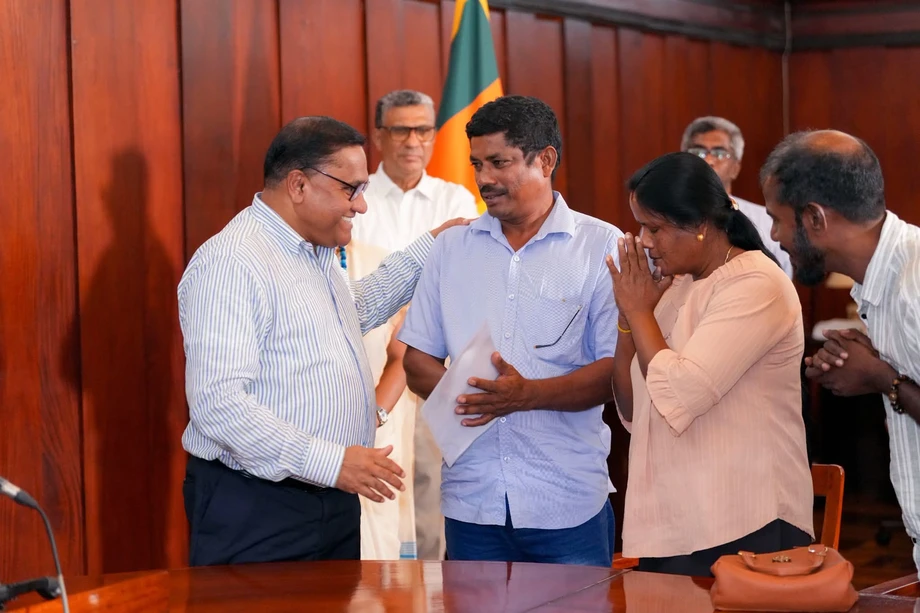
Anojan's relatives visited the Foreign Ministry on November 11 and met Herath. The minister briefed them on the end of the case and the arrangements under way for his return.
The family thanked President Dissanayake, the Foreign Ministry and the government institutions and officials involved in securing the outcome, according to the ministry's account of the meeting. Their visit followed the parents' earlier efforts to obtain assistance with an appeal against the original prison sentence and fine.
For the family, the developments have come in stages: a challenge to the initial punishment, an appeal that brought a death sentence, a Supreme Court ruling removing that sentence, and finally the prosecution's decision to end the case.
The next expected step is Anojan's return to Sri Lanka. Herath said the government had made the necessary interventions and expected to bring him home within one or two weeks of the November 11 announcement.
Key Points
- Saudi Public Prosecution decided on November 9, 2026, to discontinue proceedings against Sivarasa Anojan.
- Sri Lanka's government said all previous sentences were no longer in force.
- The case concerned a Facebook post that circulated through screenshots and an Arabic translation.
- Anojan initially received five years in prison and a fine of 3 million Saudi riyals, followed by a death sentence on appeal.
- The Supreme Court's ruling dated October 13, 2026, overturned the death sentence and returned the case to the Al-Ahsa Criminal Court, which referred it for further investigation on October 27 before prosecutors closed the remaining case.
- Herath said Anojan remained in custody but was expected home within one or two weeks of November 11.