Deadly raid deepens Sri Lanka's Easter attack crisis
Fifteen people, including six children, were killed when a raid on a suspected militant hideout in eastern Sri Lanka ended in gunfire and three explosions on Friday, 26 April 2019. The confrontation in Sainthamaruthu, in the Kalmunai area, came as security forces searched for people linked to the Easter Sunday bombings that killed more than 250 people at churches and hotels.
Contents
- Deadly raid deepens Sri Lanka's Easter attack crisis
- What happened at the house
- Islamic State's claim and the evidence recovered
- Arrest totals and the remaining search
- The Easter attacks and the suspected ringleader
- Emergency measures and a week of escalating searches
- Residents flee and churches suspend gatherings
- Missed warnings put leaders under pressure
- Key Points
Police said three men inside the house detonated explosives after occupants opened fire on approaching troops. A military spokesman described a gun battle lasting more than an hour. A search on Saturday morning found bodies inside and outside the damaged property, while a wounded woman and child were taken to hospital.
The deaths exposed the immediate dangers of the continuing search operation: suspected bombers remained at large, children were inside a property containing explosives, and nearby residents fled their homes. About 600 Muslims took shelter in a school as the confrontation unfolded, according to residents.
President Maithripala Sirisena vowed to search every home in the country. Authorities were using emergency powers to pursue suspects, but the scale of the investigation remained uncertain. Arrest totals ranged from 70 in an initial account to more than 100 in later reporting, while estimates of people suspected of Islamic State links also differed.
What happened at the house
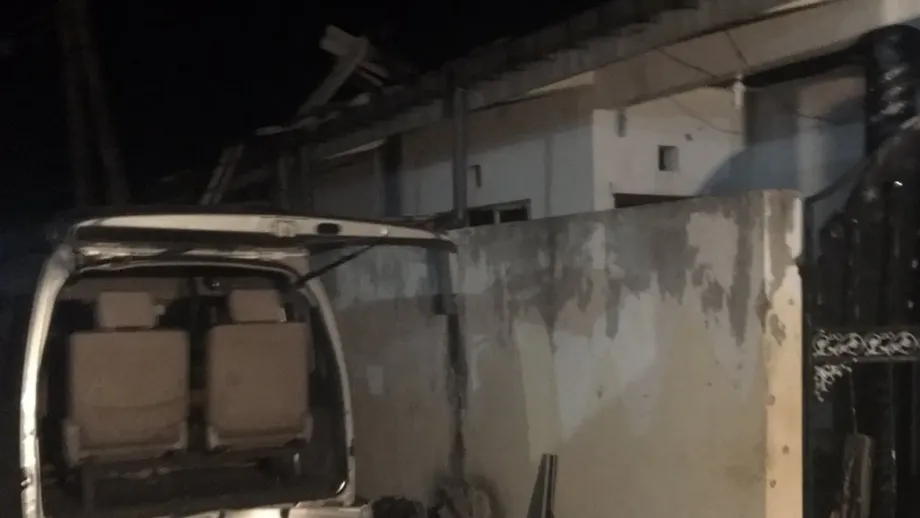
The raid followed a tip about a property in Sainthamaruthu, a predominantly Muslim coastal town roughly 360 to 370 kilometres from Colombo. Accounts also identify the location as Saindamarudu in the Kalmunai area. The suspects had reportedly arrived a day or two after the Easter bombings, moving boxes from a pale grey minivan into a low house behind a high wall and black metal gate.
Police said gunmen fired as troops approached on Friday evening. During the ensuing battle, three explosions tore through the house, damaging its roof and a wall. Police reported no casualties among the security forces.
The account of Saturday's search described three men, three women and six children found dead inside, with three other men outside who had been shot. Police described those outside as suspected suicide bombers. Another account said at least one civilian was killed in the crossfire. It was not clear how that civilian fitted into the published breakdown of the 15 deaths.
Police spokesman Ruwan Gunasekara said most of the victims were believed to be militants. That assessment did not establish the identity or role of every adult killed, and the six children must be distinguished from the suspected fighters. The wounded woman and child were rescued alive, but their identities had not been conclusively established.
Islamic State's claim and the evidence recovered
Islamic State, also known as IS or ISIL, claimed on Saturday that three of its members had fought police for several hours before detonating explosive vests. Its Amaq outlet provided no evidence for the claim. Police accounts supported the occurrence of gunfire and three explosions, but the group's statement did not independently establish who the men were or how the operation was directed.
Separate searches in the surrounding area produced material investigators linked to the Easter attackers. A military spokesman said a nearby raid recovered Islamic State flags, 150 sticks of gelignite, thousands of steel pellets and a drone camera. Gelignite is an explosive, while steel pellets can become lethal fragments when packed around a bomb.
A raid in Sammanthurai, about nine miles from the scene of the gun battle, reportedly uncovered an Islamic State flag and uniforms resembling those worn by the suspected Easter bombers in a video pledging allegiance to the group's leader. These discoveries supported the investigation into local militant activity, but did not by themselves establish the extent of direction from Islamic State abroad.
Footage of the damaged Sainthamaruthu house also showed explosives, batteries, a generator and a drone. No confirmed purpose for the drone was given. Its presence should not be treated as proof that militants planned an aerial attack.
Arrest totals and the remaining search
The number of people detained rose as searches continued, but reports gave different totals. The initial account put arrests at 70. A subsequent account said 10 arrests on Friday brought the total since Easter Sunday to 80. Other reporting placed at least 94 people in custody, while a later account cited police as saying more than 100 suspects had been arrested.
These figures cannot be combined into one verified count. They may reflect updates at different stages of the operation, but no single reconciliation was given. Arrest also does not establish guilt or show that every detainee belonged to the group responsible for the bombings.
Estimates of the remaining threat were similarly unsettled. Sirisena said intelligence services believed about 130 people linked to Islamic State were in Sri Lanka and that police were hunting 70 still at large. Another account put his estimate at about 140 people with suspected links.
Prime Minister Ranil Wickremesinghe also put the number still being sought at about 70, describing them as supporters and sympathisers of the cell responsible for the Easter attacks. He warned that some could carry out suicide bombings.
The difference between suspects, detainees and people still being sought matters. Those categories are not interchangeable, and the figures do not support a reliable calculation of how many members of the bombing network had been captured.
The Easter attacks and the suspected ringleader
The search followed coordinated bombings on Sunday, 21 April, targeting churches crowded for Easter worship and hotels used by tourists. Reports at this stage put the death toll at at least 250 or at least 253, with more than 500 people wounded. The precise published toll therefore varied, although each account described mass casualties.
Authorities blamed the local extremist group National Thowheeth Jama'ath, whose name also appeared under other English spellings. Islamic State claimed a role in the attacks. Investigators suspected nine people of carrying out the bombings.
Sirisena said the alleged ringleader, Zahran Hashim, died in the attack on Colombo's Shangri-La hotel. Officials were conducting DNA tests to establish his identity conclusively. Police also believed the woman and child rescued in Sainthamaruthu might be his wife and daughter, but that identification remained provisional.
Two suspected bombers were reported to be sons of spice trader Mohammad Yusuf Ibrahim, who was detained and questioned. One son, identified as Ilham Ibrahim, was said to have attacked the Shangri-La alongside Hashim. The other reportedly targeted the Cinnamon Grand hotel's restaurant.
Rohan Karr, the Cinnamon Grand's manager, described how the suspected bomber checked in the previous evening, then entered the restaurant the next morning carrying a rucksack. Karr said the man ate and waited for guests to gather near the buffet before striking.
He sat, he ate, he waited for people to gather towards the buffet. When he saw a bigger crowd that was the time he decided, this is the time for me to create maximum damage.
Emergency measures and a week of escalating searches
Sirisena banned National Thowheeth Jama'ath and another suspected radical group, identified in one account as Jamathei Millathu, under emergency measures. Troops were deployed to support police searches. The ban was announced as officials sought both suspected attackers and people believed to have supported them.
The sequence shows how quickly the response moved from investigating the Easter bombings to confronting an armed group at a residential property:
- 21 April: Coordinated bombings struck churches and hotels on Easter Sunday.
- 22 or 23 April: The suspected occupants reportedly moved into the Sainthamaruthu house.
- 23 April: Sirisena declared a conditional state of emergency, according to one account.
- 26 April: Security forces raided the house, triggering gunfire and three explosions.
- 27 April: Searches documented the deaths, Islamic State claimed involvement in the confrontation, and Sirisena announced bans on two groups.
No firm date was given for completing the nationwide searches. Sirisena said the suspects would be arrested in the coming days, but that was an assurance rather than a verified timetable.
Residents flee and churches suspend gatherings
The operation disrupted a predominantly Muslim neighbourhood whose residents feared further violence. About 600 people sheltered in a school, and neighbours left the street around the damaged house. Security was increased around mosques for Friday prayers, while some Muslims stayed away because they feared revenge attacks.
The Catholic Church suspended public Sunday Masses until further notice. Cardinal Malcolm Ranjith, the archbishop of Colombo, said he had seen a leaked security document warning of further attacks and urged parishioners to remain indoors and pray.
A small service at the cardinal's residence was planned for broadcast on national television. Another service was reported as scheduled in a tent outside St Sebastian's church in Negombo, where more than 100 people had been killed during Easter Mass. These arrangements were described separately from the broader suspension of church gatherings.
The restrictions meant that the effects of the attacks extended beyond the bombed buildings. Displaced Muslim residents, Catholics unable to attend their usual services and people avoiding Friday prayers were all facing immediate changes to daily life because of the continuing threat.
Missed warnings put leaders under pressure
The government faced mounting anger over its failure to act on a foreign intelligence warning that the local extremist group was planning suicide attacks on churches. Police chief Pujith Jayasundara and senior defence ministry official Hemasiri Fernando were reported to have resigned over the failures.
Cardinal Ranjith said church leaders had not been informed of the warnings. Describing his reaction as the head of Colombo's Catholic community, he said:
I felt betrayed a little bit. I felt sad. It's a very serious lapse on the part of the security agencies that they didn't tell us about it.
Wickremesinghe apologised on Friday on behalf of the government:
We take collective responsibility and apologise to our fellow citizens for our failure to protect victims of these tragic events.
The prime minister also said the warnings had not reached him and rejected the suggestion that he should resign for failing to act on information he did not receive. The communication breakdown drew renewed attention to his strained relationship with Sirisena. The president had dismissed him in October 2018, before court rulings led to his reinstatement in December.
The immediate unresolved issues were concrete: the identities of those killed in the raid, confirmation of Hashim's death through DNA testing, the number and capabilities of suspects still at large, and responsibility for the missed warnings. No hearing dates or deadlines for resolving those questions were given.
Key Points
- Fifteen people, including six children, died during the 26 April raid in Sainthamaruthu.
- Police described a gun battle and three explosions. A wounded woman and child survived.
- Islamic State claimed involvement in the confrontation without providing evidence.
- Reported arrest totals ranged from 70 initially to more than 100 later. About 70 people were said to remain at large.
- Nearby searches recovered explosives, steel pellets, Islamic State flags and other equipment.
- About 600 Muslim residents sought shelter in a school, while Catholic public worship was suspended.
- Missed intelligence warnings prompted resignations and a government apology.