
A torpedo strike brings the war to Sri Lanka's doorstep
A US submarine sank the Iranian warship IRIS Dena off southern Sri Lanka on March 4, 2026, leaving Sri Lankan rescuers to recover 87 bodies and bring 32 survivors ashore. The attack near Galle extended the fighting between the United States and Iran into the Indian Ocean, far from Iran's coast, and put Sri Lanka at the center of a difficult rescue and diplomatic operation.
Contents
- A torpedo strike brings the war to Sri Lanka's doorstep
- What rescuers found off Galle
- The location accounts do not match
- A warship returning from events in India
- Bushehr's engine failure creates a second crisis
- Why rescue and military custody are different
- Neutrality does not settle every legal question
- The wider naval campaign and Australia's connection
- Later reports show an unresolved maritime problem
- Key Points
The Dena was returning from naval events hosted by India when it was struck. Within days, Sri Lanka also took custody of a second Iranian naval vessel, IRIS Bushehr, after its captain requested help following an engine failure. Those two incidents created separate responsibilities: saving people from the water, treating the wounded, and deciding how a neutral country should handle a foreign military ship and its personnel.
US Defense Secretary Pete Hegseth publicly confirmed the submarine attack at a Pentagon briefing and described the Dena as Iran's "prize ship." He presented the sinking as part of the American campaign against Iran's navy.
An American submarine sunk an Iranian warship that thought it was safe in international waters. Instead, it was sunk by a torpedo.
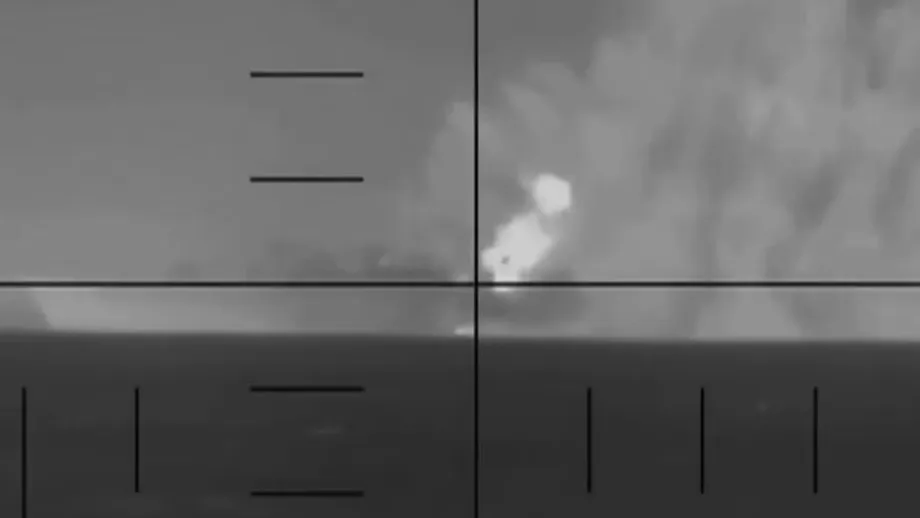
Footage released by the US Department of Defense showed an underwater explosion beneath the Iranian vessel, followed by a large plume of water. The ship appeared to break apart. The footage documented the strike, but did not settle the competing accounts of how many people were aboard or the precise location of the attack.
What rescuers found off Galle
Sri Lankan Foreign Minister Vijitha Herath told Parliament on March 4 that an Iranian naval vessel was in distress about 40 nautical miles from Galle Port. Sri Lanka's navy and air force dispatched ships and aircraft after receiving the distress signal.
Navy spokesman Commander Buddhika Sampath said the warship had disappeared by the time rescuers reached the location. He described finding "only some oil patches and life rafts," rather than an intact vessel.
We found people floating on the water.
The 32 survivors were admitted to hospital in Galle. Dr. Anil Jasinghe, a senior health ministry official, said one was in critical condition, seven were receiving emergency treatment and the others had minor injuries. Recovered bodies were brought ashore and taken to a temporary mortuary at the hospital.
The rescue figures were consistent across the initial accounts: 87 bodies recovered and 32 people rescued, accounting for 119 people. The total number aboard was not. Sri Lankan authorities initially described a complement of 180, while Iranian Foreign Minister Abbas Araghchi subsequently said the Dena had carried "almost 130" crew.
Using the Sri Lankan figure, 61 people were not accounted for in the initial recovery totals. One account rounded that number to about 60. Araghchi's lower estimate would leave a much smaller gap. Neither figure should be treated as a final missing persons count without a confirmed passenger list and an updated search assessment.
The location accounts do not match
The distance from Sri Lanka is another unresolved detail. Herath's first parliamentary statement put the distressed vessel about 40 nautical miles from Galle Port. An account of the navy's initial announcement gave the same approximate distance.
President Anura Kumara Dissanayake later said the Dena had been attacked about 19 nautical miles from Galle Port and that the distress signal came from that area. Reporting based on that location placed the incident in the contiguous zone near Sri Lanka's territorial sea, while other accounts described it more broadly as occurring in international waters.
These descriptions are not necessarily contradictory in legal terms. The territorial sea generally extends up to 12 nautical miles from a coastal state's legal baseline. The contiguous zone can extend to 24 nautical miles and permits certain limited controls, but it is not equivalent to territorial waters.
A distance measured from Galle Port is not automatically the same as a distance measured from the legal baseline. Without verified coordinates, the 19 nautical mile and 40 nautical mile accounts cannot be reconciled confidently. What both establish is that Sri Lanka was close enough to become the immediate rescue authority.
A warship returning from events in India
The Dena was one of Iran's newer warships, equipped for operations far from home. Its weapons included heavy guns, surface to air missiles, anti ship missiles and torpedoes. It also carried a helicopter.
Before the sinking, it had participated in naval events hosted by India and was heading back toward Iran. India's Defense Ministry said at least 74 countries joined those events. The US Navy also participated, conducting reconnaissance aircraft and maritime patrol drills.
India received a distress signal from the Dena, but Sri Lanka's rescue effort was already underway by the time India launched its own search and rescue operation, according to the ministry's account.
The Dena had been placed under US Treasury sanctions in February 2023. That designation was separate from the question of whether an attack on it was lawful during armed conflict. Sanctions restrict dealings with a designated entity or asset; they do not themselves authorize a military strike.
Araghchi called the sinking an "atrocity at sea" and said the United States would "bitterly regret" the attack. His response contrasted with Hegseth's portrayal of the sinking as a military success, illustrating the sharp disagreement over an attack on a vessel returning from an international naval gathering.
Bushehr's engine failure creates a second crisis
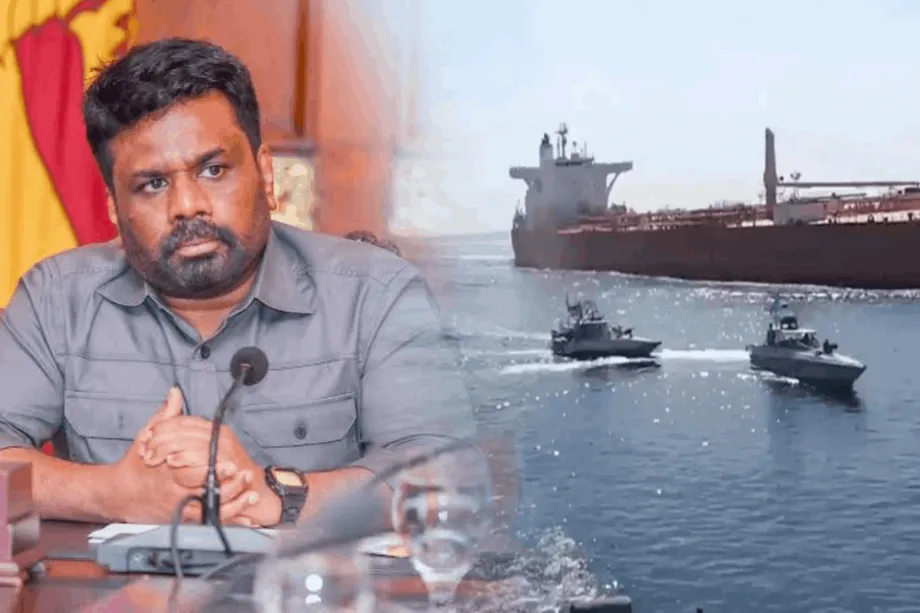
After the Dena sank, the Iranian logistics vessel IRIS Bushehr sought assistance while anchored outside Sri Lankan waters. Dissanayake said one of its engines had failed and that Sri Lankan authorities discussed the request with Iranian officials and the captain before deciding to take control of the ship.
Commander Sampath initially said 204 Iranian sailors were transferred to Welisara Naval Base near Colombo. They underwent border procedures and medical checks, with no health problems identified. About 15 remained aboard to help Sri Lankan personnel interpret operational instructions, manuals and logs.
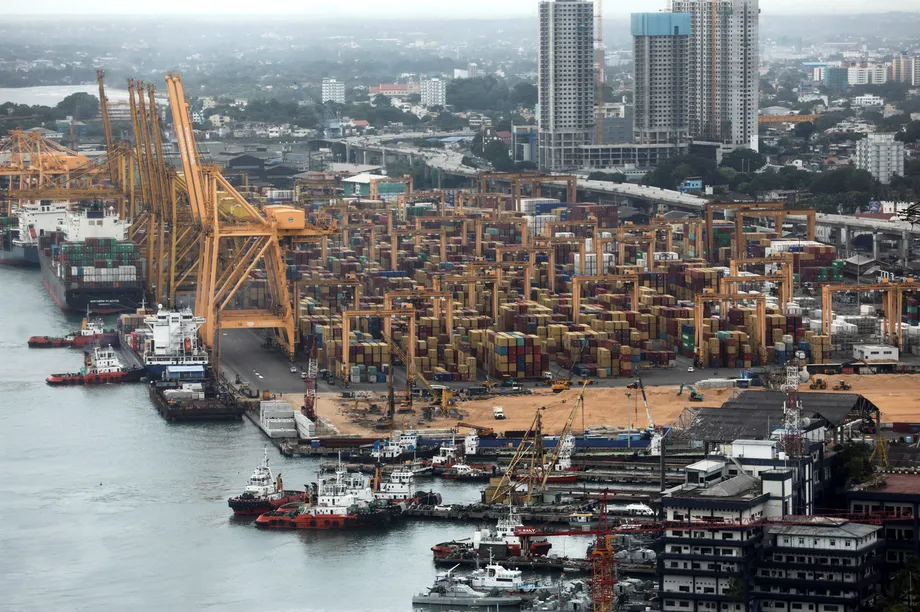
The plan was to move the Bushehr to Trincomalee on Sri Lanka's eastern coast and hold it in Sri Lankan custody until further notice. Later reporting said it had been anchored there since March 9.
Dissanayake explained that permission to enter port required consideration of Sri Lanka's international obligations, rather than a simple choice between supporting Iran or the United States.
We have to understand that this is not an ordinary situation. It's a request by a ship belonging to one party to enter into our port. We have to consider that according to the international treaties and conventions.
The sequence developed over several months:
- March 4, 2026: A US submarine sank the Dena off Galle. Sri Lanka launched a rescue operation.
- March 5: Dissanayake explained the decision to assist the Bushehr after its engine failure.
- March 6: Sri Lanka reported bringing 204 Bushehr sailors ashore.
- March 9: Later reporting identified this as the start of the Bushehr's stay in Trincomalee.
- September 11: Parliament discussed the remaining Iranian crew and requests to replace them.
- September 15: A shipping observation identified 21 vessels linked to Iran near Sri Lanka.
Why rescue and military custody are different
Herath said Sri Lanka acted under the United Nations Convention on the Law of the Sea, known as UNCLOS. Kusal Kavinda Amarasinghe, a lawyer and lecturer at the University of Colombo's Faculty of Law, identified Article 98(2) and the 1979 International Convention on Maritime Search and Rescue as relevant to Sri Lanka's rescue responsibilities.
Article 98(2) concerns a coastal state's duty to promote adequate and effective search and rescue services. The central distinction is between providing emergency assistance at sea and determining the status of military personnel after they reach land. Saving shipwrecked sailors does not, by itself, mean joining their country's war.
H.M.G.S. Palihakkara, a former Sri Lankan foreign secretary and former permanent representative to the United Nations, said Sri Lanka had acted responsibly and impartially by responding to the distress call and providing medical care.
You could not have ignored the distress call. Even the attacking powers cannot leave shipwrecked sailors dying. That is the law.
Amarasinghe said the subsequent treatment of Iranian military personnel also engaged international humanitarian law. He cited Article 5 of the Second Geneva Convention and Article 4(B)(2) of the Third Geneva Convention in explaining protections and internment obligations involving neutral states.
Internment means holding military personnel to prevent them from returning to combat. It is distinct from criminal punishment. Amarasinghe said the sailors could receive protections associated with prisoners of war even if they were not technically classified as prisoners of war.
He also cited Article 118 of the Third Geneva Convention in arguing that release should follow the end of active hostilities. That is a legal interpretation, not a published Sri Lankan ruling on every sailor's status. Later reports of repatriation make the government's precise legal reasoning particularly relevant.
Neutrality does not settle every legal question
Dissanayake said Sri Lanka's decisions were guided by neutrality and humanitarian principles. He rejected the idea that assistance required submission to either side.
We have followed a very clear stance. We will not be biased to any state nor we will be submissive to any state.
Marc-André Franche, the UN resident coordinator in Sri Lanka, welcomed the intervention as reflecting the country's commitment to neutrality, peace and multilateral cooperation.
There were differing legal assessments of what happened after the Bushehr entered port. Katsuya Yamamoto, director of the Strategy and Deterrence Program at the Sasakawa Peace Foundation in Tokyo, said a neutral Sri Lanka could permit the vessel to enter. He argued that the ship would remain under Iranian jurisdiction once docked and that Sri Lankan authorities lacked grounds to inspect it unless Colombo sided with Washington.
That assessment sits alongside Sri Lanka's description of taking the vessel into its custody. Port entry, jurisdiction aboard a foreign warship, physical control of the vessel and the status of its crew are related but separate issues. No detailed agreement resolving those questions was identified.
Amarasinghe said Sri Lanka could notify the United Nations if another state threatened its sovereignty over the detainees and potentially pursue proceedings at the International Court of Justice. Such proceedings would still require a valid basis for the court's jurisdiction. He said he had not observed that kind of threatening situation at the time of his assessment.
The wider naval campaign and Australia's connection
US President Donald Trump identified destroying Iran's navy as a war objective. Admiral Brad Cooper, commander of US Central Command, said at least 17 Iranian naval vessels had been sunk. General Dan Caine gave a separate figure of 20 vessels destroyed since the opening US and Israeli strikes.
The figures describe different categories, sunk vessels and destroyed vessels, and may reflect different reporting times. They should not be added together. An Australian Naval Institute assessment cited Iran's navy as having more than 18,500 personnel and more than 100 ships and submarines, but those fleet figures alone do not establish how much operational capability survived.
Donald Rothwell, a professor of international law at the Australian National University, assessed the Dena as a target the United States could attack under the applicable rules of engagement. He also said the strike expanded combat operations deep into the Indian Ocean. His assessment does not constitute a judicial determination of the attack's legality.
Hegseth's claim that no submarine had sunk a warship since World War II was contradicted by earlier examples. Britain's HMS Conqueror sank an Argentine warship during the Falklands War in 1982, and a Pakistani submarine torpedoed an Indian frigate in 1971.
Australia confirmed that three Australians were aboard the American submarine under the AUKUS training arrangement involving Australia, the United Kingdom and the United States. Their presence did not establish that they selected the target or fired the weapon. Neil James, executive director of the Australian Defence Association, said he did not believe an Australian would have performed the torpedo firing role.
Later reports show an unresolved maritime problem
By September, the immediate rescue emergency had developed into a longer diplomatic issue. Later reporting said 208 Bushehr sailors had been returned to Iran by air after staying at Welisara, while 13 remained aboard to protect the vessel.
Those numbers differ from the initial account of 204 sailors brought ashore and about 15 left aboard. The reports do not explain whether the difference reflects revised counts or subsequent personnel movements. They also do not specify the legal conditions under which repatriation occurred.
On September 11, parliamentarian Rauff Hakeem said permission had been sought to replace all 13 remaining sailors, but the Defence Ministry had approved only three replacements. He contrasted that with India's reported permission to rotate about 30 Iranian sailors. Deputy Foreign Minister Arun Hemachandra said Sri Lanka had attended to the sailors' safety and welfare and was coordinating with relevant agencies to resolve outstanding matters. No completion deadline was given.
A separate shipping observation at about 03:30 GMT on September 15 identified 21 vessels linked to Iran near the coast from Matara through Galle and Colombo to Negombo. They were reported to have been in the area since July and to be subject to US sanctions. The vessels were Stream, Halti, Dream II, Sea Cliff, Snow, Helm, Diamond II, Deep Sea, Dino I, Herby, Sevin, Amber, Henna, Huge, Dore, Sonia I, Felicity, Dune, Hero II, Daisy and Shiba.
Herath had said on September 8 that authorities identified 47 vessels in the area, including Iranian ships, beyond Sri Lanka's maritime limits. The 21 and 47 counts covered different groups on different dates, so they cannot reliably be used to calculate an Iranian share of the same total.
Herath said none had requested facilities from Sri Lanka and none had received them. He also said the US Embassy had asked whether Sri Lanka knew about the Iranian vessels and was monitoring them. The US State Department discussed concerns about Iranian activity, including illegal fuel trading, but declined to comment on private diplomatic conversations.
Later reporting also attributed to Central Command an announcement of attacks on eight Iranian fuel vessels on September 5 and 8, with one sunk. These developments concerned an area near an international shipping route reportedly used by more than 60,000 vessels annually. They did not establish that the commercial ships near Sri Lanka were under Sri Lankan protection or that any particular vessel faced an imminent attack.
Key Points
- A US submarine sank IRIS Dena off Galle on March 4, 2026.
- Sri Lanka recovered 87 bodies and rescued 32 people. The total aboard remained disputed.
- Initial accounts placed the ship about 40 nautical miles from Galle Port; the president later gave about 19 nautical miles.
- Sri Lanka assisted IRIS Bushehr after an engine failure and moved its crew ashore before the vessel went to Trincomalee.
- Rescue duties, military internment and jurisdiction aboard the Bushehr involved separate legal questions.
- Later reports described crew repatriation and 13 sailors remaining aboard, without a published deadline for resolving their situation.
- September observations identified 21 vessels linked to Iran near Sri Lanka, while the government denied providing them facilities.