Nineteen Iranian ships wait beyond Sri Lanka's waters
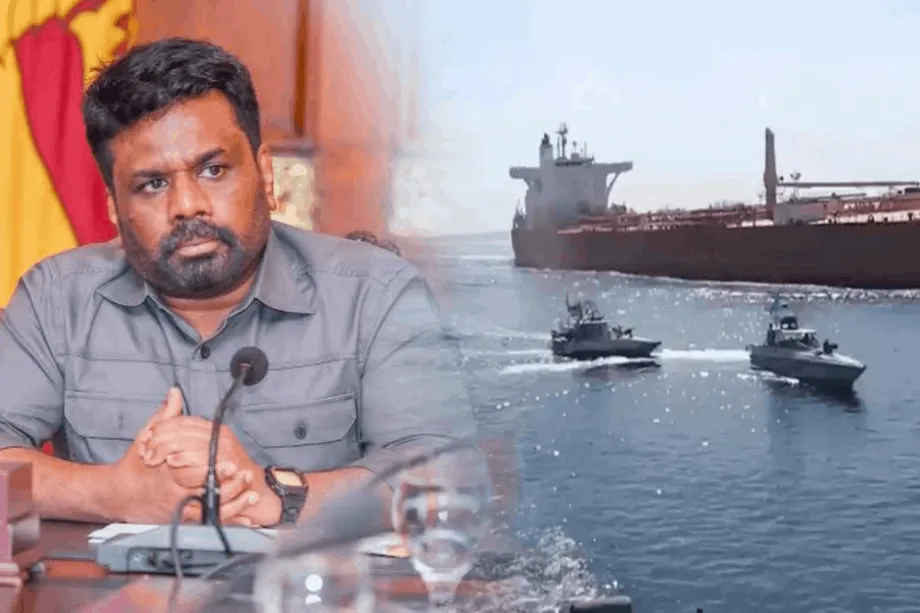
Nineteen Iranian vessels facing shortages of food, drinking water and fuel remain caught between a disrupted route home and Sri Lanka's concern about US sanctions. Foreign Ministry spokesman Thushara Rodrigo said on October 9, 2026, that Colombo had no immediate plans to assist them, while Foreign Minister Vijitha Herath has said the government remains ready to respond when humanitarian circumstances require action.
Contents
- Nineteen Iranian ships wait beyond Sri Lanka's waters
- Why the tankers are waiting off Galle
- Months offshore, not a sudden arrival
- Colombo denies receiving an American order
- How sanctions reach a Sri Lankan supplier
- Rescue duties depend on the sailors' circumstances
- Earlier rescues show a different response at sea
- Trade and maritime jobs shape the calculation
- Monitoring continues as safety concerns grow
- Key Points
Herath put the wider gathering at about 47 foreign ships near Sri Lanka, including the 19 Iranian vessels. He said they were outside the country's territorial waters, which extend 12 nautical miles from its coast, and had been there for a long time rather than arriving recently.
Rodrigo explained the government's position by pointing to both national interests and the risks facing businesses that supply ships.
Sri Lanka will put its national interest first before considering any help, and the companies that supply ships are aware of possible secondary sanctions from the United States.
Colombo is already supporting 13 Iranian crew members aboard the separate naval vessel IRIS Bushehr at Trincomalee port, providing food, accommodation and security. Offshore, however, commercial suppliers face a different calculation: whether delivering provisions could put their access to international banking at risk.
The impasse follows the decision to withhold immediate assistance described on October 11. No delivery timetable or agreed humanitarian arrangement has been announced, and the number of sailors aboard the stranded tankers, their remaining supplies and their medical condition have not been publicly specified.
Why the tankers are waiting off Galle
The vessels became stranded after the United States resumed its naval blockade of Iranian ports in July. The disruption followed the war that began with joint US and Israeli strikes on Iran on February 28, Iranian retaliation and restrictions on navigation through the Strait of Hormuz.
Hormuz connects the Persian Gulf with the open ocean. Restrictions there affect ships trying to reach or leave Iranian ports, even when those vessels are waiting thousands of kilometres away.
Charlie Brown, a senior adviser to United Against Nuclear Iran and director of Southeast Asia regional programmes at the Yokosuka Council on Asia-Pacific Studies, said many of the tankers had transferred oil to other vessels in Malaysia's Eastern Outer Port Limits. The crude was subsequently carried toward Chinese refineries.
Brown said the ships would normally return to Iran after those transfers but were waiting for the blockade to lift. Several accounts describe the stranded tankers as empty following their deliveries. Their immediate requirements are therefore provisions for their crews and fuel to maintain operations while they wait.
Herath said vessels were also waiting in international waters near Malaysia and Indonesia. Sri Lanka's predicament is one part of a wider interruption to the shipping network connecting Iranian oil exports with Asian buyers.
Months offshore, not a sudden arrival
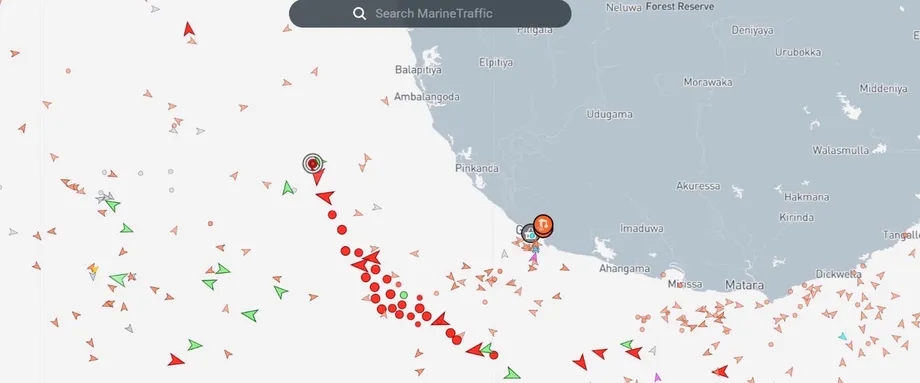
Tracking conducted on August 21 identified 16 Iranian tankers arranged in a line outside the territorial limit near Galle, along Sri Lanka's southwestern coast. Some had been idle since the middle of July. Herath's later figure was 19 Iranian ships among approximately 47 foreign vessels nearby.
The ships identified in August included very large crude carriers measuring about 333 metres in length. One was the MT Amber, identified by International Maritime Organization number 9357406, which Brown said arrived off Galle on July 16. Such identification numbers help distinguish vessels even when their names or flags change.
The main developments stretch across several months:
- February 28: US and Israeli strikes on Iran began the conflict that disrupted regional shipping.
- March 4 and 5: Sri Lanka rescued sailors from two Iranian naval vessels following a sinking and an engine failure.
- July: The renewed US blockade left Iranian tankers waiting outside their normal route home.
- July 16: The MT Amber arrived off Galle, according to Brown.
- August 24: Washington announced further sanctions measures affecting services to sanctioned vessels.
- September 9 to 11: More than 40 Sri Lankan officials attended US training on maritime sanctions evasion.
- October 9: Rodrigo said Sri Lanka had no immediate plans to help the 19 Iranian vessels.
The long wait makes the supply problem increasingly practical. Ships need drinking water and food for their crews, while fuel supports machinery and essential onboard services even when they are stationary.
Colombo denies receiving an American order
Herath has rejected allegations that Washington instructed Sri Lanka to prevent food or water deliveries. He said the government had received no such warning, intervention or pressure and was making decisions while protecting the country's sovereignty and policy of nonalignment.
Other reporting describes US officials pressing Colombo to stop local companies from servicing the vessels, including an August communication that identified 19 tankers and warned of possible secondary sanctions. Colombo's public position is that the sanctions are global measures rather than restrictions directed specifically at Sri Lanka.
Rodrigo stated that distinction in remarks dated October 3, explaining how the government understood Washington's policy.
The US has issued secondary sanctions as their own common policy perspective which is applying globally and do not target only Sri Lanka or any specific country.
Herath also said the government had supplied no goods to vessels subject to US sanctions. He placed responsibility on private suppliers to understand the circumstances in which they operate, while maintaining that Sri Lanka would intervene appropriately for humanitarian reasons.
For businesses, the practical concern extends beyond whether an American official issued a direct instruction. A publicly announced sanctions policy can affect a company's decisions because its banks and commercial partners must also assess the risk of handling a transaction.
How sanctions reach a Sri Lankan supplier
Secondary sanctions seek to influence businesses outside the country imposing them. In this case, Washington can threaten restrictions on a foreign company dealing with sanctioned Iranian interests, including restrictions affecting access to the US financial system.
A Sri Lankan supplier might arrange a delivery locally, yet still depend on banks, insurers or partners connected to international financial networks. Those institutions may decline the payment or service because of the vessel's sanctions status.
Rodrigo said the measures announced on August 24 could expose individuals or entities servicing sanctioned vessels to the loss of access to the US financial system. The risks therefore extend beyond the company physically carrying water, provisions or fuel out to a tanker.
Deputy Minister of Ports and Civil Aviation Janitha Ruwan Kodithuwakku had already acknowledged that concern in August. He said private suppliers and banks enabling their activities could face US sanctions, but that the ministry had not received a sanctions list through the Foreign Ministry. He said official notification would allow warnings to local suppliers.
A senior Sri Lanka Ports Authority official also described requests for policy guidance on how offshore service providers should handle approaches from the tankers. For companies operating from ports such as Galle, clear instructions matter before a vessel is dispatched, supplies are purchased or a bank processes payment.
Rescue duties depend on the sailors' circumstances
Iranian Ambassador Alireza Delkhosh has invoked Article 98 of the United Nations Convention on the Law of the Sea, together with the conventions on Safety of Life at Sea and maritime Search and Rescue, in arguing that Sri Lanka should assist the stranded vessels.
Article 98 addresses assistance to people in danger at sea. It requires states to oblige shipmasters to help people at risk, where they can do so without serious danger to their own ship and those aboard, and calls for effective search and rescue arrangements.
The tankers are described as being within Sri Lanka's exclusive economic zone but beyond its territorial sea. An exclusive economic zone gives a coastal state rights over resources and certain activities; other countries retain navigation rights there. Whether the sailors require rescue or another form of urgent intervention depends on their actual condition and the circumstances of any request for help.
Dayan Jayatilleka, Sri Lanka's former permanent representative to the United Nations, has urged attention to the crews aboard commercial vessels rather than treating the ships as combatants. He described the government's difficulty in balancing assistance with its other concerns.
We are caught in a difficult situation. It's clear to the world that we are not willingly refusing to assist, but there are reasons we have to be careful and to deliberate.
Herath's commitment to act on humanitarian needs leaves room for an emergency response. The unresolved operational issue is how Colombo would assess an urgent request and arrange assistance while addressing the concerns of the suppliers and banks involved.
Earlier rescues show a different response at sea
Sri Lanka rescued 238 sailors during incidents involving two Iranian naval ships in March. That total comprised 32 survivors from IRIS Dena, which was sunk by a US Navy torpedo attack on March 4, and 206 sailors from IRIS Bushehr after an engine malfunction and a request for assistance on March 5.
Herath has said IRIS Bushehr remains at Trincomalee with 13 crew members receiving food, accommodation and security. That continuing support places an existing humanitarian operation alongside the unresolved requests involving commercial tankers offshore.
President Anura Kumara Dissanayake also disclosed on March 20 that Sri Lanka had rejected a US request to land two combat aircraft at a civilian airport in the south. He said Washington made the request on February 26, two days before the war began.
October brought a different kind of port call. USS Tulsa arrived in Colombo on October 7, took on fuel and supplies, and departed on October 9. The US Embassy described the visit as an opportunity to strengthen ties between American and Sri Lankan sailors.
Colombo is therefore managing several relationships at once: providing support to Iranian naval personnel, maintaining cooperation with the United States and deciding how local companies should respond to Iranian commercial vessels affected by sanctions.
Trade and maritime jobs shape the calculation
Sri Lankan companies exported goods worth $2.999 billion to the United States in 2025 and imported $544 million in return, according to the trade figures cited in the accounts of the dispute. The United States purchased about 24% of Sri Lanka's exports, close to one dollar in every four earned from goods sold abroad.
Those figures leave a goods trade surplus of approximately $2.455 billion with the United States. They also show why access to that market matters to Sri Lankan exporters and the workers they employ.
Sri Lanka is still recovering from the economic crisis of 2022, its worst since independence in 1948. A four year IMF programme worth $3 billion was approved in March 2023. Another disruption to trade or financial access would come during that recovery.
The maritime industry has its own exposure. Figures cited in the original account put its historical contribution at around 2.5% of gross domestic product, with approximately 40,000 to 50,000 people in direct, full time employment. About 70% of service providers are locally owned, and the country has roughly 130 shipping agencies.
The tanker dispute consequently reaches beyond diplomacy. Suppliers need workable rules, banks need to assess transactions and port businesses need to preserve their international connections. The crews offshore need dependable access to essentials.
Monitoring continues as safety concerns grow
The Sri Lankan Navy has been watching the tankers through maritime monitoring systems. A senior defence official said further action required government direction and warned that a confrontation involving such large vessels could cause a fire or an offshore oil spill.
The official referred to the MT New Diamond fire in 2020 and said Sri Lanka would need outside help to deal with a crude oil spill offshore. For the southwestern coast, a prolonged gathering of large tankers is therefore also a matter of maritime safety and emergency planning.
More than 40 officials from Sri Lanka's navy, coast guard, ports and financial authorities attended the US Embassy's September workshop on identifying suspicious vessels and sanctions evasion. The training covered practices such as manipulating vessel identification, illustrating how closely shipping oversight and financial restrictions now intersect.
Colombo's stated positions leave two commitments to reconcile: protecting national economic interests and responding when people at sea need humanitarian help. A concrete arrangement would have to connect an assessment of the crews' needs with instructions for the companies capable of reaching them.
Key Points
- Sri Lanka says 19 Iranian vessels are among approximately 47 foreign ships waiting beyond its territorial waters.
- Foreign Ministry spokesman Thushara Rodrigo said on October 9 that there were no immediate plans to assist them.
- Colombo denies receiving a US instruction to stop food or water deliveries, while suppliers remain concerned about secondary sanctions.
- The tankers have been waiting for months after disruption to their route back to Iran.
- Sri Lanka continues to support 13 Iranian crew members aboard IRIS Bushehr at Trincomalee.
- No agreed supply arrangement or delivery timetable has been announced for the stranded tankers.