October 13 ruling brings relief as family awaits next hearing
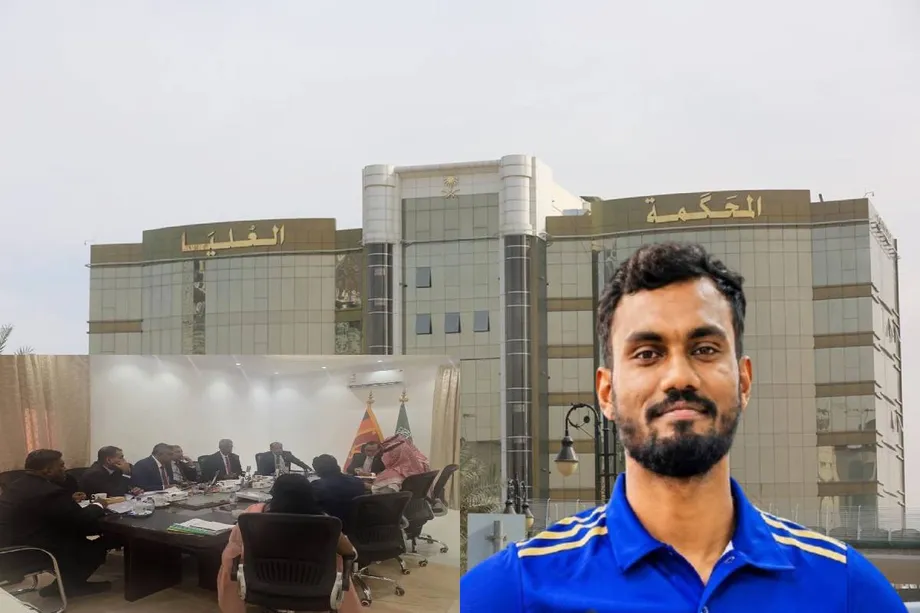
Saudi Arabia's Supreme Court set aside the death sentence imposed on Sri Lankan construction worker Anojan Sivarasa on October 13, 2026, following an appeal filed just two days earlier. His family says another hearing is scheduled for October 17, when they hope to learn more about the legal proceedings still ahead.
Contents
- October 13 ruling brings relief as family awaits next hearing
- How a dispute in Sri Lanka reached a Saudi courtroom
- From five years in prison to a death sentence
- The dates that shaped the case
- Lawyers and diplomats worked on parallel tracks
- A family waiting for contact and clarity
- Political leaders call for efforts to continue
- Amnesty challenged the prosecution and treatment
- Key Points
Sivarasa, a Tamil man from Narpittimunai near Kalmunai in eastern Sri Lanka's Ampara district, had faced execution over a Facebook comment insulting Islam and the Prophet Muhammad. He deleted the comment and issued a video apology, but a screenshot reached his employer and Saudi authorities.
Deputy Foreign Minister Arun Hemachandra announced the reversal on his official Facebook account on October 14. He credited sustained diplomatic and legal efforts by Sri Lanka and thanked Saudi authorities, diplomats, government officials and lawyers from both countries.
Hemachandra described the decision as a major relief and gave the date of the ruling:
On October 13, 2026, the Supreme Court of Saudi Arabia set aside the judgment imposing the death penalty on Anojan Sivarasa.
The full ruling had not been made public when the decision was announced. Its consequences for Sivarasa's conviction, the earlier prison sentence and fine, his continued detention and any arrangements for returning home were still unclear.
For his family, the immediate focus is October 17. His brother said Hemachandra personally telephoned to tell them that the death sentence had been set aside. Relatives welcomed the news but said their sense of relief would depend on the outcome of the next hearing.
How a dispute in Sri Lanka reached a Saudi courtroom
The dispute began in June with footage of a dog named Subramaniam being kicked near Kalmunai. The animal had accompanied Hindu devotees on a pilgrimage to the Kataragama Murugan Temple. The video spread widely, prompted public anger and led to police complaints.
A Muslim youth was arrested over the attack on the dog, later released on bail and issued an apology. Arguments about the incident continued on social media, where comments about religion drew increasingly hostile responses.
Sivarasa joined the discussion while working in Saudi Arabia. After another user reportedly posted derogatory remarks about a Hindu deity, he responded in Tamil with a comment insulting the Prophet Muhammad. He subsequently removed it and posted a video apology.
A screenshot preserved the deleted words. The comment reached the company where he worked and Saudi authorities, leading to his arrest in July. The online exchange had concerned events in Sri Lanka, but the criminal proceedings took place in the country where he was employed.
Sivarasa had travelled to Saudi Arabia for work in September 2025. His case brought together a dispute in his home community, an employer abroad and a legal system with severe penalties for speech considered offensive to religion.
From five years in prison to a death sentence
The Criminal Court in Al-Ahsa initially sentenced Sivarasa on July 27 to five years in prison and a fine of three million Saudi riyals, approximately US$800,000, under Saudi Arabia's Anti-Cybercrime Law. That law governs certain offences involving computers and online communications.
The punishment became much more severe on September 17. The Court of Appeal in Saudi Arabia's Eastern Region increased the sentence to death, treating the offence as carrying a fixed punishment under its interpretation of Islamic law.
A fixed punishment is one a court considers prescribed for a particular offence, rather than a sentence chosen freely from a range of penalties. The appeal court's approach changed Sivarasa's situation from a lengthy prison term and a large financial penalty to the threat of execution.
Amnesty International said Sivarasa told a judge that he wrote the comment in anger and later expressed remorse. The organisation also said he had no access to a lawyer between his arrest and his initial sentencing.
The dates that shaped the case
Sivarasa's case moved through three levels of the Saudi court system in less than three months after the first sentence. Sri Lankan lawyers then joined Saudi counsel in preparing the challenge that reached the Supreme Court.
- September 2025: Sivarasa travelled to Saudi Arabia for employment.
- June 2026: An argument on social media followed the circulation of footage showing a dog accompanying Hindu pilgrims being kicked.
- July 2026: Saudi authorities arrested Sivarasa over his Facebook comment.
- July 27: The Al-Ahsa Criminal Court imposed five years in prison and a fine of three million Saudi riyals.
- September 17: The Eastern Region appeal court increased the sentence to death.
- October 11: Lawyers filed an appeal with the Supreme Court.
- October 13: The Supreme Court set aside the death sentence, according to Hemachandra.
- October 14: Hemachandra publicly announced the decision.
- October 17: A further hearing is scheduled, according to Sivarasa's family.
The Supreme Court decision came 26 days after the death sentence and two days after the appeal was filed. Those dates show how quickly the final challenge progressed after weeks of growing concern among relatives and Sri Lankan officials.
Lawyers and diplomats worked on parallel tracks
Sivarasa's family appealed to the Sri Lankan government for help and met President Anura Kumara Dissanayake, who assured them that efforts to save him would continue. Sri Lanka sent a specialised legal delegation to Saudi Arabia to work with local lawyers.
The delegation included President's Counsel Azad Navavi, Faiszer Musthapha, Upul Kumarapperuma and Hafeel Farisz. Sri Lanka's ambassador to Saudi Arabia, Amir Ajwad, also played a leading diplomatic role.
The lawyers prepared the Supreme Court appeal while officials pursued discussions with Saudi authorities. Musthapha, who is also a Sri Lankan lawmaker, said diplomatic talks preceded the reversal. After the announcement, he said the legal team was examining the ruling.
Hemachandra thanked the Foreign Ministry secretary and ministry officials, the chair and members of the Sri Lanka Bureau of Foreign Employment, the ambassador and both countries' legal teams. His statement described the result as the product of continuing legal and diplomatic work.
The court appeal and diplomatic discussions served different purposes. Lawyers challenged the sentence through Saudi judicial procedures, while Sri Lankan officials sought cooperation and support for a citizen facing execution abroad.
A family waiting for contact and clarity
Sivarasa's relatives had faced weeks of anxiety before the Supreme Court decision. His family said they had been unable to contact him after September 28. His brother also said earlier in October that Sivarasa had been moved to a prison where executions were carried out.
His parents, brother and other close relatives gathered at the family home in Narpittimunai as news of the reversal emerged. His brother described Hemachandra's telephone call as bringing some comfort, while explaining that the family was waiting for the next hearing before feeling fully reassured.
The family thanked the Sri Lankan government, Foreign Ministry, diplomats, religious leaders and politicians for their efforts. Their immediate concern remained the completion of the proceedings and Sivarasa's return to his relatives.
Dissanayake welcomed the Supreme Court decision, saying it brought relief to Sivarasa, his family and Sri Lankans who had followed the case. The president promised continued assistance until the remaining legal proceedings concluded and described the government's responsibility toward citizens working abroad:
No Sri Lankan who leaves our shores in search of a livelihood should ever feel that they stand alone.
Political leaders call for efforts to continue
Sri Lankan opposition leader Sajith Premadasa welcomed the decision and thanked those involved, including Musthapha and Kumarapperuma. He also expressed appreciation for embassy officials who had worked on the case.
Rishad Bathiudeen, leader of the All Ceylon Makkal Congress and a member of parliament, said he hoped the remaining proceedings would conclude with Sivarasa's full release and safe return to Sri Lanka. He thanked the Saudi and Sri Lankan governments, the opposition leader, civil society groups and community organisations.
Bathiudeen also spoke about Muslims' love and respect for the Prophet Muhammad while supporting lawful and peaceful ways of seeking justice. His response combined religious concern about the comment with support for Sivarasa returning safely to his family.
Shanakkiyan Rasamanickam, a member of parliament from the Sri Lankan Tamil Arasu Kachchi, said efforts would continue until Sivarasa completed the legal process, returned safely and reunited with his relatives. He called for continued cooperation between Sri Lankan and Saudi authorities.
The responses from government and opposition figures shared a concrete goal: completing the remaining proceedings and bringing Sivarasa home. Their statements also recognised the work of lawyers, diplomats and community groups involved in seeking relief.
Amnesty challenged the prosecution and treatment
Amnesty International had called on Saudi Arabia to overturn Sivarasa's conviction and release him unconditionally shortly before the Supreme Court decision. Its objections covered the punishment for his comment and his reported lack of legal representation during the early proceedings.
Heba Morayef, Amnesty's Middle East and North Africa director, argued that offensive speech should not lead to imprisonment or execution:
No one should be imprisoned, let alone face execution simply for expressing their views, even if these are deemed insulting or offensive.
Amnesty also criticised Saudi Arabia's lack of a comprehensive written penal code, saying it leaves many offences and punishments to judicial interpretation. A penal code sets out crimes and their penalties in written law, helping people understand what conduct can lead to prosecution and what punishment may follow.
In its October 7 statement, the organisation said Saudi Arabia had executed at least 175 people in 2026 as of October 5, including at least 94 foreign nationals from more than 20 countries. Foreign nationals therefore accounted for about 54 percent of that recorded total, or slightly more than half.
For Sivarasa, access to lawyers, diplomatic assistance and the Supreme Court appeal became central to challenging the death sentence. His family's next expected point of clarity is the October 17 hearing, while Sri Lankan officials have pledged to continue supporting him through the remaining proceedings.
Key Points
- Saudi Arabia's Supreme Court set aside Anojan Sivarasa's death sentence on October 13, 2026, according to Sri Lanka's deputy foreign minister.
- The construction worker from Narpittimunai was prosecuted over a Facebook comment that he deleted and followed with an apology.
- His initial sentence was five years in prison and a fine of three million Saudi riyals before an appeal court imposed death.
- Sri Lankan and Saudi lawyers filed the Supreme Court appeal on October 11.
- His family says another hearing is scheduled for October 17.
- The full ruling and details of his remaining penalties, detention and return home had not been publicly clarified.
- Sri Lankan leaders pledged continued support, while Amnesty International called for his unconditional release.