Longer prison terms and new protections for children
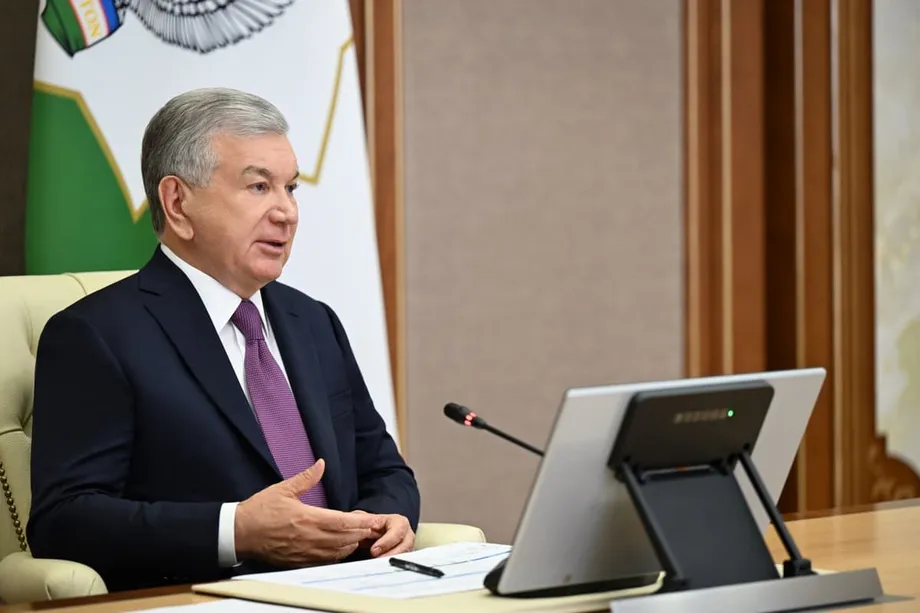
Uzbekistan has raised the punishment for rape and certain other sexual crimes against children younger than 14 to between 15 and 25 years in prison or life imprisonment. President Shavkat Mirziyoyev signed the legislation on October 14, 2026, following parliamentary approval and public anger over an alleged assault at a state kindergarten in Namangan region.
Contents
- Longer prison terms and new protections for children
- What changes in sentencing?
- How the law reached the president
- The Namangan case and the figures behind the debate
- A lawyer from the start of proceedings
- Recorded interviews and controlled confrontations
- Protection when the accused is a relative
- Deaths, physical injury and neglect
- Other duties and changes to juvenile supervision
- A wider child protection programme
- Key Points
The law changes five codes and six laws. Alongside tougher sentences, it removes prosecution time limits for specified sexual offences, provides legal assistance paid for by the state, and requires video recording of interviews with child victims. It also creates an additional legal ground for dismissing education workers held accountable for violence against a child.
Saida Mirziyoyeva, head of the Presidential Administration, announced the signing on social media. She said responsibility would extend to perpetrators within families and educational institutions, as well as anyone else who harms a child.
Mirziyoyeva described the government's position on violence against children:
Violence against a child is unacceptable, and punishment must be severe.
The legislation combines changes to punishment with changes to how children are treated during investigations and trials. A child who reports abuse may need a lawyer, protection from an accused relative and a way to give evidence without repeatedly recounting a distressing experience. The new provisions address each of those needs.
The five codes being amended are the Criminal Code, Criminal Procedure Code, Criminal Enforcement Code, Labour Code and Code of Administrative Liability. The law takes effect on the day of its official publication, making publication the legal trigger for its commencement.
What changes in sentencing?
Part four of Articles 118 and 119 of the Criminal Code now provides for imprisonment of 15 to 25 years or a life sentence for the specified sexual offences against a person younger than 14. Article 118 covers rape. Article 119 covers other sexual acts committed through force, threats or exploitation of a person's helplessness.
The previous penalty for rape of a child younger than 14 was 15 to 20 years in prison. The new law retains the minimum of 15 years, raises the maximum fixed term by five years and adds life imprisonment as an option.
The amendments also expand the Criminal Code provisions governing sentences longer than 20 years and life imprisonment to include these offences. This matters because the law must both specify a punishment for an offence and permit that punishment within the code's general sentencing rules.
A life sentence is available to a court under the revised provisions. The sentencing range also permits a fixed prison term of between 15 and 25 years, so the punishment imposed will depend on the court's decision in the individual case.
The removal of the statute of limitations applies to the specified provisions of Articles 118 and 119, including their fourth parts and certain other listed offences. A statute of limitations is a legal deadline for bringing a prosecution. Removing it means the passage of time will no longer close the prosecution window for those crimes.
How the law reached the president
The legislation followed a sequence of public statements and parliamentary decisions in late September and early October. The Legislative Chamber, Uzbekistan's lower house of parliament, considered tougher sentencing proposals before approving the law. The Senate then gave its approval.
The main steps were:
- September 27: Saida Mirziyoyeva called for consideration of the death penalty for sexual crimes against children.
- September 28: Shakhnoza Mirziyoyeva, first deputy director of the National Agency for Social Protection, announced that proposals for life imprisonment had been submitted.
- September 29: The Legislative Chamber approved tougher sentencing proposals at their first reading.
- September 30, 2026: The Legislative Chamber adopted the law.
- October 2, 2026: The Senate approved it.
- October 14, 2026: President Shavkat Mirziyoyev signed the legislation.
Uzbekistan's Constitution prohibits capital punishment. The legislation signed by the president introduces life imprisonment, while keeping fixed prison terms within the revised sentencing range.
The law's title describes its broader purpose: amending legislation to improve the system for protecting children from all forms of violence. Its provisions reach beyond sexual offences to neglect, physical injury, legal representation and the responsibilities of institutions caring for children.
The Namangan case and the figures behind the debate
A reported sexual assault involving a girl aged five at a state kindergarten in Namangan region brought public attention to child protection. A maintenance worker aged 52 was detained in September. The girl's mother alleged that relatives of the suspect offered her money to withdraw her complaint.
The allegation and detention formed part of the background to the sentencing debate. No outcome of the criminal case was given in the announcement of the legal changes.
Gulrukh Agzamova, a member of parliament, said on September 29 that 445 criminal cases involving rape of children younger than 14 had been opened between 2022 and 2025. The annual figures she cited included 85 cases in 2022, 129 in 2024 and 123 in 2025.
The 2025 figure was 38 cases higher than the 2022 figure, an increase of about 45 percent. It was six cases lower than the 2024 figure. These numbers describe criminal cases opened by authorities, making them a measure of cases entering the justice system.
During Senate discussion, lawmakers also heard that 122 incidents of violence against children had been identified in educational institutions in 2025. Of those, 38 occurred in kindergartens and 84 in schools. Schools accounted for about 69 percent of that total.
The two sets of figures cover different categories: Agzamova's figures concern rape cases involving children younger than 14, while the education figures concern violence against children in schools and kindergartens. Together, they explain why the legislative response addresses both serious sexual crimes and the conduct of staff responsible for children.
A lawyer from the start of proceedings
Children who have experienced violence or witnessed it will be entitled to legal assistance paid for by the state from the moment they become involved in the relevant procedural actions. Those actions include formal steps in an investigation or court case.
The amendment adds these children to the categories covered by the Law on the Provision of Legal Aid at State Expense. It places access to assistance at the beginning of their involvement, when they may first need help understanding questions, statements and their rights.
The Criminal Procedure Code also requires measures to secure the participation of a lawyer providing assistance at state expense for minor victims and witnesses in sexual violence cases. A child who saw violence can therefore receive support even when someone else was the direct victim.
This part of the reform changes the practical route through the justice system. Longer sentences concern what happens after an offender is convicted. Legal assistance concerns the child's ability to take part in the process that leads to a court decision.
Recorded interviews and controlled confrontations
Investigators must record interviews with minor victims on video. The stated purpose is to reduce repeated questioning that can make a child relive an upsetting experience. A recorded interview preserves what the child said during that questioning.
The law also restricts face to face confrontations between a child victim of a sexual offence and a suspect. Such a confrontation is a procedural step in which participants are questioned together, often to address differences between their statements.
Under the amendments, that step requires a specific decision by an inquiry officer, investigator or prosecutor, or an order from a court. The requirement places a formal decision between the child and an encounter with the person accused of harming them.
Video recording, legal assistance and control over confrontations address separate pressures on a child. Recording preserves testimony, a lawyer helps the child exercise legal rights, and the decision requirement governs whether a direct confrontation takes place.
Protection when the accused is a relative
A representative of the guardianship authority must participate in all procedural actions during investigation and trial when the alleged crime against a minor was committed by a parent, adoptive parent, guardian, custodian or another relative.
Guardianship authorities have responsibilities for protecting children and people who need legal care. Their required participation brings a public protection body into proceedings where the person ordinarily expected to support the child may be accused of the offence.
The procedural amendments also address the participation and replacement of legal representatives. This gives the justice system a framework for dealing with cases in which a child's family circumstances affect who can represent their interests.
Educational organisations face a related employment change. Employers gain an additional ground for ending the contract of an employee responsible for teaching or raising children who has been held accountable for violence against a child. The provision connects responsibility for abuse with continued employment in a role involving children.
The legislation therefore addresses two places where children depend heavily on adults: the family and the educational institution. It sets out both how children should be represented during proceedings and how an employer can respond to an employee's violence.
Deaths, physical injury and neglect
Intentional crimes resulting in a child's death carry further restrictions. The law rules out suspended sentences and early conditional release for those offences. A suspended sentence allows a convicted person to avoid serving the prison term subject to conditions; early conditional release allows departure from prison before the full term has been served.
Saida Mirziyoyeva described the position on crimes causing a child's death in broad terms, saying there would be no leniency. The specific legal restrictions include the exclusions for suspended sentences and early conditional release in cases involving an intentional crime.
Intentional infliction of serious or moderately serious bodily injury on a minor also becomes an aggravating circumstance. An aggravating circumstance is a feature of an offence that the law treats as making it more serious when punishment is considered.
Administrative liability for parents and people acting in their place expands to cover deliberate failure to meet a child's basic needs when that failure harms the child's health or physical, mental or moral development. The penalty is a fine of five to ten base calculation units.
A base calculation unit is a standard amount used to calculate legal payments and fines in Uzbekistan. Stating the fine as a multiple of that unit allows the monetary amount to follow the value set for the unit.
Other duties and changes to juvenile supervision
The administrative amendments also strengthen penalties involving sexual harassment, violations of the legal marriage age and failures to protect children from information harmful to their health.
A new provision makes distribution to children of prohibited harmful information punishable by confiscation of the material and a fine. The fine is seven base calculation units for individuals and 50 for officials.
Another new provision penalises failure to carry out decisions of commissions on children's affairs. Individuals face fines of three to five base calculation units, while officials face five to seven. These provisions attach penalties to duties intended to protect children before or beyond a criminal trial.
The law also abolishes specialised educational and correctional institutions for minors. Courts will instead be able to direct adolescents to educational organisations, institutions providing upbringing and institutions providing social services.
A new supervision measure allows a court to place an adolescent aged 14 to 18 under the supervision of parents or the heads of bodies responsible for preventing offences. This changes the measures available when the justice system deals with adolescents themselves.
For complaints concerning harassment and violence against women and children, authorities will not send a written response if the applicant requests that no written response be sent. The provision gives the person making the complaint a choice about that form of communication.
A wider child protection programme
Uzbekistan has approved a Strategy for Protecting Children from All Forms of Violence for 2026 to 2030. The legislation places the amendments within that programme and records the country's participation in the Bogota Call to Action and the Global Alliance to End Violence Against Children.
The package gives several institutions distinct responsibilities. Courts receive wider sentencing options. Investigators must record interviews and obtain specific authorisation for confrontations. Lawyers and guardianship representatives become part of the protection provided during proceedings. Education employers receive an additional basis for dismissal.
The central change is therefore broader than the new maximum punishment. The law addresses how a child reaches the justice system, who supports that child, how evidence is collected and what happens to an adult held responsible for violence. Those duties accompany the possibility of 25 years in prison or life imprisonment for the specified sexual crimes against children younger than 14.
Key Points
- President Shavkat Mirziyoyev signed the law on October 14, 2026, amending five codes and six laws.
- Specified sexual offences against children younger than 14 carry 15 to 25 years in prison or life imprisonment.
- Prosecution time limits are removed for specified offences under Articles 118 and 119 of the Criminal Code.
- Child victims and witnesses gain legal assistance paid for by the state from the start of their involvement in proceedings.
- Interviews with minor victims must be recorded on video, and confrontations with suspects require a specific authorised decision.
- Guardianship authorities must participate when the accused is a parent, guardian or another relative.
- Intentional crimes causing a child's death are excluded from suspended sentences and early conditional release.
- The law adds penalties for neglect and other violations, an employment dismissal ground for education workers, and new supervision measures for adolescents.