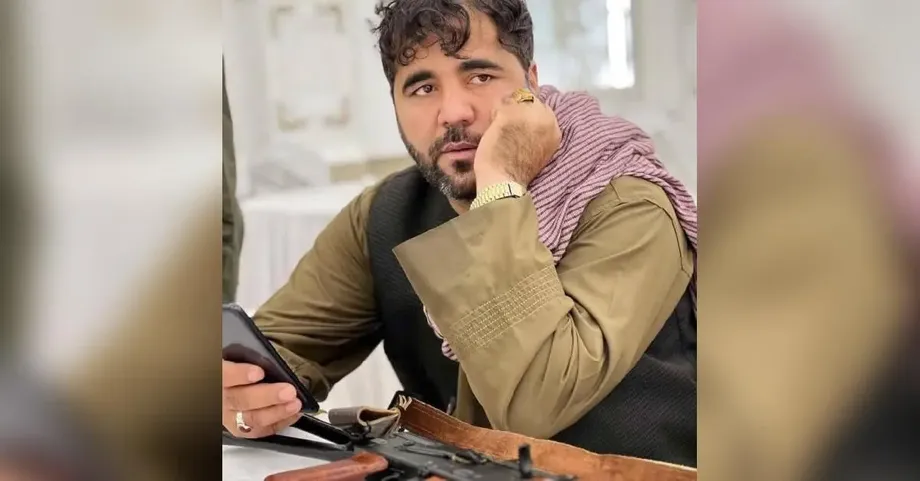
A family receives remains, but no explanation of death
The remains of Allah Dad Badi Zai, a former police commander in Afghanistan's southern Helmand province, have been returned to his family months after his reported arrest by Taliban intelligence. Relatives say a friend detained alongside him was also killed and his remains returned. Badi Zai leaves behind three wives and 14 children, according to his relatives.
Contents
- A family receives remains, but no explanation of death
- What is known about the arrest?
- Relatives describe a second victim and an unsuccessful appeal
- The chronology remains disputed
- A former commander covered by the amnesty promise
- What UNAMA documented after the takeover
- Later monitoring and risks for returning Afghans
- Taliban denials and the unanswered questions
- Key Points
The accounts agree on the central sequence: Badi Zai was detained in the first police district of Lashkar Gah, the provincial capital, taken to an undisclosed location, and later returned to his family dead. They differ over whether he disappeared five or six months earlier and whether the handover took place on Sunday or Monday.
There is also a critical difference over how he died. One account says the circumstances remain unclear and describes an earlier allegation of severe torture in prison. Relatives, in a separate account, say Badi Zai and his friend were shot after their arrest and accuse the Taliban of killing them. That allegation has not been independently established.
The case concerns a group the Taliban promised to protect through the general amnesty announced after their return to power in August 2021. The United Nations Assistance Mission in Afghanistan (UNAMA) subsequently documented hundreds of violations against former officials and security personnel, including cases in which detainees died in custody or their bodies were returned to relatives.
What is known about the arrest?
Badi Zai was reportedly arrested by the Taliban's intelligence directorate in Police District 1 of Lashkar Gah. Relatives identify the location more precisely as Tortang and say a friend was arrested with him. Both were allegedly taken somewhere their families could not identify.
An earlier account of the arrest said intelligence personnel seized Badi Zai outside his home. Witnesses cited in that account alleged that he was beaten and forced into a vehicle. No reason for the arrest was given.
The intelligence directorate reportedly denied holding him. Relatives said they received no information about his whereabouts, leaving them unable to establish where he was detained or what had happened to him.
Three months before the reported return of his body, a source alleged that Badi Zai was being subjected to severe torture in a Taliban prison. That account did not establish the location of the prison, identify the people allegedly responsible, or provide a medical finding.
A reported detention followed by a denial of custody is central to an allegation of enforced disappearance. The term describes a deprivation of liberty involving authorities, or people acting with their support, followed by concealment of the person's fate or whereabouts. Whether that legal description is established in this case would require an investigation into the arrest and subsequent custody.
Relatives describe a second victim and an unsuccessful appeal
Badi Zai's relatives say their search extended beyond Helmand. They complained to the office of Taliban leader Hibatullah Akhundzada in Kandahar in an effort to learn his fate, but said the approach produced no result.
According to their account, the remains of Badi Zai and his friend had been abandoned in sandy areas around Lashkar Gah after they were killed. The families were then summoned to the provincial police command on Monday to receive them.
This account adds a second alleged victim to a case otherwise described mainly as the death of a former commander. The friend is not named, and no information establishes his occupation, the reason for his detention, or whether he had served in the former security forces.
Relatives described what they received as remains. That distinction matters because it does not establish when the men died, how long their bodies lay outside, or how they were identified. No forensic examination, death certificate, or official explanation of the condition of the remains is described.
The chronology remains disputed
The reports do not provide a consistent calendar chronology. Most say Badi Zai was arrested about six months before his remains were returned; another puts the interval at five months. One says the provincial police command handed over his body on Sunday and that his funeral followed on Monday in Marjah district. Others place the handover on Monday, with one specifying October 12.
A separate account refers to an earlier arrest report dated 6 Asad 1404 in the Afghan calendar, a date in July 2025. Another cites a UNAMA reporting period ending in June 2026. These references cannot establish a single reliable year for the handover, and the relative intervals should not be treated as precise dates.
The sequence can be set out without resolving those discrepancies:
- Five or six months before the reported handover: Badi Zai was allegedly arrested in Police District 1 of Lashkar Gah and taken to an undisclosed location.
- During the disappearance: relatives sought information, including through Akhundzada's office in Kandahar.
- Three months before the handover, according to one account: a source alleged severe torture in prison.
- Sunday or Monday, depending on the account: the provincial police command reportedly returned his body or remains.
- Monday, according to one account: his funeral was held in Marjah district.
These differences do not erase the shared allegation of arrest followed by the return of remains. They do limit what can responsibly be said about the length of detention and the date of death.
A former commander covered by the amnesty promise
Badi Zai is described as a former local police commander and a resident of Marjah. Relatives give a broader account of his service: he worked in the Helmand police department responsible for combating terrorism and later commanded a unit of the former national intelligence service.
Those descriptions may refer to different stages of his career rather than conflicting identities. They place him among former security personnel whose treatment has been a recurring focus of UNAMA's human rights monitoring.
The Taliban have repeatedly said they remain committed to the general amnesty announced by Akhundzada following the takeover. The promise was intended to protect former government officials and security personnel from retaliation for their previous service.
An amnesty does not by itself explain an individual arrest or establish that every subsequent death is a retaliatory killing. In Badi Zai's case, however, the reported denial of detention, lack of a stated reason for arrest, and eventual return of remains leave the central events unexplained.
What UNAMA documented after the takeover
In its August 2023 report, UNAMA documented at least 800 human rights violations against former Afghan government officials and members of the former security forces between August 15, 2021, and June 30, 2023.
The findings included at least 218 extrajudicial killings, more than 424 arbitrary arrests and detentions, and over 144 instances of torture and ill treatment. Other recorded violations included enforced disappearances and threats. Former army personnel, police officers, intelligence officials and members of the Afghan Local Police were among those targeted.
An extrajudicial killing is an unlawful killing outside a lawful judicial process. An arbitrary detention is a deprivation of liberty without a valid legal basis or necessary safeguards. Those categories describe separate kinds of violations, and the figures should not be read as a count of distinct victims because one person may experience several abuses.
UNAMA described cases in which Taliban security forces detained people before they were killed. Some died in custody; others were taken to undisclosed locations before their bodies were found or handed over to families. Its account of torture included beatings with pipes and cables, threats and verbal abuse.
The resemblance to the allegations surrounding Badi Zai is relevant, but it is not proof of what happened to him. The earlier findings establish a documented pattern requiring scrutiny, not a forensic conclusion about this particular death.
Later monitoring and risks for returning Afghans
UNAMA's monitoring for October through December 2023 continued to record extrajudicial killings, arbitrary detention, torture and ill treatment involving former officials and security personnel. It also identified risks for some Afghans returning from Pakistan, including people reportedly killed after their return.
A later account of UNAMA's October through December 2025 monitoring gives at least 14 extrajudicial killings, 28 arbitrary arrests and detentions, and seven cases of torture or ill treatment involving former security and defence personnel. Those targeted reportedly included people recently returned from Iran and Pakistan.
Two examples concerned men shot by unidentified attackers in separate incidents in Jabal al Saraj district of Parwan on December 9. One was a former Interior Ministry official; the other was a cousin of a former deputy police commander. Both had recently returned from Iran.
Another account attributes eight killings, 29 arbitrary arrests and detentions, and five cases of torture or ill treatment to UNAMA's monitoring between April 1 and the end of June 2026. These figures concern a different period from the 2025 figures and should not be combined or used to claim a trend without checking the underlying reports and their coverage.
The distinction between identified authorities and unidentified attackers also matters. Some deaths are alleged to have followed Taliban detention; in other cases, the perpetrators have not been established. Both categories warrant investigation, but responsibility cannot be assumed to be identical.
Taliban denials and the unanswered questions
Taliban spokesman Zabihullah Mujahid disputed the figures attributed to UNAMA for the final quarter of 2025 and denied that Taliban forces had targeted the people concerned. He referred to acts of personal revenge and said suspects had been identified and arrested in many cases.
Mujahid said no one had the right to take revenge arbitrarily. He also said some arrests might concern involvement in other activities. Those were general responses to UNAMA's findings, not an explanation of Badi Zai's reported arrest or death.
UNAMA's August 2023 report found that investigations and efforts to hold those responsible accountable remained extremely limited. It called on Taliban authorities to uphold the amnesty and conduct credible, transparent investigations into alleged abuses against former officials and security personnel.
For Badi Zai's family, the return of remains answers only part of the disappearance. It does not establish who ordered the arrest, where he and his friend were held, when they died, or whether the allegations of torture and shooting are supported by physical evidence.
No announced investigation, finding of responsibility, prosecution, or date for a further official response is described. The immediate unresolved issue is whether authorities will produce custody records and a verifiable account of the two men's deaths.
Key Points
- Allah Dad Badi Zai's remains were reportedly returned months after his arrest by Taliban intelligence in Lashkar Gah.
- Reports differ over whether the interval was five or six months and whether the handover occurred on Sunday or Monday.
- Relatives allege that Badi Zai and a friend were shot after detention; another account leaves the cause of death unclear.
- The intelligence directorate reportedly denied detaining Badi Zai, and relatives say an appeal to Akhundzada's office produced no result.
- UNAMA documented at least 800 violations against former officials and security personnel between August 2021 and June 2023, despite the amnesty.
- No verified cause of death or announced investigation into this case has been established.