Delivery riders and urban fleets lead a transition through 2060
Indonesia is preparing a vehicle electrification roadmap through 2060 that would gradually replace more than 170 million vehicles powered by combustion engines with electric alternatives made domestically. The first phase, scheduled for 2027 to 2030, puts motorcycles used by delivery couriers, drivers working through ride apps, companies and government agencies at the front of the transition.
Contents
- Delivery riders and urban fleets lead a transition through 2060
- What happens in each phase?
- Why motorcycles come first
- Buses, family cars and freight need different preparations
- How much electricity would the transition require?
- Charging access must grow with vehicle sales
- Domestic production is central to the plan
- Fuel spending, incentives and motorcycle conversions
- Research funding and the difference between sales and the fleet
- Key Points
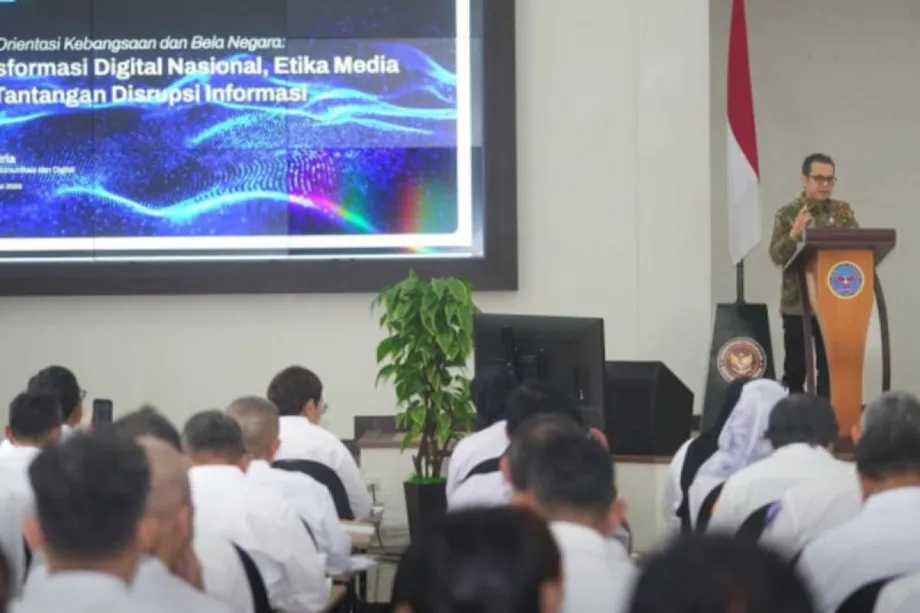
Deputy Minister of Industry Faisol Riza outlined the plan at the Periklindo Electric Vehicle Conference in Jakarta on October 28, 2026. Electric motorcycles would expand to every province between 2031 and 2035, while the early phase would also support electric buses, compact cars, family cars and commercial vehicles.
The scale is enormous. Faisol cited Statistics Indonesia figures showing 172.94 million vehicles at the end of 2025, including motorcycles, vehicles with three wheels, passenger cars and larger vehicles. The government's intention is to change that fleet gradually over several decades while building the factories, electricity supply and charging facilities needed to support it.
Indonesia also starts from a small electric fleet. By August 2026, electric vehicles numbered 541,678, compared with around 400,000 the previous year. Using the vehicle total from the end of 2025 as a rough reference, electric vehicles amounted to about 0.31%, or approximately three for every 1,000 vehicles. The two figures describe different dates, but together show the distance between current adoption and the government's ambition.
For households and businesses, the earliest changes would concentrate on vehicles used for daily work and urban travel. For manufacturers and electricity providers, preparation must begin before adoption reaches millions of additional users.
What happens in each phase?
The Ministry of Industry is organizing the transition around vehicle types, user needs and local readiness. Motorcycles receive priority, while buses and other public transport would begin in cities with routes suitable for electrification.
The timetable described by Faisol includes the following stages:
- 2027 to 2030: Prioritize electric motorcycles for couriers, drivers working through ride apps, corporate fleets, government vehicles and residents of major cities.
- 2027 to 2030: Introduce electric buses and public transport on urban corridors ready for the change, and expand domestic production of family cars and compact electric cars.
- 2027 to 2030: Encourage companies to prepare electric commercial vehicles and trucks for road use and work away from public roads.
- 2031 to 2035: Extend the electric motorcycle initiative to every Indonesian province.
- Through 2060: Continue the broader transition toward replacing combustion vehicles with electric vehicles produced in Indonesia.
Faisol described the roadmap as still being prepared. Purchase incentive rules and arrangements for converting existing vehicles also remained under discussion, leaving the final financial support for buyers and operators undecided.
Why motorcycles come first
Motorcycles already form the largest category in Indonesia's electric fleet. The August 2026 figures included approximately 280,100 electric motorcycles and 259,000 electric passenger cars. Together, those two categories represented more than 99% of the stated electric vehicle total.
Couriers and drivers working through ride apps are central to the first phase because their vehicles support daily income. Charging access, time spent away from work and vehicle reliability will therefore shape how the transition works in practice. Companies and public agencies can also plan purchases across entire fleets rather than leaving each driver to organize a change alone.
Fleet priorities also appear in the International Council on Clean Transportation's Roadmap to zero, published on April 26, 2026. The briefing recommends prioritizing vehicles serving the wider public interest, including transit buses and logistics fleets.
Its authors, Jeanly Syahputri, Dale Hall, Josh Miller, Aditya Mahalana and Francisco Posada, connect vehicle adoption with fiscal policy, manufacturing rules, charging support and local government action. Those recommendations help explain why the transition involves much more than putting electric models in showrooms.
Buses, family cars and freight need different preparations
Electric buses and public transport are scheduled to enter suitable urban corridors during 2027 to 2030. Fixed routes give operators a defined distance and service schedule around which to organize charging and electricity connections.
The starting fleet remains small. The August 2026 figures listed 936 electric buses, 919 vehicles with three wheels, 607 goods vehicles and three special vehicles. Expanding these categories will require preparations tailored to how each vehicle works, rather than one charging arrangement for every user.
Passenger cars have a different industrial priority. Faisol said the government wants a wider range of domestically produced family cars and compact vehicles suited to Indonesian needs during the same period. That makes the availability of suitable local models part of the adoption plan, alongside support for buyers.
Commercial vehicles and trucks would cover both road transport and operations away from public roads. Businesses would be encouraged to prepare electric fleets for their transport needs. A truck's route, working hours and access to charging will matter alongside its purchase price.
How much electricity would the transition require?
Faisol used illustrative annual consumption figures of 1,500 kilowatt hours for an electric motorcycle and 2,000 kilowatt hours for an electric passenger vehicle to show the scale of possible electricity demand. A kilowatt hour measures energy used over time, the same unit households see on electricity bills.
At those assumptions, one million electric motorcycles would consume 1.5 terawatt hours annually, while one million electric passenger vehicles would consume 2 terawatt hours. One terawatt hour equals one billion kilowatt hours. Actual consumption would depend on travel distance, vehicle efficiency and patterns of use.
Faisol said state electricity company PLN produced approximately 494 terawatt hours in 2025. The illustrative annual demand from one million motorcycles would equal about 0.3% of that amount; one million passenger vehicles would equal about 0.4%. As adoption spreads across tens of millions of vehicles, transport becomes a much larger electricity customer.
National energy totals are only part of the planning task. Faisol also identified charging times, concentrations of users and the ability of the grid to deliver power as necessary considerations. A district where many vehicles charge together needs sufficient local electrical equipment, even when power is available elsewhere in the country.
Faisol said electrification at large scale would require many new power plants. His comments place PLN alongside vehicle manufacturers as a central participant in the transition.
Charging access must grow with vehicle sales
The ICCT briefing recommends early financial support for charging infrastructure, including subsidies and revenue guarantees. New charging stations may initially have few customers, making it difficult for operators to recover their investment before electric vehicle use grows.
Charging facilities for heavy vehicles can require larger investments, making that early period especially difficult. Revenue guarantees would give operators some protection while demand develops, helping charging capacity arrive ahead of widespread adoption.
The briefing also recommends common standards for charging plugs and compatibility between communications and payment systems. In everyday terms, drivers should be able to connect, charge and pay without facing unnecessary barriers between different networks.
Building rules are another proposed tool. Preparing new buildings for electric vehicle charging can make later installation easier. The ICCT also calls for cooperation among central, provincial, district and city governments, whose decisions affect fleet purchases and the locations where charging infrastructure develops.
Domestic production is central to the plan
Faisol's roadmap ties electrification to vehicles produced in Indonesia. He also highlighted domestic component requirements, known as TKDN, as a way to support local manufacturing. These requirements concern how much of a product's content comes from domestic production.
The ICCT briefing says Indonesia already has battery electric vehicle production targets, vehicle specifications and domestic component requirements under Ministry of Industry policy from 2022. It identifies manufacturing capacity as a major constraint on meeting future demand entirely through local production.
The International Council on Clean Transportation described the production challenge in its briefing:
But to meet net zero sales targets through domestic production alone, Indonesia would need to significantly accelerate its manufacturing capacity.
The Ministry of Industry is inventorying components that domestic businesses could supply, including bodywork, frames, wiring, seats, interiors, glass and tires. Battery packs, battery housings and charging stations are also on the list. Faisol said some of these industries already operate in Indonesia.
PERIKLINDO chairman Moeldoko urged Indonesia to build its own electric vehicle industry rather than become mainly a buyer of foreign products. He also called for standardization to protect users, with a role for the National Standardization Agency.
The economic stakes extend beyond vehicle sales. The ICCT briefing puts employment supported by the automotive sector at 1.5 million jobs and its contribution to gross domestic product at 8%. Local production decisions will shape where investment and work develop during the transition.
Fuel spending, incentives and motorcycle conversions
Indonesia's existing vehicle fleet runs predominantly on fuel described by the ICCT as having high sulfur content and meeting the older Euro 2 standard. The briefing also says fossil fuel subsidies accounted for approximately 5% of state spending in 2025, connecting transport choices with pressure on public finances.
Electric vehicle incentives were still being discussed when Faisol outlined the roadmap. Rules for electric motorcycle support were being developed by the Ministry of Finance, while broader incentives would take account of industry needs and conditions rather than being distributed uniformly.
The ICCT recommends incentives designed to balance their own costs, for example by using revenue from polluting activities to fund cleaner transport. Such an arrangement aims to support adoption without requiring an expanding call on the general budget.
Converting existing gasoline motorcycles to electric power is another strand of government work. A conversion changes the vehicle's propulsion equipment while retaining an existing motorcycle, giving owners a different route from buying a newly manufactured electric model.
Slamet, acting head of the Energy Ministry's electricity testing and survey center, said conversions could reduce fuel imports and budget pressure. Andi Nur Arief Wibowo, subcoordinator for charging station development at the Directorate General of Electricity, called for standardized technical procedures and battery specifications supporting rapid charging. Financial arrangements for conversions remained part of discussions involving the Finance Ministry.
Research funding and the difference between sales and the fleet
Deputy Minister of Higher Education, Science and Technology Stella Christie linked electric vehicles to energy security and national sovereignty. She argued that research and skilled workers are necessary to make vehicles efficient and affordable, and encouraged closer connections between universities and industry.
Stella cited research funding of Rp1.47 trillion in 2024, Rp2.27 trillion in 2025 and Rp3.09 trillion in 2026. The 2026 amount is slightly more than double the 2024 figure. She also described a planned Rp20 trillion research endowment. These figures concern research funding broadly, with electric vehicle development among the industrial needs she discussed.
Proposals included cooperation in vocational education with China, with a possible sequence of one year studying in Indonesia, one year in China and one year in an industrial internship in China. Battery expertise and other vehicle technologies were among the areas where Stella encouraged businesses to connect with researchers.
The ICCT's best case scenario envisages all new cars being zero emission by 2040. That scenario concerns vehicles entering the market each year. Indonesia's roadmap through 2060 addresses the much larger task of changing vehicles already in use as well as future purchases.
The practical sequence is therefore crucial: manufacturers must supply suitable vehicles, operators need workable charging arrangements, and electricity providers must prepare for new demand. The first scheduled test is the 2027 to 2030 phase, when motorcycles used for work, urban public transport and locally produced passenger models move to the center of the plan.
Key Points
- Indonesia is preparing an electrification roadmap through 2060 for a fleet exceeding 170 million vehicles.
- The first phase, from 2027 to 2030, prioritizes electric motorcycles for couriers, drivers working through ride apps, companies, government agencies and major cities.
- The motorcycle initiative is scheduled to reach every province between 2031 and 2035.
- Electric buses, family cars, compact cars and commercial vehicles are also included in the transition.
- Electric vehicles numbered 541,678 in August 2026, against a national vehicle count of 172.94 million at the end of 2025.
- Domestic manufacturing, charging infrastructure and electricity supply must expand together; incentive and conversion arrangements remain under discussion.