A review of 527 entities could reshape state business
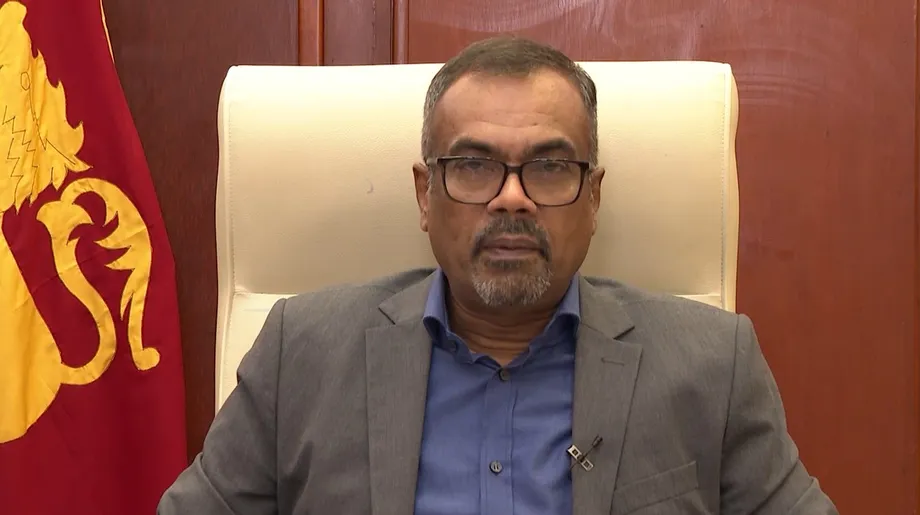
Sri Lanka is preparing legislation to allow the sale, merger and restructuring of state enterprises, with Deputy Minister of Finance and Planning Anil Jayantha saying a bill initially targeted for passage in 2026 may reach Parliament only in 2027. The government plans to retain ownership in strategic utilities such as energy while moving away from ordinary commercial activities, including trading and running hotels.
Contents
- A review of 527 entities could reshape state business
- Sales, mergers and closures serve different purposes
- A holding company would change how ownership works
- The Treasury outlined a similar structure in 2023
- Energy losses explain the financial pressure
- Debt links utilities, airlines and state banks
- Strategic ownership and competition can coexist
- Investment and salaries compete for public money
- The legislative timetable remains unsettled
- Key Points
Speaking at an industry forum hosted by the Securities and Exchange Commission and the Colombo Stock Exchange, Jayantha said a committee had been appointed to examine public enterprises and recommend restructuring strategies. His remarks, dated October 28, 2026, describe a proposed change in both what the state owns and how its businesses are managed.
Jayantha said only a small number of the 527 bodies classified as state enterprises are genuine commercial businesses. Many carry out administrative functions under specific legal requirements. That makes the review broader than a programme to sell companies: it also involves deciding which institutions belong together and which functions government needs to continue providing.
President Anura Kumara Dissanayake has also disclosed that a Finance Ministry committee is examining the closure or amalgamation of 34 state enterprises. He announced that review at the 100th Annual Conference of the Government Surveyors' Association. The 34 institutions represent a specific group under examination, while Jayantha's figure of 527 describes the much wider collection of bodies classified as state enterprises.
Sales, mergers and closures serve different purposes
Jayantha outlined several possible outcomes for the review. Divestment means the government sells some or all of its ownership in an enterprise. A merger combines organisations, while closure ends an institution's operations and requires decisions about its remaining responsibilities, assets and debts.
Jayantha, the deputy finance minister, described the options at the industry forum:
Some of these SOEs really we can divest, sometimes we may have to merge.
The government's stated aim is to reduce commercial distortions and concentrate on regulation and supporting economic activity. For a business operating alongside private competitors, that could mean new ownership or different management. For an administrative body, it could mean combining responsibilities with another institution.
The announcements do not identify which enterprises will be sold, merged or closed, or set out arrangements for affected workers. Those decisions will determine the practical effect on employees, customers and the public services that some of these institutions provide.
A holding company would change how ownership works
The proposed SOE Act would allow enterprises to have separate management and be reorganised under a holding company. Jayantha said the organisations would be incorporated as limited liability companies and given greater freedom to respond to market conditions.
A holding company owns shares in other companies. Under the proposed model, the state could exercise ownership through that central organisation, while each operating business has its own management. Incorporation as a limited liability company gives a business a distinct legal structure, with its own assets, obligations and corporate decision making.
Commercial state enterprises and state banks would move away from traditional bureaucratic controls toward competitive corporate models, Jayantha said. The intention is to let management respond more readily to business needs, rather than treating a commercial enterprise like a government department.
Some restructured businesses could eventually be listed on the Colombo Stock Exchange to attract domestic private investors and foreign investment. A listing allows investors to buy shares traded on an exchange. How much ownership the government retains would depend on the terms of any future share sale.
The Treasury outlined a similar structure in 2023
The holding company proposal has a documented history. In a Treasury reform speech delivered on September 5, 2023, K M Mahinda Siriwardana, then Secretary to the Treasury and Ministry of Finance, Economic Stabilisation and National Policies, described plans for a government owned holding company accountable to the Finance Ministry.
Siriwardana said the company would eventually take ownership of government corporate assets to support professional management and corporate governance. He also described proposed SOE legislation and the Public Financial Management Act as parts of a wider legal framework for governing public enterprises.
The 2023 programme included divesting commercial assets outside strategic activities, with a State-Owned Enterprise Restructuring Unit established at the General Treasury. Siriwardana said Cabinet had approved the divestment of several entities and transaction advisers had been appointed.
Jayantha's remarks return to those central ideas: separating ownership from daily management, using a holding structure and deciding which commercial assets the state should retain. The 2023 speech records the government's plans at that time; Jayantha's October 2026 comments describe legislation still awaiting clearance before submission to Parliament.
Energy losses explain the financial pressure
The Treasury's 2023 account puts figures on the cost of weak enterprise finances. In 2022, the Ceylon Electricity Board recorded losses of Rs. 262 billion, while the Ceylon Petroleum Corporation lost Rs. 615 billion. Together, those losses reached Rs. 877 billion, with the petroleum corporation accounting for about 70 percent.
Siriwardana linked the losses to delayed price adjustments, weak financial management and a sharp increase in import costs. The rupee fell from around Rs. 200 to the US dollar to Rs. 365, while global energy prices rose. Businesses importing fuel therefore needed many more rupees to pay their bills.
Retail prices did not fully reflect those costs for prolonged periods. The Treasury said petroleum pricing began reflecting costs in May 2022, while electricity prices were adjusted in August 2022 and February 2023, the first such increases since 2013.
The Treasury had to transfer funds to support the two enterprises. For the public, such losses create competing demands on government money: funds used to keep an enterprise operating are funds that must come from revenue or borrowing.
Debt links utilities, airlines and state banks
The Treasury also described a chain of unpaid bills connecting public enterprises and state banks. The electricity board and SriLankan Airlines owed money to the petroleum corporation for fuel. The petroleum corporation, in turn, relied on bank funding, often at high cost.
Those connections explain why restructuring involves more than changing a company's management. When one enterprise struggles to pay, another loses cash it needs, and the banks financing the system face greater exposure to repayment problems.
The petroleum corporation also carried substantial debt in foreign currencies while earning almost all its revenue in rupees. A weaker rupee increased the local currency cost of that debt. Siriwardana said the government had taken onto its own balance sheet the corporation's foreign currency loans guaranteed by the state, along with most comparable loans at the electricity board.
The wider restructuring exercise covered the petroleum corporation, electricity board, SriLankan Airlines and Road Development Authority. Moving guaranteed debt to the government changes who records and services the obligation. Public resources are still needed to meet it, making future borrowing and spending discipline central to the reform programme.
Strategic ownership and competition can coexist
Jayantha said the government would retain ownership in strategic utility sectors such as energy to prevent private market manipulation. That sets a boundary around the proposed withdrawal from ordinary business: the state intends to keep an ownership role where it considers public control necessary.
The Treasury's 2023 programme also sought more competition in energy. Siriwardana said Sinopec had begun commercial operations in petroleum retail the previous week. He described plans to separate electricity generation and distribution activities operationally and financially, with support from the Asian Development Bank.
State ownership and competition address different parts of the market. A government can retain an energy business while allowing other suppliers to compete with it. Separating activities within an electricity system can also make it easier to identify costs and judge the performance of each operation.
Consumers face a related issue: how to pay for essential services without allowing losses to build up again. The Treasury's approach was to charge prices reflecting costs and provide direct cash transfers to people identified as poor or vulnerable, rather than keeping fuel and electricity prices low for every customer.
Investment and salaries compete for public money
Dissanayake's review of 34 enterprises comes alongside plans for a substantial increase in development spending. Capital expenditure is expected to rise from Rs. 1,330 billion in 2026 to Rs. 2 trillion in 2027. That is an increase of Rs. 670 billion, or about 50 percent.
The president said the Kurunegala-Galewela, Rambukkana-Galagedara and Kahathuduwa-Ingiriya expressway projects were being financed through domestic Treasury resources rather than dollar borrowing. A Kelani Valley railway electrification project, estimated to cost Rs. 600 billion, is also planned to begin in 2027.
Domestic financing still leaves a foreign exchange requirement when projects need imported machinery, steel or other materials. The government must therefore manage both the rupee cost of construction and the dollars needed for imports.
Public salaries add another continuing commitment. Dissanayake said the three phase basic salary increase provided for in the 2025 Budget would add Rs. 330 billion to the annual salary bill by 2027 compared with 2024. He indicated that allowances could receive greater consideration in the 2028 Budget, when no further basic salary increase is planned.
Dissanayake also blamed past political appointments for excessive staffing at lower levels of the public service and called for capable, qualified professionals. The Treasury's earlier governance programme addressed related management concerns through better board appointments, regular audited accounts and stricter controls on procurement and capital spending.
The legislative timetable remains unsettled
Jayantha said backlogs at the Legal Draftsman's Department could delay the SOE bill. The initial ambition was parliamentary passage by the end of 2026, but his revised assessment allowed for submission in 2027. Submission is the stage at which Parliament receives a bill; passage requires parliamentary approval.
Jayantha explained that the department's clearance must come first:
"First, we need to get it cleared from the Legal Draftsman's Department; if that is the case, at least we can submit to the Parliament, maybe that could be next year," he said.
The reform programme now spans several years, combining earlier financial measures with proposed changes to ownership and management:
- May 2022: Petroleum prices began reflecting costs, according to the Treasury.
- August 2022 and February 2023: Electricity prices were adjusted to reflect costs.
- September 5, 2023: The Treasury outlined divestments, debt restructuring, governance legislation and a government owned holding company.
- October 28, 2026: Jayantha described the proposed SOE framework and a possible delay in submitting the bill.
- 2027: Submission to Parliament may take place, alongside planned increases in capital spending and the start of Kelani Valley railway electrification.
For businesses, workers and customers, the next practical developments will be the bill's provisions and the institution by institution decisions that follow. Those will determine how much managerial freedom enterprises receive, which assets change ownership and how public service responsibilities are carried forward.
Key Points
- Sri Lanka plans sales, mergers and restructuring across selected state enterprises, with strategic energy ownership retained.
- Jayantha said only a small number of 527 classified entities are genuine commercial businesses.
- A Finance Ministry committee is examining closure or amalgamation of 34 enterprises.
- The proposed law would support separate management, limited liability companies and a holding company structure.
- The electricity board and petroleum corporation recorded combined losses of Rs. 877 billion in 2022, according to the Treasury.
- The SOE bill may reach Parliament in 2027, later than the initial goal of passage in 2026.