A bigger Japanese slate, with audiences at home first
Amazon MGM Studios plans to double its investment in original Japanese content, its Japan chief Buddy Marini said at TIFFCOM in Tokyo on October 28, 2026, outlining an expansion that includes The Apothecary Diaries for 2028 and another installment of The Silent Service for summer 2027.
Contents
- A bigger Japanese slate, with audiences at home first
- The Apothecary Diaries leads the upcoming projects
- The Silent Service connects streaming and cinemas
- What happens next, and when
- Why scripts sit at the center of the spending plan
- Japanese producers want a lasting share of success
- Kingdom shows the scale of a franchise plan
- One Piece illustrates the cost of winning fans
- Trust connects adaptations with the wider business
- Key Points
Marini did not disclose the amount, the spending period or the budget used as the starting point for the increase. His plan combines more investment in Japanese films, series and anime with closer work on scripts, established entertainment properties and partnerships with local producers.
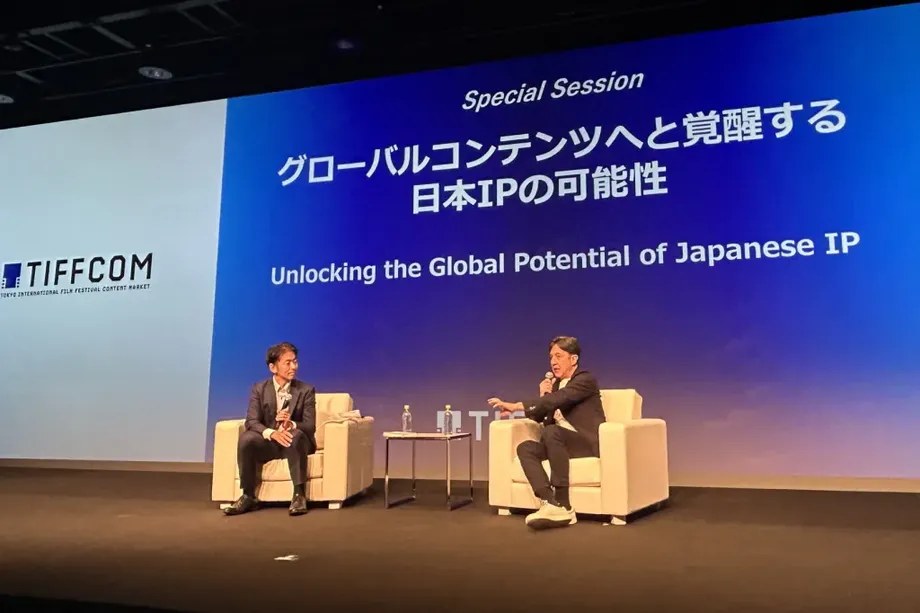
The announcement came during Unlocking the Global Potential of Japanese IP, a panel organized by the Motion Picture Association and UniJapan. IP, short for intellectual property, means creative works and the rights attached to them, such as a manga whose characters and story can become films, television series or merchandise.
Marini, appointed in March, spoke alongside Credeus chief executive Shinzo Matsuhashi and Steven Maeda, an executive producer and showrunner of Netflix's adaptation of One Piece. Their discussion connected three practical challenges: paying for ambitious productions, satisfying fans and deciding who benefits when an adaptation succeeds.
Marini said Japanese audiences remain the starting point, even when a project has worldwide distribution. The studio is working with Japan's Toho, Credeus, TV Tokyo and Wowow, as well as South Korea's Studio Dragon, across a range of genres and formats.
Marini, whose previous roles included leading Warner Bros. Discovery Japan and Hulu Japan and founding manga platform Mangamo, described the spending increase as a way to support better productions:
High-quality content is in demand so we're going to double our investment to reach an international standard and attract global audiences.
The Apothecary Diaries leads the upcoming projects
The Apothecary Diaries is among the largest properties in the announced slate. Amazon MGM Studios and Toho are producing an adaptation starring Mana Ashida as Maomao, with an exclusive worldwide release on Prime Video planned for 2028.
The historical mystery franchise comes from Hyuganatsu's light novel series, which has sold more than 57 million copies in 16 languages. Light novels are a form of Japanese fiction often published with illustrations. That existing readership gives the adaptation a substantial potential audience before its release.
Marini said the production used Japanese cast and staff and was made entirely in Japan. For this project, the studio's international ambition rests on a Japanese production reaching viewers abroad through Prime Video's distribution network.
Bless, another planned adaptation, follows an aspiring makeup artist. Its inclusion alongside a historical mystery and a submarine thriller shows how Amazon MGM is spreading its investment across different kinds of stories rather than relying on a single genre.
Recent releases include Chloe And Emma, a manga adaptation made with Wowow that began streaming in June 2026, and Criminal, or Hanzaisha, directed by Daishi Matsunaga and released in July. Amazon MGM worked with Protx, a TV Tokyo subsidiary, on Criminal.
The Silent Service connects streaming and cinemas
The Silent Service provides an existing example of Amazon MGM developing a Japanese property across both streaming and theatrical releases. Based on Kaiji Kawaguchi's manga, originally published from 1988 to 1996, the story follows a rogue Japanese submarine captain and a confrontation involving a U.S. submarine.
The Silent Service Season 1: Battle of Tokyo Bay became Amazon MGM Studios' most watched series produced in Japan in 2024. The property has also generated a theatrical feature, The Silent Service: Battle Of The Arctic, which earned ¥1.15 billion at cinemas in 2025.
Amazon MGM has approved a third season, The Silent Service: Awaken, New York, for Prime Video in summer 2027. The studio's work with Credeus on the franchise illustrates its willingness to continue a story through different release formats rather than assigning every property permanently to television or cinemas.
Marini said maintaining the production standard remains difficult even after a successful release. The next installment therefore carries two tasks: continuing a familiar story for existing viewers and sustaining the quality that helped establish its audience.
What happens next, and when
Amazon MGM's expansion stretches across several years. Some partner productions are already available, while two prominent franchise releases are scheduled for 2027 and 2028.
- March 2026: Buddy Marini became head of Amazon MGM Studios Japan.
- June 2026: Chloe And Emma began streaming on Prime Video.
- July 2026: Criminal arrived on the service.
- October 28, 2026: Marini discussed the investment increase at TIFFCOM, which ran through October 30 at the Tokyo Metropolitan Industrial Trade Center.
- Summer 2027: The Silent Service: Awaken, New York is scheduled to debut on Prime Video.
- 2028: The Apothecary Diaries is planned for an exclusive worldwide Prime Video release.
The slate also builds on a Japanese adaptation of the Korean series Marry My Husband, produced with Studio Dragon, and Like a Dragon: Yakuza, adapted from Sega's video game franchise. The latter involved The Fool, Wild Sheep Content and 1212 Entertainment.
Those projects draw on different starting points: Korean television, Japanese manga, novels and games. For viewers, the expansion means more Japanese productions across familiar franchises and different genres. For production partners, it creates opportunities to work with a distributor that can release a title internationally.
Why scripts sit at the center of the spending plan
Marini described Amazon MGM's role as covering a project from its initial idea through development, investment and completion. Creative executives, writers and development staff work together on scripts intended to engage Japanese viewers while remaining accessible to people elsewhere.
An adaptation has to turn the source story into something that works in a different medium. A manga can spend many chapters developing a character or explaining a fictional world. A television series must choose what to show, what to shorten and when viewers need an explanation.
Amazon MGM's approach places that work early in production. The studio is also flexible about whether a project reaches audiences through cinemas or streaming, allowing the story and business plan to help shape its release.
Marini linked the strategy to a broader change in Prime Video's role. He said Amazon had successfully built a business bringing content together for subscribers and now wanted to place greater weight on originals, both in Japan and internationally.
Prime membership also connects entertainment with Amazon's wider business. Marini said video and music began as membership benefits, while Prime Video viewers now also purchase products on Amazon. That gives the company a commercial interest extending beyond the viewing of an individual series.
Japanese producers want a lasting share of success
Matsuhashi, chief executive of Credeus, focused on ownership as well as production spending. For the recently released Blue Lock feature, Credeus established CK Works, a company jointly owned with manga publisher Kodansha, to hold rights.
A production company working as a contractor receives payment to make a film or series. Once it delivers the finished work, its earnings from that project may end. Retaining rights gives it a continuing financial stake, with the details depending on the contracts.
Matsuhashi said Credeus wanted to move away from arrangements that left the producer with nothing after delivery. He described the ownership change this way:
It's rare for production companies to be involved in holding IP rights, but it's starting to become more standardized and practiced globally.
Credeus has also started a fund business to increase its capacity to invest. Matsuhashi said production costs are too high for production companies to cover entirely themselves, making access to financing part of the effort to secure a larger role.
Matsuhashi has negotiated success fees for more than two decades, allowing producers to receive additional payment when a project becomes a hit. A success fee rewards a particular outcome; rights ownership can give a company a continuing interest in the property. Both address his concern that creators should share in the value they help generate.
Kingdom shows the scale of a franchise plan
Matsuhashi said films he produced surpassed ¥100 billion in cumulative box office revenue in 2026. His credits include Kokuho, Gintama, Golden Kamuy and the Kingdom franchise, which now comprises five feature films.
Kingdom, adapted from a manga set during China's Warring States period, began its theatrical run in 2019. Its first three films each earned more than ¥5 billion, putting their combined ticket sales above ¥15 billion. Those figures describe cinema revenue, before accounting for production costs and the division of receipts among cinemas, distributors and other participants.
Matsuhashi recalled proposing the first three Kingdom films as a single business venture to Sanford Panitch, then responsible for international production at Sony Pictures. Planning several films together gave the proposal a larger scope than financing one installment at a time.
Matsuhashi said his method begins with an interesting story and script, followed by the director, crew and cast. His account connects the financial and creative sides of the panel: investment supports the production, while the underlying story and the people making it determine what reaches the screen.
One Piece illustrates the cost of winning fans
Maeda described the pressure of turning One Piece, a manga with hundreds of installments, into an opening television season of eight episodes. His team had to compress the story while securing enough money to create a version that fans would accept.
The team wrote three versions following budget discussions with Netflix, including a much less expensive version. Maeda said that cheaper approach would not have delivered the One Piece its existing audience wanted.
Maeda, who had read the first hundred chapters after being approached about the adaptation, said the challenge was serving two audiences at once: people deeply familiar with the original and viewers encountering its world for the first time. He described those competing demands:
You're going to have people who love the show, and they want a faithful adaptation of that show. You're going to have people who have never heard of the show, and you still need to bring those people in as well.
One Piece topped viewing charts in 46 countries during its opening week in 2023 and accumulated more than 140 million viewing hours over those seven days. Viewing hours add together the time people spend watching, so the figure measures consumption rather than a count of individual viewers.
Those results provide a concrete example of a Japanese property attracting international audiences. Maeda's budget negotiations also show where spending decisions become creative decisions: reducing the budget can change which parts of a familiar world an adaptation can put on screen.
Trust connects adaptations with the wider business
Maeda said trust is central when creators allow another team to reinterpret their work. An adaptation tells the story differently, and the people holding the rights must allow changes while protecting what makes the original appealing.
Maeda, explaining how a successful adaptation can bring audiences back to the original work and related products, said:
If a show is done well, it gets people excited, driving them to previous versions of the IP. It will drive merchandising. It will drive all sorts of wonderful things.
Maeda is also adapting the Eisner Award winning graphic novel Monstress for Prime Video with Tiff Greshler and Hivemind Entertainment. His work connects the discussion of Japanese adaptations with Amazon's broader search for stories that can travel between formats and markets.
Amazon MGM's investment plan, Credeus's rights venture and the One Piece experience point to connected decisions. A studio must finance a convincing production, producers seek a lasting stake in its success, and an adaptation must give established fans and new viewers reasons to watch. The upcoming Japanese slate will put those priorities into practice through releases already scheduled across the next two years.
Key Points
- Amazon MGM Studios Japan plans to double investment in original Japanese content; Marini did not disclose the amount or spending timetable.
- The Apothecary Diaries, starring Mana Ashida, is scheduled for worldwide release on Prime Video in 2028.
- The Silent Service: Awaken, New York is planned for summer 2027.
- Credeus and Kodansha created CK Works to hold rights connected with the Blue Lock feature.
- Matsuhashi said his produced films passed ¥100 billion in cumulative box office revenue in 2026.
- One Piece recorded more than 140 million viewing hours in its first week in 2023, illustrating the international reach discussed at the panel.