A return to Hyrule, followed by a worldwide film
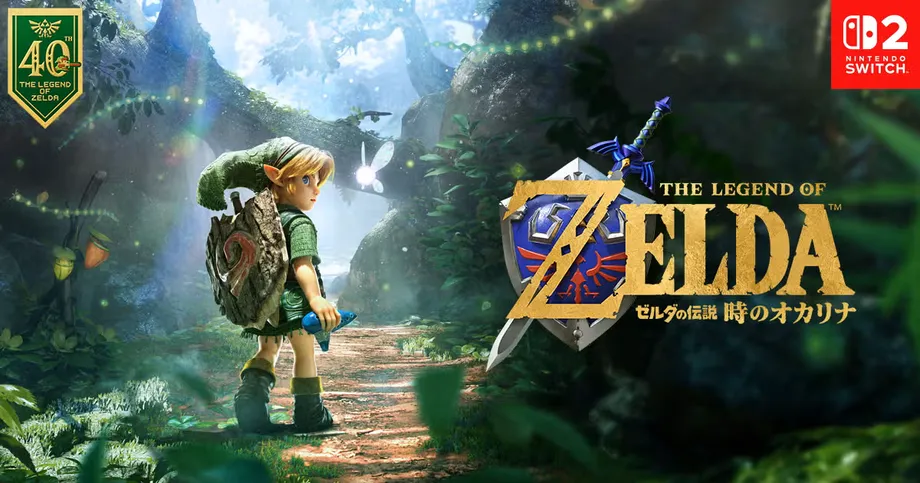
Nintendo will release its remake of The Legend of Zelda: Ocarina of Time for Nintendo Switch 2 on November 5, 2026, bringing fully voiced cutscenes, orchestral music and new movement controls to the adventure first released in 1998. A special anniversary console arrives one week earlier, on October 29, while the series' live-action film is scheduled to open worldwide on April 30, 2027.
Contents
- A return to Hyrule, followed by a worldwide film
- What changes in Ocarina of Time?
- New controls make familiar tasks easier
- The puzzles are familiar, with some surprises
- The ocarina reaches beyond the controller
- Why rebuilding a classic is a delicate job
- The film draws on 40 years of Zelda
- Concerts, collectibles and a Kyoto celebration
- The release calendar and buying decisions
- Key Points
The dates anchor a celebration that stretches beyond the 40th anniversary year into concerts, musical instruments, collectible figures and other products in 2027. Series producer Eiji Aonuma presented the remake's first gameplay during Nintendo's anniversary Direct presentation.
Nintendo's anniversary announcement confirms November 5 as the game's launch date, as does its Malaysian announcement; a preview published elsewhere gave November 14. The company's schedule places the remake at the center of its autumn Zelda releases.
The Legend of Zelda began in Japan in 1986 on the Family Computer Disk System, reaching overseas audiences on the Nintendo Entertainment System about a year later. Its adventures follow Link through the fantasy kingdom of Hyrule, where exploration, puzzles and battles are woven into struggles against threats including Ganon.
Forty years later, Nintendo is using that familiar world in several different ways. The remake gives existing fans a reason to return and newcomers an updated starting point. The film takes Zelda into cinemas, while concerts and merchandise create opportunities to earn money beyond game sales.
What changes in Ocarina of Time?
Ocarina of Time follows Link from Kokiri Forest into a struggle against Ganondorf, with the fairy Navi accompanying him. Its story spans his childhood and adulthood, connecting exploration with changes in Hyrule over seven years.
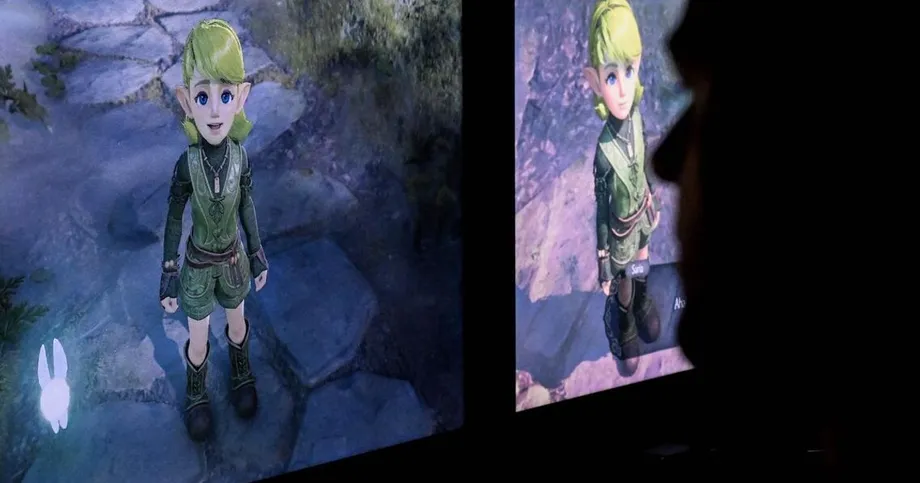
Nintendo says the remake completely rebuilds the visuals, including the textures that give surfaces their appearance. Locations have been remodeled, sound has been refreshed, loading is faster and movement is more responsive. The music receives a symphonic orchestral treatment.
The changes also affect how the world behaves. The cycle between day and night now continues wherever Link goes, including towns. Players can move the camera freely to inspect redesigned buildings, interiors and landscapes.
Expanded cutscenes feature fully voiced characters and more dialogue. Preview sessions indicate that ordinary conversations often retain brief vocal reactions, while important story scenes receive spoken performances. The expansion therefore reaches beyond sharper graphics into how characters express themselves and explain the adventure.
The first production run of the physical game will have packaging with textured foil cover art, available while supplies last. That gives collectors a distinct edition alongside the changes inside the game.
New controls make familiar tasks easier
Link can now jump at the press of a button and dash, rather than relying on automatic jumps at particular edges. Players can also control the camera with the right stick, bringing movement closer to the controls used in Breath of the Wild and Tears of the Kingdom.
Item selection has been revised to reduce trips into menus. Preview demonstrations show a quick selection bar and shortcuts for changing equipment, a useful change in dungeons where players repeatedly switch between tools to solve puzzles.
The familiar targeting system remains. Assigned to ZL, it keeps attention on an enemy or object while Link moves around it. Players can choose whether targeting requires holding the trigger or pressing it once to engage and again to release.
Other settings include camera speed and inversion, optional motion aiming, controller vibration and the ability to swap the jump and attack buttons. Subtitle options can identify the speaker, and players can choose the voice language.
Three display modes, Normal, Pro and Master, offer different amounts of information on screen. Normal includes reminders and status details; Pro reduces them; Master is designed to remove visual guidance. These choices let players decide how much help or distraction they want while exploring.
The puzzles are familiar, with some surprises
Preview sessions covered Kokiri Forest, Castle Town and the Forest Temple, including its boss. One session lasted about two hours, while another examined three sections spanning Link's childhood and adulthood. Their scope gives a detailed look at selected areas rather than the full adventure.
The Forest Temple shows how the game builds challenges around interconnected rooms. Players search for four flames that open the route to the boss, rotate hallways to change their paths and use equipment to reach places that initially seem inaccessible.
Phantom Ganon, the temple's boss, also requires observation. Players must identify the real threat among figures emerging from paintings before responding at the right moment. Success depends on understanding the trick as well as reacting quickly.
Some puzzles, routes and enemy behaviors have been adjusted. A new event in Castle Town involves catching insects for a shopkeeper, with an empty bottle as the reward. Returning players can therefore expect changes within a broadly familiar structure.
Navi offers more reactions and guidance, while a feature called Threads of Time records story progress and the next objective. Nintendo says a large tapestry gradually fills as the journey continues. For someone returning after a break, that provides a practical reminder of where to go next.
The ocarina reaches beyond the controller
The ocarina, a small wind instrument central to the game, gains a new form of input. Players can hum a melody Link has learned near the Switch 2's built-in microphone, prompting him to perform it in the game.
Microphone options also support whistling and music played on an instrument. Button controls remain available, including modes intended for playing with one hand or two hands.
Nintendo plans two physical ocarinas for later in 2026: a playable acoustic instrument and an electric version made by HORI. The electric model can produce notes or entire songs with a button press.
ZELDA NOTES, accessed through the Nintendo Switch App on compatible smart devices, adds another musical option. A virtual ocarina lets users play on a touchscreen, follow a guide, hear automatic performances and create scores to share using QR codes.
The app will also record daily accomplishments and statistics, offer location challenges based on hint images and provide a daily quiz drawn from more than 2,000 questions. It already supports the Switch 2 editions of Breath of the Wild and Tears of the Kingdom, with Ocarina of Time joining that service.
Why rebuilding a classic is a delicate job
Ocarina of Time helped establish ways of navigating and fighting in three dimensions. Its targeting system gave players a reliable way to keep an enemy in view, while music became an interactive tool rather than simply a soundtrack.
Salva Fernández, a video game journalist and author of Zelda, detrás de la leyenda, describes its historical importance in direct terms:
Yes, I think it's the greatest game ever made, because no other game has had that impact,
His assessment reflects the challenge facing Nintendo: players who remember the original may value its exact rhythms, while newcomers arrive with expectations shaped by decades of newer games. Faster item selection and freer camera movement address those expectations without replacing the dungeon structure.
Jaume Esteve, a communications scholar and video game expert, identifies the central design task as finding:
the balance between modernizing a game and preserving what made it a benchmark.
The previewed changes show that balance in concrete form. Link gains a manual jump, but the Forest Temple still asks players to study rooms and uncover routes. Story guidance becomes more explicit, while some puzzles and enemy behaviors change enough to surprise experienced players.
The potential audience is substantial. Reported sales estimates put Breath of the Wild at around 40 million copies and Tears of the Kingdom at roughly 30 million. Many players who discovered Zelda through those games will encounter an earlier style here, with a more directed sequence of dungeons and tools.
The film draws on 40 years of Zelda
The live-action film is officially titled The Legend of Zelda. Nintendo's Malaysian anniversary announcement names Nintendo, Arad Productions Inc. and Sony Pictures Entertainment Inc. as the companies behind its worldwide release on April 30, 2027.
Nintendo describes it as an original film based on the stories, ideas and concepts developed across four decades of Zelda games. That gives the production a wider foundation than the plot of Ocarina of Time alone.
Shigeru Miyamoto, the Nintendo executive who created Zelda, is among the producers. In a statement on Nintendo's website in September, he described the company's approach to changing technology and entertainment:
With the evolution of digital technology and game consoles, we have continued to take on new forms of play,
The film fits Nintendo's effort to earn more from its characters and worlds outside consoles. Its animated The Super Mario Galaxy Movie, released in April, has performed strongly at the box office. Zelda offers another major series for that expansion, this time using live action.
Concerts, collectibles and a Kyoto celebration
The anniversary concert series begins in Japan in January 2027, starting in Tokyo. The North American tour opens in Chicago in February, followed by a European tour beginning in London in April and an Australian tour starting in Melbourne in May.
The programs will draw on music from across the series, linking its earliest melodies with more recent compositions. That extends the celebration to people who want to experience Zelda through a performance rather than a new game.
In Kyoto, the Nintendo Museum's anniversary activities include a special ticket design from September 9 and new photo opportunities from November 5. The Super Family Restaurant is scheduled to open in autumn 2026, with Link and other Nintendo characters featured in its surroundings. Museum anniversary activities are planned to continue for a year.
Young Link and Young Zelda amiibo figures are due in 2027. These separately sold figures can unlock masks in the remake that evoke an older graphical style. Mineru's Construct, an amiibo for Tears of the Kingdom, has a September 17 release date.
Other products include a LEGO Link & Epona display model containing 1,750 pieces, scheduled for spring 2027, and a Hasbro Electronic Master Sword arriving in the same season. The sword measures 27 inches and has more than 15 sounds activated by touch or movement.
The release calendar and buying decisions
The anniversary Switch 2, Pro Controller and carrying case with screen protector use Triforce designs. The controller is planned in versions with and without a display stand, with a store exclusive stand package reported for Nintendo's New York City and San Francisco shops.
Nintendo had not confirmed the remake's price in its anniversary announcements. A digital price of $60 has been reported, while a $70 physical listing appeared briefly before being removed. Final prices, instrument release dates and the full retail availability of the accessories remain unsettled.
The main milestones stretch across several months:
- September 17, 2026: Mineru's Construct amiibo release.
- October 29, 2026: Anniversary Switch 2 console and accessories launch.
- November 5, 2026: Ocarina of Time remake launches on Switch 2.
- January and February 2027: Concert tours begin in Japan and North America.
- April 30, 2027: The Legend of Zelda film opens worldwide.
- Spring 2027: LEGO and Hasbro anniversary products arrive.
The remake also enters a busy month for gaming. Grand Theft Auto VI is scheduled for November 19, two weeks after Nintendo's confirmed Zelda date, and is not planned for Switch 2. The releases therefore reach different console audiences, although some players own more than one system.
Nintendo's schedule connects an October hardware release to a November game and then to entertainment and products in 2027. For players, the immediate decision is whether the updated controls, presentation and guidance make this the right moment to begin or revisit Link's 1998 adventure.
Key Points
- Ocarina of Time launches on Switch 2 on November 5, 2026, following anniversary hardware on October 29.
- The remake adds voiced cutscenes, orchestral music, manual jumping, camera controls and story tracking.
- Selected puzzles, routes and enemy behaviors have changed, according to preview sessions.
- Players can use microphone input for learned ocarina melodies or continue playing with buttons.
- The Legend of Zelda film opens worldwide on April 30, 2027.
- Concerts, amiibo figures, LEGO and Hasbro products extend the anniversary into 2027.
- Final game pricing and some accessory details still await confirmation.