A funding request spanning fuel, farms and banks
Bangladesh has asked the World Bank for $3.77 billion in additional financing for the financial year 2027, combining $2.77 billion for projects with $1 billion in direct budget support. The request includes $350 million in guarantees for liquefied natural gas imports, $450 million for financial sector reforms and $300 million for fertilizer supplies.
Contents
- A funding request spanning fuel, farms and banks
- What the $3.77 billion would cover
- Why gas imports matter beyond electricity
- Fertilizer funding follows a June approval
- Rice production connects imports to household incomes
- How the proposed $10 billion would be divided
- Bank repairs and transport projects share the agenda
- What happened and what comes next
- IMF talks add pressure for revenue and bank reforms
- Key Points
The government is also discussing a broader $10 billion financing framework over three years, called the Resilience, Reform and Investment Partnership (RRIP), beyond regular World Bank allocations. Its proposed spending connects urgent import bills with longer efforts to repair banks, sustain businesses and protect employment.
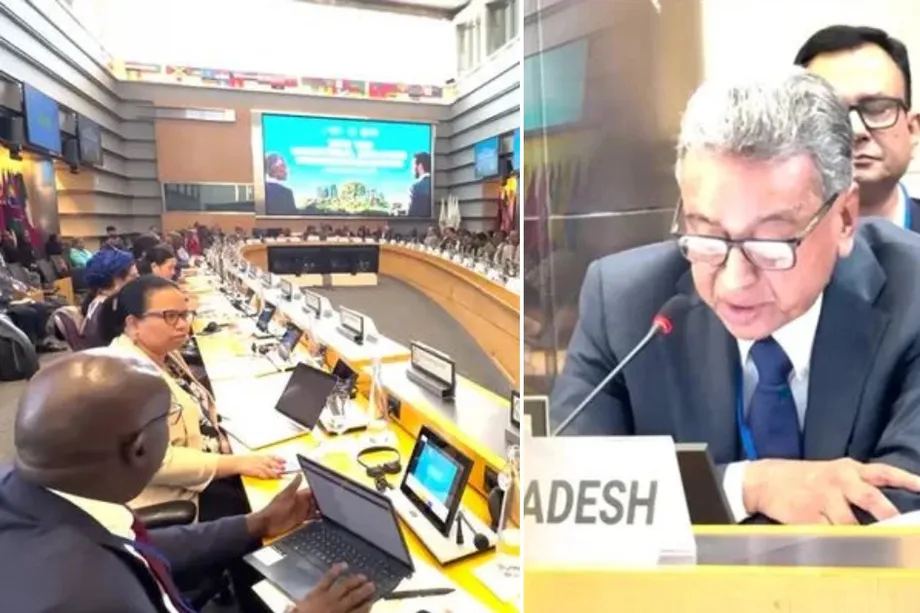
Finance Minister Amir Khasru Mahmud Chowdhury, who led Bangladesh's delegation to the October 12–18 meetings in Bangkok, described the negotiations as continuing.
Discussions are ongoing with the World Bank, and we will continue talks,
The immediate financing request arrives after the World Bank approved emergency assistance in June 2026 for many of the same pressures. That earlier package targeted fertilizer imports, fuel supplies, household incomes and essential services, showing how closely Bangladesh's energy and food needs are linked.
The proposals remain under negotiation. The financing sources, loan terms, reform conditions and relationship between overlapping requests have yet to be settled or fully explained. For households and businesses, the practical stakes are reliable gas, fertilizer delivered before planting deadlines, and banks able to support economic activity.
What the $3.77 billion would cover
The $2.77 billion project pipeline and $1 billion budget request serve different purposes. Project financing supports specified activities, such as importing fertilizer or implementing banking reforms. Direct budget support provides financing through the government's budget, with conditions determined through negotiations.
Three named components account for $1.1 billion of the $2.77 billion pipeline, or about 40%. The figures therefore describe part of a wider programme, which officials said involves 10 pipeline projects for FY27.
- $350 million in International Development Association guarantees for LNG imports.
- $450 million for Financial Sector Support Programme-2.
- $300 million for Emergency Support for Food Security, covering fertilizer import needs.
The International Development Association (IDA) is the World Bank institution that provides concessional financing, meaning support on more favorable terms than ordinary commercial borrowing, to eligible countries. A guarantee works differently from a loan paid directly to the government: it covers specified risks to help a transaction secure financing.
The requested LNG guarantees are intended to support longer supply arrangements at comparatively lower costs. Their value lies partly in helping Bangladesh obtain dependable terms for an essential import while managing pressure on foreign exchange reserves, the foreign currencies used to pay overseas suppliers.
Why gas imports matter beyond electricity
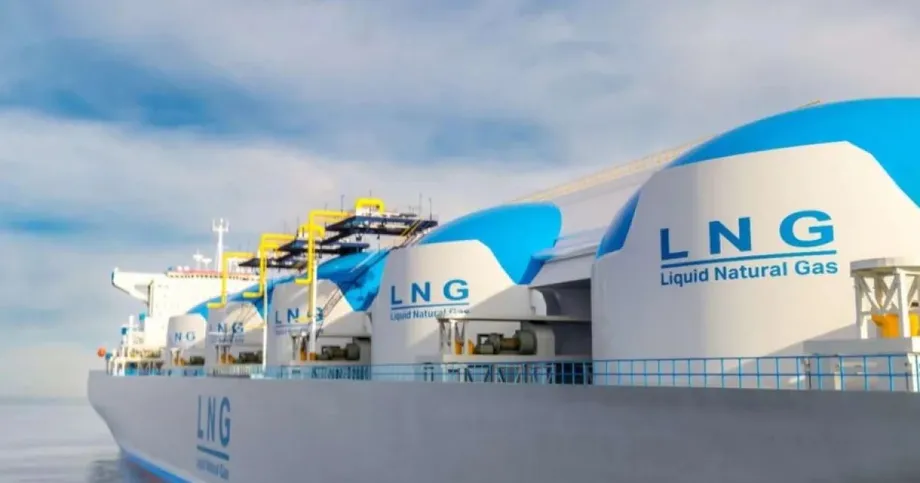
LNG is natural gas cooled into liquid so it can be transported by ship. Bangladesh uses imported gas for electricity generation and industrial production, making access to supplies important for both public services and factory operations.
Higher international fuel prices increase the foreign currency needed to buy the same quantity of energy. Global conflict can also disrupt delivery schedules and supply routes. The financing request seeks to ease those pressures through support for imports and arrangements extending beyond individual purchases.
The World Bank's June emergency package already addressed this connection between fuel availability and essential services. Its emergency response project included energy supplies alongside assistance intended to keep food, medicines, medical equipment and water available during a crisis.
Bangladesh's proposed $10 billion partnership gives urgent imports the largest allocation, $4 billion. That share, 40% of the proposed total, shows the weight the government places on immediate access to energy and fertilizer even while seeking money for longer reforms.
Fertilizer funding follows a June approval
The World Bank's June emergency financing announcement provides the most detailed account of the food security intervention. Published on June 26, 2026, it described $1.1 billion in approved support and listed a $300 million Emergency Support for Food Security Project and a $713 million Contingent Emergency Response Project.
The food security project was designed to finance 600,000 metric tons of fertilizer, half of it urea, for rice cultivation covering 1.4 million hectares. Bangladesh imports more than 85% of its fertilizer requirements, leaving farmers exposed to price increases and interruptions abroad.
The October financing request includes $300 million under the same food security project name. The government has not explained whether this represents the June approval within the financing pipeline, a further request or another financing arrangement. Farmers' immediate need is fertilizer arriving in time for the relevant growing seasons.
Jean Pesme, the World Bank's division director for Bangladesh and Bhutan, linked the June intervention to international price pressures and limited government spending capacity.
Rising food, fertilizer, and fuel prices stemming from the Middle East Conflict, along with tighter fiscal space have deeply impacted Bangladesh's economy, hitting smallholder farmers as well as poor and vulnerable people the hardest,
The June project covered the Aman season from July to October 2026 and the Boro season from October 2026 to April 2027. Those dates make the timing of imports central to the programme: fertilizer delivered after farmers need it has less value for that crop.
Rice production connects imports to household incomes
Aman and Boro together account for about 90% of Bangladesh's rice production, according to the World Bank. Protecting these two seasons therefore reaches far beyond the farmers receiving fertilizer. Rice supplies influence food availability and the budgets of households that buy their food.
Souleymane Coulibaly, the World Bank's lead economist and task team leader for the food security project, described the scale of that exposure.
Bangladesh's food security depends on Aman and Boro rice seasons, which together account for about 90% of the country's total rice production. Further, about half the population is employed in agriculture sector. So, any disruption in fertilizer supply would not only threaten food security, it would deepen poverty and cost jobs,
The June emergency response project extended support to households and businesses through cash transfers and livelihood assistance. It included micro, small and medium enterprises, often abbreviated as MSMEs, whose ability to keep operating affects both employment and local trade.
The World Bank said that project would use unspent financing from existing projects and disburse by June 30, 2026. Redirecting existing funds was intended to make money available quickly when rising import costs threatened incomes and essential services.
How the proposed $10 billion would be divided
The RRIP proposal groups Bangladesh's needs into four spending areas over three years. Alongside $4 billion for urgent energy and fertilizer imports, it assigns $3 billion to financial sector recovery, $1.5 billion to enterprise trade and employment continuity, and $1.5 billion to contingent, catalytic and cofinancing instruments.
Financial sector recovery would take 30% of the total, compared with 15% for business continuity and 15% for the remaining instruments. Urgent imports and banking recovery together would absorb $7 billion, or 70% of the proposed package.
Contingent financing is money available when specified conditions or emergencies arise. Cofinancing brings funding from more than one institution into the same activity. Catalytic instruments are intended to help attract further financing. The proposal groups these tools into a single allocation rather than providing a detailed instrument by instrument breakdown.
Bangladesh and the World Bank intend to incorporate RRIP into the country's next Country Partnership Framework, which guides the institution's priorities for its work with the government. This would place the proposed support within a broader programme of lending and reforms.
Zahid Hussain, a former lead economist at the World Bank's Dhaka office, said Bangladesh's annual allocation under the institution's three year country based IDA programme had never exceeded $4.5 billion. He suggested that the additional $10 billion could require financing through other World Bank channels, making the eventual funding mix central to the negotiations.
Bank repairs and transport projects share the agenda
The proposed $450 million Financial Sector Support Programme-2 targets reforms across banking and the wider financial sector. It sits alongside the larger $3 billion allocation for financial recovery under RRIP, reflecting the government's focus on banks as well as import financing.
Parallel discussions with the International Finance Corporation covered banking reforms, recapitalization, trade financing and private investment. Recapitalization means adding capital to a bank so it has a stronger financial cushion to absorb losses and conduct business.
The government also requested World Bank support for the Dhaka–Chattogram rail chord line, the Dhaka–Chattogram expressway and the Dhaka Inner Circular Ring Road. Preliminary talks covered a broader investment project to restore rivers and canals around Dhaka and address pollution.
These projects address different needs from emergency fertilizer or fuel purchases and require their own preparation. Hussain said financing for major transport proposals would depend on project design and implementation capacity, meaning the ability to prepare, manage and complete the work.
What happened and what comes next
The financing discussions developed across several meetings, beginning with talks between Bangladesh's prime minister and the World Bank president. The government is targeting June 2027 to finalize the partnership framework.
- June 26, 2026: The World Bank announced emergency support covering fertilizer imports, essential supplies and livelihoods.
- September 22, 2026: Prime Minister Tarique Rahman raised the additional financing proposal with the World Bank president during the UN General Assembly in New York.
- October 12–18, 2026: Bangladesh's delegation discussed the framework and project pipeline at the IMF–World Bank annual meetings in Bangkok.
- Within 60 days of the discussions: A joint technical team is expected to bring together the Economic Relations Division, the World Bank and other stakeholders.
- June 2027: The government aims to complete the framework.
The technical team's task is to turn broad allocations into a workable partnership. That requires matching projects and reforms with financing instruments, responsibilities and a schedule for delivery.
IMF talks add pressure for revenue and bank reforms
Bangladesh is also seeking a $4.5 billion package from the International Monetary Fund. During the Bangkok discussions, the IMF called for higher tax revenue relative to the size of the economy and action to address capital shortages in banks.
The tax to GDP ratio compares government tax collections with the value of goods and services the economy produces. Raising it would give the government more domestic revenue to meet spending needs. The finance minister acknowledged that an IMF facility would carry stringent performance criteria, with a technical team expected in Dhaka within two weeks of the October discussions.
A delegation led by Tanvir Shariar Gani, the prime minister's special assistant for investment and capital markets, also held talks with international banks, financial infrastructure providers, ratings specialists and Google. Subjects included Bangladesh's credit ratings, possible government bond issuance and the investment climate.
Fahmida Khatun, distinguished fellow at the Centre for Policy Dialogue, said the government had limited fiscal space to meet pressing needs. She called for spending discipline as Bangladesh seeks more external borrowing.
To prevent adding to the burden of existing debt, funds must be spent transparently and efficiently, with clear, measurable outcomes.
Her warning identifies a practical test for the financing programme: whether borrowed money delivers fertilizer, dependable energy, stronger banks and completed projects at a cost the country can repay.
Key Points
- Bangladesh seeks $3.77 billion for FY27, comprising $2.77 billion in project financing and $1 billion in budget support.
- Named requests include $350 million in LNG guarantees, $450 million for financial reforms and $300 million for food security.
- A proposed $10 billion partnership over three years would put 70% toward urgent imports and financial sector recovery.
- The World Bank approved emergency fertilizer and livelihood assistance in June 2026; the relationship with the October food security request needs clarification.
- The government aims to finalize the broader framework by June 2027 while pursuing separate IMF financing talks.