A teenager receives treatment made in Kathmandu
A 17-year-old patient with blood cancer has received Nepal's first locally manufactured CAR-T cell therapy at Tribhuvan University Teaching Hospital in Maharajgunj, Kathmandu. Doctors Anjan Shrestha and Prasun Upadhyay said the patient was stable, with encouraging early signs after receiving the modified immune cells on September 27.
Contents
- A teenager receives treatment made in Kathmandu
- How the treatment turns immune cells against cancer
- What doctors have observed so far
- From a 2022 initiative to the first infusion
- What the laboratory study found
- Local manufacturing still depends on a wider supply chain
- A free first treatment, but a substantial cost challenge
- Why specialist monitoring is part of treatment
- What Nepal's experience offers other countries
- Key Points
The Centre for Regenerative Medicine Nepal, known as CRM Nepal, produced the treatment and provided it free because of the patient's financial hardship and the significance of the first treatment in the country. The team plans to monitor the teenager for a year to assess the response and whether the cancer has been eliminated.
The treatment brings together several years of laboratory development, preparation for manufacturing and work with hospital specialists. Nepal's Department of Drug Administration approved the domestically produced CD19 CAR-T product for clinical use in 2026. Its intended uses include B-cell acute lymphoblastic leukaemia and diffuse large B-cell lymphoma, two types of blood cancer.
For eligible patients, local production opens a route to treatment within Nepal instead of travelling to countries such as India or China. Whether that route becomes affordable for more families will depend on costs, funding and the capacity of hospitals to deliver the therapy safely.
How the treatment turns immune cells against cancer
CAR-T therapy starts with T cells, a type of white blood cell that helps the immune system fight threats. A patient's T cells are collected from the blood and genetically modified in a laboratory so they can recognise a particular target on cancer cells.
The modified cells are multiplied and returned to the patient through an infusion. CAR stands for chimeric antigen receptor, the added receptor that helps the T cells find their target. In Nepal's product, that target is CD19, a marker found on certain cells involved in blood cancers.
Dr Shrestha, a blood and cancer specialist leading the hospital team, said the treatment could be useful when disease returns after chemotherapy or medicines stop working. The exact blood cancer diagnosis of the teenager was not disclosed.
What doctors have observed so far
Dr Shrestha and Dr Upadhyay said the teenager underwent careful preparation before the infusion and close monitoring afterward. CRM Nepal described the initial response as encouraging, while scientist Sanjivan Gautam reported a promising increase in CAR-T cells in the patient's blood.
Doctors will follow the patient over the coming year to measure the treatment's full effect. For the family, the immediate development is access to a therapy that previously would have required seeking care abroad, alongside continued observation at the teaching hospital.
The infusion date was given as September 27 in the English account of the doctors' announcement. The Nepali account used Asoj 11, a date in Nepal's calendar, rather than October 11. Keeping the calendar distinction clear helps place the treatment accurately within the programme's development.
From a 2022 initiative to the first infusion
Gautam, a Nepali immunologist based in the United States, has worked on the initiative since 2022. CRM Nepal credited a wider group of contributors, including Professor Om Kurmi, Dr Sudhanshu KC, geneticist Balaram Gautam, Luca Gattinoni and Dr Dilip Sharma.
Gattinoni, a professor and director of the Division of Functional Immune Cell Modulation and project coordinator at T-FITNESS, recalled visiting Nepal for an international meeting three years before the treatment announcement. In a LinkedIn post, he congratulated his former postdoctoral researcher Gautam, CRM Nepal and the hospital team.
It has been a privilege to support this effort from the start.
The programme's main steps show how the work moved from organising expertise to treating a patient:
- 2022: Gautam began contributing to the development initiative.
- 2023: A conference lasting two days in Kathmandu brought together clinicians, scientists, regulators and government officials to discuss cellular therapies.
- Laboratory development: CRM Nepal tested local manufacturing capabilities using T cells from healthy donors.
- 2026: The Department of Drug Administration approved the CD19 CAR-T product for clinical use, with approval reported by March 7.
- September 27: The first patient received the locally manufactured therapy at Tribhuvan University Teaching Hospital.
The next stage described after approval was clinical implementation in cooperation with doctors across Nepal. The first infusion gives that effort a concrete starting point.
What the laboratory study found
The academic article CAR-T cell therapy in developing countries: how long should we wait?, published in the Journal for ImmunoTherapy of Cancer, documents the scientific preparation behind Nepal's programme. It describes a feasibility study designed to test whether local laboratories could manufacture the cells.
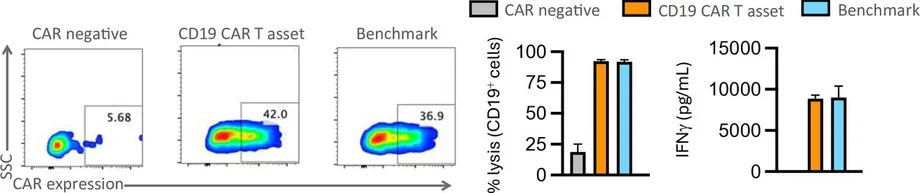
Researchers used T cells from healthy donors and produced three batches. All three met the full list of manufacturing specifications. Between 25% and 58% of cells in the products showed the added CAR receptor, a measurement the researchers called CAR positivity.
The manufactured cells killed cells carrying CD19 in laboratory tests and released immune signalling proteins, including interferon-gamma. The researchers also reported comparable patterns of cell expansion and product potency across donors. In simple terms, the laboratory could make modified cells that multiplied and acted against their intended target.
The study used materials sourced within Nepal and from abroad. Items obtained from India included cell culture materials, interleukin-2 and activation beads, while antibodies and materials for genetic modification came from the United States. The work established a practical manufacturing foundation before the move into patient treatment.
Local manufacturing still depends on a wider supply chain
CRM Nepal's academic account described plans for a central manufacturing and distribution system in Kathmandu. Under that model, hospitals collect a patient's cells through leukapheresis, a procedure that separates selected white blood cells from the blood. The collected cells then travel to the manufacturing centre.
The centre modifies and grows the cells using standard procedures, then sends the finished product back to the hospital for infusion. Hospital teams remain responsible for administering treatment, managing the patient and tracking the response.
At the time of the study, CRM Nepal was constructing two facilities designed to meet Good Manufacturing Practice standards. These standards govern how medical products are made, with procedures intended to keep production consistent and control contamination.
Manufacturing in Nepal therefore involves more than having a laboratory capable of modifying cells. It requires coordinated collection, transport, production, testing and hospital care. Imported materials also remain part of the process, even when the finished therapy is made locally.
A free first treatment, but a substantial cost challenge
CRM Nepal's decision to provide the first patient's cells free of charge removed a major financial barrier for that family. The earlier academic study, however, estimated a cost of approximately US$40,000 per patient for the planned programme.
The researchers said much of that estimate came from imported reagents, the materials used to grow, modify and test the cells. Supplies were expected to come from developed countries as well as China and India. The study said a precise manufacturing cost would be determined closer to the start of clinical production.
CRM Nepal proposed operating production on a nonprofit basis, with support from government, hospitals, private organisations and academic centres. That approach places funding alongside manufacturing as a central part of expanding access.
Families who previously had to consider treatment abroad may gain an option closer to home, reducing the need for international travel and care arrangements in another country. A projected cost of US$40,000 still makes financial support a major concern for patients with limited means.
Why specialist monitoring is part of treatment
CAR-T therapy can provoke serious reactions because the modified immune cells activate inside the body. CRM Nepal's academic account set out plans to train nurses and critical care clinicians to recognise and manage these problems using established protocols.
One concern is cytokine release syndrome, an inflammatory reaction that can occur when activated immune cells release large amounts of signalling proteins. The planned response included tocilizumab and corticosteroids, medicines used to reduce the inflammatory response.
Another concern is a neurological reaction known as immune effector cell-associated neurotoxicity syndrome. The programme described close monitoring for neurological symptoms and corticosteroids when needed. It also planned supportive treatment for low blood cell counts, including growth factors and transfusions.
The preparation extended to intensive care admission protocols, checks on vital signs and continuing patient assessment. At Tribhuvan University Teaching Hospital, the teenager's special monitoring is part of the clinical work that accompanies the infusion, rather than an optional final step.
What Nepal's experience offers other countries
Gattinoni described the first treatment as an achievement with relevance beyond Nepal. His message connected the local programme to the broader challenge of making advanced cancer care available in countries with fewer resources.
Nepal can now be a model for other low- and middle-income countries seeking to bring CAR-T therapy to their patients.
The academic study identifies practical lessons behind that ambition: bring scientists, clinicians and regulators together early; build manufacturing capacity; arrange access to essential materials; and train the staff who will care for patients. The 2023 Kathmandu conference addressed those tasks together, including regulation and international collaboration.
Senior cancer specialist Dr Bishnudatta Poudel also welcomed the local manufacturing achievement.
"I am amazed. Producing CAR-T cells in Nepal is a major breakthrough in cancer treatment," said Dr Bishnudatta Poudel.
Nepal now has experience across laboratory production, regulatory approval and a first hospital infusion. Turning that first treatment into a service for more patients will require the same parts to work repeatedly, with reliable funding and sustained clinical follow-up.
Key Points
- A 17-year-old blood cancer patient received Nepal's first locally manufactured CAR-T therapy at Tribhuvan University Teaching Hospital.
- Doctors gave the infusion date as September 27 and reported a stable condition with encouraging early signs.
- The patient will be monitored for a year to assess the treatment's full effect.
- Nepal's Department of Drug Administration approved CRM Nepal's CD19 CAR-T product for clinical use in 2026.
- All three products in the earlier laboratory feasibility study met manufacturing specifications.
- The first treatment was provided free, while an earlier programme estimate put costs at approximately US$40,000 per patient.
- Expanding access requires manufacturing capacity, specialist hospital care, imported supplies and financial support.