Nearly four in five people needing care go without it
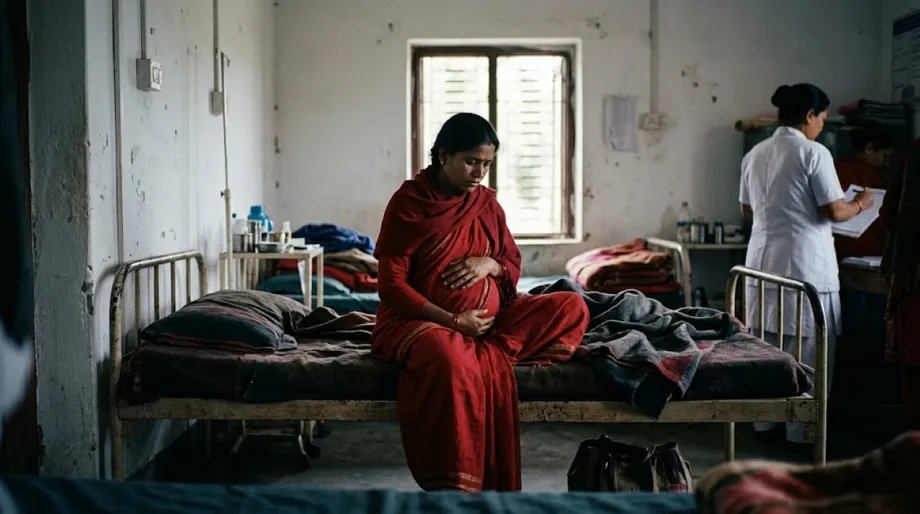
Nepal's mental health crisis is as much about access to treatment as the number of people experiencing illness. Dr Krishna Prasad Paudel, acting director general of the Department of Health Services, says around 80% of people needing mental health care cannot obtain the services they require, while only about 20% receive them when needed.
Contents
- Nearly four in five people needing care go without it
- What the national survey actually measured
- Cost and uncertainty keep treatment out of reach
- Expansion beyond cities has begun, but coverage is uneven
- A small budget must support a broad response
- Court directions and legislation follow years of delay
- Suicide prevention needs dependable records and referrals
- The 1166 helpline provides a route into care
- Youth research connects adversity with mental health risk
- Rights protections must reach local communities
- Key Points
The strongest national evidence helps define that gap. The Nepal Health Research Council's National Mental Health Survey collected data from 15,088 people between January 2019 and January 2020 across all seven provinces. It found that 10% of adults had experienced a mental disorder during their lifetime and 4.3% had a current disorder, measured over the previous month. Among adolescents aged 13 to 17, lifetime prevalence was 5.2%.
These figures describe different things. The 80% treatment gap concerns people who need care, not 80% of Nepal's entire population. The adult lifetime figure also does not mean that one in ten adults was experiencing a disorder at the moment of the survey.
Speaking at an event organized by the Health Journalists Forum, Paudel described inadequate funding, limited community services and incomplete suicide reporting as major obstacles. Reports surrounding World Mental Health Day 2026 describe government commitments to legislation, hospital beds and new suicide risk guidance. They also describe continuing delays in carrying out a Supreme Court order to rebuild the country's mental health structures.
The central issue is whether those commitments can become dependable services outside major cities, backed by trained staff, affordable treatment and protection from discrimination. Earlier official assessments document progress, but also show how much of the service network still needed development.
What the national survey actually measured
The national survey included 9,200 adults and 5,888 adolescents in 68 of Nepal's 77 districts. Its size and coverage make it a stronger national baseline than figures drawn from small preliminary studies or surveys of particular age groups.
Different prevalence estimates nevertheless circulate. A separate account attributes a figure of 4% to a national health survey dated 2077 in Nepal's calendar, while also citing a much broader 30% estimate without explaining its measurement or population. A published academic review reported 12.9% from a pilot mental health survey. None should be treated as interchangeable with the completed national survey's 10% adult lifetime prevalence or 4.3% current prevalence.
The distinction matters for planning. A lifetime measure captures anyone who has met the survey's criteria at some point, including people whose condition has improved. A current measure captures a narrower period. Neither is a count of everyone experiencing distress, and a history of adversity is not itself a mental disorder.
The national survey also found geographic and demographic differences. Adult lifetime prevalence was highest in the area then called Province 1, at 13.9%, while current prevalence was highest in Bagmati, at 5.9%. Adults aged 40 to 49 had the highest lifetime and current prevalence, at 13.3% and 6.3% respectively.
Cost and uncertainty keep treatment out of reach
The survey's treatment table records that 40.1% of adults with symptoms or a diagnosed disorder discussed their symptoms with someone. Only 3.5% spoke with a health professional. Treatment seeking was recorded at 22.7%, and adherence to prescribed treatment at 21.1%. These are separate survey indicators, not a sequence of percentages that should be multiplied together.
Practical barriers were substantial: 24.9% reported uncertainty about where to obtain professional care, 19.5% could not afford the financial costs, and 14% had difficulty taking time away from work. The survey also identified attitudes such as expecting symptoms to resolve without help or wanting to manage them alone.
Average spending on treatment over the previous 12 months was NPR 16,053, with a further NPR 4,146 for transport and NPR 3,460 in other associated costs. Those amounts total NPR 23,659. Transport and other costs therefore represented about 32% of the combined expense, showing why the price of a consultation alone does not capture the burden of obtaining care.
Adults sought help from doctors without specialist psychiatric training more often than from psychiatrists, at 8.8% compared with 6.5%. Faith healers accounted for 6.7%. The survey recommended integrating mental health into routine care and preparing general medical and nursing staff to manage conditions under specialist supervision.
Expansion beyond cities has begun, but coverage is uneven
The World Health Organization's Nepal service assessment documents a limited starting point: in 2021, only one in four health facilities offered mental health services, mostly in major cities. Among facilities offering those services, just 16% had a worker who had received mental health training during the previous two years.
By its 2022 assessment, primary care and district hospital mental health services had expanded to 35 of 77 districts, about 45% of the total. At least one doctor in each of those 35 district hospitals had been trained. More than 1,700 health workers received mental health training in 2022, including programme managers, primary care providers and female community health volunteers.
Dr Rajesh Sambhajirao Pandav, WHO representative to Nepal, described the need for wider access in the agency's account:
The magnitude of mental disorder in Nepal underlines an urgent need to strengthen and expand effective, affordable, and quality mental health care in Nepal.
The figures show an expansion of capacity, not proof that all patients in those districts could obtain continuous treatment. WHO also reported that, by December 2022, three of 13 general hospitals being monitored had established acute mental health services for admitted patients.
An academic services review, using 2020 resource figures, recorded 200 psychiatrists, 25 psychiatric facilities admitting patients and 500 psychiatric beds. Later reports place registered psychiatrists at roughly 274 to 300, although the different dates and definitions prevent a precise comparison. The review also identified inadequate clinical supervision and irregular medicine supplies as weaknesses in community programmes.
A small budget must support a broad response
Paudel says the Epidemiology and Disease Control Division, which houses the section responsible for mental health programmes, must fund training, community activities and the Mental Health Gap Action Programme from a division budget of around NPR 520 million. That is not a dedicated mental health allocation.
The Mental Health Gap Action Programme, commonly called mhGAP, supports care by workers who are not mental health specialists. Its purpose is to make assessment and basic treatment available closer to where people live, with referral when more specialized care is required. Training needs continuing supervision, medicines and functioning referral services to translate into reliable treatment.
The academic review records mental health spending at 0.2% of the health budget in 2020, compared with 0.8% in 2008. The recorded share was therefore one quarter of its earlier level, a 75% reduction in the proportion allocated. Those percentages alone do not establish whether spending in rupees fell.
Reports differ on the wider health budget. The account of Paudel's remarks at the journalists' event says actual health investment remained around 5%, despite a strategy targeting 10% across the three levels of government. Another account quotes him as saying government had allocated at least 10%. The academic review's historical table gives 6.15% for 2020. Different periods or budget definitions may explain some variation, but a consistent current figure is not established.
Paudel also pointed to the word gradually in the financing strategy as a reason the 10% target had not produced the expected increase. Some mental health activities continue with support from partner organizations, leaving the scale of public financing central to sustained expansion.
Court directions and legislation follow years of delay
On Mangsir 17, 2081 in Nepal's calendar, corresponding to December 2, 2024, the Supreme Court issued a reported order containing 12 directions. These included revising the National Mental Health Policy of 2053, adopted in 1996, and creating a policy with adequate strategies to deliver mental health rights.
The order called for a dedicated division at federal level, branches in the provinces and contact persons locally. It also directed hospitals under federal and provincial governments to develop services involving psychiatrists, psychologists, psychiatric nurses, social workers and psychotherapists, for both admitted patients and people attending consultations.
Matrika Devkota, executive director of Koshish Nepal, has pointed to the absence of a separate federal division as an obstacle to programme implementation. Advocate Sharmila Parajuli has argued that the mental health bill under preparation should establish structures at all three levels in line with the court's directions.
Health and Food Hygiene Minister Nisha Mehta, speaking at a ministry event for World Mental Health Day 2026, said the Cabinet had approved a mental health concept paper and that legislation would be developed from it. She also committed to allocating mental health beds in hospitals with capacity exceeding 100 beds. Approval of a concept paper is a preparatory step, not passage of an act.
The sequence shows repeated attempts to move from policy to delivery:
- 1996: Nepal adopted its first National Mental Health Policy, later described in the academic review as poorly implemented.
- December 2020: The National Mental Health Strategy and Action Plan was launched.
- February 2021: Nepal joined WHO's Special Initiative for Mental Health.
- October 10, 2022: Government endorsed the National Mental Health Care Strengthening Programme.
- December 2, 2024: The Supreme Court issued directions on policy, institutions, staffing and rights.
- World Mental Health Day 2026: Reports describe commitments on legislation and hospital beds, and the release of new suicide risk guidance.
Suicide prevention needs dependable records and referrals
Paudel cited roughly 7,200 suicide deaths annually and a rate of 24 deaths per 100,000 people. He described the task of bringing that rate below five in connection with sustainable development goals. The target is a rate per 100,000, not a percentage. Moving from 24 to below five would require a reduction of more than 79%.
He referred to a remaining period of about three and a half years, but the journalists' event is not dated, so that statement cannot establish a precise deadline. Separately, WHO's global mental health action plan calls for suicide rates to fall by at least one third by 2030. That global benchmark and the national rate cited by Paudel are distinct targets.
Incomplete reporting makes progress difficult to measure. Paudel said many deaths do not reach police or health institutions. The academic review identified the absence of a national suicide registry, while a later UN account described a registry prototype and plans for a pilot. A proposed pilot is not confirmation of a functioning national registry.
The National Guideline on Suicide Risk Assessment and Management, 2083, released at an event for World Mental Health Day 2026, seeks to organize risk identification, assessment of severity, safety planning, initial support and referral for further treatment. The Department of Health Services says implementation will run through health structures in all seven provinces and local governments, supported by training, technical assistance and monitoring.
The guideline also calls for better records of suicide and self harm. No firm legislative timetable, full implementation deadline or verified national registry completion date is established in these announcements.
The 1166 helpline provides a route into care
The UN's national helpline account says Nepal's suicide prevention number, 1166, became fully functional on May 5, 2021. Based at the Mental Hospital in Lagankhel, Lalitpur, it received technical and financial support from WHO and operational support from the Transcultural Psychosocial Organization Nepal.
Counsellors assess immediate risk, help callers connect with support, arrange referrals where needed and make follow up calls. The account also describes plans for expanded online access and a national suicide prevention resource centre. These developments position the helpline as a route into services rather than a substitute for continuing treatment.
Two official accounts give different call totals. The UN account records more than 3,000 calls through March 31, 2022, with nearly a quarter concerning suicide or other mental health issues. WHO's service assessment records 1,764 calls by November 2022 from people with suicidal thoughts or mental health concerns. These may represent different categories, but the accounts do not explain the difference, so the figures cannot establish a trend in total calls.
WHO also reported psychosocial support for more than 40,000 people by November 2022, including 20,000 children and 3,000 health providers. In Bagmati, 116 school nurses and 269 teachers across 120 schools received training in emotional skills, screening and initial management.
Youth research connects adversity with mental health risk
A separate household survey conducted from March to September 2025 examined 6,055 people aged 16 to 29 in Bagmati, Madhesh and Sudurpashchim. Researchers including Subash Thapa, Nancy Ross and Santosh Giri conducted the study with funding from Charles Sturt University.
Among participants, 62.4% reported at least one adverse childhood experience, and 10.4% reported four or more. Such experiences included abuse, neglect, household violence and substance use within the family. This does not mean that 62.4% had a mental disorder.
The survey recorded anxiety in 24.3%, depression in 6%, psychological distress in 9.8% and a history of suicide attempts in 1.9%. Participants reporting four or more adverse experiences had a reported 9.6 times greater likelihood of a suicide attempt than those reporting none. Anxiety prevalence was 44.9% in the group with four or more experiences, compared with 18.8% among those with none, a difference of 26.1 percentage points.
Bullying had a strong association with all four outcomes. Social support and resilience, meaning the capacity to cope with adversity, appeared protective. Researchers recommended earlier identification through schools and primary care, with support directed toward economically disadvantaged young people and young women.
The study measured experiences and outcomes at one point in time, so it cannot prove that childhood adversity caused later mental health problems. Its coverage of three provinces and households also limits national conclusions and may exclude homeless or institutionalized young people.
Rights protections must reach local communities
The National Human Rights Commission has called for affordable, accessible and good quality mental health services without discrimination. Its monitoring found that affected people's voices and experiences were often ignored, leaving them exposed to neglect, abuse and violations of their rights.
The commission identified a severe shortage of community counselling staff and urged all three levels of government to provide local psychosocial support. It cited constitutional protections under Article 16 on dignity, Article 18(2) on protection from discrimination and Article 35 on health, alongside the Public Health Service Act of 2075, adopted in 2018.
Privacy and meaningful participation in decisions about treatment are part of that demand. Paudel's warning about floods, landslides and earthquakes also points to needs beyond hospital care. The combined policy challenge is to connect health services with community support, disaster response, education and social protection, while ensuring that promised institutions have staff and funding.
Key Points
- Nearly 80% of people needing mental health care in Nepal are estimated to go without it.
- The national survey found adult lifetime mental disorder prevalence of 10% and current prevalence of 4.3%.
- WHO documented service expansion to 35 of 77 districts by 2022, alongside major staffing and training gaps.
- A 2024 Supreme Court order called for revised policy, dedicated institutions and broader hospital services.
- Reports surrounding World Mental Health Day 2026 describe new suicide risk guidance and commitments on legislation and beds, without firm completion dates.
- The 1166 helpline supports crisis care and referrals; prevention also requires continuing treatment, community support and reliable records.