Behind the one in four figure
About one in four women in Nepal experiences some form of abuse during childbirth, according to a figure attributed to the Nepal Health Facility Survey 2021. Separate research involving 62,926 women in 11 public hospitals reveals another dimension of the problem: 84.3 percent had no opportunity to discuss their concerns, and 80.4 percent were not adequately informed about their care.
Contents
- Behind the one in four figure
- What the largest hospital study found
- Who faces the greatest risk?
- What mothers described at Bharatpur Hospital
- Consent and privacy are measurable gaps
- Violence also follows women home
- Seti complaints show the pressure on maternity wards
- Rights exist, but reform is still being debated
- Longer maternity leave is a separate protection debate
- Key Points
Those findings put communication, consent and dignity at the center of a debate often framed around physical violence. Reaching a hospital does not necessarily mean a woman can ask questions, understand a procedure, maintain her privacy or receive help when she needs it.
A 2026 exploratory study by the Forum for Women, Law and Development (FWLD) extends the picture beyond hospital wards. It surveyed 1,680 women across all seven provinces, with 560 participants each during pregnancy, childbirth and the postpartum period, and included observations at 43 health facilities. Violence was reported by 38.4 percent during pregnancy, 37.9 percent during childbirth and 35.9 percent after birth.
These percentages measure different experiences. The FWLD findings include violence within families and communities as well as health facilities. They cannot be read as a direct update to the one in four childbirth abuse figure or as a national estimate of violence over a woman's lifetime.
The distinction matters for the response. Hospital reform must address treatment by health workers and failures in care, while protection during pregnancy and after delivery must also reach women facing abuse at home. Nepal's constitutional and legal recognition of reproductive rights has not resolved either problem.
What the largest hospital study found
The multicentric prevalence study, published in BMC Pregnancy and Childbirth, followed women in 11 public hospitals across six of Nepal's seven provinces between April 2017 and October 2018. Researchers interviewed participants before discharge and assessed experiences during childbirth and the postnatal period.
Of the women enrolled, 53,047 had no opportunity to discuss concerns, and 50,593 were not adequately informed about the care provided. Another 944 women, or 1.5 percent, reported being refused care because they could not pay during the postpartum period.
At the same time, 99.2 percent reported no physical, verbal or sexual abuse during childbirth. That finding differs sharply from figures discussed at the FWLD event, including 23 percent experiencing verbal abuse or disrespect and 13.23 percent experiencing physical mistreatment such as beating, slapping or pinching.
The discrepancy cannot be resolved by treating all these measures as interchangeable. The hospital study used a particular questionnaire, covered selected institutions and interviewed women while they were still inside hospitals. Its authors cautioned that interviews in that setting, together with quality improvement activities at participating hospitals, might have contributed to underreporting.
Figures presented in the FWLD discussion also included 72.2 percent experiencing disrespectful service, 66.6 percent experiencing unsafe service involving inadequate privacy, and 35.6 percent experiencing neglect. The denominators and methods behind those percentages are not sufficiently specified to compare them directly with the hospital cohort. They should not be added together or presented as a single national rate.
Who faces the greatest risk?
The evidence points consistently to unequal experiences across caste and ethnic groups, but it does not give one consistent answer about age. The FWLD discussion identified women aged 35 or older as being at greater risk of obstetric violence.
The larger hospital cohort found the opposite age pattern. Women aged 18 or younger had higher mistreatment index scores than every older age group, including women aged 35 or older. That index combined several indicators of care into a score rather than measuring physical violence alone.
Different populations, definitions and periods may help explain the disagreement, but the research does not establish which factor accounts for it. A policy focused only on older mothers would therefore overlook evidence of vulnerability among adolescents.
On ethnicity, the hospital study found higher mistreatment scores among Dalit, Muslim and Janjati women than among Chettri women. The FWLD discussion also identified Muslim and Dalit women as disproportionately affected. These findings support attention to discrimination alongside improvements in staffing, communication and clinical care.
What mothers described at Bharatpur Hospital
A qualitative childbirth study published online in Global Public Health on December 12, 2024, examined experiences at Bharatpur Hospital in Chitwan district. It was subsequently included in the journal's 2025 volume. Researchers conducted detailed interviews with 16 mothers between five and 16 weeks after delivery.
The women were deliberately selected because they had reported mistreatment. The study therefore explains how abuse and neglect were experienced, not how frequently they occurred among all women using the hospital. Interviews took place at participants' homes, away from the institution where they had received care.
Participants described physical and verbal abuse, threats, painful procedures, treatment without consent, inadequate privacy and neglect. Researchers grouped the findings into four themes: mistreatment and undignified care, health system constraints, adverse hospital culture, and displays of power and control.
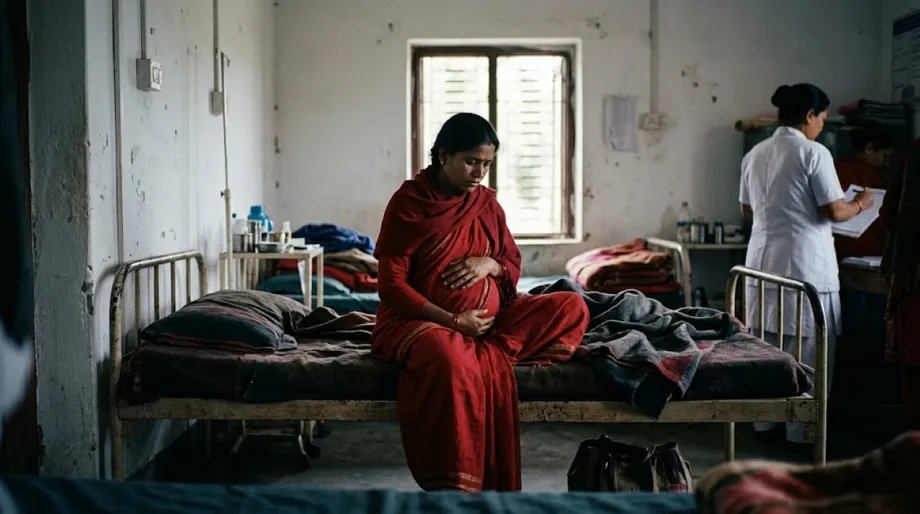
The study connects individual experiences with overcrowding, limited resources, workplace stress, rigid professional hierarchies and practices that had become accepted within the hospital. Restricted birth companionship left some women giving birth alone and feeling afraid.
Its conclusions go beyond a call to punish individual misconduct. They point toward allowing support during childbirth, addressing solitary births and improving conditions for staff while protecting the dignity and choices of patients. Resource shortages can help explain poor care, but they do not make threats, humiliation or treatment without consent acceptable.
Consent and privacy are measurable gaps
The 2026 FWLD research found that 14.3 percent of women surveyed during childbirth received no information about the services provided to them. Another 19.5 percent said providers did not create an environment where they could ask questions and receive proper answers.
Among women surveyed during pregnancy, 15.2 percent reported physical examinations without informed consent. The corresponding figure after childbirth was 13.8 percent. Informed consent means receiving an understandable explanation and having a meaningful opportunity to agree to care, rather than simply undergoing an examination without knowing what is happening.
During childbirth, 41.1 percent said they were not given a choice or alternative concerning the delivery method, including vaginal birth or cesarean section. That finding does not establish that every procedure was medically unnecessary. It identifies a reported lack of participation in decisions about delivery.
Privacy was not maintained for 25.2 percent of women during childbirth and 27 percent after birth. In Gandaki, those figures reached 52.5 percent and 56.3 percent respectively. The childbirth figure in Gandaki was more than twice the 25.2 percent recorded across the surveyed childbirth group.
Violence also follows women home
The FWLD study found emotional violence to be the most widely reported form across the three periods: 30.7 percent during pregnancy, 32.7 percent during childbirth and 30 percent postpartum. Physical violence was reported by 4.5 percent, 3.2 percent and 4.5 percent respectively, while sexual violence was reported by 16.1 percent, 9.5 percent and 16.4 percent.
Among women who reported violence, husbands were identified as perpetrators by 52.1 percent during pregnancy, 44.9 percent during childbirth and 47.8 percent postpartum. Family members and relatives were identified by 60 percent, 64.4 percent and 71.1 percent respectively. These categories overlap because women could identify more than one perpetrator.
Sabin Shrestha, FWLD executive director and lead researcher, linked the violence to beliefs and discrimination operating across homes, communities and health institutions.
"Superstitions, traditional beliefs and gender bias, including preferences based on whether a woman gives birth to a son or daughter, also contribute to such violence," he said.
Krishna Kumari Paudel Khatiwada, spokesperson and member of the National Women Commission, identified son preference as a continuing source of discrimination.
"Even educated families continue to discriminate against women because of son preference," she said.
Nepal Police registered 14 complaints involving pregnant women who were assaulted and subsequently suffered miscarriages in fiscal year 2024/25, including 12 in Madhesh and one each in Lumbini and Koshi. These are registered complaints, not a measure of all such incidents. Shrestha said dependence on relatives, reconciliation of cases as family disputes and difficulties establishing a connection between assault and miscarriage could discourage reporting.
Seti complaints show the pressure on maternity wards
At Seti Provincial Hospital, the largest hospital in Sudurpashchim, Ambika Bhandari, district chair of a women human rights defender network, described continuing complaints of scolding, offensive language, reprimands during labor and delayed services.
Bhandari also reported that two or three women could have to share a bed while giving birth. Although many hospital services had moved to a new building, she said maternity services remained in an old building unsuitable for maternity care. These are allegations raised in the discussion, rather than findings from an independent inspection.
The complaints connect the questions of conduct and capacity. Shared beds and unsuitable space threaten privacy even before a health worker speaks to a patient. Delays and harsh treatment can then compound the distress of labor.
Care after delivery presents another gap. In the 11 hospital cohort, 73.7 percent of mothers were not counselled about newborn danger signs, 59.9 percent of newborns were not examined at discharge, and 40.6 percent were not examined in the mother's presence. These findings show why respectful maternity care must extend beyond the delivery room.
Rights exist, but reform is still being debated
Nepal's Constitution, the Safe Motherhood and Reproductive Health Rights Act 2018 and the Public Health Service Act 2018 recognize maternity and reproductive health rights. The government also provides free delivery services in government hospitals through the Aama Suraksha Program.
The policy and research record spans several decades:
- 1998: Nepal launched the Safe Motherhood Programme to reduce maternal mortality.
- 2006: The Skilled Birth Attendant policy was endorsed, alongside incentives encouraging institutional deliveries and antenatal visits.
- April 2017 to October 2018: Researchers conducted the cohort study in 11 public hospitals.
- 2018: Nepal introduced legislation recognizing safe motherhood and reproductive health rights.
- December 12, 2024: The Bharatpur qualitative study was published online.
- 2026: FWLD research examined violence and rights violations during pregnancy, childbirth and the postpartum period across all seven provinces.
The Bharatpur paper cites the 2022 Nepal Demographic and Health Survey as showing that 79 percent of deliveries occurred in health facilities. That makes the quality of institutional care a concern for most births, not a small group of hospital users.
FWLD proposes a clear legal definition of obstetric violence, recognition of postpartum violence as an offense, accountability for perpetrators and compensation for affected women. It also seeks amendment of section 6(2) of the Safe Motherhood and Reproductive Health Rights Act to require respectful care in all types of health institutions.
Views differ on whether a separate obstetric violence law is necessary. The proposals have not been established as enacted changes, and no date for a decision is specified. The research also cautions that legal enforcement alone will not resolve hospital culture, staffing constraints and the normalization of mistreatment.
Longer maternity leave is a separate protection debate
Opposition women lawmakers have registered a public importance proposal seeking to extend maternity leave from 98 days to six months, according to advocate Dipesh Shrestha. The proposal was registered under Rule 71 of the House of Representatives Regulations, 2073.
The proposal cites a fertility rate of 1.68 and argues for stronger support for safe motherhood and reproductive health. That fertility figure is presented as part of the proposal's case, rather than as a new finding from the childbirth studies.
Advocates connect the leave period with the World Health Organization's recommendation of exclusive breastfeeding for six months. The hospital cohort found that 42.1 percent of women were not counselled on exclusive breastfeeding. Together, the two issues show a gap between expecting mothers to breastfeed and providing information and time to support that expectation.
Savitra Ghimire, chair of Dalit Women Rights Forum Nepal, calls for coverage across government, private and nongovernmental employment, including daily wage workers. She also proposes a dedicated government or social security fund to finance paid leave.
Her concern is practical: organizations employing staff for short projects may lack funds to pay a mother on leave and hire someone to cover her work. The proposed duration, eligibility rules and financing arrangements remain matters for debate. No hearing, vote or implementation deadline is specified.
International figures presented in the FWLD discussion included obstetric violence affecting 51 percent in the Asia Pacific region, about one in five women in Italy and Belgium, one in three in Spain, and 32.6 percent in Mexico. The figures reinforce that mistreatment is not confined to Nepal, but different definitions and study methods prevent a reliable ranking. The immediate task in Nepal is more specific: make consent, privacy, communication and protection meaningful throughout pregnancy, delivery and recovery.
Key Points
- A figure attributed to the Nepal Health Facility Survey 2021 puts childbirth abuse at about one in four women.
- A study of 62,926 women found widespread failures in communication, despite low reported levels of physical, verbal or sexual abuse.
- Research differs on age risk, while several findings identify greater mistreatment among disadvantaged ethnic groups.
- The 2026 FWLD study covers violence in homes, communities and health facilities, not hospital abuse alone.
- FWLD seeks clearer legal protections, mandatory respectful care and compensation.
- A separate parliamentary proposal seeks six months of maternity leave, with coverage and funding still under debate.