A missing identity card stands between survivors and treatment
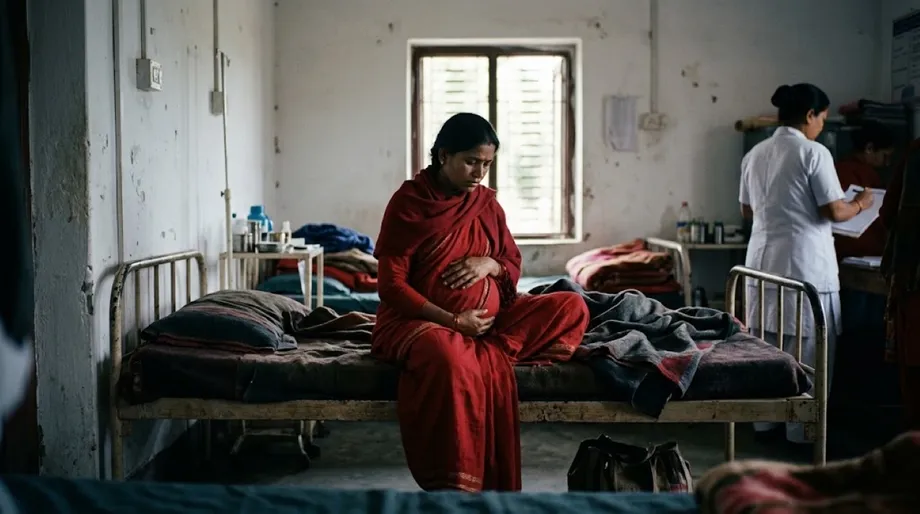
Geeta, a 45-year-old woman from Dang in western Nepal, went to her district administration office seeking a recommendation for free medical treatment under a Lumbini provincial programme. Officials asked her to prove that she was a conflict victim. She had neither a victim identity card nor a place on the official list, and returned home without the document she needed.
Contents
- A missing identity card stands between survivors and treatment
- Other victims received assistance while survivors waited
- The exclusion was documented in 2010
- Why proving victim status became another burden
- A registry existed, but many survivors were outside it
- Lumbini's treatment programme shows the practical gap
- Silence, injury and the cost of coming forward
- International decisions describe what redress should include
- A long process with immediate needs
- Key Points
Geeta says police officers searching for her husband, who had gone underground during the Maoist insurgency, raped her around 2002 or 2003. She had given birth just 17 days earlier. She describes lasting injuries to her uterus and years spent keeping the assault secret before eventually telling her husband.
His support helped her speak about what happened. Roughly a decade after the peace process began, she submitted her name to the local peace committee. She later sought help from municipal, district and ward offices, hoping for treatment and recognition.
Geeta described the response to those efforts:
I went to many places seeking justice as a war victim. I asked for treatment for my uterus. In return, I received only humiliation.
Her experience exposes a gap running through Nepal's response to its 1996–2006 armed conflict: survivors of sexual violence have sought help through institutions whose assistance categories and records often left them out. Recognition matters in practical terms. Without an accepted document confirming their status, survivors can struggle to obtain treatment even where a government has established a programme for conflict victims.
An official review documented this exclusion in December 2010. A later institutional briefing identified the same problem in 2018. Survivors' accounts from Lumbini show how the consequences can last for years, combining untreated injuries with repeated demands to establish eligibility.
Other victims received assistance while survivors waited
Harimaya, from eastern Rukum, says three police officers raped her in a forest while she was grazing goats in 2004 or 2005. She was 17. She kept the attack secret and says it took years to understand that she, too, was a conflict victim entitled to seek help.
Harimaya eventually submitted a complaint to the Truth and Reconciliation Commission. Other people in her village who had been injured or left with disabilities during the war received assistance and treatment. She waited, then travelled to the commission in Kathmandu after district officials directed her there.
Harimaya says she challenged commission staff over why some victims received relief and others did not. They told her they could do nothing, and she left crying. She says she has not returned to seek justice.
Nepal provided assistance in stages to several categories of conflict victims. Families of people killed or disappeared eventually received NPR 1 million, while some injured people and people with disabilities received treatment or subsistence allowances. Sexual violence survivors described being excluded from comparable support.
Maina Karki, a former lawmaker and chair of the Conflict Victims Common Platform, said the failure began with official recognition:
They were not considered official victims of the war. That is why survivors of sexual violence were left out of interim relief and the justice process. This was a major error by the state.
The exclusion was documented in 2010
The International Organization for Migration and the Office of the United Nations High Commissioner for Human Rights examined Nepal's Interim Relief and Rehabilitation Programme in their December 2010 mapping and gap analysis. They found that victims of torture and sexual violence were excluded from the assistance categories.
The programme, operating since 2008 under the Ministry of Peace and Reconstruction, had disbursed more than US$28 million by the review date. Its benefits included NPR 100,000 payments to families of people killed or disappeared, scholarships ranging from NPR 10,000 to NPR 16,000, medical reimbursements for conflict injuries and payments of up to NPR 200,000 for people with disabilities.
Those figures describe an earlier stage of assistance than the later NPR 1 million payments to bereaved families. Together, they show that relief expanded over time while sexual violence survivors continued to face exclusion.
The review also found little evidence that programme design or delivery took account of women's particular circumstances. Consultation with victims, women and vulnerable groups had been limited. Money was being distributed, but the categories used to distribute it left some forms of wartime harm outside the system.
Why proving victim status became another burden
District administration offices were central to relief claims, yet the 2010 review found inconsistent forms, unclear documentation requirements and different practices between districts. Responsibilities were spread across local committees, chief district officers, ministries and other institutions.
Chief district officers could decide which local bodies took part in collecting claims. Local committees and district officials could also determine which applications advanced for processing. The review described a highly politicized process, with victim participation guaranteed by neither policy guidelines nor official instructions.
Medical documentation created further barriers. Guidelines required bills from government or community health institutions. People treated privately or outside Nepal could be excluded because their records did not meet those requirements.
The review said individual claims could still be submitted to district administration offices or relevant agencies at that time. It also found no proper health ministry database recording injured people who had received benefits, and uncertainty about how that information was shared with the peace ministry.
Geeta's unsuccessful search for a recommendation fits this administrative problem: a person seeking care is asked for recognition, while obtaining recognition requires navigating offices and records that may never have included her.
A registry existed, but many survivors were outside it
The International Center for Transitional Justice revisited these barriers in its February 2018 briefing, Pursuing Truth, Justice, and Redress. It said victims of sexual violence and torture had been unable to participate in the interim relief programme, and that the government's failure to provide a way to verify victim status was preventing access to help.
A ministry task force had developed a relief registry between 2008 and 2012. ICTJ recommended expanding that registry to include people previously excluded, using information collected by the two transitional justice commissions and checking it against existing relief records.
Conflict Victims Common Platform representatives argued that confirming someone's victim status should be the responsibility of the agency providing the service or benefit. That would move the administrative work toward the institution holding or accessing the records, instead of requiring survivors to assemble proof repeatedly.
Women participating in ICTJ workshops sought healthcare, victim identification documents, education, employment assistance and public acknowledgement. ICTJ also found that records already submitted for relief were not shared in a searchable form, forcing people to provide documentation again to commissions and local offices.
Lumbini's treatment programme shows the practical gap
Lumbini provides eligible people injured during the conflict with free treatment worth up to NPR 50,000 a year. Suresh Chandra Acharya, an undersecretary at the provincial ministry responsible for internal affairs and law, said conflict injury patients had been accessing treatment through district administration offices and the provincial ministry.
For Geeta, access stopped at the recommendation stage. Her account shows why a healthcare budget alone cannot meet survivors' needs when eligibility depends on a list or document they lack.
Rolpa's former local peace committee recorded 946 deaths, 33 disappearances and 505 people injured or left with disabilities. Around 225 sexual violence complaints from the district were submitted to the commission. Journalist Dinesh Subedi, who works on the experiences of conflict sexual violence survivors, said more than 200 people from Rolpa had openly applied.
Subedi said other categories of victims had received assistance through commission, provincial or local channels, while sexual violence survivors remained without comparable relief. The complaint total reflects people who came forward; stigma and fear have kept others silent.
Man Dhakal, a former Truth and Reconciliation Commission member, said the commission had referred some sexual violence cases to the Finance Ministry for interim relief. Those recommendations were not implemented. Her account identifies another point where the process stalled: even a referral from the commission did not necessarily produce assistance.
Silence, injury and the cost of coming forward
Geeta describes living for years with reproductive injuries. Harimaya describes the delay before she could even name her experience as conflict victimization. Their accounts show why reporting dates can fall long after the violence itself.
REDRESS, in its guide to securing reparations, identifies shame, social exclusion and rejection by relatives or communities as barriers to complaints and claims for redress in Nepal. It draws on a 2021 Nepal study by the Global Survivors Fund, ICTJ, Nagarik Aawaz and the Conflict Victim Women National Network.
ICTJ's 2018 briefing described women experiencing severe physical and psychological harm, sometimes alongside rejection by their families and communities. It recommended enough female staff to give survivors the option of speaking to a woman, training for commission personnel and women's participation in designing justice measures.
For survivors, those arrangements affect whether an office feels safe enough to approach. A confidential, respectful process can allow someone to describe an assault and seek treatment without adding public exposure to an already painful experience.
International decisions describe what redress should include
Reparations are measures intended to address the harm caused by a rights violation. They can include compensation, healthcare, psychological support, acknowledgement and action to prevent repetition. Interim relief provides help while a fuller justice or reparations process is still pending.
REDRESS describes two Nepal cases before the United Nations Human Rights Committee that show the range of measures involved. In Purna Maya v. Nepal, decided on June 23, 2017, the committee found that Nepal's armed forces had used sexual violence as torture and that authorities had failed to investigate, hold perpetrators accountable and provide reparations.
Purna Maya had been arrested in November 2004 and subjected to repeated rape and other abuse in military detention. Attempts to seek prosecution were obstructed, including by the deadline for filing a rape complaint. Advocacy Forum Nepal provided medical and psychosocial assistance before her international complaint was filed.
In RR, KR and SR v. Nepal, decided on May 20, 2022, the committee addressed the rape and killing of a 16-year-old girl in 2004. Her family complained to police the following day, but police did not investigate. Nepal's National Human Rights Commission established in 2005 that security forces had killed her, and the Supreme Court ordered an immediate investigation in 2009.
The committee called for investigation and prosecution, adequate compensation, free medical and psychological rehabilitation, a public apology and measures commemorating RR. It also called for legal reforms, including removal of the limitation period for rape complaints. REDRESS identifies weak domestic arrangements for implementing international decisions and a lack of political commitment as continuing obstacles.
A long process with immediate needs
Nepal's peace and justice process has produced agreements, legislation, complaint records and international findings over many years. The main milestones relevant to survivors' access to relief include:
- 1996–2006: Armed conflict between the government and Maoist insurgents.
- November 21, 2006: The Comprehensive Peace Agreement ended the conflict and committed the parties to a peace process.
- 2008: The government began providing assistance through the Interim Relief and Rehabilitation Programme.
- December 2010: IOM and OHCHR documented the exclusion of sexual violence and torture victims from assistance categories.
- 2014: Nepal enacted the law establishing the framework for its truth and disappearance commissions.
- 2017 and 2022: The UN Human Rights Committee issued decisions in Purna Maya's and RR's cases.
- 2018: ICTJ recommended expanding the relief registry and improving verification of victim status.
Survivors' immediate needs remain concrete: treatment for physical injuries, psychological care, financial support and recognition that allows them to access services. Neither Geeta nor Harimaya was given a date when assistance would arrive.
The institutional recommendations point to practical work that can proceed alongside investigations: include excluded survivors in benefit records, make agencies responsible for checking status, share information securely and involve women in decisions about services. Those steps address the barriers described at district counters as well as in national reviews.
Geeta says years of seeking help have left her unwilling to approach another office. For her, the cost of delay includes both an untreated injury and the loss of confidence that asking again will produce a different answer.
Key Points
- Sexual violence survivors in western Nepal describe being denied recognition, medical assistance and relief despite seeking help through official channels.
- IOM and OHCHR documented their exclusion from interim relief categories in December 2010.
- ICTJ recommended expanding the existing victim registry and making service providers responsible for verifying status.
- Lumbini provides eligible conflict injury patients with treatment worth up to NPR 50,000 annually, but documentation barriers can prevent access.
- UN Human Rights Committee decisions call for investigation, compensation, rehabilitation and other measures addressing wartime sexual violence.