Debt agreements bring Sri Lanka close to the finish
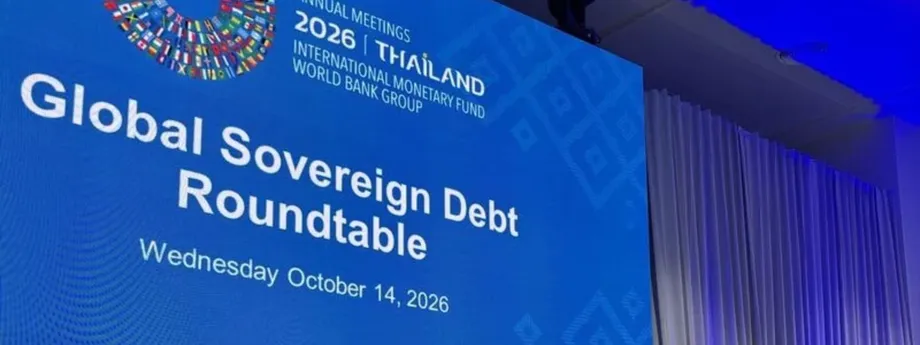
Sri Lanka has completed the restructuring of about 94% of the external debt covered by its negotiations, rising to approximately 99% when agreements in principle are included, according to the Global Sovereign Debt Roundtable's seventh Co-Chairs Progress Report, dated October 14, 2026.
Contents
- Debt agreements bring Sri Lanka close to the finish
- What the 94% and 99% figures mean
- From the 2022 payment suspension to the latest review
- Government lenders give Sri Lanka more time
- The bond exchange delivered billions in relief
- Smaller creditors and a court case remain
- IMF support moves toward another decision
- The payment burden has fallen, but remains large
- Sri Lanka's experience feeds into global changes
- Key Points
The remaining debt awaiting agreement was estimated at 1% of the restructuring total as of September 18. Progress on a debt exchange involving SriLankan Airlines and agreements with government lenders has brought the country closer to completing a process that began after its financial crisis in 2022.
The roundtable's seventh progress report says negotiations with remaining commercial creditors are continuing in good faith. A court ruling in litigation involving Hamilton Reserve Bank is also pending.
For Sri Lanka, the milestone means that repayment terms covering almost all the targeted debt have either been changed or agreed in principle. Completing the remaining paperwork and negotiations will bring greater certainty about what the government must pay and when, after years of disruption for households and businesses.
What the 94% and 99% figures mean
The roundtable measures progress against the external debt inside Sri Lanka's restructuring perimeter. That term means the particular debts selected for renegotiation, rather than every debt owed by the government.
The 94% figure covers completed restructuring. The additional roughly five percentage points consist of agreements in principle, where creditors and the borrower have settled the main terms but still need to complete the formal process. About one percentage point remains outside either category.
A restructuring changes a debt contract so that a borrower can manage its payments. Creditors may accept less money, lower interest, later repayment dates or a combination of these changes. Sri Lanka's arrangements use several of those tools, with different packages negotiated for government lenders, banks and bondholders.
The percentages measure how much debt is covered by the process, rather than how much debt has been cancelled. Sri Lanka will continue making payments under the revised contracts, with some repayments stretching to 2043.
From the 2022 payment suspension to the latest review
Sri Lanka suspended payments on its official bilateral debt and external commercial debt on April 12, 2022. The crisis brought fuel and medicine shortages, prolonged power cuts, rising prices and protests that forced the government from power.
The government then had to negotiate with several creditor groups while working through an International Monetary Fund programme. The main steps show why the process has taken several years:
- April 12, 2022: Sri Lanka began a temporary moratorium on payments to official bilateral and external commercial creditors.
- March 2023: The IMF approved an Extended Fund Facility arrangement worth approximately $3 billion.
- June 26, 2024: Agreements with the Official Creditor Committee and China Exim Bank were signed.
- December 20, 2024: The international sovereign bond exchange settled.
- December 24, 2024: Sri Lanka completed restructuring settlements with China Development Bank.
- May 2026: The IMF completed the combined fifth and sixth programme reviews.
- October 5, 2026: IMF staff reached an agreement on the seventh review, subject to Executive Board approval.
- October 14, 2026: The roundtable's seventh progress report put completed restructuring at about 94%, or 99% including agreements in principle.
The latest stage involves finishing smaller outstanding negotiations and implementing agreements already reached. Earlier progress assessments had recorded six signed agreements with official bilateral creditors; the latest international comparison puts Sri Lanka at nine of 17.
Government lenders give Sri Lanka more time
The Treasury's public debt restructuring note, prepared for a January 1, 2025 presentation by Treasury Secretary K. M. Mahinda Siriwardana, sets out the scale and terms of the main deals.
The Official Creditor Committee, jointly chaired by France, India and Japan, covered $5.8 billion. China Exim Bank accounted for another $4.2 billion. Other official creditors, including Kuwait, Saudi Arabia, Iran and Pakistan, represented about $300 million.
The committee and China Exim Bank agreements provide relief on up to 92% of their respective debt service falling due during the IMF programme. Debt service means the principal and interest scheduled for payment. The deals provide grace periods on principal until 2028, lower interest rates and a repayment schedule ending in 2043.
For the government budget, the immediate benefit is a much smaller payment bill during the programme. Payments are then spread over a longer period, giving Sri Lanka time to rebuild revenue and foreign currency resources.
The June 2024 agreements still require implementation through individual arrangements with lenders. This explains how Sri Lanka can have broad agreements covering large sums while some bilateral documents remain unfinished.
The bond exchange delivered billions in relief
International sovereign bonds were one of the largest parts of Sri Lanka's debt problem. These are securities sold to investors, with promises to pay interest and return the borrowed money on specified dates.
The Treasury recorded $12.55 billion in bond principal against $37 billion in central government external debt principal at the end of 2023. Bonds therefore represented about 34% of that total. The larger $14.2 billion bond figure used in its creditor breakdown includes overdue interest.
Participation in the exchange reached 96%, allowing 98% of the bonds to be exchanged under the transaction's arrangements. The Treasury described Hamilton Reserve Bank as the only significant holdout at that stage.
The exchange provided an upfront debt stock reduction of $3 billion under the baseline economic scenario. The Treasury said that relief could rise to $4.3 billion if the economy performed worse than the baseline, or fall to $1.8 billion if it performed better. Part of the relief therefore changes with Sri Lanka's economic performance.
The government also secured a $9.6 billion reduction in debt service during the four years of the IMF programme, a 33% reduction in the bond interest rate to 4.3%, and an extension of average maturity by around six years. Maturity is the point when borrowed principal must be repaid.
Credit ratings improved after the December 2024 settlement. Fitch moved Sri Lanka from Restricted Default to CCC+, while Moody's raised its rating from Ca to Caa1. A further Fitch upgrade to B− with a stable outlook followed in September 2026.
Smaller creditors and a court case remain
SriLankan Airlines' debt exchange is among the developments that helped lift the latest completion figures. The remaining commercial negotiations are smaller than the bond and major bank transactions already settled, but they still require agreement with the creditors concerned.
Hamilton Reserve Bank's litigation is proceeding through the courts. Both parties submitted their final arguments between June and August 2026. The case is awaiting a ruling, and no decision date has been set.
The roundtable's October assessment describes the remaining discussions in these terms:
authorities continue good-faith negotiations with remaining residual commercial creditors.
The 1% residual estimate describes the share still awaiting a restructuring agreement as of September 18. Separately, agreements in principle covering roughly another 5% need to move through the steps required for completion.
IMF support moves toward another decision
The IMF completed Sri Lanka's combined fifth and sixth reviews in May 2026, allowing approximately $695 million in further financing under the Extended Fund Facility. Programme reviews assess whether economic policies and financing arrangements remain consistent with the agreed recovery plan.
IMF staff reached an agreement on the seventh review on October 5. Approximately $345 million could become available after Executive Board approval, with conditions including presentation of a 2027 budget consistent with programme requirements and a review of financing assurances.
Those assurances cover expected financing from international institutions and progress on debt restructuring. The next disbursement therefore depends on both domestic budget decisions and confidence that Sri Lanka's financing plan is workable.
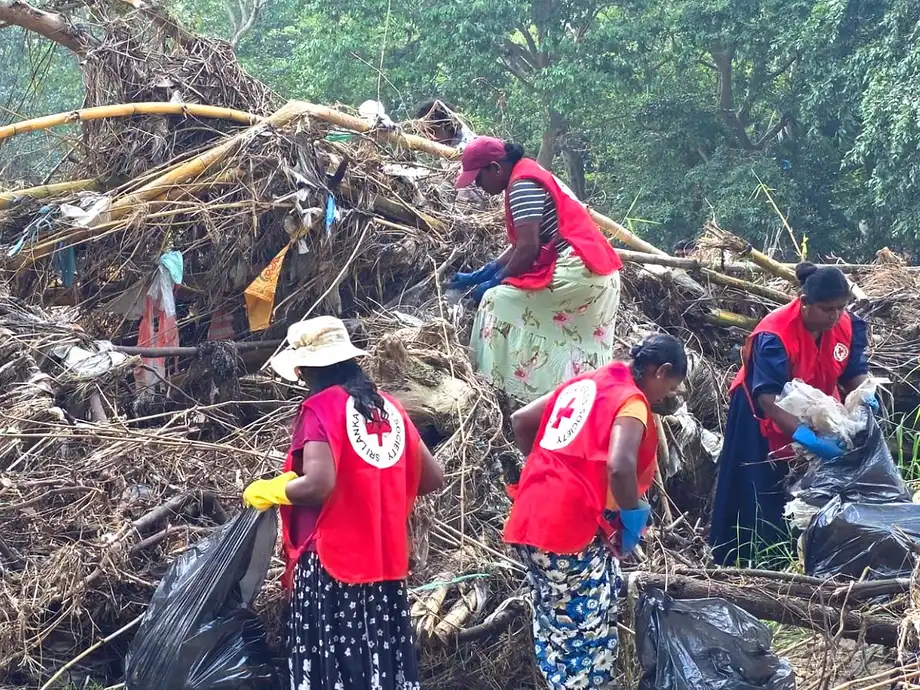
Emergency needs have also affected the recovery. After a severe cyclone, Sri Lanka received support through the IMF's Rapid Financing Instrument in December 2025. The World Bank made up to $120 million available by redirecting money from existing projects toward recovery, essential services and infrastructure.
The roundtable's latest report says the World Bank has committed more than $2.4 billion to Sri Lanka since fiscal year 2021, with net flows exceeding $1.4 billion. Net flows measure money received after repayments over the period, showing how much financing has remained available to the country.
The payment burden has fallen, but remains large
Sri Lanka's public debt declined from 125.8% of gross domestic product in 2022 to 101.1% in 2025, a fall of 24.7 percentage points. GDP measures the value of goods and services produced in the economy; comparing debt with GDP helps show the size of the burden relative to the country's economic resources.
Gross financing needs fell from 33.9% to 19% of GDP over the same period. This measure includes the money the government needs to cover its budget shortfall and repay debt falling due. Interest payments also fell from 79% to 46% of government revenue, leaving more room for other spending, although interest still absorbed nearly half of revenue.
The programme's medium term targets call for public debt below 95% of GDP by 2032, average gross financing needs below 13% of GDP during 2027–2032, and annual foreign currency debt service below 4.5% of GDP over those years.
Foreign currency resources will become especially important as sovereign bond repayments are scheduled to resume in April 2028. Gross official reserves stood at about $6.85 billion at the end of September 2026, down from approximately $6.93 billion a month earlier.
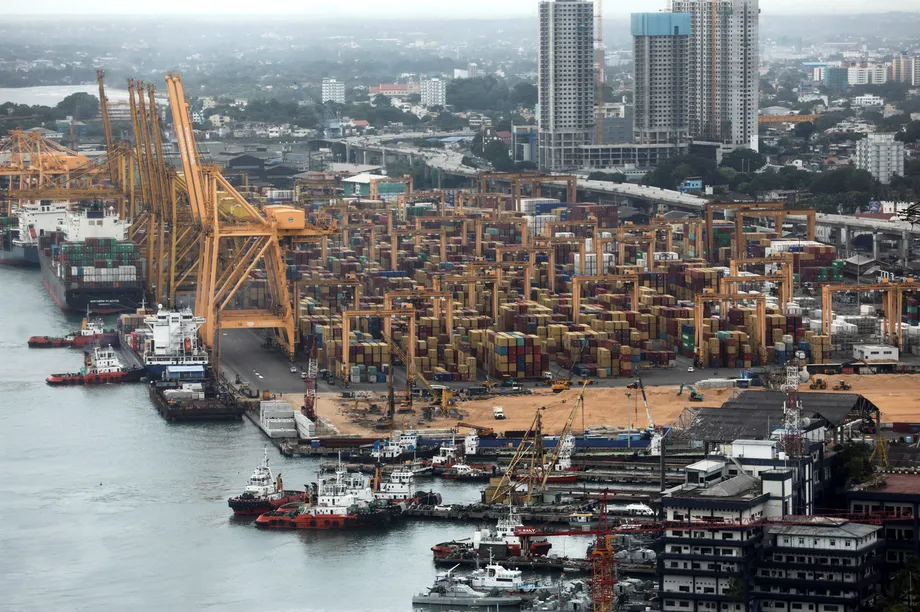
Sri Lanka's external earnings show competing pressures. The merchandise trade deficit widened to $7.2 billion in January–August 2026 from $4.3 billion a year earlier. Tourism earnings fell by about 10% to $2.1 billion, while money sent home by workers abroad rose 19.8% to $6.1 billion.
The larger trade deficit means more foreign currency was needed to pay for goods imports than was earned from goods exports. Remittances helped cover that gap. Maintaining reliable foreign currency inflows will matter as the government moves from negotiating new payment terms to meeting them.
Sri Lanka's experience feeds into global changes
The roundtable's stocktaking covers six countries: Chad, Ethiopia, Ghana, Zambia, Suriname and Sri Lanka. Chad, Ethiopia, Ghana and Zambia used the G20 Common Framework, a process intended to coordinate debt treatment among creditors. Sri Lanka and Suriname negotiated outside it.
Zambia, Ghana, Sri Lanka and Suriname completed bond exchanges between November 2023 and December 2024. Ethiopia remains the only one of the six tracked cases still awaiting completion of a bond exchange. Eleven of its 14 Official Creditor Committee bilateral agreements have been finalized, compared with nine of 17 for Sri Lanka.
Those figures show that progress can move at different speeds across creditor groups. Sri Lanka completed its main bond exchange before finishing all its bilateral agreements; Ethiopia has advanced further in bilateral signatures while its bond transaction remains open.
The roundtable says experience from Sri Lanka and the other cases has informed improvements to debt resolution procedures and updates to its Sovereign Debt Restructuring Playbook. Work has included faster negotiations, better sharing of information among creditors and clearer treatment of different lending arrangements.
Earlier roundtable assessments also identified high interest costs, refinancing needs and pressure on education, health and infrastructure budgets across countries facing debt difficulties. Initiatives involving loan data reconciliation aim to make borrower and creditor records easier to compare, reducing uncertainty over what is owed.
Sri Lanka is now among the cases closest to completion. Its remaining tasks are concrete: finish agreements, resolve the outstanding litigation, complete the next IMF review process and prepare for the repayment schedule beginning in 2028.
Key Points
- About 94% of external debt within Sri Lanka's restructuring perimeter has completed restructuring; coverage reaches about 99% with agreements in principle.
- Residual debt still awaiting agreement was estimated at 1% as of September 18, 2026.
- Major creditor deals lowered near term payments, reduced interest and extended repayment dates, in some cases to 2043.
- Hamilton Reserve Bank's litigation awaits a court ruling, with no decision date set.
- The IMF completed the fifth and sixth reviews in May 2026; the seventh review requires Executive Board approval.
- Sovereign bond repayments are scheduled to resume in April 2028, making revenue and foreign currency earnings central to the next stage of recovery.