A $371 million plan to upgrade 60 substations
The World Bank approved a $100 million loan to Uzbekistan on October 27, 2026, joining a financing package worth $371 million to modernize and digitize 60 major electricity substations. The program aims to reduce power losses and outages while preparing the grid to accommodate at least 3.3 gigawatts of renewable energy capacity.
Contents
- A $371 million plan to upgrade 60 substations
- How the financing fits together
- What will change at the substations?
- Making room for solar and wind power
- Understanding the electricity and emissions targets
- Jobs depend on the facilities entering service
- Digital upgrades bring new operating responsibilities
- How this fits into other grid investments
- Key Points
The Asian Development Bank (ADB) is providing a further $200 million in loans, and Uzbekistan will contribute $71 million from its state budget. National Electric Grids of Uzbekistan, a state owned joint stock company, will implement the Electricity Distribution Systems Modernization Program.
By 2031, the World Bank expects annual electricity losses at the upgraded substations to fall by 20,000 megawatt-hours. The program is also projected to prevent almost 23,000 tonnes of greenhouse gas emissions, measured as carbon dioxide equivalent, each year.
Uzbekistan's aging and overloaded electricity infrastructure makes the investment urgent. Equipment installed decades ago is struggling with growing demand, contributing to interruptions that affect homes, businesses, schools and hospitals. New solar and wind power plants also need a network capable of carrying their electricity to consumers.
The financing brings together physical construction, digital controls and changes in how the grid company operates. Alongside replacing outdated equipment, the program includes financial management, cybersecurity, environmental and social standards, and measures to promote gender equality in employment.
How the financing fits together
The two international lenders will provide $300 million, or about 81% of the total program budget. Uzbekistan's $71 million contribution accounts for the remaining 19%. ADB's $200 million loan is twice the size of the World Bank loan and represents approximately 54% of the full package.
The approvals and agreement took place in several stages:
- September 30, 2026: ADB approved its $200 million loan for the program.
- October 15, 2026: The ADB loan agreement was signed.
- October 27, 2026: The World Bank approved its $100 million loan.
- 2030: Uzbekistan aims to reach 25 gigawatts of installed renewable energy capacity.
- 2031: The program targets lower annual electricity losses and capacity to accommodate at least 3.3 gigawatts of renewable energy.
The World Bank and ADB are using the Full Mutual Reliance Framework, a cooperation arrangement that allows them to share approaches to preparing a project and supervising its implementation. ADB will act as the lead lender.
For Uzbekistan, the practical benefit is less duplication. Rather than running parallel assessments and oversight procedures for each bank, the lenders intend to coordinate their work, reducing administrative costs and demands on the government. No commissioning date for the upgraded facilities or detailed loan repayment terms were specified in the announcement.
What will change at the substations?
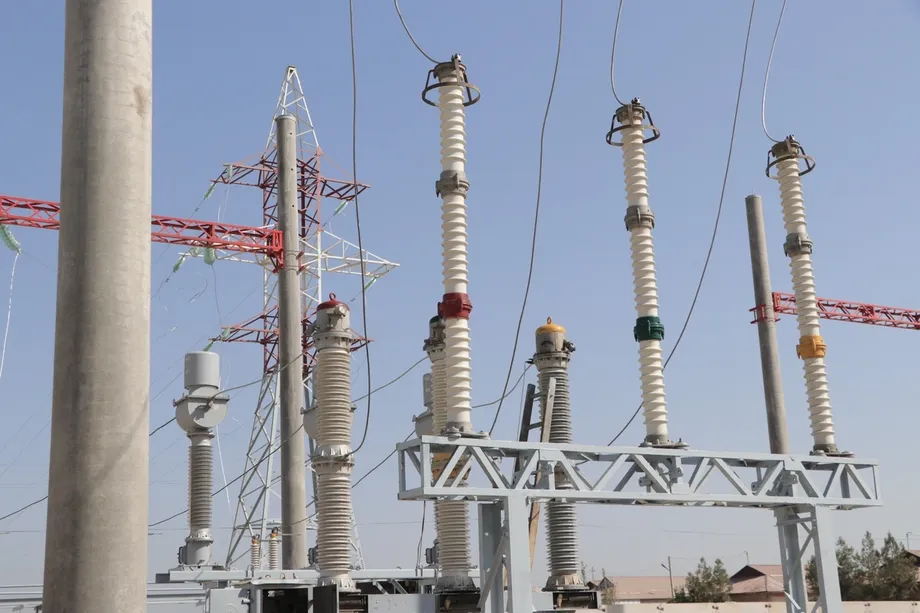
Substations are junctions in an electricity network. They direct power through the grid and change its voltage so electricity can move between different parts of the system and eventually reach consumers.
The 60 substations selected for modernization will receive replacement equipment and digital control systems. Operators will be able to monitor electricity loads and detect faults more quickly, helping them manage equipment that is currently under pressure.
Overloading occurs when demand pushes equipment beyond the level it can comfortably handle. Along with aging components, it can contribute to electricity losses and supply interruptions. Updating substations therefore addresses both the amount of power the network can carry and the reliability of its operation.
For a household, success would mean fewer interruptions to lighting, heating equipment and appliances. For a business, it would mean fewer disruptions to machinery and daily operations. Schools and hospitals also depend on steady electricity to keep essential services running.
Making room for solar and wind power
Uzbekistan plans to increase installed renewable energy capacity to 25 gigawatts by 2030. The substation program is designed to help the grid accommodate at least 3.3 gigawatts, equivalent to 13.2% of that national target.
The comparison shows the scale of the network investment alongside the country's generation ambitions. Power plants produce electricity, while substations and lines carry it to the places where it is needed. Building more generation therefore needs to be matched by investment in the network.
A gigawatt measures power capacity, meaning how much electricity a facility can produce at a particular moment under suitable conditions. The amount actually generated over a year depends on how often it operates and, for solar and wind plants, on sunlight and wind conditions.
The program's 3.3 gigawatt objective concerns the grid's ability to accommodate renewable generation. Its funded work centers on substations and the systems used to operate them, supporting connections between new electricity sources and consumers.
Understanding the electricity and emissions targets
The projected reduction in annual electricity losses is 20,000 megawatt-hours by 2031, equal to 20 million kilowatt-hours. A kilowatt-hour is the unit commonly used on household electricity bills; 1,000 kilowatt-hours make one megawatt-hour.
Electricity losses are power that enters the network but does not reach consumers as usable electricity. Some energy becomes heat as it passes through electrical equipment. Replacing aging equipment and improving operation can reduce those losses, allowing more of the electricity already generated to reach users.
The 20,000 megawatt-hour target applies to the upgraded substations. No starting figure for their annual losses was given, so the planned reduction cannot be expressed as a percentage improvement.
The program also projects an annual reduction of almost 23,000 tonnes of carbon dioxide equivalent. This measure puts different greenhouse gases on a common scale according to their warming effect. Lower electricity losses and greater capacity to accommodate renewable generation are part of the program's planned contribution to reducing emissions.
The distinction between capacity and energy helps explain the two main targets. Gigawatts describe the renewable power capacity the grid should be able to accommodate. Megawatt-hours describe the quantity of electricity expected to be saved each year at the modernized substations.
Jobs depend on the facilities entering service
The World Bank expects the program to help create nearly 11,700 additional quality jobs within five years after the modernized infrastructure enters operation. The employment estimate is tied to commissioning, rather than to the date the loans were approved.
The projected jobs are described as employment the investment could create or support through improved electricity supplies. The announcement did not give a breakdown by occupation, location or permanent and temporary employment.
Naji Benhassine, the World Bank's regional director for Central Asia, linked dependable power to household needs, employment and public services. Speaking about the purpose of the investment, he said:
Reliable electricity supply is a basic necessity for households and business activity, as well as a foundation for jobs, public services and economic growth.
Benhassine also said cooperation with ADB would help modernize electricity infrastructure and use financial resources more efficiently. His comments connect the program's technical work with its economic purpose: giving people and businesses a more dependable supply of power.
Digital upgrades bring new operating responsibilities
National Electric Grids of Uzbekistan will be responsible for implementing more than equipment replacement. The program also includes improvements to maintenance, financial oversight and cybersecurity, alongside stronger compliance with environmental and social standards.
Digital controls can give operators faster information about equipment loads and faults. Protecting those systems is part of keeping electricity operations dependable, which is why cybersecurity appears alongside modernization in the program.
Financial management measures are intended to improve how the company plans, uses and accounts for its resources. Environmental and social standards will guide how the investment is carried out and how effects on people and surrounding areas are managed.
The program also aims to promote gender equality in employment and expand opportunities for women in the energy sector. No numerical hiring target for women was specified.
How this fits into other grid investments
ADB has provided Uzbekistan with more than $3.4 billion in energy financing and guarantees since 2010. In 2023, it separately approved $200 million to digitalize 26 distribution substations, showing that the latest package builds on earlier investment in the network.
Tashkent also has plans to modernize 10 substations. Replacing their power transformers is expected to add a combined 333.2 megavolt-amperes of capacity. Megavolt-amperes are a rating used for electrical equipment, including transformers, while the renewable energy target is expressed in gigawatts of generation capacity.
The new program combines a national package of 60 substation upgrades with shared oversight by two major lenders. Its measurable objectives are lower losses, capacity to accommodate more renewable electricity and reduced emissions by 2031.
For consumers, the most tangible result will be whether electricity becomes more reliable. For Uzbekistan's renewable energy plans, the test will be whether the upgraded network can carry additional power from generation sites to the households, businesses and public services that need it.
Key Points
- The World Bank approved a $100 million loan on October 27, 2026, for electricity grid modernization in Uzbekistan.
- ADB will lend $200 million and Uzbekistan will contribute $71 million, bringing total financing to $371 million.
- The program will modernize and digitize 60 major substations.
- By 2031, annual electricity losses at the upgraded substations are expected to fall by 20,000 megawatt-hours.
- The grid should be able to accommodate at least 3.3 gigawatts of renewable energy capacity.
- Annual emissions reductions are projected at almost 23,000 tonnes of carbon dioxide equivalent.
- Nearly 11,700 additional jobs are expected within five years after the modernized facilities enter operation.
- National Electric Grids of Uzbekistan will implement the program, with ADB leading coordinated lender oversight.