A giant reservoir puts water timing at the centre of the deal
Tajikistan's Rogun hydropower project promises 14.4 billion kilowatt hours of electricity a year, with Uzbekistan among its future buyers. For farmers downstream, however, another figure matters just as much: 4.2 billion cubic metres, the proposed limit on how much summer river water the combined Rogun and Nurek reservoir system would shift into winter.
Contents
- A giant reservoir puts water timing at the centre of the deal
- What Rogun would add to the electricity system
- Why Uzbekistan moved from opposition to cooperation
- What the water rules actually require
- Why studies produce different water forecasts
- What downstream communities challenged
- How the review and construction schedules unfolded
- More than 50,000 people face relocation
- Who pays, and what the reservoir could provide
- Key Points
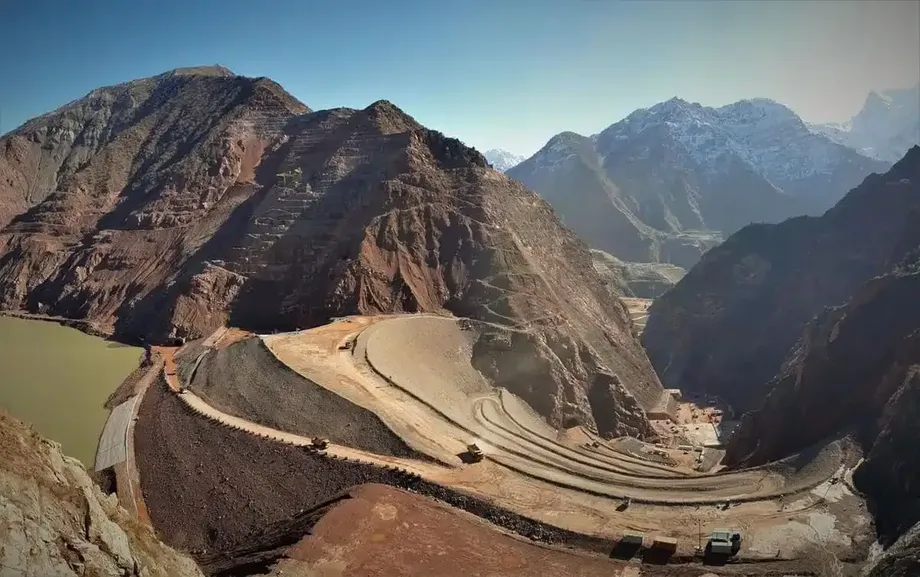
That operating rule sits at the centre of a project expected to require about $6.29 billion to complete and the resettlement of more than 50,000 people. Rogun's planned dam, rising 335 metres above its foundation on the Vakhsh River, would become the world's tallest. Its reservoir would hold 13.3 billion cubic metres of water.
Uzbekistan signed an intergovernmental agreement in 2025 to buy electricity from Rogun. The agreement reflects a major change from the opposition that marked relations with Tajikistan under former Uzbek president Islam Karimov. Yet communities in Uzbekistan and Turkmenistan have also challenged the project's environmental safeguards through the World Bank's Inspection Panel.
The practical issue is straightforward. Tajikistan needs electricity during cold winters. Uzbekistan and Turkmenistan need river water during the summer growing season. Water released through turbines can generate power and continue downstream, but storing it for release months later changes when farms receive it.
Rogun could bring both electricity and more reliable water storage to the region. Whether those benefits reach downstream communities depends on the filling schedule, seasonal release rules and access to information showing how the reservoirs actually operate.
What Rogun would add to the electricity system
Rogun is under construction on the Vakhsh, roughly 100 kilometres from Dushanbe. Two of its six planned generating units are operating, although below their eventual capacity. Webuild, the Italian construction company, said the dam had reached about 190 metres in August 2026. A third unit is scheduled to start in September 2027.
The World Bank estimates annual electricity production at completion would equal about 60% of Tajikistan's current yearly generation. For households facing winter shortages, the benefit would be more dependable heating, lighting and public services. Businesses would gain a more reliable supply for production.
About half of Rogun's output is expected to be exported, including to Uzbekistan and Kazakhstan, which have signed power purchase agreements. The World Bank previously expected exports to account for 70%, before revising the forecast to reflect growing demand within Tajikistan. Applied to projected annual generation of 14.4 billion kilowatt hours, a 50% export share would mean about 7.2 billion kilowatt hours for foreign buyers collectively.
Uzbekistan could use those imports to reduce the gas burned at its power stations. Hydropower can also adjust production to help balance changes in solar and wind generation. Actual deliveries will depend on construction progress, reservoir levels and the capacity of regional transmission networks.
Why Uzbekistan moved from opposition to cooperation
Uzbekistan's earlier objections concerned irrigation supplies, the timing of releases and the consequences of a possible dam failure. A 2025 academic study identifies the country's leadership transition in 2016, when Shavkat Mirziyoyev succeeded Karimov, as a turning point towards cooperation.
The study explains how the Soviet system connected water and energy across the region. Upstream republics stored water during winter and released it during summer for downstream irrigation. Downstream republics supplied fossil fuels in return. After the Soviet Union dissolved, those exchanges depended on agreements between independent countries with different priorities.
Petr Bologov's December 2016 analysis records the pressure behind Tajikistan's search for energy independence. Uzbekistan stopped gas shipments in January 2013, after supplying 95% of Tajikistan's gas consumption. Bologov also reported that 70% of the country regularly experienced electricity shortages at that time.
Diplomatic contacts had begun before the leadership transition, including foreign ministry consultations in December 2015. Uzbekistan's subsequent decision to buy Rogun electricity gives both governments a commercial reason to cooperate over a river system that previously divided them.
What the water rules actually require
The Vakhsh contributes about 26% of the Amu Darya's annual flow, according to a World Bank environmental assessment presented in July 2014. The Panj contributes about 40%. Snow and glacier melt produce high summer flows, while winter flows are much lower.
The World Bank's 2014 environmental assessment describes an operating model that limits the transfer of summer water into winter to 4.2 billion cubic metres, the historical amount associated with Nurek reservoir. Rogun and Nurek would operate together within that limit, rather than each shifting that volume separately.
Tajikistan has committed to respecting existing water allocation arrangements, including decisions of the Interstate Commission for Water Coordination. Under the process described in the assessment, the Amu Darya basin water organisation prepares seasonal allocations using national requests and forecasts. The commission approves them and can make seasonal adjustments.
Reservoir filling would use water within Tajikistan's allocation. The assessment calculated that Tajikistan left an average of 1.2 billion cubic metres of its Vakhsh allocation unused annually between 2005 and 2011, and proposed using that share during a gradual filling period.
For Uzbek farmers, implementation matters at the canal intake. A yearly allocation can arrive in full while still leaving crops short of water if releases come outside the growing season. The 2025 academic study also notes that the regional commission, established in 1992, lacked binding enforcement mechanisms.
Why studies produce different water forecasts
Shokhrukh-Mirzo Jalilov, Thomas M. DeSutter and Jay A. Leitch examined a different operating choice in their 2011 agriculture study: storing water from April to September and releasing it mainly for winter electricity generation. Their model projected an 18% reduction in summer Amu Darya flow entering Uzbekistan and a 54% increase in winter.
The World Bank's later operating model instead limits the seasonal shift to Nurek's historical level. The two studies therefore describe different choices about how to run the reservoir. Winter electricity production and summer irrigation compete most directly when operators retain more summer water for later generation.
Jalilov and his colleagues estimated a filling period of 12.4 years, during which Rogun would retain about 2% of mean annual Amu Darya discharge. Their larger agricultural losses arose during subsequent operation focused on winter generation.
Using economic and agricultural data available at the time, their scenario without adaptation projected 506,000 hectares leaving production, $609 million in lost revenue, a 2.2% fall in Uzbekistan's GDP and 336,000 people affected. A scenario with improved water management reduced those estimates to 314,000 hectares, $378 million, 1.4% of GDP and 208,000 people. The revenue loss fell by $231 million, about 38%.
The calculations use historical crop patterns, prices and economic conditions. Their practical message is that both reservoir operating rules and irrigation efficiency determine the cost to downstream agriculture. The authors proposed better irrigation, water pricing and possible compensation through electricity or shared hydropower revenue.
What downstream communities challenged
Two people representing communities in Uzbekistan and Turkmenistan submitted a complaint to the World Bank's Inspection Panel on February 24, 2025. They requested confidentiality because they feared retaliation. The Almaty organisation Rivers without Boundaries Public Fund submitted the request on their behalf.
The panel's April registration notice records allegations of inadequate consultation, incomplete environmental assessment and possible damage to health, livelihoods and river ecosystems. The complainants described a wider downstream population of 8 million to 10 million people potentially exposed to changes in water availability and quality.
The request alleged that filling Rogun over 13 to 16 years could reduce flow to the Amu Darya delta by at least 25%. The World Bank's 2014 assessment had estimated about a 15% reduction in inflow to the Aral Sea during filling. The estimates concern different downstream locations and assessment assumptions: the delta in the complaint and inflow to the sea in the earlier assessment.
The complainants also raised salinisation, desertification, damage to floodplain forests and risks to endangered fish. They said documents were unavailable in Uzbek, Karakalpak and Turkmen and that emergency information was inadequate.
World Bank management told the panel that draft environmental documents had been discussed in Almaty in November 2023 with 69 participants from five countries sharing the river basin. The bank says subsequent assessment work expanded to cover cumulative effects across the Amu Darya basin, alongside commitments to monitoring and disclosure.
How the review and construction schedules unfolded
Rogun has undergone decades of interrupted construction and repeated assessment. The World Bank's assessment studies summary says technical, economic, environmental and social studies were completed after four years of analysis and five rounds of consultations with countries sharing the rivers.
In 2010, the bank and Tajikistan agreed that new construction would wait until assessments had been prepared, independently reviewed and discussed with neighbouring river states. They also agreed that further reservoir area resettlement would wait for a framework providing compensation or alternative housing.
- September 1, 2014: Final technical and environmental assessment reports were disclosed, alongside independent expert reports.
- October 2016: Tajikistan began blocking the Vakhsh's main channel for the dam project.
- December 17, 2024: The World Bank approved a $350 million construction grant.
- February 24 and April 8, 2025: The Inspection Panel received and then registered the downstream complaint.
- June and November 11, 2025: The panel recommended an investigation; the bank's executive directors later closed the case on procedural eligibility grounds.
- June 30, 2026: A further $300 million World Bank grant brought approved construction grants to $650 million.
- September 2027: The third generating unit is scheduled to enter service.
The complaint ended at the eligibility stage, leaving the environmental allegations unresolved through that process. At registration, management had identified eight outstanding conditions for the first construction grant to become effective, including final assessments, resettlement plans and emergency response guidelines.
Completion forecasts also vary. The World Bank's planning schedule places full operation in 2033 and final filling in 2039; another construction schedule gives 2032 and about 2036 respectively. These remain forecasts, with commissioning and reservoir filling proceeding as separate stages.
More than 50,000 people face relocation
Rogun's electricity and storage benefits come with a direct cost for communities in the reservoir and construction areas. The World Bank expects more than 50,000 people to require resettlement over the project's phases.
The bank's figures for the 2018–2026 phase list 6,812 people fully resettled, 1,008 fully compensated and approaching a move, and 6,699 building homes on replacement land. More than 30,600 additional people could be affected later. These categories cover different stages of relocation.
Some residents say construction materials have become more expensive since their properties were valued, leaving compensation insufficient to build replacement homes. Others complain that promised agricultural land has not arrived. Some relocated residents have welcomed improved housing conditions and infrastructure.
The World Bank says the programme includes compensation, land, housing and measures to restore incomes. For farming families, a replacement house is one part of the move. Access to productive land, water and employment determines whether they can rebuild their livelihoods.
Environmental critics argue that a lower dam could reduce displacement. Tajikistan's authorities and the World Bank consider the 335 metre option the most economically efficient. The 2014 assessment also identified possible employment for up to 13,000 people during construction, while calling for particular assistance to vulnerable households affected by relocation.
Who pays, and what the reservoir could provide
The Inspection Panel's April 2025 notice set out a financing plan for approximately $6.29 billion needed to complete Rogun: $2.14 billion from Tajikistan's budget, $1.25 billion from electricity sales and $2.9 billion in grants and concessional loans from development partners.
The proposed ADB financing package would add $500 million. Tajikistan's Finance Ministry described a $200 million grant and a $300 million concessional loan, while ADB's project listing, updated in January 2025, showed a proposed $210 million grant and $290 million loan. Final approval and terms remain pending. Grants require no repayment; concessional loans do, but on more favourable terms than ordinary commercial borrowing.
The reservoir could also provide services beyond electricity. The 2014 assessment examined additional releases of 2 billion or 4 billion cubic metres during exceptionally dry years. It said changes to existing agreements and operating practice would be needed to capture those benefits. Rogun could help regulate floods and trap sediment that would otherwise shorten Nurek reservoir's useful life.
Uzbekistan's central interest is therefore a measurable operating arrangement: how much water enters storage, how much leaves, and when it reaches farms. The 2014 assessment recommended publishing the planned operating regime, independently auditing hydrological monitoring and making monitoring data public. Those measures would give downstream users a way to compare promised allocations with actual releases.
Key Points
- Rogun's planned 335 metre dam would generate an estimated 14.4 billion kilowatt hours annually, with about half intended for export.
- Uzbekistan has agreed to buy electricity, while remaining dependent on timely summer water supplies for irrigation.
- The proposed operating model limits combined seasonal redistribution by Rogun and Nurek to 4.2 billion cubic metres.
- Studies focused on winter generation project larger summer water losses than the World Bank's proposed operating model.
- A downstream complaint was closed on procedural eligibility grounds in November 2025, leaving its environmental allegations unresolved through that process.
- More than 50,000 people are expected to require resettlement, and approximately $6.29 billion is needed to complete the project.
- The World Bank has approved $650 million in construction grants; a proposed $500 million ADB package awaits final approval.
- Public reservoir data, seasonal releases and compliance with water agreements will determine the practical outcome for downstream communities.