Jakarta exposes the scale of Indonesia's housing challenge
Indonesia has 9.29 million households without a home of their own and about 18 million living in inadequate housing, according to the Central Statistics Agency (BPS). In Jakarta, the pressure is especially acute: 39.4 percent of households lack homeownership, while 821,840 homes are classified as unfit for habitation.
Contents
- Jakarta exposes the scale of Indonesia's housing challenge
- What the national housing figures measure
- National improvement leaves substantial needs
- Why Jakarta needs particular attention
- Roofs and sanitation are part of the problem
- Renovation targets are expanding sharply
- Mortgage support still faces an affordability test
- Local budgets and fee waivers can reduce costs
- Company funding offers another route to assistance
- Key Points
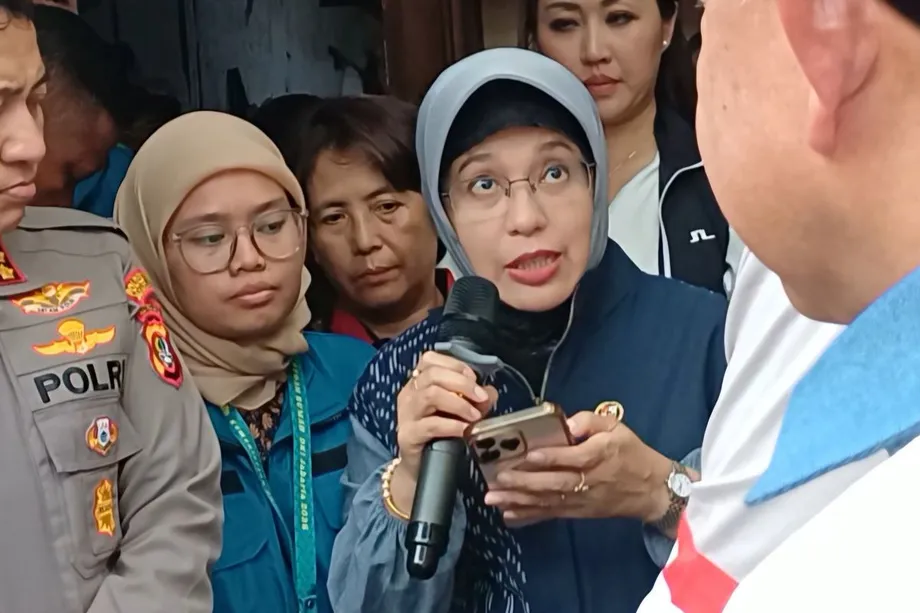
BPS chief Amalia Adininggar Widyasanti presented the figures on October 24, 2026, during a visit to a home renovation site in Kampung Ambon, Kedaung Kali Angke, Cengkareng, West Jakarta. Her findings put a local face on a national problem: even as housing indicators improve, millions of families still need help buying a home or making their existing home suitable to live in.
West Jakarta accounts for 256,487 of the capital's inadequate homes, about 31.2 percent of Jakarta's total. BPS also found asbestos roofing in 57.6 percent of West Jakarta households, compared with 54.6 percent across the capital.
The government is responding through renovation assistance, subsidized mortgages and reductions in taxes and approval fees for eligible households. The immediate challenge is matching each form of help to the problem a family faces. A household needing a safer roof requires different support from one trying to buy its first home.
What the national housing figures measure
The Ministry of Housing and Settlement Areas' housing statistics release describes two separate housing backlogs. A backlog is the unmet need that housing policy is trying to address.
The first measures households without a home of their own, including those occupying someone else's property. The second measures households that own their home but whose dwelling fails the standards for adequate housing. For these families, ownership has been achieved, but essential improvements are still needed.
BPS put the homeownership backlog at 12.39 percent in March 2026, down from 13 percent in March 2025. That represents about 350,000 fewer households without their own home over a year, leaving 9.29 million. The agency said the ownership backlog declined in every province.
The inadequate housing backlog stood at 24.03 percent, or approximately 18.01 million households, in 2026. Amalia rounded that figure to about 18 million when speaking in West Jakarta. Nearly one household in four therefore falls within this measure.
Amalia, the head of BPS, described the national housing quality problem during the October visit:
About 18 million households, or about 24 percent, still occupy homes that are not fit for habitation. This figure shows that about one-fourth of households in Indonesia live in uninhabitable conditions.
Home Affairs Minister Tito Karnavian separately described the wider challenge as affecting around 30 million families without a home or living in inadequate housing. BPS provides the more detailed breakdown through its ownership and housing quality indicators.
National improvement leaves substantial needs
BPS released its first Housing Statistics Publication on August 13, 2026, bringing together National Socioeconomic Survey data and administrative records from ministries, regional governments and other housing institutions. The publication is intended to support both decisions about assistance and checks on government performance.
The proportion of households with access to adequate housing reached 70.30 percent in 2026, up from 68.40 percent in 2025, an increase of 1.90 percentage points. BPS also said the inadequate housing backlog declined in almost every province.
The access measure covers households with adequate housing, while the ministry defines the second backlog specifically around owners living in inadequate homes. The publication presents them as separate indicators, each describing a different part of the housing situation.
Housing and Settlement Areas Minister Maruarar Sirait cited 18.8 million substandard housing units in 2025 when discussing the renovation program. His figure counts housing units, while the 2026 BPS backlog is expressed in households. Tracking progress requires keeping those units of measurement consistent.
The main dates show how the statistical findings and policy response developed:
- March 2025: The share of households without their own home stood at 13 percent.
- March 2026: The National Socioeconomic Survey recorded 9.29 million households without homeownership, or 12.39 percent.
- August 13, 2026: BPS released its first Housing Statistics Publication.
- October 14, 2026: Subsidized mortgage financing had reached 180,608 homes during the year.
- October 24, 2026: Ministers and the BPS chief visited Kampung Ambon and discussed Jakarta's housing conditions.
- 2027: Maruarar has proposed expanding renovation assistance to 2 million homes.
Why Jakarta needs particular attention
Jakarta's homeownership gap is much larger than the national figure. Its rate of 39.4 percent is about 3.2 times the national rate of 12.39 percent. In everyday terms, roughly four in ten Jakarta households lack a home of their own, compared with about one in eight nationally.
The capital's inadequate housing rate is also higher: 27.9 percent, compared with 24.03 percent nationally, a difference of about 3.9 percentage points. These figures show that Jakarta faces both a substantial ownership problem and a separate need to improve existing homes.
Cengkareng was singled out for attention after data collection conducted with Jakarta's governor identified 54 neighborhood units, known locally as RT, classified as slum areas. An RT is a small neighborhood administrative unit, so the findings give officials a way to identify specific places for intervention.
West Jakarta's 256,487 inadequate homes make the area a substantial part of the capital's repair challenge. Connecting that count with neighborhood mapping can help local authorities decide where to allocate renovation budgets and which communities need coordinated work.
Roofs and sanitation are part of the problem
BPS assesses housing adequacy through building durability, sufficient floor space per person, access to adequate sanitation and electricity as a supporting component. A home can therefore need assistance because of crowding or inadequate basic facilities, as well as the condition of its structure.
Sanitation remains an area requiring attention, according to the ministry's account of the BPS publication. For families, that makes housing quality a question of daily living conditions, including suitable toilets and sanitation facilities, rather than simply whether a building provides shelter.
Amalia identified asbestos roofing as a health concern during the West Jakarta visit. The proportion of households using it was three percentage points higher in West Jakarta than across Jakarta as a whole. She said roofing conditions should inform the design of government housing programs.
Amalia, speaking as BPS chief, explained the agency's assessment of the material:
Asbestos is considered one of the roofing materials that is not suitable from a health perspective.
The roofing figures give renovation planners a specific feature to examine alongside floor space, sanitation and building strength. A program centered on housing quality needs to identify what each home lacks so that funding addresses the actual condition of the dwelling.
Renovation targets are expanding sharply
The government's Self-help Housing Stimulant Assistance program, known as BSPS, has a target of 400,000 homes in 2026. The scheme supports residents in improving inadequate homes, with poor households and those vulnerable to poverty identified as priority recipients.
Tito cited a nationwide repair target of about 450,000 homes during the October 24 visit. Maruarar's 400,000 figure refers specifically to BSPS, while Tito described the government's repair effort more broadly. Officials have not explained the precise relationship between the two targets.
Jakarta's BSPS target has risen from 158 homes in 2025 to 10,000 in 2026. That is more than 63 times the previous year's target, a major increase in planned activity in a city where BPS has counted more than 821,000 inadequate homes.
The ministry recorded 88,635 homes reached by the Home Renovation Program in the first half of 2026. Maruarar has also proposed a BSPS target of 2 million homes for 2027, five times the program's 2026 target. The 2027 figure remains a proposal.
Maruarar said renovation assistance should be transparent because it uses public money. Material requirements and budgets are disclosed, and multiple suppliers are involved to encourage price competition. Those arrangements matter as the program expands and purchasing decisions affect how far each allocation can stretch.
Mortgage support still faces an affordability test
Subsidized home finance addresses a different part of the housing challenge: helping households buy their first home. The Housing Financing Liquidity Facility, known as FLPP, supports subsidized mortgages for people on low incomes and is managed by BP Tapera with the housing ministry.
By October 14, 2026, FLPP financing had reached 180,608 homes, worth Rp22.5 trillion. Against an annual quota of 350,000 homes, that amounted to about 51.6 percent, leaving 169,392 homes within the quota still to be financed.
The ministry had recorded 91,531 FLPP homes in the first half of the year. The October total shows continued disbursement, while the gap against the quota illustrates the scale of financing still required to reach the annual allocation.
Purwadi Purwoharsojo, an economics observer at Universitas Mulawarman, identified household purchasing power as a possible constraint. He said prospective borrowers may hesitate when their wages leave too little money for monthly mortgage payments.
His assessment points to a practical issue for families: a subsidized mortgage still requires regular repayments. Renovation assistance and purchase finance serve different needs, and the availability of a mortgage quota must be matched by households able to take on the payments.
Local budgets and fee waivers can reduce costs
Tito urged Jakarta and other regional governments to allocate money for repairs, arguing that better housing should form part of efforts to address poverty and social problems. During the Kampung Ambon visit, he said improvements to living conditions should accompany law enforcement in areas facing such difficulties.
The Ministry of Home Affairs is supporting President Prabowo Subianto's 3 Million Homes program through simpler regulations and assistance for people on low incomes. Tito said eligibility should be based on income, rather than solely on whether a household belongs to the poorest 40 percent of the population.
One measure is a waiver of the land and building acquisition tax, known as BPHTB, for eligible households. Tito described relief from a 5 percent charge. The ministry has also issued a circular to regional heads supporting waivers of building approval fees, known as PBG, for people on low incomes.
The housing ministry recorded 101,201 units receiving PBG exemptions in the first half of 2026. Housing programs supported by provincial budgets reached 4,014 units during the same period, alongside contributions from district and city governments.
The ministry also recorded 95,878 borrowers under the Housing Program Credit scheme, with financing of about Rp20.58 trillion in the first half of the year. That scheme sits alongside FLPP and renovation assistance in the government's wider housing response.
Company funding offers another route to assistance
Purwadi proposed using corporate social responsibility funds to help provide adequate housing. He pointed to companies operating in East Kalimantan, including those in coal mining, palm oil and oil, as potential contributors.
His proposal would bring company resources into housing improvements alongside public spending. The ministry's housing publication already recognizes corporate social responsibility contributions as part of the wider effort, together with developers, regional governments and residents financing work themselves.
The combined picture is more specific than a single national housing shortage. BPS has identified households needing ownership support, owners needing repairs, neighborhoods requiring attention and particular building materials that concern officials. Government programs now need to connect those findings with assistance that families can actually use.
Key Points
- BPS recorded 9.29 million households without their own home in March 2026, down by about 350,000 from a year earlier.
- The inadequate housing backlog stood at about 18.01 million households, or 24.03 percent.
- Jakarta has 821,840 inadequate homes, including 256,487 in West Jakarta.
- Asbestos roofing was used by 54.6 percent of Jakarta households and 57.6 percent in West Jakarta.
- The 2026 BSPS renovation target is 400,000 homes; Tito cited a broader repair target of about 450,000.
- FLPP mortgage financing reached 180,608 homes by October 14, against a quota of 350,000 for 2026.
- Maruarar has proposed expanding BSPS assistance to 2 million homes in 2027.