A $200 million grant and $300 million loan are planned
The Asian Development Bank plans to provide $500 million for Tajikistan's Rogun hydropower plant, split between a $200 million grant and a $300 million concessional loan, according to Tajikistan's Ministry of Finance. The proposed package would help finance a project that still needs billions of dollars and is expected to remain under construction until 2035.
Contents
- A $200 million grant and $300 million loan are planned
- Why the banks want one set of procedures
- How ADB's proposal developed
- How much money does Rogun still need?
- Signed agreements and money arriving in stages
- A larger plant, with construction extending beyond new turbines
- More electricity for winter and for neighbouring countries
- The budget and debt carry part of the burden
- Safety and a wider partnership shape the next steps
- Key Points
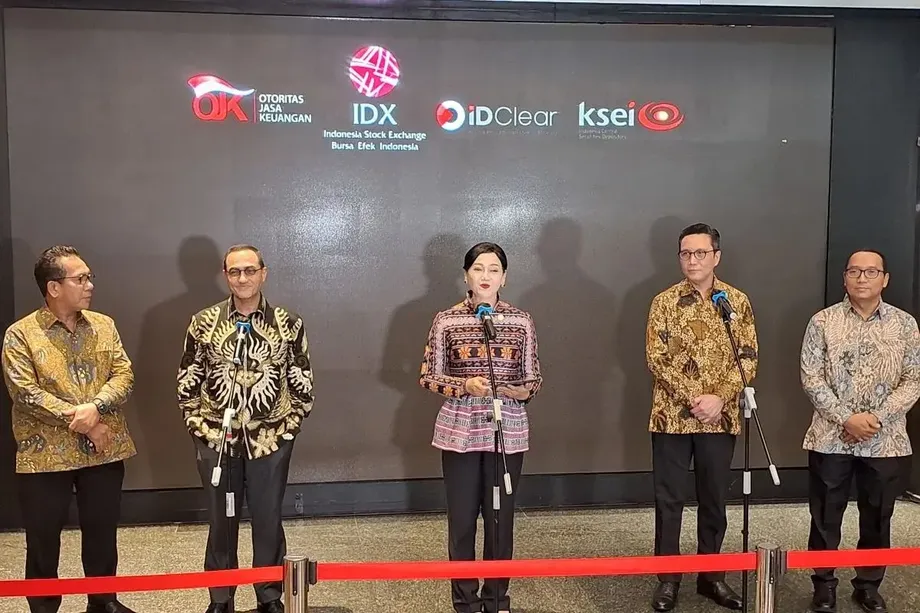
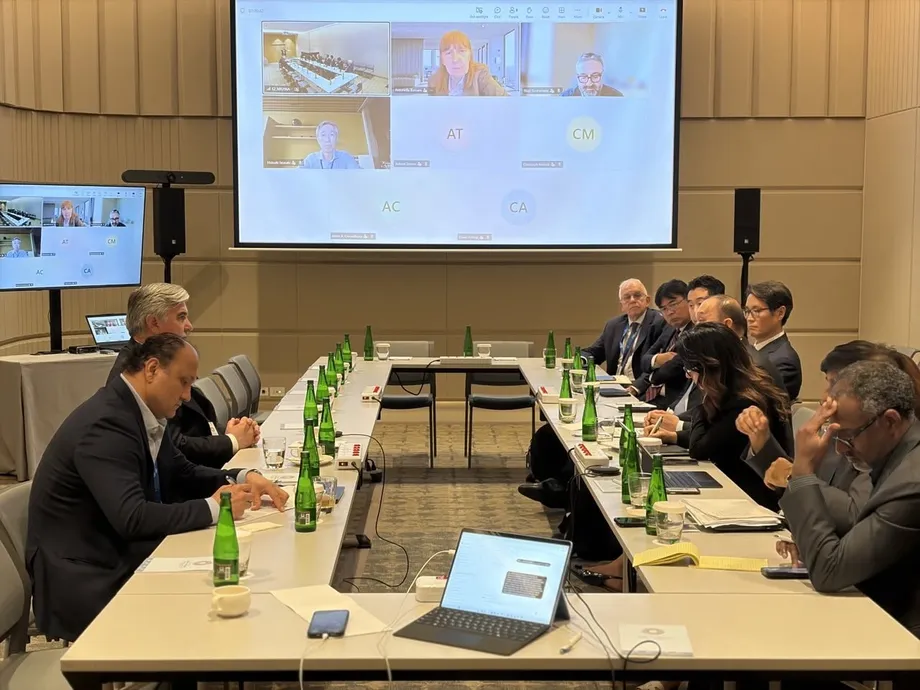
Finance Minister Faiziddin Sattor Qahhorzoda discussed the financing during two rounds of talks in Bangkok with Antonella Bassani, the World Bank's vice president for Europe and Central Asia, and Wempi Saputra, ADB's vice president for sectors and themes. Representatives of both banks also participated.
The discussions focused on how the two institutions could finance Rogun together while using common procedures to assess the project, award contracts and monitor construction. Tajikistan's finance ministry described the proposed approach as the Full Mutual Reliance Framework.
The ministry presented the grant and loan split as a plan. No final approval or payment date was given in its account of the Bangkok discussions. Earlier negotiations had considered a loan of $250 million to $300 million, with the balance of the $500 million package provided as a grant.
For Tajikistan, the difference matters. A grant does not have to be repaid, while a concessional loan must be repaid under more favourable terms than ordinary commercial borrowing. Under the proposed split, 40% of ADB's contribution would be a grant and 60% would add to borrowing.
Rogun is intended to reduce recurring winter electricity shortages and supply neighbouring countries. Its construction also places a large demand on the national budget, making the timing and terms of international support central to the project's progress.
Why the banks want one set of procedures
The World Bank and ADB are discussing common requirements for project assessment, procurement and supervision. Procurement is the process of choosing companies to supply equipment or carry out construction work.
When several banks finance one project, each can require its own checks, documents and reporting. The Bangkok talks examined how to reduce repeated procedures so that Tajikistan and the lenders could spend less time processing similar requirements.
The Full Mutual Reliance Framework would allow the institutions to coordinate their work through an agreed set of rules. The practical aim is to make financing and implementation move faster while keeping oversight of how money is spent and construction is carried out.
Rogun's financing arrangements make that coordination especially relevant. International lenders release money in stages, and payments can depend on completed construction, equipment production, submitted reports and confirmation that agreed requirements have been met.
How ADB's proposal developed
ADB's proposed contribution follows negotiations stretching back to at least February 2025, when Tajikistan asked the bank for $500 million and invited it to join a consortium of international financial institutions supporting Rogun.
Ko Sakamoto, ADB's country representative in Tajikistan, described the bank's position on February 25, 2025, while discussions about approval and the form of assistance were continuing.
"ADB will continue to support the project and share updates as negotiations progress," Sakamoto said.
The main milestones show how the request developed alongside construction and wider financing efforts:
- November 16, 2018: Rogun's first generating unit was commissioned.
- September 9, 2019: The second generating unit was commissioned.
- February 25, 2025: Sakamoto discussed Tajikistan's $500 million request and ADB's review.
- May 2025: ADB President Masato Kanda reaffirmed the bank's readiness to provide $500 million during discussions with First Deputy Prime Minister Hokim Kholiqzoda around ADB's annual meeting in Milan.
- June 30, 2026: The World Bank approved a further $300 million grant, bringing its Rogun support to $650 million.
- Third quarter of 2027: The next generating unit is expected to enter service.
- 2035: S&P Global Ratings expects the full construction programme to be completed.
How much money does Rogun still need?
S&P Global Ratings estimated in August 2026 that approximately $5.8 billion was still needed to complete Rogun. The World Bank's financing plan at the end of 2024 had put the remaining requirement at $6.29 billion, including an expected $2.97 billion in grants and concessional financing from development partners.
The figures describe spending still required at different stages of construction. As work is completed and paid for, the remaining requirement changes. S&P had estimated about $6.4 billion in August 2025 and about $6 billion in February 2026.
Qahhorzoda has said the final construction cost can be calculated only after the work is finished. Inflation, equipment and materials prices, difficult geological conditions and additional safety requirements can all affect spending.
Against S&P's $5.8 billion estimate, ADB's proposed $500 million would cover about 8.6% of the remaining requirement. The package is substantial, but Tajikistan would still depend on other lenders, public funds and revenue generated by the plant.
S&P expects external financing to cover about half of the remaining cost, approximately $2.9 billion. The other half would come from Tajikistan's budget and Rogun's own income. That structure is close to the earlier World Bank plan, which also assigned roughly half of the financing requirement to international partners.
Signed agreements and money arriving in stages
Tajikistan's finance ministry has put signed agreements with international partners at approximately $1.5 billion, including about $650 million in grants and $867 million in concessional loans. Signing an agreement is one stage of financing; cash is then released according to the contract and progress on the work.
At a July 22 briefing, Qahhorzoda said the World Bank had transferred $30 million, while two other transfers totalled €136.4 million. He also identified $120 million from the Asian Infrastructure Investment Bank and $25 million from the Qatar Fund for Development.
The minister said about 70% of the manufacturing cost of the plant's main equipment, principally turbines and generating machinery, had already been paid. Further payments would follow equipment production and fulfilment of contractual conditions.
The World Bank's additional $300 million grant approved on June 30 brought its total support to $650 million. Funding is intended for construction, equipment, quality and safety supervision, and environmental and social commitments.
Tajikistan is also discussing €500 million from the European Investment Bank for a construction package known as Lot 3A. The European Union intends to provide a €50 million grant, with €40 million intended to reduce interest costs associated with the European Investment Bank financing and €10 million for issues connected with relocating residents from the reservoir area.
The EU proposal connects two concrete needs: making borrowing cheaper and helping address the effects of the reservoir on people who must move. The size and timing of each financing agreement will influence how quickly work can proceed.
A larger plant, with construction extending beyond new turbines
Rogun is being built on the Vakhsh River. The current project description calls for six generating units of 630 megawatts each, giving a total installed capacity of 3,780 megawatts. An earlier description used six units of 600 megawatts, totalling 3,600 megawatts.
Megawatts measure how much electricity a plant can produce at a particular moment. Annual generation, usually expressed in kilowatt hours, measures how much electricity it produces over time. Water availability and operating conditions affect that annual total.
The two units commissioned in 2018 and 2019 currently operate at reduced capacity. The next unit is expected in the third quarter of 2027, with Tajikistan's energy ministry specifying September. Its introduction had previously been planned for September 2025.
Earlier plans envisaged the sixth unit entering service in 2029, while S&P expects the complete project to finish in 2035. Commissioning turbines and completing the entire dam complex are different construction milestones. Civil engineering, water infrastructure and other work can continue after generating equipment starts operating.
The reservoir is planned to hold 13.3 cubic kilometres of water, including 10.3 cubic kilometres of active storage, the portion available for planned use in operating the plant. An earlier project plan envisaged filling it over 15 to 17 years.
More electricity for winter and for neighbouring countries
The World Bank estimates that Rogun could improve electricity access for around 10 million people in Tajikistan and help reduce recurring winter shortages. Completing the plant could produce about 14.4 billion kilowatt hours annually, equivalent to roughly 60% of the country's current annual electricity production.
Rogun is already producing electricity. The plant generated more than 1.6 billion kilowatt hours in 2025, approximately 400 million more than in 2024. The energy ministry put cumulative production from the two operating units at 9.9 billion kilowatt hours by December 31, 2025.
Production fell in the first half of 2026 to 675 million kilowatt hours, 161 million below the same period of 2025. That places production in the first half of 2025 at about 836 million kilowatt hours, meaning the subsequent decline was approximately 19%.
Export expectations vary across the financing assessments. S&P expects around 60% of future production to go to other Central Asian countries, while an earlier project description envisaged about 70%, principally to Kazakhstan and Uzbekistan. The World Bank's later description allocates roughly half to growing domestic demand and the remainder to exports.
For Tajik households, the central benefit would be a more dependable winter supply. For the project, exports would provide revenue to support operations and financing. The World Bank also expects construction and operation to create more than 30,000 direct and indirect jobs.
The budget and debt carry part of the burden
Tajikistan has directed more than 48.1 billion somoni from the budget and other sources to Rogun since 2008, according to the authorities. The energy ministry estimated that construction was nearly 60% complete by the end of 2025.
At the July briefing, Qahhorzoda said the initial annual budget allocation was 4.5 billion somoni, with about 4 billion already financed during the first half. Higher than planned budget revenue had allowed the government to consider increasing the allocation to approximately 7 billion somoni.
S&P expects net government debt to rise from about 13.4% of gross domestic product in 2025 to 19% in 2029, partly because of new borrowing for Rogun. Gross domestic product, or GDP, is the value of goods and services produced by the economy in a year.
Currency movements also matter. About 90% of central government debt is denominated in foreign currencies, according to S&P. If the somoni weakens, more local currency is needed to meet the same foreign currency payment.
Tajikistan issued a $500 million international bond in 2017 to finance Rogun's first two units. S&P describes principal repayments of approximately $83 million every six months from March 2025 to September 2027. Qahhorzoda gave a different payment schedule at his July briefing, identifying $100 million due on September 20, 2026, and another $100 million in April 2027.
S&P puts total external debt payments at about $500 million in 2026 and $470 million in 2027. Those obligations run alongside continuing construction spending, making grant funding particularly valuable to the budget.
Safety and a wider partnership shape the next steps
International specialists are considering an additional protective structure known as a saddle dam, Qahhorzoda said. The proposed work concerns flood flows, river conditions and water movement near the outlets of construction tunnels.
Safety assessments also cover emergency readiness at Rogun, downstream hydropower plants and nearby communities. Any additional construction would need to be incorporated into project spending and scheduling. Residents facing relocation from the reservoir area are another part of the programme's social commitments.
ADB's involvement extends beyond Rogun. By 2025, the bank had provided approximately $2.7 billion for 198 projects over 27 years, including $2.2 billion in grants. It allocated $220 million across six projects in 2024 and planned four new approvals in 2025, including digital agriculture.
The partnership strategy discussed for 2026 to 2030 spans energy, transport, tourism, education, health, agriculture and environmental protection, with digital development across those sectors. In May 2025, ADB was supporting 19 projects in Tajikistan worth more than $1 billion.
Rogun's proposed $500 million package is therefore large even within that wider relationship. The immediate financing task is to turn the planned contribution and common banking procedures into agreements and payments matched to construction milestones. The next generating unit in 2027 is the nearest major test of the construction timetable, while the full programme extends to 2035.
Key Points
- ADB plans $500 million for Rogun, comprising a $200 million grant and a $300 million concessional loan.
- ADB and the World Bank are discussing shared assessment, procurement and supervision procedures.
- S&P estimated the remaining construction requirement at $5.8 billion in August 2026.
- The current plant design provides for six units with combined capacity of 3,780 megawatts.
- The next generating unit is expected in the third quarter of 2027; S&P expects full completion in 2035.
- Rogun is intended to reduce winter electricity shortages and earn revenue through regional exports.
- Government funding, foreign debt, dam safety and relocation commitments remain central to completing the project.