Bank approval holds the key to a new funding plan
New World Development is seeking a two year extension on about HK$88 billion in loans, with a proposed repayment of roughly HK$8.8 billion, as the Hong Kong developer tries to secure more time to manage its debt and prepare a possible share sale.
Contents
- Bank approval holds the key to a new funding plan
- What the banks are being asked to accept
- How the 2025 refinancing led to this point
- Why a rights issue matters to the Cheng family
- Losses put the focus on cash
- Property collateral gave banks more security
- Bondholders face a separate exchange proposal
- Investment talks put ownership in focus
- 11 Skies relief changes a major commitment
- Key Points
The preliminary discussions, described by people familiar with the matter in October 2026, require unanimous approval from lenders. That agreement would allow the company to proceed with a rights issue, through which existing shareholders could buy new shares in proportion to their holdings.
The developer aims to complete the loan negotiations by January 2027. A rights issue could be announced as early as November 2026, making the bank discussions and preparations for new capital closely connected parts of its funding effort.
The package represents about 62% of the roughly HK$143 billion in total debt New World reported at the end of June. Its size makes the negotiations central to the company's finances, although the developer is also pursuing a bond exchange, possible investment partners and relief from commitments at its 11 Skies development near Hong Kong International Airport.
No agreement has been reached, and the proposed terms could change or the talks could fail. New World had not immediately responded to a request for comment.
What the banks are being asked to accept
New World's proposal combines a later repayment date with an immediate reduction in principal, the amount originally borrowed. Repaying 10% of a HK$88 billion package would amount to about HK$8.8 billion, leaving roughly HK$79.2 billion before any other adjustments.
The extension would give the developer longer to gather cash from property sales, asset disposals or new investors. The partial repayment would give lenders some money back while they waited for the remaining balance.
Every lender must approve the plan before the linked rights issue can proceed, according to people familiar with the discussions. Talks with some banks are therefore an early stage in a process that needs support across the lending group.
The loans have different maturity dates. The earliest date in the refinancing completed in June 2025 was June 30, 2028. A proposed extension of two years would move the affected repayment dates further out, while the final timetable would depend on the terms banks accept.
How the 2025 refinancing led to this point
New World signed its previous refinancing agreement on June 30, 2025, after months of negotiations that brought the company back from the brink of default. The agreement covered approximately HK$88.2 billion, commonly rounded to HK$88 billion, and was described as Hong Kong's largest debt refinancing.
That deal treated different groups of loans differently. About HK$63.4 billion originally due in 2025 and 2026 received extensions of three years. Loans due in 2027 and later retained their existing repayment schedules, with New World providing additional collateral and other protections for creditors.
The current proposal follows that earlier effort to move repayment demands further into the future. The main stages are:
- February 2025: New World proposed a larger property collateral package as it negotiated refinancing with banks.
- June 30, 2025: The company signed a refinancing agreement covering about HK$88.2 billion, with the earliest maturity on June 30, 2028.
- October 2026: Preliminary discussions emerged over extending about HK$88 billion in loans by another two years.
- November 2026: A possible rights issue could be announced as early as this month.
- January 2027: The company aims to complete the loan extension negotiations.
The HK$63.4 billion that received longer repayment periods in 2025 represented about 72% of the roughly HK$88 billion package. The remaining portion involved debt that already had later maturities.
Why a rights issue matters to the Cheng family
The Cheng family, which controls New World, has been considering proposals to inject equity for months. A rights issue would provide a route for existing shareholders, including the family, to contribute fresh money.
Equity is money invested in exchange for ownership. Unlike a bank loan, it does not create a scheduled obligation to repay principal. For a company managing heavy debts, it can provide cash without adding another loan maturity.
A rights issue offers shareholders the opportunity to buy new shares according to the size of their current holdings. Shareholders who participate proportionately can generally maintain their ownership percentage. Those who do not may end up owning a smaller share of the expanded company.
A completed issue backed by the Cheng family would be a substantial sign of financial support. The amount to be raised, the subscription price and the family's financial commitment have not been disclosed. Those details would determine how much cash reaches New World and how ownership changes.
Losses put the focus on cash
New World posted a loss of about US$3.6 billion for its latest fiscal year and reported total debt of approximately HK$143 billion at the end of June. Its residential, office and shopping mall projects span Hong Kong and mainland China, where a prolonged property downturn has weighed on business.
Falling home prices and weak consumer sentiment have put pressure on revenue, while a high interest rate environment has increased borrowing costs. Together, those conditions make it harder to generate cash while meeting interest payments and preparing for debt maturities.
The company's earlier financial figures show that debt pressure had been building before the June 2025 refinancing. At December 31, 2024, consolidated net debt was about HK$124.63 billion, interest bearing debt was approximately HK$146.5 billion and the net gearing ratio was 57.5%.
Net debt subtracts cash from borrowings, while total debt counts borrowings before that deduction. New World's latest total debt figure and its earlier net debt figure therefore measure different things. The practical task is to generate enough cash for payments while reducing the amount owed.
Property collateral gave banks more security
New World's negotiations in early 2025 show how much property was being put forward to support the refinancing. A February proposal added US$3.8 billion of assets for loans maturing in 2027 and later, bringing the proposed collateral package to US$19.1 billion.
The earlier part of that proposal covered 25 assets valued at US$15.3 billion to support refinancing of US$7.7 billion in loans due in 2025 and 2026. About US$11.3 billion of that asset value was described as unpledged, meaning it had not already been committed as security for other borrowing.
Properties proposed included New World Tower, K11 Art Mall and 11 Skies offices in Hong Kong, together with Shanghai K11 Art Mall and Shenzhen K11 ECOAST. K11 Shanghai Huaihai Middle Road and Rosewood Phuket were among 13 assets proposed for loans with later maturities.
Collateral gives a lender a claim over an asset if a borrower cannot meet its obligations. Some properties in the proposed package already secured other debts, so prospective lenders would receive a second ranking mortgage, placing their claim behind an existing lender. The June 2025 agreement subsequently required additional collateral, making asset security an important part of the company's debt arrangements.
Bondholders face a separate exchange proposal
New World is also trying to manage nearer bond maturities through an exchange offer launched earlier in October 2026. The offer covered roughly US$991 million in bonds.
A bond exchange asks investors to swap existing debt for replacement securities under new terms. For a borrower, it can help rearrange payment demands; the outcome depends on the terms offered and how many investors accept.
Participation by the early bird deadline was below the cap the company had set. The cap was the maximum amount sought for that stage of the offer. Final participation figures and the resulting change to New World's payment schedule were not given.
The bond exchange and bank negotiations involve different groups of creditors. Completing both would address separate repayment demands, while a rights issue would bring in new money rather than rearrange existing debt.
Investment talks put ownership in focus
Bain Capital is exploring a potential investment that could also involve fresh funds from the Cheng family. Such a transaction would provide another possible source of capital alongside a rights issue.
Ownership has already affected another proposed transaction. Earlier in 2026, Blackstone withdrew from a proposed US$4 billion partnership after the Cheng family declined to relinquish control of New World.
The two potential deals show that raising money involves decisions about who will own and direct the company, as well as how much investors will contribute. A rights issue gives current shareholders a route to participate proportionately, while negotiations with an outside investor can involve a different allocation of ownership and decision making powers.
No final terms have been announced for a Bain investment. Its size, structure and relationship to any family contribution remain open, leaving the bank extension as one part of a broader effort to secure funding.
11 Skies relief changes a major commitment
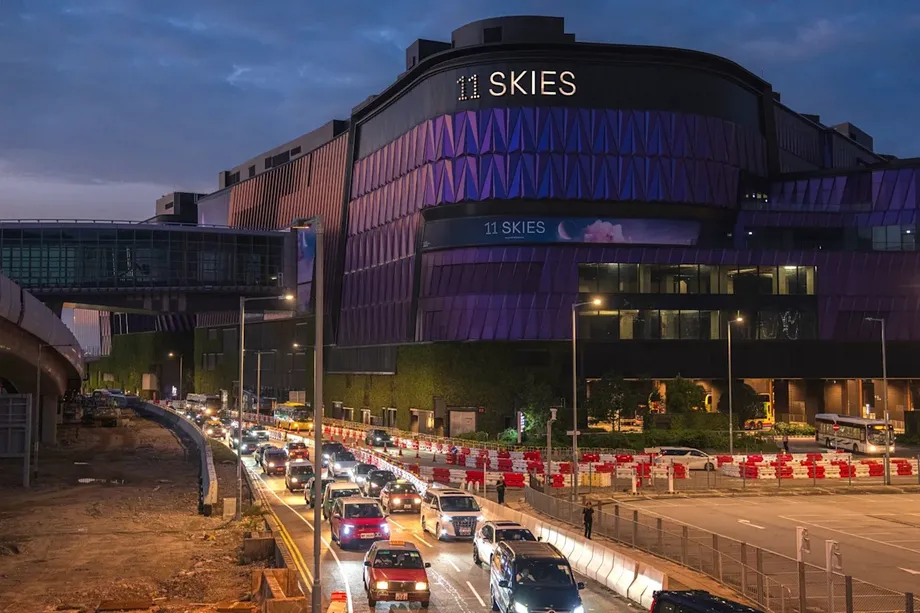
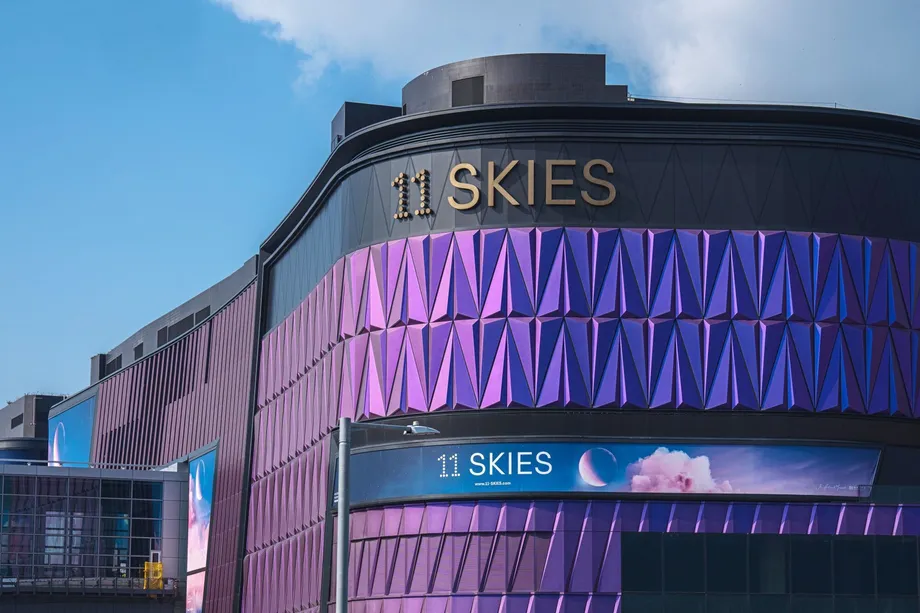
Hong Kong's Airport Authority has agreed to take full control of 11 Skies, New World's HK$18 billion shopping mall and office complex near the airport. The arrangement includes waiving billions of Hong Kong dollars in rent the company had committed to pay.
The authority said the agreement would terminate the project contracts early, with New World's wholly owned subsidiary surrendering the related leases. The project assets, including three office buildings and an entertainment hub, will transfer to the authority at no cost. The leases will terminate on April 1, 2027.
New World will provide more than HK$3 billion in cash and cash equivalents to the authority under the deal. Executive director and chief executive Echo Huang put the contribution at about HK$2.3 billion in cash and about HK$1.05 billion in equivalent services. The arrangement therefore combines relief from future rent commitments with a contribution from the developer and a transfer of control over the complex.
The authority said it would take full responsibility for the project's business development and management. Its chief executive said the authority and New World had been working together on 11 Skies since 2018.
The company has also pursued property sales and asset disposals. Executive director and chief executive Echo Huang had identified reducing debt as a priority, with a target of generating HK$26 billion in cash during the 2025 fiscal year through sales of development projects, noncore assets and businesses.
New World separately said it had achieved its HK$26 billion contracted sales target for that fiscal year by June 25, 2025. Contracted sales record agreements with buyers; the timing of cash receipts depends on payment schedules and project progress.
The scale and type of New World's property holdings help explain why turning assets into cash takes time. Its 2024 annual report listed seven urban renewal projects in mainland China with a combined floor area of 1.622 million square metres, about 43.6% of its total land bank of 3.721 million square metres.
Urban renewal involves redeveloping existing areas, with planning, preparation and construction taking place before completed properties can be sold or rented. New World's current funding effort brings together several ways to manage that gap: longer loan periods, partial repayments, new equity, asset transactions and changes to project commitments.
Key Points
- New World is discussing a two year extension on about HK$88 billion in loans and proposes repaying 10% of principal, roughly HK$8.8 billion.
- All lenders must agree before the linked rights issue can proceed. The company aims to finish negotiations by January 2027.
- A rights issue could be announced as early as November 2026, but its size, price and family backing have not been disclosed.
- The loan package represents about 62% of the HK$143 billion in total debt reported at the end of June.
- A US$991 million bond exchange, possible Bain Capital investment and the 11 Skies arrangement are other parts of the funding effort.
- 11 Skies assets will transfer to the Airport Authority at no cost, with leases ending on April 1, 2027; New World will contribute more than HK$3 billion, including about HK$2.3 billion in cash and about HK$1.05 billion in equivalent services.
- The extension remains under discussion, following the major refinancing completed on June 30, 2025.