Two suspected groups, three IPOs and billions in restricted assets
Hong Kong's Securities and Futures Commission ordered trading in bubble tea chain ChaPanda suspended from 9 a.m. on October 13, 2026, while restricting dealings in client assets up to a combined HK$4,664,493,480 across two suspected groups. The regulator is investigating whether initial public offerings created a false impression of investor demand and whether some proceeds secretly returned to major share recipients.
Contents
- Two suspected groups, three IPOs and billions in restricted assets
- How IPO proceeds may have returned to share recipients
- Who is covered by the larger restriction?
- A separate group and overlapping brokerage networks
- What the notices prohibit, and why assets are being preserved
- The legal basis and the sequence of suspensions
- ChaPanda's IPO demand was weak even before the investigation
- A steep share decline alongside reported operating growth
- Investor confidence and the decisions still outstanding
- Key Points
The larger restriction, covering up to HK$4,379,463,215, concerns accounts linked to Sun Ran and eight companies suspected of involvement in IPO schemes concerning both ChaPanda and Cloudbreak Pharma. A separate restriction of up to HK$285,030,265 concerns accounts linked to Liu Haoran and two companies associated with the Tianju Dihe IPO.
In its October 13 statement, the SFC said it had serious concerns that ChaPanda's IPO might have been artificially manipulated. It described the suspension as necessary or appropriate to maintain an orderly and fair market and protect investors while its investigation continues.
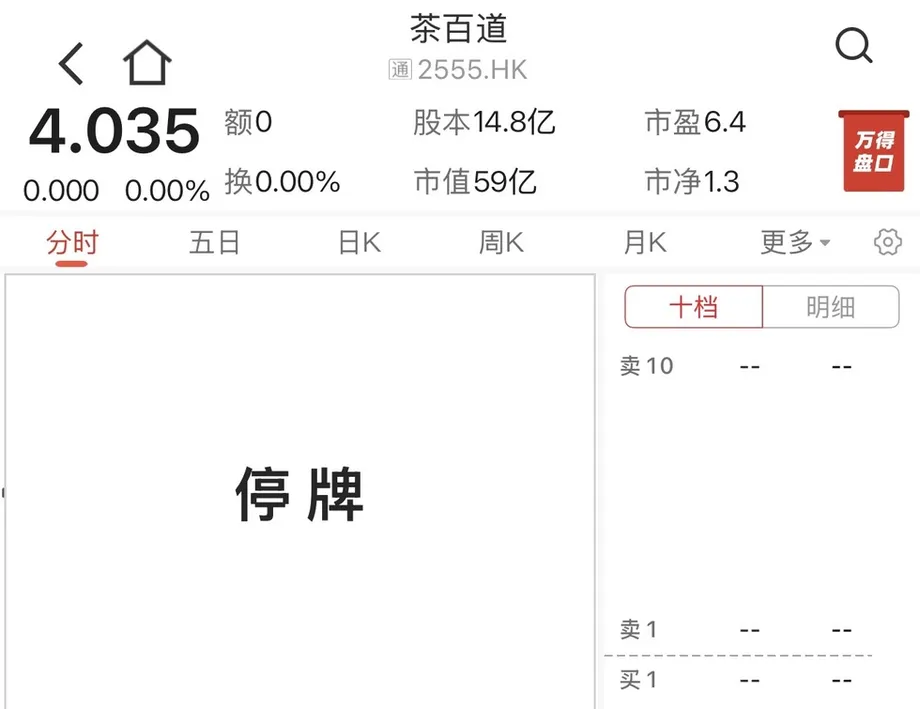
ChaPanda, formally Sichuan Baicha Baidao Industrial Co., trades under stock code 02555. Its shares closed at HK$4.035 on October 12, compared with the HK$17.50 price of its April 2024 IPO. That represents a decline of about 76.9%. The allegations remain under investigation; the SFC announcement does not establish that the suspected parties committed fraud.
The action combines two different protections: stopping trading in ChaPanda shares and preserving specified assets held through brokers. The asset restrictions are not a finding that HK$4.66 billion was stolen, nor does the regulator identify that sum as money belonging solely to ChaPanda.
How IPO proceeds may have returned to share recipients
The central allegation concerns what happened to money after the IPOs, rather than simply how many investors applied for shares. The SFC suspects that some proceeds may have left the listed companies under agreements with the suspected groups that were not disclosed.
Those transfers were purportedly for investments in financial products. According to the regulator, the agreements may have allowed proceeds to flow covertly back to major IPO placees or their associates. A placee is an investor allocated shares through the placement portion of an offering, rather than through the public application process.
The distinction matters because an IPO is meant to bring capital into the issuing company. If money raised from investors is secretly returned to selected share recipients, apparent demand may not represent the independent financial commitment that other investors believe it does. That is the mechanism the SFC is investigating, not a conclusion it has already proved.
The announcement does not specify how much money allegedly moved, identify individual financial products, or allocate suspected transfers among the three IPOs. It also does not publish the agreements or identify which executives, if any, approved them. Those missing details limit what can presently be concluded about each company's role.
Who is covered by the larger restriction?
The SFC issued notices to six brokerages covering assets in accounts held by Sun Ran and eight related companies. It described the HK$4.379 billion ceiling as the largest restriction amount in a case of this kind in its history. That record applies to the first group's restriction, rather than requiring the two groups' amounts to be combined.
The eight companies are Avant Team Limited, Citadel Wealth Limited, Fortuna Capital Management Limited, Gemstone Capital Management Limited, Generations Capital Management Limited, Panda Capital Management Limited, Prudent Wealth Global Inc and Timeless Capital Management Limited.
The regulator expressly distinguished the named Gemstone Capital Management Limited from a separate Hong Kong corporation with the same name that holds an SFC licence. Six of the companies are incorporated in the British Virgin Islands, while Avant Team is incorporated in Seychelles and Timeless Capital Management in Samoa.
Sun is identified in the official announcement as a licensed representative of Harvest Global Investments Limited. The six brokerages receiving notices include China International Capital Corporation's Hong Kong securities business, CMB International Securities, Futu Securities International (Hong Kong), Haitong International Securities, Harvest Global Investments and Valuable Capital.
The SFC names the relevant account holders, despite some reports describing the groups' identities as undisclosed. Being named in the notices does not itself establish liability. The regulator also explicitly says the brokerages receiving notices are not subjects of its investigation.
A separate group and overlapping brokerage networks
The second group concerns Liu Haoran, The Reynold Lemkins Group (Asia) Limited and Kaufmann & Company Pan-Asia Limited. The two companies are incorporated in Hong Kong. Restrictions affecting their accounts and Liu's accounts extend across 29 brokerages, with a ceiling of HK$285,030,265.
This group is suspected of involvement in a fraudulent scheme concerning Tianju Dihe (Suzhou) Technology Co., stock code 02479. The SFC does not say this second group was involved in ChaPanda's IPO. Keeping the groups separate is essential to understanding the scope of the allegations.
The six brokerages in the first set and the 29 in the second do not add up to 35 distinct firms. Four appear on both official lists: China International Capital Corporation's Hong Kong securities business, CMB International Securities, Futu Securities International (Hong Kong) and Valuable Capital. The two lists therefore cover 31 distinct brokerages.
Reports also identify CCB International and CMB International as having participated in underwriting all three IPOs, while China International Capital Corporation was ChaPanda's sole IPO sponsor. These transaction roles should not be confused with allegations of wrongdoing. The SFC announcement does not accuse those underwriting or sponsorship businesses of participating in the suspected schemes.
What the notices prohibit, and why assets are being preserved
The asset notices were issued under sections 204 and 205 of the Securities and Futures Ordinance. Without prior written consent from the SFC, the relevant brokerages cannot dispose of or deal with the restricted assets, or assist, encourage or arrange for someone else to do so.
They also cannot execute instructions issued directly or indirectly by the covered account holders concerning the restrictions. If they receive instructions involving restricted assets, they must notify the regulator.
The SFC says the notices do not affect the brokerages' operations or their other clients. These are targeted restrictions on specified client assets, not orders to close the firms or freeze every customer's account.
Preserving assets may support later restitution proceedings. Restitution means requiring responsible parties to return money or compensate affected investors. The regulator says parties involved may eventually be ordered to provide compensation, but it has not announced an award, an eligibility process or a payment timetable.
The legal basis and the sequence of suspensions
The ChaPanda suspension was directed under section 8(1) of the Securities and Futures (Stock Market Listing) Rules. This is distinct from the provisions of the Securities and Futures Ordinance used for the asset restrictions.
The listing rules allow the SFC to order a suspension when listing documents or company communications contain materially false, incomplete or misleading information; when suspension is needed for an orderly and fair market; when investor or public protection warrants it; or when conditions imposed for an earlier resumption have not been met. Listing those powers does not mean the SFC has found all four circumstances present in this case.
The official announcement places ChaPanda's suspension within a sequence involving three listed companies:
- April 23, 2024: ChaPanda began trading on the Hong Kong Stock Exchange's main board.
- June 28, 2024: Tianju Dihe began trading on the main board.
- April 1, 2025: Tianju Dihe's shares were suspended.
- July 3, 2025: Cloudbreak Pharma, stock code 02592, began trading on the main board.
- September 10, 2026: The SFC directed the suspension of Cloudbreak Pharma shares.
- October 13, 2026: ChaPanda's suspension took effect at 9 a.m., followed by the SFC announcement after the market closed.
All three stocks were suspended by the time of the latest action, but their suspensions did not begin together. Reports attribute Tianju Dihe's April 2025 suspension to its failure to publish financial results; the October 13 SFC announcement records that date without describing the original reason.
ChaPanda's IPO demand was weak even before the investigation
ChaPanda's published subscription figures did not depict a heavily oversubscribed flotation. Its April 15, 2024 prospectus set out a global offering of approximately 148 million H shares at HK$17.50 each. H shares are shares of a company incorporated in mainland China that are listed in Hong Kong.
The initial allocation placed 14.7764 million shares in the Hong Kong public offering, about 10% of the deal, and approximately 133 million shares in the international offering. The April 22 allotment announcement recorded 4,593 valid public applications and subscription demand of only 0.5 times the public shares initially available.
The international offering was subscribed 1.11 times, with 122 placees. That means demand was approximately 11% above the initial international allocation, rather than several times the number of shares available.
Because the public tranche was undersubscribed, 7.4408 million shares moved into the international offering. The final public allocation was 7.3356 million shares, roughly half its original size, while the international allocation rose to approximately 140 million shares. ChaPanda's net proceeds after listing expenses were about HK$2.463 billion.
Weak public demand does not resolve the manipulation allegation. The SFC's concern is whether some apparent demand was genuine and whether selected recipients may have received proceeds back through undisclosed arrangements. Even an offering with modest subscription levels can be examined on those grounds.
A steep share decline alongside reported operating growth
ChaPanda's shares fell sharply on their first trading day. Reports describe the decline as more than 26% or about 27%, a difference consistent with rounding. One account says the shares never traded above their offer price.
The October 12 closing price of HK$4.035 was HK$13.465 below the HK$17.50 IPO price. Reports put the company's market value at approximately HK$5.9 billion to HK$6 billion and its decline since the start of the year at more than 36%. Those market value estimates are rounded, rather than precise measures of losses attributable to the alleged scheme.
The share weakness contrasts with reported growth in the company's operating results. Revenue in the reported first half was RMB2.655 billion, up 6.2% from a year earlier, and net profit was RMB345 million, up 3.5%. The preceding full year produced revenue of RMB5.395 billion, up 9.7%, and net profit of RMB805 million, up more than 70%.
Those figures imply a net profit margin of about 13.0% for the reported first half, calculated as RMB345 million divided by RMB2.655 billion. The preceding full year's margin was approximately 14.9%, using RMB805 million and RMB5.395 billion. The periods differ in length, so this is a comparison of margins, not proof of a sustained deterioration.
Business performance and securities conduct are separate issues. Revenue growth does not answer whether IPO demand was manipulated. Equally, the SFC announcement does not establish that the investigation has interrupted ChaPanda's tea shops or its franchise operations.
Investor confidence and the decisions still outstanding
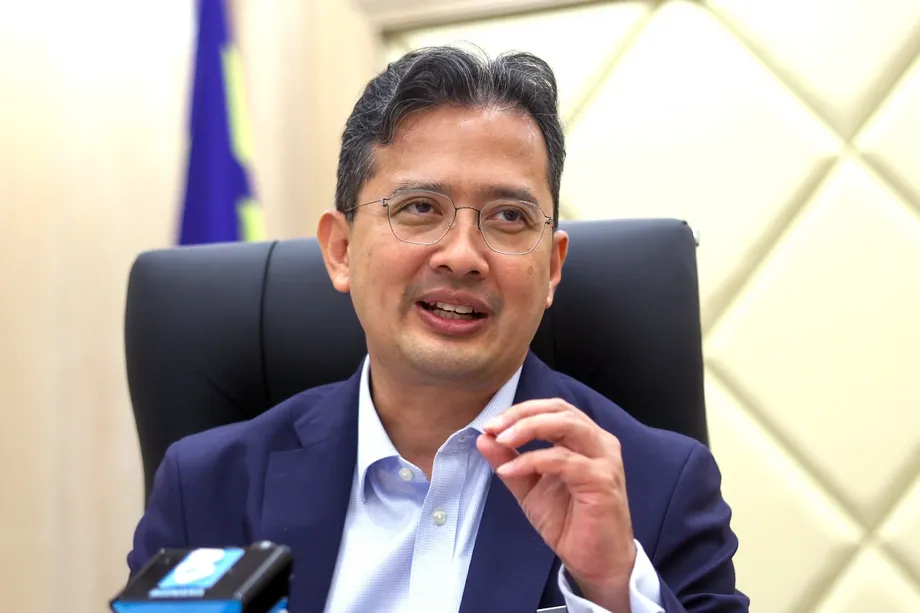
SFC Chief Executive Officer Julia Leung linked enforcement to confidence in Hong Kong's capital markets. Describing why market integrity matters, she said:
Market integrity and robustness are the cornerstones of a fair capital market and genuine investor confidence.
Leung also stated that the regulator has zero tolerance for IPO manipulation, price rigging and the creation of false markets. Michael Duignan, identified in the official announcement as the SFC's Executive Director of Enforcement, said the actions had disrupted the two suspected groups and were intended to protect investors and preserve market integrity.
Responding separately to concerns that suspensions could damage confidence, the SFC said effective action against serious misconduct helps strengthen trust. It said it would continue targeted action of appropriate strength and work with the stock exchange and market participants to support a competitive listing market.
For ChaPanda shareholders, the immediate consequence is an inability to buy or sell the shares on the exchange while trading is suspended. The SFC has not announced a resumption date, a hearing date or a deadline for completing the investigation.
It has also not disclosed a final measure of investor losses, the amount of proceeds allegedly returned to placees, or a compensation plan. The regulator says its investigation continues and that it will make no further comment while it is under way. The next substantive developments would therefore require further regulatory decisions or disclosures, rather than assumptions that suspension automatically leads to a particular penalty.
Key Points
- ChaPanda trading was suspended from 9 a.m. Hong Kong time on October 13, 2026.
- Two sets of notices restrict dealings in assets up to a combined HK$4,664,493,480.
- The first suspected group concerns ChaPanda and Cloudbreak Pharma IPOs; the second concerns Tianju Dihe.
- The SFC suspects undisclosed agreements may have returned some IPO proceeds to major placees or their associates.
- The notices cover 31 distinct brokerages, which the SFC says are not investigation subjects.
- ChaPanda's HK$4.035 closing price on October 12 was about 76.9% below its IPO price.
- The allegations remain under investigation, with no announced trading resumption date or compensation timetable.