A sweeping request to clear convictions and liability
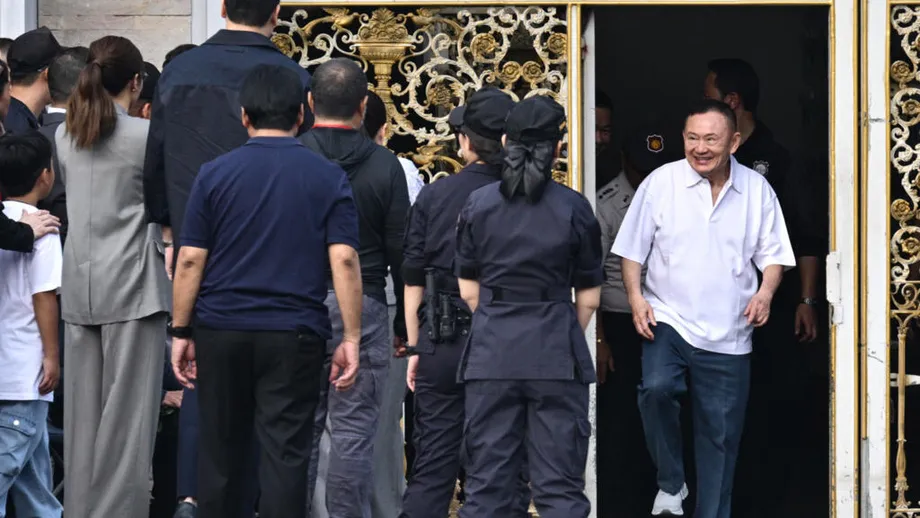
Former Thai prime minister Thaksin Shinawatra is seeking amnesty for cases he argues arose from political conflict, including a judgment involving 46,373,687,554.70 baht in confiscated assets. His lawyer, Winyat Chatmontree, said on October 12, 2026, that Thaksin had authorised a petition on October 8 asking Thailand's Committee on Promoting a Peaceful Society to recognise his entitlement to amnesty and release him from all liability covered by the law.
Contents
- A sweeping request to clear convictions and liability
- What the peaceful society law covers
- Thaksin's argument begins with the 2006 coup
- The asset judgment and three other cases
- A pardon and an amnesty serve different purposes
- How the petition would reach a decision
- Courts have taken different approaches
- The dates behind the application
- A stated wish to stay out of politics
- Key Points
The request goes beyond reducing a sentence. It seeks to clear past political charges and convictions from his record. Winyat said the application covered all relevant cases together rather than presenting separate requests for each case. It was submitted through the joint service centre at the Office of the Permanent Secretary, Prime Minister's Office, and addressed to the committee's chair.
Receipt and eligibility were not immediately confirmed. Chatchai Bangchuad, permanent secretary of the Prime Minister's Office and secretary of the committee, said he first needed to check whether the petition had arrived. He acknowledged Thaksin's right to apply, while making clear that ordinary criminal cases without a political connection would not qualify.
The distinction is central to the application: Thaksin argues that his cases belong within a law intended to address political conflict, but that argument has not yet been accepted by the committee. His request also comes amid disagreement about how courts and other justice agencies should apply the amnesty, and whether qualifying defendants must wait for a committee decision.
What the peaceful society law covers
Thai Lawyers for Human Rights, a legal assistance and rights monitoring organisation, says in its statement on implementation that the Act on Promoting a Peaceful Society took effect on August 24, 2026. It covers qualifying acts arising from political assembly or expression motivated by political conflict or political motives between January 1, 2005, and July 16, 2025.
Lawmakers passed the measure in July, and the government under Prime Minister Anutin Charnvirakul presented it as a reconciliation initiative. It could benefit thousands of people prosecuted during the political turmoil that followed the 2006 coup which removed Thaksin from power. Eligibility, however, depends on the conduct and offences covered by the Act, not simply on a person's involvement in politics.
The organisation identifies the legislation as the Act of B.E. 2569, corresponding to 2026. Reports about Thaksin's application differ on the year, with some calling it a 2025 Act. The commencement date given by Thai Lawyers for Human Rights is August 24, 2026. Its account also states that cases under Section 112 of the Criminal Code, concerning offences against the monarchy, are excluded.
According to the organisation's explanation of Section 7, qualifying conduct ceases to constitute an offence and the person is no longer regarded as having committed it. That is broader than a reduction of punishment: it addresses the legal status of the conduct itself. Whether Thaksin's cases satisfy those conditions is the question his petition asks the committee to resolve.
Thaksin's argument begins with the 2006 coup
The reported petition traces the cases against Thaksin to political conflict between 2005 and 2016, placing particular weight on the coup of September 19 and 20, 2006. It describes his position as an elected prime minister and leader of the Thai Rak Thai party, arguing that actions taken in those roles amounted to political expression within Section 7.
Thaksin's argument is that the coup created the basis for investigations and prosecutions against him. The petition challenges the legitimacy of the subsequent collection of evidence and invokes the legal concept known as the fruit of the poisonous tree. In simple terms, that concept concerns whether evidence obtained through an unlawful process can taint evidence derived from it.
This is an argument made by the applicant, not a finding that the investigations or judgments were unlawful. The petition asks the committee to accept that his actions as head of government arose from political motives and should fall within the amnesty. It also argues that holding political office should not exclude him from the law's reference to a person engaged in political expression.
The decisive issue is therefore more specific than whether Thaksin experienced political opposition. The committee must assess whether the conduct underlying the cases meets the statutory conditions, including the political connection and the offences covered by the Act.
The asset judgment and three other cases
The petition cites four judgments from the Supreme Court's Criminal Division for Holders of Political Positions. One is case Om.1/2553, involving confiscated assets of 46,373,687,554.70 baht, approximately 46.37 billion baht. The other three are identified as Om.4/2551, Om.5/2551 and Om.10/2552.
For the asset case, Thaksin relies on Announcement No. 30 of the coup authorities, dated September 30, 2006. His petition argues that this measure appears at item 29 in the schedule attached to the amnesty law and that the judgment, together with related legal provisions, brings the case within its scope. It makes a related argument about the three other judgments.
A schedule attached to a law is a list that forms part of the legislation. Here, the petition's argument depends partly on connecting the legal basis of the judgments to the measures listed in that schedule. The appearance of a measure in the schedule does not, by itself, establish that every case connected to it qualifies.
Thaksin also argues that the judgments contain no explicit finding that he committed corruption or misconduct of the kind that would exclude him under Section 3. That remains his interpretation of the judgments. No committee ruling accepting it has been announced, and the precise relief available in the asset case has not been established.
A pardon and an amnesty serve different purposes
The petition invokes a royal reduction of Thaksin's sentences in the three cases to a combined term of one year. It says he has completed that punishment and relies on the reduction as part of the reasoning for his request to recover his legal standing under Sections 7, 8 and 9.
A reduction of sentence changes the punishment imposed. The amnesty Thaksin seeks would go further by removing liability for qualifying conduct and addressing the resulting criminal record. Completion of a sentence therefore does not, on its own, settle the separate question of amnesty eligibility.
There is an unresolved difference between the petition's account and reporting on his custody. The petition says he served the reduced sentence in full. A separate account says he was released on parole from Klongprem Central Prison in Bangkok on May 11, after the Supreme Court ordered him to serve the one year sentence on September 9 of the previous year. Parole means release before the end of a custodial term, subject to conditions; it is not the same as expunging a conviction.
That account describes the sentence as concerning abuse of authority and conflict of interest while Thaksin was prime minister before the 2006 coup. It also records his return to Thailand on August 22, 2023, after 15 years abroad, his stay at Police General Hospital rather than in prison, and an earlier parole release in early 2024. The committee has not announced how it will assess this history alongside his current legal claims.
How the petition would reach a decision
Chatchai described a process beginning with confirmation that the application had been received. It would then go to a screening subcommittee chaired by the permanent secretary for justice, which would determine whether the request met the criteria for consideration.
If it passed screening, the petition would be forwarded to the main committee, chaired by Deputy Prime Minister Pakorn Nilprapunt. Chatchai said some cases could require supporting evidence or grounds demonstrating political motives. A stated desire for national reconciliation would not substitute for examining the connection between the cases and political activity.
Justice Minister Pol Lt Gen Rutthapon Naowarat said he did not know which provisions Thaksin had invoked and would leave the eligibility decision to the committee. Explaining his limited knowledge of the request, the minister said:
There are already rules and criteria in place, but I do not yet know what he has applied for.
Officials were compiling petitions, and Chatchai said a further meeting was expected soon, although no date had been scheduled. The law gives the committee 180 days to complete its work, according to the account of his remarks. No starting date for that period or deadline specific to Thaksin's petition was given, so it cannot yet be translated into a firm decision date for his application.
Courts have taken different approaches
Thaksin's application comes against a wider dispute about whether the committee must decide every amnesty case. Thai Lawyers for Human Rights argues that Sections 7 and 8 require courts, police and prosecutors to apply the law directly when eligibility is clear, rather than adding a referral to the committee.
Its statement describes contrasting court practices during the first two weeks after the Act took effect. The Criminal Court terminated some assembly cases immediately, but scheduled hearings a month later for certain detainees seeking release. The Bangkok South Criminal Court referred applications to the committee on the ground that the committee had authority to determine eligibility conclusively.
Other courts acted without waiting for such a ruling. The Central Criminal Court for Corruption and Misconduct Cases ordered the release of a detainee prosecuted over the closure of polling stations in 2013 after about a week of consideration, without a hearing. The Dusit Kwaeng Court moved to terminate two cases arising from P-Move assemblies without requiring an application from the defence.
Thai Lawyers for Human Rights argues that the committee's role includes resolving disputed political motivation, while courts retain their own duty to terminate qualifying proceedings. It points to a September 11, 2025, legislative committee discussion in which wording that would have delayed amnesty until a committee resolution was removed from the draft.
Those examples concern other defendants and do not establish Thaksin's eligibility. They show, however, that referral procedures can affect how quickly a person receives relief. The organisation's account also criticised uncertainty about committee appointments before its establishment; subsequent reporting says the committee held its first meeting on September 21.
The dates behind the application
The sequence separates the law's passage and implementation from Thaksin's individual request. It also helps distinguish earlier concerns about the committee's formation from the later question of when it will consider his petition.
- September 19 and 20, 2006: The coup identified in Thaksin's petition as the starting point for the cases against him.
- September 11, 2025: The legislative committee discussion cited by Thai Lawyers for Human Rights about making amnesty effective without waiting for individual committee resolutions.
- July 2026: Lawmakers passed the peaceful society legislation.
- August 24, 2026: The Act took effect.
- September 21, 2026: The committee reportedly held its first meeting, one day before the September 22 deadline identified by Thai Lawyers for Human Rights.
- October 8, 2026: The date Winyat gave for Thaksin's authorisation and submission of the petition.
- October 12, 2026: Winyat publicly disclosed the application.
No hearing or decision date for Thaksin has been announced. Confirmation of receipt, screening of the legal grounds and consideration by the main committee remain distinct steps.
A stated wish to stay out of politics
Winyat presented the application as an attempt to restore Thaksin's reputation and allow him to pursue business and a peaceful life. Describing the former prime minister's intentions, the lawyer said:
Thaksin wants to earn a living and live peacefully. He is getting older and does not wish to become involved in politics or enter political life.
Reports differ on his age: the petition describes Thaksin as 77, while the account of his parole and the justice minister's response calls him 76. Neither account explains that difference.
There were reports of opposition from political activists after the application became public, but no activists were identified and no posts were reproduced. Predictions that amnesty could restore Thaksin's rank or positions, or allow fuller political participation, have not been confirmed as legal consequences of this petition. They also differ from his lawyer's stated account of his intentions.
What can be established is narrower: Thaksin seeks removal of liability and the clearing of his record, while officials say political eligibility must be examined. There has been no announced decision granting amnesty, returning confiscated assets or restoring any position.
Key Points
- Thaksin's lawyer says a petition submitted on October 8, 2026, seeks amnesty and release from liability across relevant cases.
- The request cites a judgment involving 46.37 billion baht in confiscated assets and three other Supreme Court cases.
- The Act covers qualifying political conduct from January 1, 2005, through July 16, 2025, and excludes Section 112 cases.
- Officials say cases must have a political connection; the right to apply does not establish eligibility.
- A screening subcommittee would assess the petition before referral to the committee chaired by Pakorn Nilprapunt.
- Courts have applied different procedures, prompting Thai Lawyers for Human Rights to call for consistent and prompt implementation.
- No decision date or grant of amnesty for Thaksin has been announced.