Thirteen Corporate Accounts Expose a Wider Network
Thai police announced the arrest of 39 suspects and the seizure or freezing of assets worth more than 500 million baht after tracing an alleged investment scam through 13 corporate bank accounts. Investigators linked those accounts to 74 cases with reported losses exceeding 173 million baht, extending an inquiry that initially examined losses of exactly 26,511,804.66 baht suffered by two victims.
Contents
- Thirteen Corporate Accounts Expose a Wider Network
- Visa Checks Provided the Initial Lead
- How Victims Were Drawn Into ETO TH
- Two Victims Became an Inquiry Into 74 Cases
- Seventy-One Warrants and Thirty-Nine Arrests
- Money Moved Through Cash, Payments and USDT
- Luxury Property Dominated the Asset Seizures
- Poipet Allegations Leave Ownership Questions Open
- Visa Reviews and Scam Warnings Follow the Raids
- Key Points
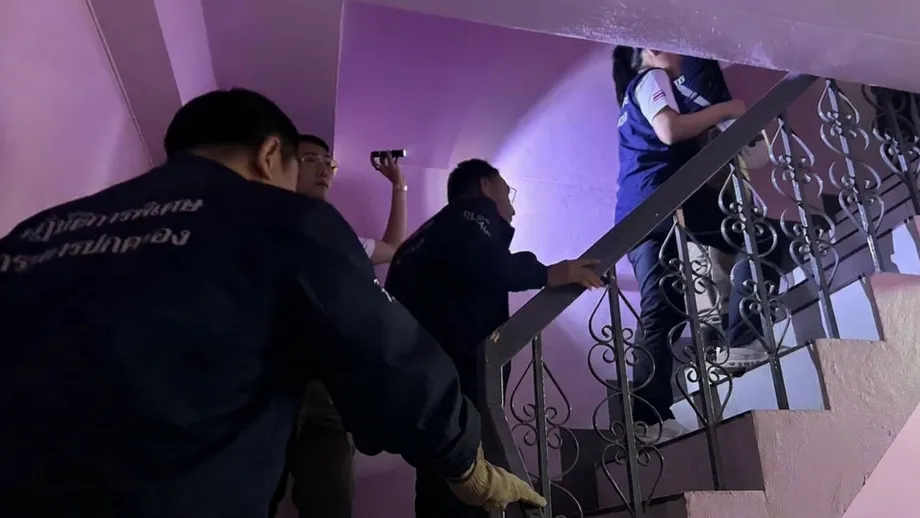
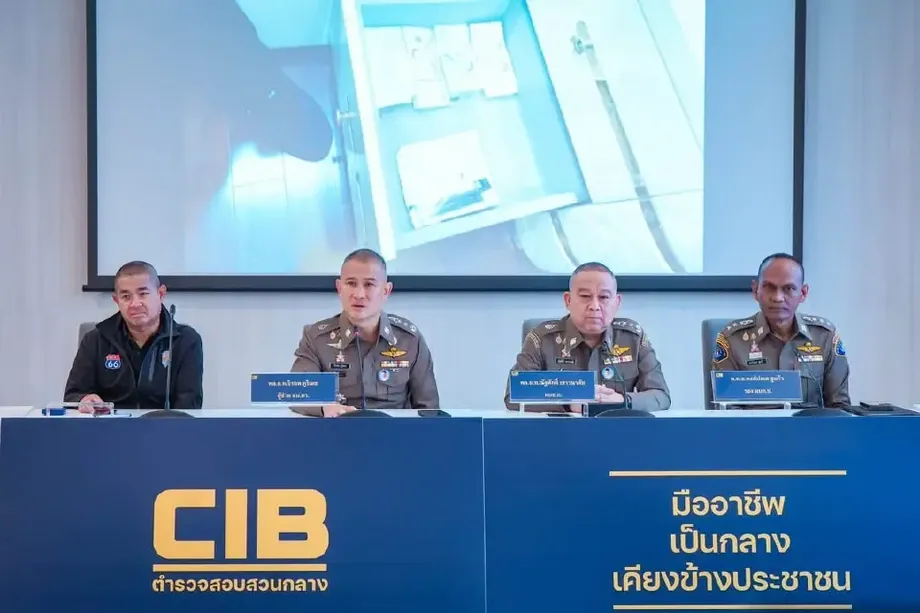
The Central Investigation Bureau (CIB) and Anti Cyber Scam Center (ACSC) described Operation Anti-Scam Matrix at a briefing on October 13, 2026. Searches covered 27 locations across 11 provinces. Police did not disclose the precise dates of the coordinated raids, so the briefing date should not be treated as the date every search took place.
The investigation centres on ETO TH, an application police described as a fake stock trading platform, and the associated website eto-th.com. Investigators allege that victims saw apparent profits on their screens but could not withdraw their money, even after paying additional fees demanded by the operators.
The largest figures concern different parts of the investigation. The 173 million baht represents reported losses linked to the corporate accounts; the asset seizures exceed 500 million baht; and a Chinese suspect allegedly admitted handling at least 3 billion baht in laundering transactions since 2022. Those amounts are not interchangeable, and police have not established that every seized asset came from the 74 identified cases.
Visa Checks Provided the Initial Lead
Police said the ACSC compared the names of foreign nationals holding Thailand Privilege visas with complaints recorded through Thailand's online police reporting system. That exercise identified bank accounts belonging to Chinese visa holders that allegedly received transfers from accounts previously paid by scam victims.
The ACSC assigned the Crime Suppression Division to follow the transfers and identify the people handling the money. A detailed account of the investigation describes more than five months of work and identifies nine Thailand Privilege holders within the wider network under examination. That figure does not mean all nine were among the eight Chinese nationals arrested.
Police Lieutenant General Jirabhop Bhuridej, assistant national police chief, presented the findings alongside CIB commissioner Police Lieutenant General Natthasak Chaowanasai. Most accounts identify Jirabhop as ACSC deputy director, although one describes him as its head.
The visa checks were an investigative lead, not evidence that holding a Thailand Privilege visa is itself suspicious. Police said screening arrangements already existed and that the transfers, examined against specific crime complaints, prompted the inquiry.
How Victims Were Drawn Into ETO TH
Acting Police Major Chonkan Buraphaka, an inspector with Crime Suppression Division Subdivision 5, described a recruitment process that began with public Facebook advertisements promising high returns from stock investments presented as block trading. In legitimate finance, a block trade involves a large transaction in securities. Using that terminology does not establish that a platform is actually carrying out such trades.
People who clicked the advertisements were directed into conversations and groups on Line. Investigators said accounts operated by the alleged scammers posed as fellow investors, creating the appearance of an active community that trusted the service.
A more detailed account identifies an investment adviser using the name Admin Kan and a purported instructor using the name Teacher Toy. Victims were invited to trading lessons through Zoom, where the instructor reportedly spoke without switching on a camera. Other supposed investment partners contacted victims through Line without meeting them in person.
Victims were encouraged to register a portfolio through eto-th.com and download ETO TH. The application displayed investment balances and apparent returns. Police allege these displays simulated trading activity rather than demonstrating that genuine investments had been made.
Money was then transferred into 13 corporate bank accounts allegedly controlled by the network. When victims tried to withdraw their investment or displayed profits, they were told to pay further fees to an analysis team. Additional payments did not unlock their funds, and demands for more money continued.
Two Victims Became an Inquiry Into 74 Cases
The detailed loss figure for the two victims was 26,511,804.66 baht. Other accounts round that amount to more than 26.5 million or 26.51 million baht. Those figures describe the same initial example rather than separate losses that should be added together.
Checks of the receiving accounts subsequently identified 74 cases with combined reported losses exceeding 173 million baht. Using 173 million baht as a conservative reference, the expanded total is more than 6.5 times the losses recorded for the two initial victims. The comparison shows how examining shared receiving accounts widened the investigation beyond the complaints that first drew attention.
The figure of 74 refers to cases. Police accounts do not establish whether it represents exactly 74 individual victims, because a case can involve more than one person. They also do not give a complete breakdown of the dates or individual amounts involved.
The investigation developed across several periods:
- Since 2022: A Chinese suspect allegedly admitted laundering at least 3 billion baht for senior partners in a scam centre in Poipet, Cambodia.
- Before the raids: Investigators spent more than five months tracing transfers and identifying alleged participants.
- October 13, 2026: Police announced 39 arrests, searches at 27 locations and assets seized or frozen worth more than 500 million baht.
- At the briefing: Police said further suspects, property relationships and visa records remained under investigation.
Seventy-One Warrants and Thirty-Nine Arrests
The Criminal Court approved arrest warrants for 71 people, according to the detailed account of the operation. They comprised 41 Thai nationals, 21 Chinese nationals, three Myanmar nationals, five Lao nationals and one Vanuatu national.
Police arrested 30 Thai nationals, eight Chinese nationals and one Myanmar national. Of the other 32 people named in the warrants, 22 were reportedly abroad, six were already imprisoned in unrelated cases and four were believed to be hiding in Thailand. The six already in prison should not be counted as fugitives.
The allegations include jointly defrauding the public, fraud through impersonation, entering false information into computer systems, conspiracy to launder money and jointly laundering money. These are allegations under investigation, not findings of guilt.
Searches took place in Bangkok, Chiang Mai, Chiang Rai, Samut Prakan, Saraburi, Sing Buri, Nakhon Pathom, Chon Buri, Kalasin, Narathiwat and Ranong. Police said they were continuing to examine connections involving Chinese nationals and other suspected participants. No next hearing date or deadline for completing those inquiries was announced.
Money Moved Through Cash, Payments and USDT
Police Lieutenant Colonel Saran Sripak, deputy superintendent of Crime Suppression Division Subdivision 5, described several alleged routes for moving the proceeds. Funds were transferred through further bank accounts, withdrawn at branches or automated teller machines, moved through informal remittance and currency exchange networks, or routed through payment gateways.
A payment gateway processes payments between customers and businesses. One detailed account identifies transactions through 2C2P Thailand, but it does not establish wrongdoing by that provider. The alleged use of a financial service by suspects is separate from whether its operator participated in a crime.
Investigators also said money was converted into Tether, known as USDT, and transferred through multiple digital wallets. USDT is a digital token designed to track the value of the US dollar. Moving between bank deposits, cash and digital tokens can make it harder to connect a final recipient with the original victim payment.
Police described wallets whose owners had not been identified, including wallets controlled directly by their users rather than held by an exchange. Such wallets are not inherently anonymous or untraceable. Blockchain transaction records can still allow investigators to follow transfers, even when identifying the person controlling an address requires further evidence.
Saran said blockchain checks showed digital assets being converted back into baht through legally operating exchanges. He specifically said those exchanges were not involved in the alleged crimes; suspects had registered as users to carry out conversions.
The resulting baht allegedly served three purposes: financing scam operations and making early payments to other victims to build confidence, providing cash for deliveries at agreed locations, and buying or taking long leases on luxury properties. Some cash handovers reportedly involved several million baht at a time.
Luxury Property Dominated the Asset Seizures
Police listed eight luxury houses or properties valued at more than 330 million baht, property documents and condominium holdings valued at more than 90 million baht, and two additional houses in Bangkok's Krungthep Kreetha area valued at more than 60 million baht.
Reports differ on the property breakdown. One describes the 90 million baht component as a single condominium in the Rama 9 area. The more detailed inventory lists a land title in Samut Prakan and three condominium units in Rama 9. Shorter inventories refer to 10 real estate items without fully explaining how title documents were counted.
If the three principal property categories are separate, their stated values exceed 480 million baht before vehicles, cash and other valuables are included. However, the differing descriptions mean the inventories should not be combined into a definitive property count without clarification from investigators.
Police also seized 10 vehicles, with reported examples including a Porsche Cayenne, Lexus LM300h, Toyota Alphard, Tesla Model Y, ZEEKR 009 and Mercedes-Benz C300e. Cash and foreign currency totalled approximately 4,202,700 baht, comprising about 3,553,235 baht in Thai currency and foreign notes valued at 649,465 baht.
The digital asset inventory listed 24,960 USDT, valued by investigators at approximately 838,885.60 baht. Other reported seizures included 87 valuables, such as jewellery, watches and designer bags, and 24 electronic items. Police separately described an evidence inventory of 32 entries containing 155 pieces, including phones, bank books, payment cards and a hardware wallet. These lists may overlap and should not be added together as separate totals.
Poipet Allegations Leave Ownership Questions Open
Police said a Chinese suspect admitted laundering at least 3 billion baht since 2022 for senior partners in a scam centre in Poipet, Cambodia. Some other Chinese suspects allegedly acknowledged laundering money for leaders connected with scam operations there.
The 3 billion baht figure describes alleged laundering activity over several years, not a verified loss total for ETO TH alone. It also does not represent money recovered. Its connection to particular victims and transactions still requires evidence beyond the reported admission.
Property ownership remains another unresolved part of the case. Investigators described transfers used to pay for purchases or long leases, but also said they had not established direct financial links between the suspects and people identified as the actual owners or occupants of the seized luxury properties.
Those statements concern different stages of the inquiry: tracing money into a property transaction does not automatically establish the knowledge or involvement of everyone associated with the property. Police described suspected nominee arrangements involving people who had not previously known one another, but the roles of individual owners and occupants remained under examination.
Asset seizure or freezing does not itself establish guilt or guarantee repayment to victims. Police did not announce a compensation timetable, a final forfeiture decision or how recovered assets would be allocated among claimants.
Visa Reviews and Scam Warnings Follow the Raids
Jirabhop said the ACSC had brought relevant agencies together to strengthen Thailand Privilege screening and conduct retrospective checks on people already granted the visas. Accounts differ on whether consultation was planned or already underway, but none describes a final adopted rule or an implementation date.
He also said reported daily losses from online scams had fallen from about 100 million baht to more than 30 million baht during the latest one to two months. One account rounds the newer figure to around 30 million baht. Using that rounded figure suggests a reduction of approximately 70%, although the more precise wording supports a somewhat smaller decline.
These are national figures presented by police, not a measure of the results of Operation Anti-Scam Matrix alone. Jirabhop attributed the improvement to sustained enforcement work but said continued new cases meant the reduction was insufficient.
He said scam operations in neighbouring countries remained active despite announced crackdowns, with operators moving from large compounds into commercial buildings, condominiums and private houses. The ACSC was seeking closer cooperation with foreign authorities as it entered its second year.
Police urged investors to check whether companies and financial service providers held the relevant licences or approvals from Thailand's Securities and Exchange Commission. They also warned against accepting payment to open bank accounts for others or allowing names to be used to register companies, because such arrangements could expose participants to laundering charges.
Other warnings concerned fake flood relief registration links and callers impersonating police. Officers reiterated that police do not conduct interrogations or examine money in bank accounts through telephone or video calls. In the ETO TH case, the central warning was concrete: an apparent profit balance on an application did not mean victims could recover their money.
Key Points
- Police announced 39 arrests after searches at 27 locations across 11 Thai provinces.
- Checks of 13 corporate accounts identified 74 cases with reported losses exceeding 173 million baht.
- Two initial victims lost a combined 26,511,804.66 baht in the alleged ETO TH investment scheme.
- Assets seized or frozen were valued at more than 500 million baht, although property inventories differ.
- A Chinese suspect allegedly admitted laundering at least 3 billion baht since 2022 for partners in a Poipet scam centre.
- Of 71 people named in warrants, 22 were reportedly abroad, six were imprisoned in other cases and four were hiding in Thailand.
- Property ownership links, further arrests and Thailand Privilege screening changes remained under investigation or review.