Two Bangkok homes searched after a mother and daughter escaped
A Myanmar woman and her five year old daughter who escaped alleged abuse helped trigger searches of two Bangkok homes, where authorities say young people were being forced to sell flowers, garlands and fruit juice late into the night. The operation, named Protecting Rosebuds, targeted properties in the Ramkhamhaeng area and exposed allegations of withheld identity documents, physical punishment and sales proceeds going into suspects' accounts.
Contents
- Two Bangkok homes searched after a mother and daughter escaped
- A promise of housework became an allegation of coercion
- Flower sales allegedly continued until early morning
- Allegations of violence extend beyond forced work
- The second house brought a disputed 30,000 baht payment into view
- Why the rescue totals do not yet match
- Police are examining payment records and identity documents
- The charges and the sequence of the investigation
- Protection and screening come before final decisions
- Key Points
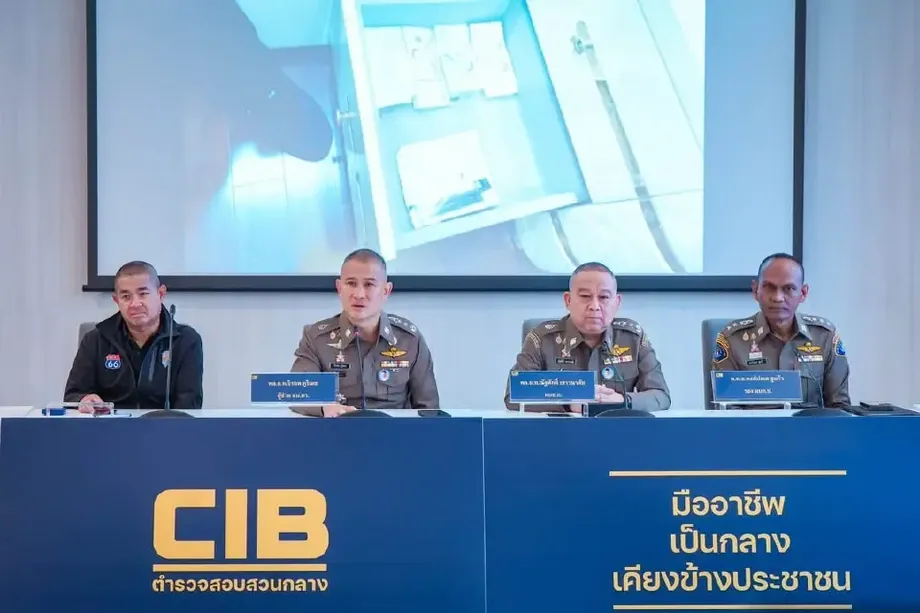
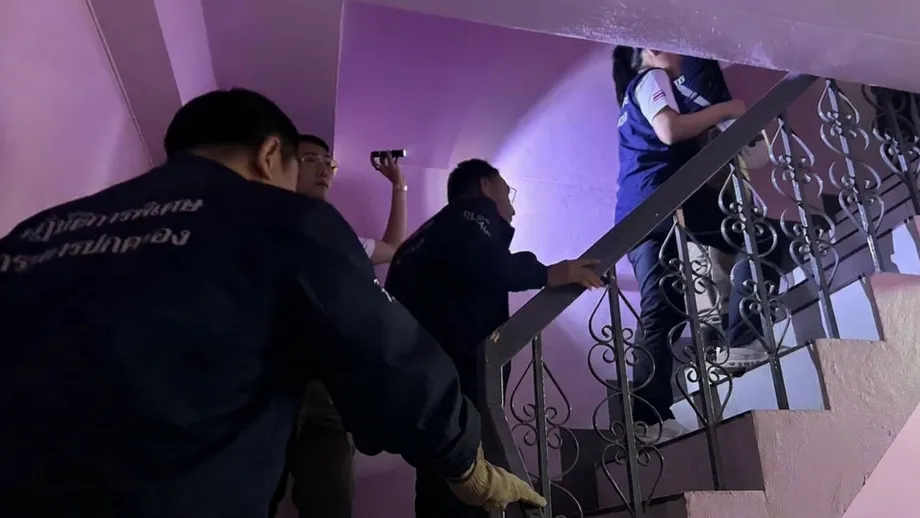
Reports dated October 13, 2026, describe officers from Thailand's Department of Provincial Administration (DOPA) entering the main property at about 7:30 a.m. Deputy Interior Minister Worasil Leangprasert and DOPA deputy director general Ronrong Thipsiri were identified as senior officials involved in the operation. Searches followed an investigation prompted by the Thai Mai Thon group, which had received the escaped woman's complaint.
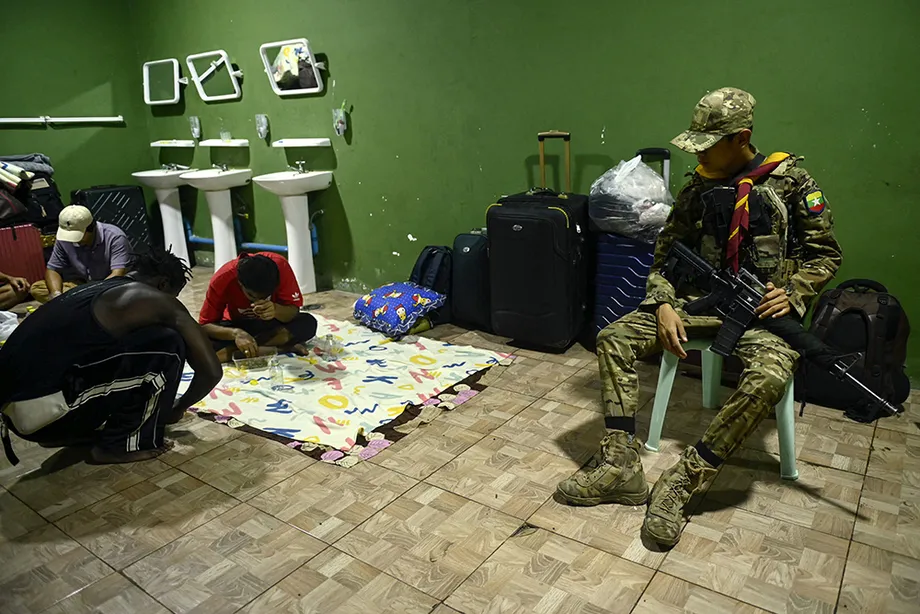
The number of people rescued and arrested is disputed. Initial accounts describe nine children and an 18 year old woman receiving help, with four suspects arrested. More detailed accounts of the minister's briefing describe two suspects arrested under warrants and six additional Myanmar victims found across two properties, separate from the mother and daughter who had already escaped. Other reports describe seven young Myanmar nationals at the first house or 10 young people helped in total.
Those figures cannot be treated as interchangeable. Some counts include children related to the suspects, some include an 18 year old, and others distinguish people found during searches from those referred for protection. Victim screening and further interviews were still pending, leaving both the final count and each person's circumstances unresolved.
A promise of housework became an allegation of coercion
The escaped woman reportedly knew the female suspect before travelling to Thailand. According to Worasil's account of the complaint, she was promised paid domestic work, help obtaining identity documents and schooling for her daughter. Investigators allege that she and the child entered through an unofficial crossing near Mae Sot district in Tak province before being taken to Bangkok.
Most reports give the woman's age as 28, while one gives it as 29. Accounts also differ on whether a broker arranged the journey or whether recruitment depended on her personal relationship with the suspect. The role of any intermediary remains part of the investigation.
The woman said the work changed after arrival. One account describes a brief period of housework before she was made to sell snacks, garlands, flowers and other goods at restaurants and entertainment venues. Her daughter was subsequently required to sell goods too. Another account says the child attended school for only two weeks before stopping.
Officials said the woman alleged that her documents and her daughter's documents were confiscated. That allegation matters separately from their immigration status: withholding identification can restrict a person's ability to travel, seek help or leave an employer. Investigators are examining whether recruitment promises, control over documents and threats formed part of the alleged trafficking arrangement.
Flower sales allegedly continued until early morning
Investigators described sales routes around Khao San Road and Nuan Chan Road, also written as Nuanchan. Young people allegedly sold flowers, garlands, orange juice and other goods from early evening into the following morning. The main rented house had reportedly been occupied by the suspects for more than two months.
Reports differ on when work ended. Several put the finish at about 3 a.m.; others say 4 a.m. One gives a schedule from 5:30 p.m. to 4 a.m., or until goods were sold. That stated window amounts to 10 hours and 30 minutes, although individual working hours have not been established.
Several accounts describe payment of 10 baht per bouquet or bunch sold. One treats that figure as the selling price, while others describe it as the amount the young people received. It is therefore uncertain whether 10 baht represented the retail price, a commission or another payment arrangement. There is no confirmed total for sales, earnings or money retained by the suspects.
Authorities also received complaints from local residents about suspicious activity at the property, including children lining up to eat around 3 a.m. That account and the escaped woman's complaint describe separate ways concerns reached investigators. Neither establishes how every child in the homes was treated.
Allegations of violence extend beyond forced work
The escaped woman alleged rape and physical assault by one suspect. A detailed account attributed to Ronrong says she accused the male suspect of raping her six times. These are allegations under investigation, not findings of guilt.
Officials also described alleged punishment with heated spoons and clothing hangers. Accounts differ on who suffered particular injuries: some refer to the mother and daughter, while others describe abuse of additional children. The five year old was reportedly threatened and struck, and unsold goods allegedly led to punishment.
Worasil said evidence of physical abuse was established for the first two complainants, while other young people were awaiting medical examinations and formal interviews. That distinction is central to the case. Evidence relating to the mother and daughter does not automatically establish what happened to everyone later found at the properties.
The investigation therefore involves several separate tasks: documenting injuries, examining allegations of sexual violence, establishing control over work and money, and identifying who was responsible for each alleged act. The reports do not establish that separate sexual assault charges had been filed.
The second house brought a disputed 30,000 baht payment into view
Officers searched a second property after information from the suspects pointed to a nearby home associated with relatives. Most accounts place the main target in Soi Ramkhamhaeng 122 and the second house in Soi Ramkhamhaeng 120. One describes both searches as taking place in Soi 122. Reports also differ between Saphan Sung and Khan Na Yao when identifying the district.
A woman associated with the second house initially said young people there attended school and did not sell flowers. Other accounts record her acknowledging that some sold orange juice after school, including between about 5 p.m. and 7 p.m. She reportedly said parents took the children to sell and received the proceeds. These statements have not been independently established.
The most serious new allegation concerned a 12 year old Myanmar child. Worasil said an occupant claimed to have paid the child's mother 30,000 baht to take the child into her care and have the child do housework. Some reports describe the payment as a purchase; others present it as an explanation that investigators still needed to check.
The payment remains an allegation requiring evidence about who paid, who received the money, what was agreed and how the child was treated. Describing it as a proven sale would go beyond the established facts.
Counts at this property also differ. One account says five young people lived there. Another says four children were found, including the 12 year old and three believed to be relatives of the suspects. One report identifies a child as coming from Mae Sai rather than Mae Sot, another detail requiring clarification.
Why the rescue totals do not yet match
The most detailed age breakdown identifies five young people at the first property: two girls aged 11, a girl aged 14, an 18 year old woman and a boy aged 12. A 12 year old girl found at the second property brings that account's total to six additional people receiving protection, excluding the escaped mother and daughter.
Other reports describe seven young Myanmar nationals at the first house, including two pairs of twins, the 18 year old and two children belonging to suspects. Another says nine children were present there, five without a parent in the home and four who were children or other relatives of the suspects.
These differences show why the number found inside a home should not be presented as the number confirmed to have been trafficked. Family relationships, ages, the timing of the count and the outcome of screening all affect the total. An 18 year old also should not automatically be counted as a child.
A similar discrepancy affects arrests. Several accounts report four arrests, while the minister's detailed briefing describes two people arrested under warrants. Reports identify the principal suspects as Ukrit, aged 28, and Oranuch, aged 24, with varying English spellings of their names. The status of any other detained people is unresolved.
Police are examining payment records and identity documents
Investigators said customers' payments went through QR codes connected to the suspects' accounts. One account says proceeds from the children's sales were transferred to both suspects. Another describes the recovery of PromptPay QR codes, victims' identity documents and five vehicles, comprising one car and four motorcycles allegedly used for transport.
PromptPay allows customers to make electronic transfers, including by scanning a QR code. Account records could help establish who collected payments and how money moved. They would not, on their own, establish whether a particular seller was coerced. Interviews, injuries and other evidence remain necessary to connect financial transactions to alleged exploitation.
Officials are also checking the identity records of the suspects and other occupants. Reports describe the female suspect as holding a pink card or registration category beginning with seven, and the male suspect as holding a card associated with a registration number beginning with zero. A relative at the second property reportedly held a Thai identity card.
Authorities said they would investigate whether documents had been obtained improperly and whether other people involved in transport or registration were connected to the case. Possession of one of these document categories does not itself prove fraud or trafficking. Officials described cancellation of improperly obtained status as conditional on establishing wrongdoing.
The charges and the sequence of the investigation
Reports identify preliminary charges under Thailand's Anti-Trafficking in Persons Act B.E. 2551, corresponding to 2008, and the Child Protection Act B.E. 2546, corresponding to 2003. The alleged conduct includes recruiting, transporting or housing people for exploitation through forced labour or services, alongside harmful work involving children and commercial exploitation.
Some accounts also mention illegal detention. The minister's briefing concentrates on trafficking and forced child labour that could harm physical or mental health. No complete charging document is reproduced, so the final list of charges should not be assumed settled.
The reported sequence is:
- Before the searches, the Myanmar mother and her daughter escaped and sought help from Thai Mai Thon.
- The complaint reached interior ministry officials, and DOPA investigators gathered evidence and sought court warrants.
- At about 7:30 a.m. on October 13, 2026, officers entered the main Ramkhamhaeng property.
- Information obtained during the operation led to a search of a second nearby house.
- Young people were referred for protection, medical assessment and interviews while the investigation continued.
Reports describe the warrants as coming from a Min Buri court, but differ on its formal name. The warrants authorized investigative action and arrests; they are not convictions. The suspects remain entitled to contest the allegations.
Protection and screening come before final decisions
Young Myanmar nationals were reportedly taken to Bang Chan police station for assessment by a multidisciplinary team, including psychologists and officials from the Ministry of Social Development and Human Security. Other accounts describe ministry protection and recovery before detailed questioning, with labour ministry personnel also involved.
The National Referral Mechanism, or NRM, is the process cited for identifying people who may have been trafficked and connecting them with protection and support. Screening is meant to establish each person's circumstances rather than treat everyone found at an address as having the same experience.
Initial accounts say children were transferred to Ban Kredtrakarn, the Kredtrakarn Protection and Occupational Development Centre in Nonthaburi. Others describe that transfer as planned after screening. Their final placements are therefore not established across the reports.
Authorities were seeking family information and considering care or eventual return to families or the country of origin under legal procedures. Some young people reportedly spoke little or no Thai, making language support important for accurate interviews. Medical examinations and assessments of their circumstances were still pending.
No date is given for a court hearing, a final victim count or completion of the financial and document checks. Those unresolved steps will determine the scope of the case and what protection each person needs.
Key Points
- Reports dated October 13, 2026, describe searches of two Ramkhamhaeng homes under the Protecting Rosebuds operation.
- A Myanmar mother and her five year old daughter escaped and reported coercion and abuse.
- Young people allegedly sold flowers and drinks around Khao San Road and Nuan Chan Road until 3 a.m. or 4 a.m.
- Accounts differ on arrests and rescue totals; a detailed briefing describes two arrests and six additional people receiving protection.
- A claimed 30,000 baht payment involving a 12 year old remains under investigation.
- Authorities are examining alleged violence, sales proceeds, transport arrangements and identity documents.
- Victim screening, medical examinations and further interviews were pending, with no hearing date given.