

A riverbank death exposed a much wider investigation
On 20 November 2024, Thailand's Criminal Court sentenced Sararat Rangsiwuthaporn to death for murdering Siriporn Khanwong, a 32 year old friend who collapsed during a fish release ritual beside the Mae Klong River in Ban Pong district, Ratchaburi. The court found Sararat guilty of premeditated murder, robbery and food adulteration. Siriporn's stolen belongings were valued at about 150,000 baht.
Contents
- A riverbank death exposed a much wider investigation
- Why Siriporn's family rejected a heart attack
- The survivor who recognised her own symptoms
- Loans and savings circles connected the cases
- Families questioned deaths classified as natural
- How investigators assembled the evidence
- What the first verdict decided
- Fourteen more files and a conflicting chronology
- Acquittals show why each prosecution stands alone
- Key Points
The conviction was the first judgment in a series of 15 prosecutions involving 14 deaths and one alleged attempted murder. Police linked the cases through friendships, loans and savings groups, investigating deaths across several provinces that stretched back to 2015. Sararat, known as Aem or Am, denied the charges.
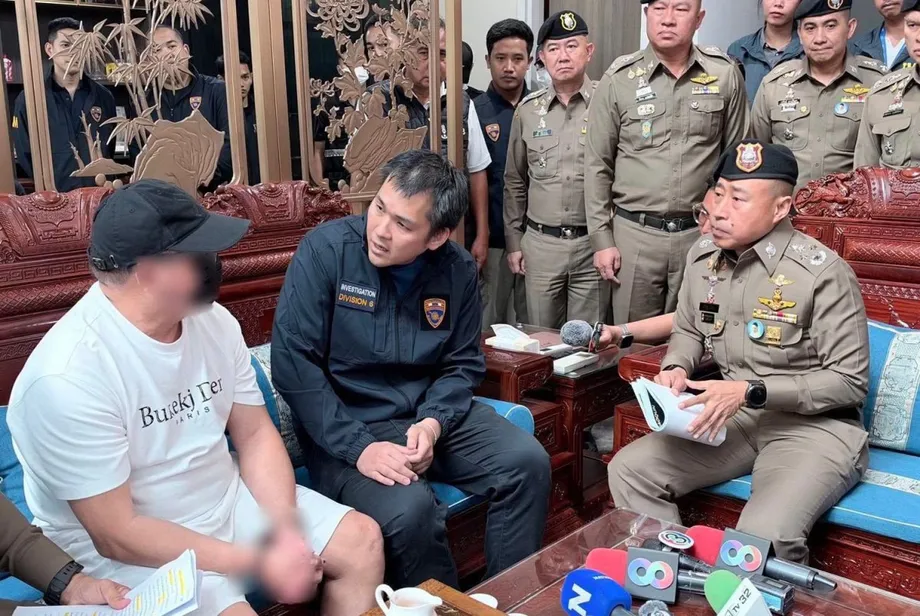
What began as a death initially attributed to a heart attack became an investigation involving a second autopsy, surveillance footage, bank transfers and a delivery photograph that investigators said helped trace cyanide to Sararat. Families who had questioned earlier deaths came forward after her arrest on 25 April 2023.
The legal results have not been uniform. Alongside death and life sentences, courts have acquitted Sararat in several cases because the evidence did not establish guilt. Reports also contain conflicting dates and sentencing details, making it necessary to distinguish the first confirmed conviction from later accounts of separate proceedings.
The central distinction is between a police theory connecting 15 people and the evidence required to prove each individual charge. Siriporn's case established criminal responsibility for her murder. It did not automatically establish responsibility for every other death under investigation.
Why Siriporn's family rejected a heart attack
On 14 April 2023, Siriporn, known to her family as Koy, told her mother that she would return that evening and take her shopping. Instead, she died beside the river, about 80 kilometres west of Bangkok, after travelling there with Sararat to release fish as part of a Buddhist merit making ritual.
Her family noticed more than the sudden death of a healthy young woman. Both of her phones were switched off, and her bag and other possessions were missing. Her sister, Nipawan Khanwong, said the family initially struggled to persuade local police to investigate further.
Independent investigator Rapee Chamnanrua, a friend of Siriporn, helped bring the family's concerns to Surachate Hakparn, who served as deputy national police chief from 2022 to 2024. Rapee explained why the missing possessions made the initial explanation inadequate.
A heart attack doesn't make belongings disappear.
A second, more detailed autopsy found cyanide. Surveillance footage also showed that Siriporn had been accompanied by Sararat at the pier. According to the prosecution account, Siriporn consumed food and water containing cyanide, collapsed, and received no help from Sararat, who took her belongings.
After the November 2024 verdict, Siriporn's mother, Thongpin Kiatchanasiri, held a photograph of her daughter outside the courtroom and spoke about the judgment.
You got justice, my child. Today, there is justice in this world.
The survivor who recognised her own symptoms
Kantima Paesaard, known as Pla, survived an episode that police later investigated as attempted murder. She had known Sararat for about a decade. Their husbands, or former husband in Sararat's case, had attended the same police academy class, and the families regularly visited one another.
Pla said she became seriously ill less than 10 minutes after taking herbal medicine Sararat had given her for a cough. She struggled to breathe, called an ambulance and experienced increasing stiffness in her hands before losing consciousness. After waking in hospital, she learned from her husband that her heart had stopped.
Pla, the only survivor among the 15 people identified by police, described the breathing difficulty she experienced.
But no matter how I tried to breathe, I still couldn't.
At the time, she thought she had suffered an allergic reaction. Sararat visited her in hospital, apparently concerned. Two months later, in November 2022, Sararat brought slimming pills to Pla's home after a family conversation about weight loss. Pla did not take them.
Only after news of Siriporn's poisoning emerged did Pla connect her own illness with symptoms associated with cyanide exposure. She also described a financial link: she had lent Sararat 250,000 baht for one month and then requested the full amount back because she needed to pay for her car.
Her survival gave investigators an account from someone who could describe both the illness and the relationship preceding it. That testimony still had to be tested separately from evidence concerning the deaths.
Loans and savings circles connected the cases
Investigators identified several types of financial relationship: people in savings groups organised by Sararat, friends who lent directly to her, and people who supplied money for her to lend or invest elsewhere. Siriporn had transferred 300,000 baht to Sararat for investment, according to her sister.
These savings circles pool regular contributions from members. Participants can borrow from the fund, pay interest at an agreed rate and continue making their usual contributions while repaying. For some members, the interest provides additional income. The arrangement depends heavily on confidence that other participants will honour their commitments.
Piriya Pholphirul, an economics professor at the National Institute of Development Administration, described the scale of participation in Thailand.
It's estimated that millions of Thais participate in share groups, with billions of baht estimated to be in circulation.
Police alleged that debt and gambling drove Sararat's actions. In May 2023, Surachate described substantial credit card debts. He later recounted an episode in which she allegedly lost 10 million baht at a gambling den while travelling between Kanchanaburi and Nakhon Pathom.
The sums illustrate the different scales of the financial relationships. Surat Toraphap, another suspected victim, had lent Sararat 50,000 baht and then 10,000 baht, a total of 60,000 baht. Siriporn's 300,000 baht transfer was five times that amount. The reported gambling loss was much larger than either loan, although those figures alone cannot establish how any particular payment was spent.
Financial distress may explain the motive alleged by police, but it does not itself prove murder. Each prosecution requires evidence connecting the defendant to the poisoning and the particular victim.
Families questioned deaths classified as natural
In Mukdahan, Sawitree Budsrirak, known as Nim, died in November 2020 shortly after giving birth. Her husband, Nitipon Nuchit, was working in Bangkok, about 650 kilometres away, when unanswered calls led him to contact their five year old son by video.
The child pointed the camera towards his mother, who was lying face down on a mattress. Nitipon initially thought she was asleep. When another call showed her in the same position, he asked a neighbour to check. Their newborn daughter was nearby.
Nitipon, describing the discovery of his wife's death, recalled the proximity of their baby.
Nim was found dead on the bed while our daughter was sleeping only a few feet away.
Nim had joined an online savings group involving Sararat to earn additional income. Reports differ on her age, giving 40 or 41. Her death was initially treated as natural.
Surat, known as Bee, was 35 and had been Sararat's schoolmate. His brother questioned his sudden death in Kanchanaburi and found messages concerning money lent to Sararat. That death was also classified as natural.
The chronology differs between accounts: the family narrative places Surat's death in January 2021, while a later case list gives 6 March 2021. The discrepancy cannot be resolved without the underlying case record. Both accounts describe a sudden death and the same financial connection.
Another investigation concerned Monthathip Khao-in, who died after returning to Thailand from abroad. Her mother said Sararat collected her from the airport and that she died hours later. The May 2023 account described the death as seven years earlier, while a later list gives 7 July 2015. Those dates also do not align precisely.
How investigators assembled the evidence
The investigation combined toxicology, surveillance footage, financial records and testimony. In May 2023, national police chief Damrongsak Kittiprapas said no witnesses had seen Sararat put cyanide into food or water, but investigators believed they had sufficient circumstantial and forensic evidence to prosecute.
Circumstantial evidence does not record the alleged act directly. It can instead connect events through facts such as purchases, communications, transfers and movements. Its value depends on whether those facts reliably establish responsibility in the individual case.
Rapee described a delivery photograph showing cyanide being handed over at Sararat's Toyota Fortuner. A small pink Hello Kitty bag was visible beside the gear stick. Investigators later seized the bag and found a bottle with a registration number identifying its importer, he said. Police also said Sararat used other people to order cyanide rather than purchasing it under her own name.
Cyanide prevents cells from using oxygen properly, potentially causing rapid breathing difficulties, loss of consciousness and cardiac arrest. It also has legitimate industrial uses, including metal plating and gold processing. Evidence of possession therefore needs to be connected to unlawful use.
Siriporn's case shows that cyanide can be detected through targeted forensic testing. The initial heart attack explanation described the apparent medical event; the later toxicology finding supplied evidence of what caused it. The distinction helped investigators reconsider deaths that had previously appeared unrelated.
What the first verdict decided
The 20 November 2024 judgment imposed a death sentence on Sararat for Siriporn's murder. Her former husband, former police lieutenant colonel Vitoon Rangsiwuthaporn, and lawyer Thannicha Aeksuwanwat were also sentenced for helping conceal evidence or assisting her in avoiding punishment.
Reports agree that Vitoon received one year and four months in prison. They differ on Thannicha's sentence. One account says both initially received two years, reduced to one year and four months for useful testimony. Other accounts, including reports of subsequent proceedings, give the lawyer's sentence as two years.
Compensation figures also differ. One account says the three defendants were ordered to pay a combined 2.4 million baht to Siriporn's family. Another says Sararat was ordered to pay two million baht. These may describe different liabilities, but the distinction is not established, so the figures should not be treated as interchangeable.
Vitoon's position had changed during the proceedings. In May 2023, the Nakhon Pathom Provincial Court temporarily released him because investigators had not yet established evidence linking him to the alleged crimes. Police then described charges involving stolen property and forged official documents. That earlier release was not a final determination of the later evidence concealment case.
On 26 November 2024, Thannicha applied to withdraw as Sararat's lawyer, citing disagreement over how to conduct the defence and completion of her work at the trial court. Before the first conviction, she had challenged the police theory and disputed whether evidence of cyanide poisoning established that Sararat supplied the poison.
Fourteen more files and a conflicting chronology
On 26 November 2024, investigators delivered 14 additional case files to prosecutors. Assistant national police chief Thanayut Wutthichatthamrong led the handover, with investigators from central and provincial police involved. Deputy Crime Suppression Division commander Anek Taosupap said he believed the evidence was sufficient for prosecution.
The files varied considerably in size. The file associated with Pla contained 2,821 sheets in six folders. The file concerning Pusadee Samboonmee contained 3,479 sheets in eight folders. Despite one account describing the handover as involving 14 deaths, its own list includes Pla, who survived.
Sanchai Chanphong, director general of the Office of Criminal Litigation, said prosecutors would assign and review the files individually. He cautioned that the effect of the first judgment on other cases had to be considered separately.
- 14 April 2023: Siriporn died after travelling with Sararat to the Mae Klong River in Ratchaburi.
- 25 April 2023: Police arrested Sararat in Bangkok.
- 4 May 2023: Police publicly described 15 suspected victims, including 14 deaths and one survivor.
- 20 November 2024: The Criminal Court imposed the first death sentence, for Siriporn's murder.
- 26 November 2024: Investigators submitted another 14 case files to prosecutors.
Later accounts cannot be combined into a single reliable update. A September 22 account, without an explicit year, records three death sentences, two life sentences and three acquittals. A separate recap explicitly dated 25 August 2026 describes seven judgments: two death sentences, two life sentences and three acquittals. It identifies a death sentence in Darinee Thepthawee's case as the seventh judgment.
The latter recap places several rulings in 2026, while the September account describes a different total. The dates and counts should remain distinct rather than being silently merged.
Acquittals show why each prosecution stands alone
The dated recap describes acquittals in cases involving Nittaya Kaewbuppa, Rosjarin Nilhoi and Monthathip Khao-in. It attributes them to gaps in evidence connecting Sararat to the alleged poisoning, possession of cyanide or financial motive. In Rosjarin's case, it also says the deceased had repaid a debt and recovered a pledged vehicle.
These outcomes distinguish investigative suspicion from proof sufficient for conviction. Police confidence in a recurring pattern cannot replace evidence establishing the defendant's responsibility in each prosecution.
Winyoo Chanakul, deputy director of the Somdet Chaopraya Institute of Psychiatry, also cautioned against treating debt as a complete explanation for repeated violence. He has more than 20 years of experience caring for psychiatric patients who committed violent acts, including homicide.
Someone who has financial problems to the point of being able to kill others, and to do so repeatedly, can't be explained by financial reasons alone. Otherwise, everyone in debt would be killing people.
His comments do not establish a diagnosis of Sararat. They challenge the idea that financial problems alone explain the behaviour alleged by investigators.
The September 22 account says Nim's and Surat's cases had not yet gone to trial and gives November 25 as the next date in Pla's attempted murder case, without specifying the year. Neither that account nor the later recap establishes the outcome of Pla's proceedings or a complete appeal history. A death sentence also does not mean an execution has occurred: Thailand was reported to have carried out only one execution since the end of 2009, in 2018.
Key Points
- Sararat Rangsiwuthaporn received her first death sentence on 20 November 2024 for murdering Siriporn Khanwong.
- Police identified 15 suspected victims: 14 people who died and one survivor, Kantima Paesaard.
- A second autopsy finding cyanide, surveillance footage, financial records and delivery evidence helped expand the investigation.
- Investigators submitted another 14 case files to prosecutors on 26 November 2024.
- Other proceedings have produced convictions and acquittals, with each case requiring separate proof.
- Reports differ on later verdict totals, some dates, the lawyer's sentence and compensation figures.
- The reported November 25 date for the survivor's case lacks an explicit year, and its outcome is not established here.