
Luxury homes and company records at the centre of Bangkok raids
Thai police arrested 11 foreign nationals after searching 17 locations across four luxury housing developments in an investigation involving 94 houses, 95 companies and properties valued at about 6 billion baht. Investigators identified 156 Thai nationals as possible nominee shareholders, including people who said documents submitted for online loans had been used to register companies without their knowledge.
Contents
- Luxury homes and company records at the centre of Bangkok raids
- How the 6 billion baht is distributed
- What police mean by nominee ownership
- A cash purchase and disputed accounts of a suspect's travels
- Other suspects linked to foreign cases and Thai warrants
- Thai shareholders say loan documents were reused
- Law firms, agents and rental income come under scrutiny
- A timeline of the cases and enforcement campaign
- Financial tracing and ownership findings are still pending
- Key Points
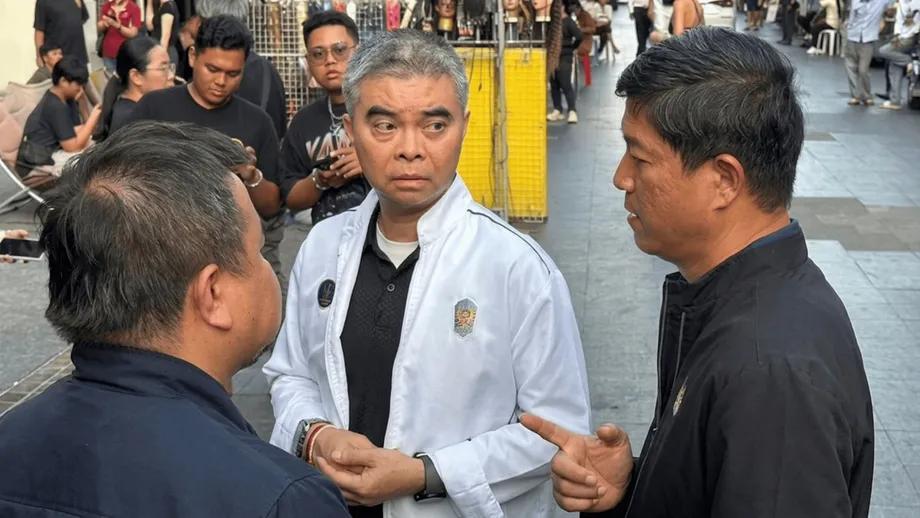
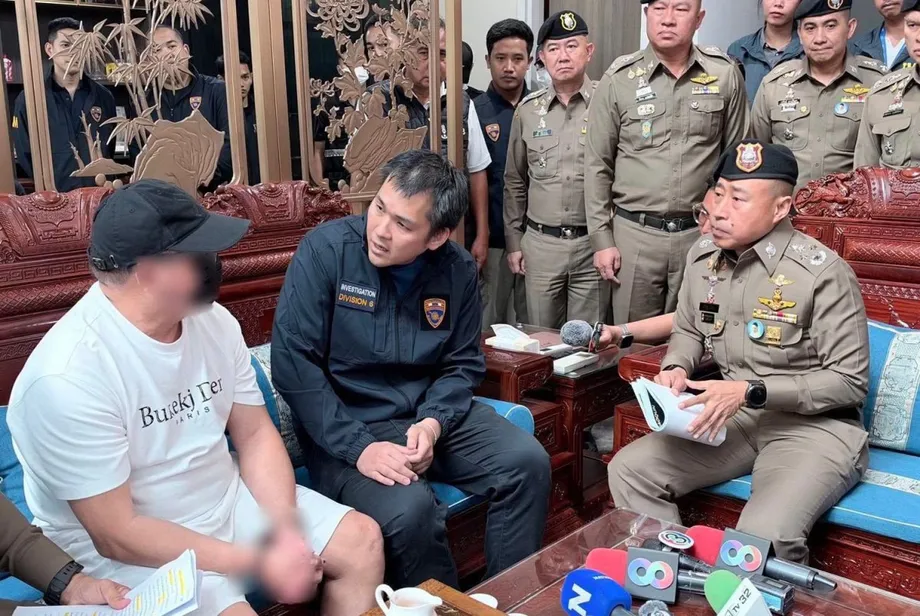
The operation, dated October 10, 2026, was the eighth phase of a campaign against suspected unlawful foreign property ownership. National police chief Pol Gen Samran Nualma led more than 100 officers, accompanied by Immigration Bureau chief Pol Lt Gen Nopasin Poolsawat and senior Metropolitan Police and forensic officers. The arrests involved 10 Chinese nationals and one American.
Police held 86 arrest warrants for foreign suspects. The wider inquiry covers 96 foreign suspects and 95 cases, figures that describe the investigation rather than the number arrested during the searches. Authorities are examining properties in Bang Na-Suan Luang, Bang Na-Wongwaen, also described as Bang Na-Kanchanaphisek or the Outer Ring Road area, Rama IX-Srinakarin and Krungthep Kreetha.
The case began with information from the Chinese embassy in Thailand about three people wanted by Chinese authorities. Investigators then examined company registrations and land records, working with local administrations, the Department of Business Development, the Department of Lands and the Revenue Department.
Police allege that foreign buyers used companies with Thai shareholders holding 51% and foreign shareholders holding 49% to acquire houses and land they could not directly own. Samran said some suspects were using Thailand as a refuge and a place to hold assets rather than genuinely operating businesses. Police also cautioned that the properties were not necessarily part of one connected network.
How the 6 billion baht is distributed
The detailed breakdown puts the largest concentration of property value in Krungthep Kreetha. Its 35 homes account for an estimated 2.8 billion baht, nearly 47% of the 6 billion baht total. Across the four developments, investigators identified the following targets:
- Bang Na-Suan Luang: 11 companies holding 11 homes, estimated at 550 million baht, with combined registered capital of 50 million baht. Homes in the development were marketed at 27 million to 55 million baht.
- Bang Na-Wongwaen: 19 companies holding 19 homes, estimated at 1.05 billion baht, with combined registered capital of 145.5 million baht. Marketed prices ranged from 39.9 million to 52.5 million baht.
- Rama IX-Srinakarin: 30 companies holding 29 homes, estimated at 1.6 billion baht, with combined registered capital of 774 million baht. Marketed prices ranged from 50 million to 69 million baht.
- Krungthep Kreetha: 35 companies holding 35 homes, estimated at 2.8 billion baht, with combined registered capital of 1.6567 billion baht. Marketed prices ranged from 77 million to 98 million baht.
The four estimates add up to exactly 6 billion baht, although several accounts describe the assets as worth more than that amount. The detailed land total is 33 rai, 2 ngan and 70.9 square wah, approximately 5.39 hectares. Rai, ngan and square wah are Thai land measurement units.
Registered capital is the amount recorded in company registration documents, not proof of how much money shareholders actually contributed or where property purchase funds originated. The difference between those records and the much larger estimated property values gives investigators separate financial questions to examine, but does not by itself establish wrongdoing.
What police mean by nominee ownership
A nominee shareholder is someone whose name appears as an owner on behalf of another person. In this investigation, police suspect that some Thai shareholders had no genuine investment or involvement, while foreign buyers controlled the companies and their property.
The alleged 51% Thai and 49% foreign structure made the companies appear majority Thai owned on paper. That split alone does not establish an offence. The central issue is whether the Thai shareholders were genuine participants or whether their names were used to conceal the actual ownership arrangements.
The legal grounds described in the investigation include Sections 86 and 111 of Thailand's Land Code, concerning unlawful acquisition of land by foreigners. The reported maximum penalty is two years in prison, a fine of up to 20,000 baht, or both. Police must establish the facts of each arrangement rather than treating every company with foreign shareholders as unlawful.
A cash purchase and disputed accounts of a suspect's travels
One principal suspect is identified in different accounts as Li Chao, Chao or Zhao. Police linked him to a Chinese murder case involving three deaths in Ulanhot on January 30, 2018. One account says the killings concerned an online gambling dispute. Reports also describe an Interpol Red Notice concerning him, which is a request to locate and provisionally arrest a wanted person, not a finding of guilt.
Police searched a Krungthep Kreetha residence associated with the suspect. He reportedly told investigators that he bought a property for 43 million baht in cash in 2022 after an introduction to an agent and advice about using a company. Investigators also linked him to a company holding property in Rama IX-Srinakarin, where marketed home prices were 50 million to 69 million baht. Reports differ on which residence was the 43 million baht purchase.
His travel history is also described differently. One account places his first entry into Thailand in 2017 and says he later obtained a Cambodian passport for US$85,000, about 2.8 million baht. Another describes travel through Cambodia and Sri Lanka before entry into Thailand during the Covid period. Other accounts say he travelled to Melbourne and Zurich before settling in Thailand. These accounts do not establish a single confirmed sequence.
Police allege connections to gambling or scam operations in Myawaddy and Shwe Kokko in Myanmar, and are examining possible connections in Sihanoukville, Cambodia. Reports differ on his response: one says he admitted gambling connections, another says he declined to answer a question about operating a scam office, and another says he denied connections to scam networks. Those are distinct claims and should not be treated as a confession to online fraud.
Other suspects linked to foreign cases and Thai warrants
Two other people flagged through the Chinese embassy held passports from several countries. The man identified as Gui in some accounts and Chen in others reportedly held Chinese, Turkish and Cambodian passports. Police said he was wanted over fraud and inducing people to cross borders illegally in Zhejiang province in April 2024. The detailed account gives April 23 and places the case in Jingning County, Lishui, while another identifies Jinyun.
A second man, identified as Jian or Jiang, reportedly held Chinese and Saint Kitts and Nevis passports. Police linked him to an alleged online fraud case in Henan province in December 2024, with the detailed account giving December 4. Both men were described as company partners connected to property in Krungthep Kreetha, and both were reported arrested under warrants.
Investigators also identified a company partner called Lin in some accounts and Liu in others, linked to Rama IX-Srinakarin property and alleged organised online fraud. The detailed account describes a Red Notice dated March 3, 2024, associated with authorities in Bengbu, Anhui province. Bai, linked to Krungthep Kreetha property, was described as subject to a Red Notice dated August 19, 2022, concerning alleged organised online fraud in Taiyuan, Shanxi province.
Huang, a company partner associated with Bang Na-Wongwaen property, was wanted under a Phra Khanong Criminal Court warrant dated May 25, 2023. The reported allegations include importing goods without customs clearance, concealing or receiving goods connected to customs offences, involvement in a secret criminal society and unlawful foreign land ownership. Differences in reported names mean these abbreviated identities cannot be treated as independently verified full names.
Thai shareholders say loan documents were reused
The 156 Thai nationals identified as possible nominees are being questioned to determine how their names entered company records. Several reportedly said they had submitted copies of identity cards and house registration documents when applying for online loans, without knowing that the documents would be used to establish companies.
One person linked to Chao said documents were handed over for an online loan in 2022. That person later learned that an arrest warrant connected them to shares worth 400 million baht. The reported share figure is separate from the 43 million baht property purchase and does not establish that the person actually invested either amount.
Some people said they had never met or known the foreign shareholders listed alongside them. Police said they would seek fair treatment for anyone unwittingly involved. Their accounts are being investigated, not accepted as established explanations for every company.
This distinction matters to the cases. Knowingly lending a name to conceal ownership is different from having personal documents used without consent. Investigators are examining who collected the documents, who prepared company filings and whether the listed shareholders understood or authorised the registrations.
Law firms, agents and rental income come under scrutiny
Police identified eight law firms or intermediary firms suspected of arranging company structures for property purchases. Firms operating in Ram Inthra, Saphan Sung and Bang Phli were among those described. Investigators said proceedings had begun against firms suspected of supporting the alleged offences, while the possible involvement of prominent lawyers or other public figures remained under examination.
The alleged purchase route ran through property agents and real estate businesses that introduced foreign buyers to legal offices. Police are examining whether those offices recruited nominal shareholders or promoted company registration arrangements intended to bypass land ownership restrictions. Accounting offices are also being investigated where evidence indicates participation.
Officers seized company registration papers, accounting documents, computers, mobile phones and electronic data. Samran said digital evidence would help identify who prepared documents, coordinated the arrangements and registered the companies. Those records may help distinguish individual purchases from arrangements involving the same service providers.
Reports differ on rental activity. One describes three or four Rama IX-Srinakarin houses renting for 350,000 baht a month, with other homes renting for 50,000 or 40,000 baht. Another describes three properties charging those three amounts respectively. Accounts also differ between unpaid rent and rent that nobody had collected for three to five months. Police suspect some owners left Thailand after monitoring earlier enforcement operations, but the rental accounts do not establish how many fled.
A timeline of the cases and enforcement campaign
The latest property inquiry brings together allegations and warrants spanning several years. The principal dates reported are:
- 2017: Li Chao reportedly first entered Thailand.
- January 30, 2018: The Chinese murder case involving three deaths occurred in Ulanhot.
- 2022: Chao reportedly purchased a Thai property for 43 million baht in cash. A Thai shareholder linked to him said they applied for an online loan that year.
- August 19, 2022: The reported Red Notice concerning Bai was dated.
- May 25, 2023: The Phra Khanong Criminal Court warrant concerning Huang was issued.
- March to December 2024: The reported Red Notice concerning Lin and the alleged offences involving Gui and Jian were dated.
- August 15, 2026: An earlier phase of the property campaign targeted Koh Samui in Surat Thani province.
- October 10, 2026: The eighth phase searched 17 locations associated with four Bangkok luxury developments and resulted in 11 arrests.
The previous seven phases covered 297 companies and 309 land plots, with land and buildings valued at approximately 3.039 billion baht. Authorities reported 118 arrests and judgments imposing penalties in 20 cases.
The 6 billion baht estimate for the latest phase is almost twice the 3.039 billion baht value reported across those seven phases combined. That comparison shows how much estimated value is concentrated in the Bangkok homes, but it does not mean the latest allegations have been proven or that all assets have been permanently confiscated.
Financial tracing and ownership findings are still pending
The Anti-Money Laundering Office is involved because of the value of the assets and will help trace funds connected with the property purchases. The next work includes examining where purchase money came from, whether it can be connected to alleged criminal activity and who actually controlled the companies.
Reports describe the homes variously as seized, frozen or targeted for seizure and freezing. A temporary restriction on an asset is not the same as a final confiscation ruling. The status of each of the 94 homes has not been individually established in the public accounts.
Metropolitan Police are expected to work with Provincial Police Region 1 and the police centre dealing with transnational crime and illegal immigration to complete the 95 case files. Authorities are also coordinating with Chinese officials and considering investigations into other luxury developments, particularly cash purchases and suspicious ownership structures.
No dates have been announced for hearings, completion of the financial investigation or final decisions on the properties. The immediate unresolved issues are which Thai shareholders knowingly participated, which service providers supported unlawful arrangements, whether purchase funds came from crimes and whether the properties belong to separate groups or a connected operation.
Key Points
- Police searched 17 locations and arrested 10 Chinese nationals and one American in the eighth phase of a property ownership campaign.
- The inquiry covers 94 homes, 95 companies, 96 foreign suspects and 95 cases, with estimated property value of about 6 billion baht.
- Krungthep Kreetha accounts for 2.8 billion baht, nearly 47% of the detailed property value estimate.
- Investigators identified 156 Thai nationals as possible nominees; some say documents submitted for online loans were used without their knowledge.
- Eight law or intermediary firms are suspected of arranging company structures, with accounting offices and property agents also under scrutiny.
- Financial tracing, individual asset decisions and findings about shareholder involvement remain pending.