Two detentions widen the investigation
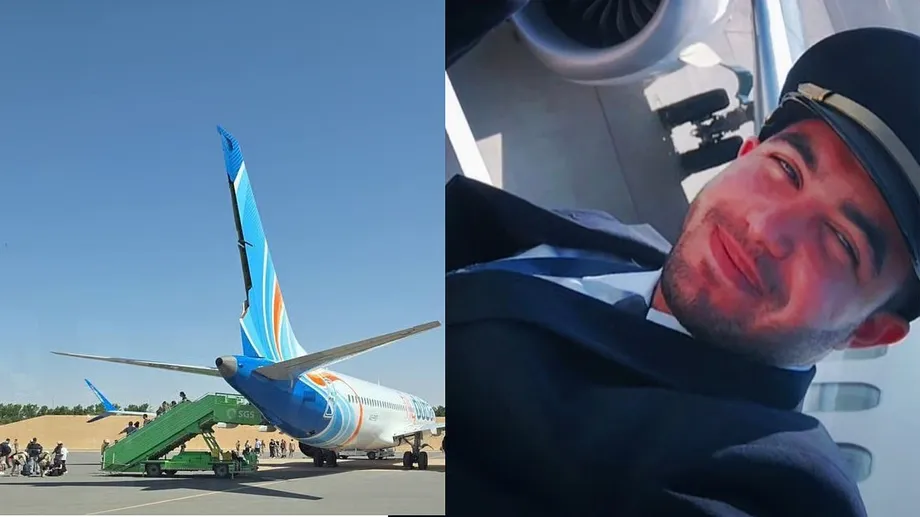
Two Maldivian pilots employed by flydubai were detained by United Arab Emirates police on October 3 as investigators examined the contacts of the Omani co-pilot accused of attacking Captain Smit Machchhar aboard flight FZ1073 on September 30. Their detention extends an investigation into an alleged plan to seize the Dubai to Tel Aviv aircraft and crash it into the passenger terminal at Israel's Ben Gurion Airport.
Contents
- Two detentions widen the investigation
- What is known about the Maldivian pilots
- How the cockpit attack unfolded
- The captain and passengers who intervened
- Prosecutors describe a planned airport attack
- Acting alone remains a claim under examination
- Earlier warnings put recruitment under scrutiny
- Investigations extend to study and training abroad
- The timeline and unresolved facts
- Key Points
The Maldivian Embassy in the UAE informed the pilots' families that they were in police custody. Reports describe the two men as colleagues and friends of the suspect, Hamam al-Hammami, with possible connections through shared flight shifts and the same residential building. UAE authorities have not publicly detailed allegations against either Maldivian pilot or disclosed evidence establishing their involvement in the attack.
That distinction matters as prosecutors investigate whether anyone knew about or assisted the alleged plot. UAE Attorney General Hamad Saif al-Shamsi has said al-Hammami confessed to acting alone, while making clear that investigators were still checking that claim. Detaining people who knew a suspect does not establish that they participated in an offence.
The case now involves several separate lines of inquiry: the attack inside the cockpit, the suspect's alleged preparations, his previous aviation employment and training, and whether airlines or authorities acted on earlier security concerns. Investigations have also opened in India, Australia and New Zealand.
What is known about the Maldivian pilots
The two detained men are reportedly the most recent recruits among six Maldivian pilots working for flydubai. Their identities have not been publicly disclosed in the accounts of their detention. Their families reportedly had no information about their whereabouts until Tuesday, when the embassy confirmed that UAE police were holding them.
Maldivian President's Office spokesperson Mohamed Hussain Shareef and the Foreign Ministry spokesperson declined to comment. No public explanation has established whether the pilots face charges, what legal grounds govern their detention or whether they have appeared before a court.
Investigators are reportedly reviewing their workplace contact, social meetings and private digital communications with al-Hammami. The inquiry includes whether he expressed extremist views, discussed martyrdom or mentioned an attack using an aircraft. These are reported investigative questions, not established findings about either detained man.
Reports that the pilots worked together or lived near the suspect explain why investigators might seek information from them. Those connections, on their own, do not demonstrate knowledge of a plan. The absence of publicly disclosed evidence leaves their status and any alleged role unresolved.
How the cockpit attack unfolded
Flight FZ1073 departed Dubai for Tel Aviv on September 30. Flight tracking information puts departure at 7:05am Dubai time and the aircraft's cruising altitude at about 34,000 feet. The original account gives an altitude of about 35,000 feet. While the Boeing 737 MAX 8 was over Saudi Arabia, al-Hammami allegedly attacked Machchhar with the cockpit's emergency crash axe.
A crash axe is carried for emergencies, including cutting through obstructions or aircraft materials. UAE prosecutors identified it as the weapon used in the assault. Machchhar also described being stabbed and seriously wounded during the struggle.
Accounts differ slightly on the aircraft's descent. One describes a fall from about 35,000 feet to 16,000 feet in two minutes; flight tracking information cited elsewhere shows a drop of more than 17,000 feet over roughly the same period. Both describe a rapid loss of altitude during the cockpit fight. The original account also reports damage to part of the tail section, although no detailed engineering assessment is given.
Machchhar eventually opened the cockpit door, allowing passengers and crew to intervene. The aircraft's transponder was subsequently set to code 7500, the signal used to notify air traffic control of unlawful interference, including a suspected hijacking.
The captain and passengers who intervened
Captain Smit Machchhar, the injured Indian pilot, described the urgency of opening the cockpit door during a conversation with Indian Prime Minister Narendra Modi from a hospital in Abu Dhabi.
When I was down, I could feel that the aircraft was plummeting, and I knew this is the last chance to do something,
Passengers and crew entered and overpowered the suspect. Israeli passenger Yaniv Hayoun, a plumber, said he pulled back on the controls to steady the aircraft until another pilot travelling in the cabin took over. Accounts describe two additional pilots helping bring the jet safely to Tabuk Airport in northwestern Saudi Arabia, although some describe the final landing as being performed by one relief pilot.
The reported landing time was 9:45am Saudi time. Saudi authorities said both cockpit pilots were taken to hospital. They were subsequently transferred to Abu Dhabi after being medically cleared for travel, while the passengers continued to Ben Gurion Airport.
India's Ministry of External Affairs said Machchhar was responding well after an operation at an Abu Dhabi hospital. The Indian Embassy remained in contact with his family, doctors, hospital officials and local authorities. No detailed recovery timetable has been announced in the statements described.
Prosecutors describe a planned airport attack
Al-Shamsi's later account of the investigation went beyond the UAE's initial description of a security incident. He said al-Hammami, identified in later reports as a 29-year-old Omani national, admitted planning a suicide attack against the passenger terminal at Ben Gurion Airport to cause the greatest possible loss of life.
According to the prosecutor's statement, investigators found that al-Hammami had taken two earlier flights to Tel Aviv to familiarise himself with the route and airport. He allegedly prepared physically by training in boxing with a private coach and increased his exposure to material promoting terrorism.
Al-Shamsi said the suspect's movement towards extremism began while he studied in Melbourne, where he encountered extremist literature and online content glorifying terrorist organisations and suicide attacks. The prosecutor described an influence from takfiri ideology, an extremist interpretation that declares other Muslims unbelievers and can be used to justify violence against them.
The attorney general's statement said al-Hammami drew inspiration from the September 11, 2001 attacks. It described how the concept developed:
The idea of carrying out a similar operation using an aircraft became firmly established in his thinking,
These are the prosecution's allegations and account of the suspect's confession. They do not amount to a court verdict. Al-Shamsi said the confession was given in the presence of a lawyer and with legally required safeguards.
Acting alone remains a claim under examination
The detention of two colleagues does not necessarily contradict the suspect's reported claim that he acted alone. Investigators may examine associates to establish whether that claim is accurate, whether anyone received a warning or whether relevant information was overlooked.
Al-Shamsi, describing the confession and the continuing inquiry, said:
He admitted that he had acted alone, without the involvement of others, although investigations are continuing to verify this claim,
UAE intelligence officials reportedly found no evidence of an operational connection to al-Qaeda, Islamic State, Hamas or another established militant organisation. Separate reporting describes forensic findings of images of Osama bin Laden, Ayman al-Zawahiri and Humam Khalil Abu-Mulal al-Balawi on accounts associated with the suspect. Such material may indicate ideological interests without proving organisational membership or outside direction.
A review of more than 3,000 archived posts from another account believed to belong to al-Hammami found religious conservatism and misogyny, but no obvious calls for violence against Israel or the West. That review covered a partial record from 2021 and 2022. It cannot settle what appeared in other accounts, private messages or later activity.
Israeli Prime Minister Benjamin Netanyahu separately said investigators were examining whether the suspect acted under anyone's direction. Emirati presidential adviser Anwar Gargash described the incident as a warning that the region's fight against extremism continues. Neither statement establishes a connection between the detained Maldivian pilots and the alleged plan.
Earlier warnings put recruitment under scrutiny
A central issue is how al-Hammami became a flydubai pilot despite reported security concerns during his time in Oman. Officials cited in reports said he was found with extremist materials while working as an Oman Air co-pilot trainee in 2024, suspended from flying and allowed to continue in an administrative role.
Other accounts describe a broader restriction imposed by Omani authorities, removal from flight training or a bar on obtaining a pilot's licence. Those descriptions are not identical: an airline suspension, a training decision and a national licensing restriction would involve different responsibilities and records. No public document resolving the exact restriction is identified.
It is also not established whether Oman shared its concerns with flydubai, other airlines or foreign authorities. Without that information, the fact that the suspect later entered a cockpit does not establish which organisation had access to a warning or whether a particular check failed.
His reported employment history contains further discrepancies. An online profile allegedly listed seven years at Oman Air, followed by Royal Air Maroc from June 2025 to January 2026. Another account places his Oman Air employment in 2020 to 2024 and his move to flydubai in January 2026. These dates do not provide a consistent, verified career chronology.
Royal Air Maroc's own account differs from reports of employment there. The airline confirmed that al-Hammami completed three months of theoretical training in 2025 as part of a process preceding employment, but was not selected for a job. It did not disclose why. Training attendance should therefore not be treated as confirmed airline employment.
Investigations extend to study and training abroad
RMIT University confirmed that al-Hammami studied at its Melbourne campus but did not complete an engineering qualification. Reports place his Australian stay at about two years, ending in 2017. Australian federal police confirmed that the Victorian Joint Counter Terrorism Team was investigating his alleged connections to Australia.
That team includes the Australian Federal Police, Victoria Police and the Australian Security Intelligence Organisation. RMIT declined further comment while the investigation continued. The university's confirmation of attendance does not independently establish the prosecution's account of when or how radicalisation began.
New Zealand authorities also opened an investigation after police confirmed that al-Hammami underwent flight training there. Reports place that training about a year after he left his studies in Australia.
Buckinghamshire New University confirmed a separate academic qualification: an aviation management degree completed through distance learning in 2023. The university said he received no pilot training there. Aviation management study concerns the running of aviation operations and businesses; it is distinct from the practical training and licensing required to fly an aircraft.
India's National Investigation Agency registered a case under the Anti-Hijacking Act and the Unlawful Activities (Prevention) Act to investigate the attack and any wider conspiracy. That inquiry runs alongside the UAE investigation rather than establishing that a wider conspiracy has already been found.
The timeline and unresolved facts
The main sequence is established, but several later developments are described only by weekdays, without complete publication dates. The reported career history also contains conflicting dates. A precise year should not be inferred from those inconsistent details.
- September 30: Flight FZ1073 departed Dubai for Tel Aviv. The cockpit attack was followed by an emergency landing at Tabuk Airport in Saudi Arabia.
- After the landing: The injured captain and suspect were transferred to Abu Dhabi following medical clearance, according to reports.
- October 3: UAE police detained the two Maldivian flydubai pilots.
- Subsequently: The Maldivian Embassy informed their families of the detention.
- In later statements: UAE prosecutors described the alleged airport attack plan and said investigators were checking the suspect's claim that he acted alone.
Accounts also differ on how many people were aboard. Several give 174 passengers and crew combined; others give 182 people, including four pilots. Another describes about 180 passengers. The figures cannot be reconciled without a verified passenger and crew breakdown.
The UAE says it has jurisdiction because the aircraft was registered in the country and operated under its flag, even though the incident occurred outside Emirati territory. Al-Shamsi said investigators were examining physical and digital evidence and completing technical examinations before announcing final findings.
Flydubai suspended operations to Tel Aviv at the authorities' request until further notice and said it was supporting the investigation. No reopening date, hearing date or deadline for final findings is given. The most consequential unanswered issues remain the legal status of the Maldivian pilots, whether anyone assisted the suspect, and what prior warnings reached those responsible for hiring and security checks.
Key Points
- Two Maldivian flydubai pilots were detained on October 3; no detailed allegations against them have been publicly disclosed.
- UAE prosecutors say al-Hammami planned to crash flight FZ1073 into the passenger terminal at Ben Gurion Airport.
- Captain Smit Machchhar opened the cockpit door despite serious injuries, allowing passengers and crew to intervene.
- Additional pilots helped land the aircraft safely at Tabuk Airport in Saudi Arabia.
- The suspect reportedly confessed to acting alone, but investigators continue to verify that claim.
- Reported warnings in Oman and conflicting career accounts have placed recruitment and information sharing under scrutiny.
- Investigations extend to India, Australia and New Zealand, while flydubai's Tel Aviv flights remain suspended pending further notice.