A survivor's commitment to peace meets an unfinished reckoning
Fifty years after police and armed rightist groups attacked protesters at Bangkok's Thammasat University on 6 October 1976, the anniversary brought together three unresolved demands: remember those killed, confront the legal protection that shielded perpetrators, and allow a fuller account of the violence before and after the massacre.
Contents
- A survivor's commitment to peace meets an unfinished reckoning
- How the return of a former dictator sharpened the crisis
- The dates that led to the attack and its legal aftermath
- Why the death toll still requires careful explanation
- Two amnesties, with different beneficiaries
- Names, songs and rituals carried the anniversary
- A government wreath and a demand for amnesty today
- A historian challenges what remembrance leaves out
- Nonviolence without erasing responsibility
- Key Points
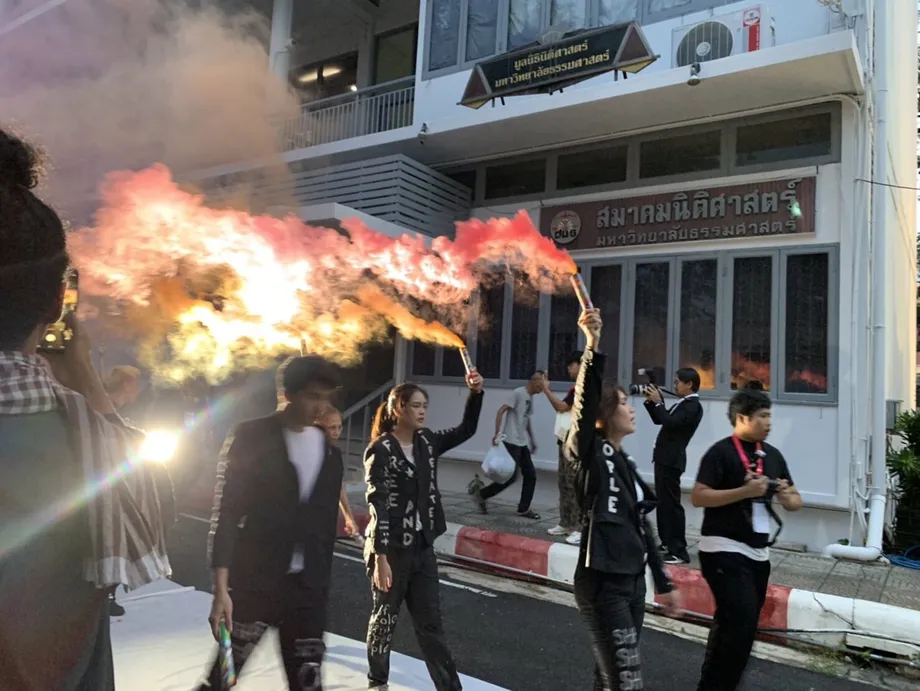
At the university's Tha Phra Chan campus on 6 October 2026, remembrance events began around 05:30. Organizers read the names of 40 people who died. Around 300 people attended the anniversary ceremony, where survivors, students and politicians gathered and activists called for amnesty for people prosecuted under Thailand's royal insult law.
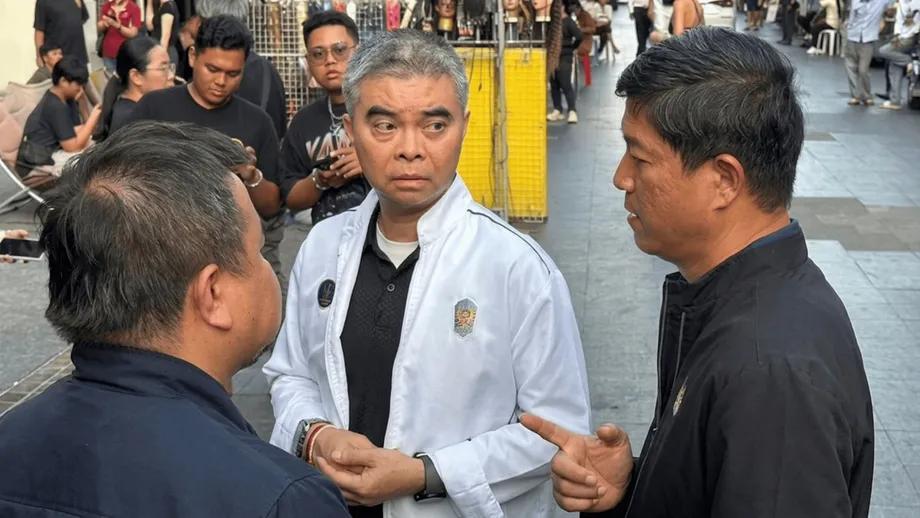
For Associate Professor Kothom Ariya, an adviser at Mahidol University's Institute of Human Rights and Peace Studies, the anniversary also carries a personal argument about political power. His experience of the massacre helped direct him toward nonviolence and the belief that power does not come from the barrel of a gun. His approach treats peace as a commitment requiring courage and discipline over many years.
The distinction between forgiveness and forgetting runs through that position. A survivor can reject revenge without accepting silence about responsibility. Forgiveness is a personal choice; acknowledgment of state violence and accountability are public matters.
The legal record makes that distinction especially important. An academic examination identifies two separate amnesty laws, passed on 24 December 1976 and 16 September 1978. One protected the seizure of power; the other freed 18 prosecuted student activists. Neither explicitly mentioned the massacre, yet the study argues that both helped preserve protection from accountability for those behind the violence.
How the return of a former dictator sharpened the crisis
The confrontation developed over months, rather than beginning suddenly on the morning of 6 October. Field Marshal Thanom Kittikachorn had been forced from power by the October 1973 uprising. His return in September 1976 revived fears that the military establishment was preparing to reverse the political opening that followed his departure.
Another former military ruler, Field Marshal Praphas Charusathien, returned in August 1976. Students protested, and armed opponents surrounded Thammasat. On 21 August, an attack involving gunfire and an explosive killed one person as a procession of Ramkhamhaeng University students entered the campus. Praphas left Thailand the following day.
Thanom's return followed a dispute within the government. On 31 August, the cabinet decided that he should not be allowed back. Nevertheless, he arrived on 19 September as a Buddhist novice and was ordained as a monk at Wat Bowonniwet that morning. The detailed chronology places his immediate journey from Singapore; another account describes his return after exile in the United States. Those descriptions concern different parts of his time abroad and do not establish a conflicting arrival date.
Thanom said his purpose was to visit his sick father, not to resume political activity. Student organizations opposed his return, while some opponents depicted their protests as hostility toward Buddhism and the monarchy. The use of his religious status made an already tense political dispute harder to address.
The next escalation came on 24 September, when two electricity workers, Wichai Ketsripongsa and Chumphon Thummai, were found hanged in Nakhon Pathom after putting up posters opposing Thanom. Students later staged a hanging scene to protest their deaths. Accusations that the performance insulted the Crown Prince helped mobilize hostility against those gathered at Thammasat.
The dates that led to the attack and its legal aftermath
The sequence links the return of former rulers, violence against their opponents, the university assault and the subsequent protection of those who seized power. It also shows that the students' release came almost two years after the massacre.
- 16–22 August 1976: Praphas returned to Thailand, protests followed, and he left after violence around Thammasat.
- 19 September 1976: Thanom returned as a Buddhist novice and became a monk at Wat Bowonniwet.
- 24 September 1976: Two electricity workers opposing Thanom were found hanged in Nakhon Pathom.
- 4–5 October 1976: A student performance depicting a hanging prompted accusations of an insult to the Crown Prince and growing mobilization against the protesters.
- 6 October 1976: Police and armed rightist groups attacked Thammasat. A military coup followed that evening.
- 24 December 1976: An amnesty law protected the coup and those responsible for the seizure of power.
- 1977: Eighteen activists were prosecuted in the case arising from the events.
- 16 September 1978: A second amnesty freed the 18 activists and dismissed their charges.
Early on 6 October, police, Border Patrol Police and armed groups attacked the campus. Protesters were shot, beaten and lynched. Violence also took place around nearby Sanam Luang, where bodies were mutilated and some were burned.
Prime Minister Seni Pramoj denied ordering the killings. His account was that the government had instructed authorities to arrest people involved in the disputed performance, not shoot students. That denial remains distinct from a judicial determination of responsibility.
Admiral Sangad Chaloryu, then Supreme Commander, announced the subsequent coup. The new rulers appointed former judge Thanin Kraivichien as prime minister, bringing the political opening that began in 1973 to an end.
Why the death toll still requires careful explanation
Reports differ on how many people were killed, and the anniversary's reading of 40 names should not be treated as a complete casualty count. Two anniversary accounts give an official toll of 46, while the historical chronology gives 39 deaths, 145 injuries and 3,094 arrests as official figures.
The higher estimates differ even more. Survivors and witnesses cited in the 2026 ceremony coverage believe more than 100 people died. At the 40th anniversary in 2016, survivors said the true number was at least twice the reported minimum of 46. The historical chronology also cites a separate estimate of around 530 deaths, without enough information to assess how that estimate was established.
These figures cannot responsibly be combined into a single definitive total. The difference between 39 and 46 is seven deaths, but the records described here do not explain whether that gap reflects different categories, locations or later revisions. The much higher estimates are claims about an incomplete count, not a verified replacement for it.
The safest conclusion is that dozens were killed and thousands were arrested, while the exact death toll remains disputed. Identifying each victim and explaining how the different totals were produced are part of the unfinished historical work.
The annual reading of names serves a different purpose from compiling statistics. It restores individual identities to an event often discussed through graphic photographs, political accusations and aggregate numbers.
Two amnesties, with different beneficiaries
The academic article The Hidden Transcript of Amnesty examines the two laws through their wording, archival documents, court records and other historical records. Its central finding is that treating the aftermath as a single amnesty obscures how legal protection was constructed.
The first law, passed on 24 December 1976, legalized the coup and prevented those who created the conditions for it and seized power from being held accountable. The second, passed on 16 September 1978, freed 18 student activists whose criminal prosecution was still underway and dismissed the charges against them.
Neither law named the massacre. The study argues, however, that protecting state actors and armed groups operating alongside them was central to both measures. This is its interpretation of the legal and archival record, rather than a new court ruling.
An amnesty removes specified criminal liability or ends prosecutions. That makes its scope crucial: releasing people prosecuted after a violent crackdown is not the same action as shielding those responsible for a coup or unlawful violence, even when both are described with the same legal term.
The second law brought concrete relief to the detained activists. It did not provide a trial establishing who ordered the attack or who bore responsibility for particular killings. The anniversary reporting says no state official has been held accountable.
This legal history explains why Kothom's commitment to forgiveness cannot be equated with approval of amnesty for perpetrators. Rejecting retaliation does not require abandoning investigation, acknowledgment or the preservation of evidence.
Names, songs and rituals carried the anniversary
The 2026 remembrance began with a performance at Lan Pho before moving toward the football field. Drums accompanied the procession, and a large white cloth was spread across the grass. Some performers later lay beside bags of red liquid to represent the violence at places associated with the killings.
Artist Teerawat Mulvilai, known as Kage, and Sinsawat Yodbangtoey led participants in singing For the People. At the memorial, participants sang The Light of the Stars of Faith, written by political thinker and poet Jit Phumisak, and laid flowers.
At about 07:30, a Buddhist merit ceremony involved 19 monks from Wat Mahathat Yuwaratrangsarit. Historians Thongchai Winichakul and Tyrell Haberkorn, human rights lawyer Kritsadang Nutcharat and activist Tantawan Tuatulanon were among those attending the day's events. Wreaths arrived from government representatives, political parties, student bodies and civil society organizations.
Wattana Chaichanasakul, a survivor who read the names of those killed, explained the purpose of the annual ritual to the audience:
remind ourselves that we will never forget our friends because if we do, it means we kill them again
The commemoration also connected different generations of witnesses. Sinsawat, who participated in the 1976 protests and helped lead the singing in 2026, had described his lasting pain at the 2016 anniversary:
Even though I wasn't injured... my heart is wounded.
His presence across the two anniversaries illustrates how remembrance continues through people as well as monuments. The passage of another decade did not turn the event into a closed historical episode.
A government wreath and a demand for amnesty today
Minister Paradorn Prissananantakul represented Prime Minister Anutin Charnvirakul at the ceremony. After laying a wreath, he expressed the government's condolences:
Today we pay tribute and express our condolences for the lives lost,
Asked why the government had never held its own service for the victims, Paradorn did not answer directly. Instead, he described what he considered the government's central lesson:
the most important lesson from the October incident, on the government side, is to open the floor to everyone who has different opinions, so they can express their voices.
That statement came as activists on a balcony called for amnesty for people prosecuted under Section 112 of Thailand's criminal code. The law punishes insults, defamation or threats against protected members of the royal family and carries up to 15 years in prison per offence. Nearly 300 people have been charged under it since 2020, according to the anniversary account.
The present demand concerns people prosecuted for expression, rather than immunity for the perpetrators of the 1976 attack. The distinction matters because the history of the two earlier amnesties shows how the same legal mechanism can serve very different purposes.
Thanaporn Singlee, a 21 year old Thammasat student attending the anniversary, explained why remembering the event mattered to her:
Thammasat was a place where people died because of the government.
The government representative's attendance and condolences did not amount to an announced investigation, a formal state apology or a commitment to enact the requested amnesty. No timetable for those steps was given.
A historian challenges what remembrance leaves out
Somsak Jeamteerasakul, a former student activist and former Thammasat history lecturer, has challenged accounts that isolate the massacre from the Communist Party of Thailand and the armed conflict surrounding it. Detained after the 1976 events, he has lived in exile near Paris since the 2014 coup.
His argument disputes a simple sequence in which the massacre alone caused student leaders to join the communist insurgency. He says almost all student leaders had entered the jungle before 6 October, some a year earlier. He also says fighting took place for hours that day and five people on the opposing side were killed. These are his claims and should not be treated as independently established casualty findings.
Somsak also argues that commemorations neglect violence subsequently committed by communist forces against security personnel, officials and villagers. In a translated statement, he described the conflict in which he had participated:
On the one hand, I accept that the struggle that led to 6 October was my life. I can never erase it from my heart. The friends who died were my friends.
He then addressed the wider armed struggle and its victims:
How many more lives did we destroy? There was no end to it and no benefit to anyone. Sometimes we 'accidentally' killed more than a dozen people at once. They were all villagers.
His account requires attention without turning it into a justification for the massacre. Evidence of an insurgency, earlier organizing or subsequent killings does not resolve who ordered the campus attack or excuse lynching and the abuse of bodies.
Other testimony also resists a single explanation for entering the jungle. Prommin Lertsuridej said at the 2016 anniversary that he fled for four years to avoid arrest after the protest. His experience and Somsak's account of earlier departures describe different trajectories. Establishing dates and individual decisions is more useful than assuming every participant followed the same course.
Nonviolence without erasing responsibility
Kothom's response offers a way to connect these difficult histories without treating their violence as interchangeable. His rejection of power through guns challenges both the use of force to impose political authority and the belief that revenge can settle a past atrocity.
That position does not require survivors to stop mourning or historians to soften the record. It allows remembrance of the Thammasat victims alongside investigation of deaths during the later insurgency. Each set of events requires its own evidence, dates, actors and account of responsibility.
The unanswered questions remain concrete. The casualty figures need reconciliation. The command responsibility for the assault has not been established through prosecutions of state officials. The academic study shows how legal protection operated, but it does not substitute for a judgment on individual criminal responsibility.
The limits of official acknowledgment also remain visible. At the 2016 anniversary, reporting stated that no state apology had been issued. In 2026, a minister attended and offered condolences, but no formal apology or accountability process was announced in the ceremony accounts.
There is likewise no announced vote or deadline for the amnesty sought by Section 112 campaigners. The anniversary therefore produced a public demand, not a completed legal change.
Fifty years after the attack, forgiveness and historical truth remain separate choices. Kothom's commitment to nonviolence concerns how people act after suffering. The state's unfinished obligation concerns what happened, who was responsible and whether those facts can be acknowledged without concealment.
Key Points
- Thammasat marked the massacre's 50th anniversary on 6 October 2026, with around 300 people attending the ceremony.
- Organizers read 40 victims' names. Reported official death tolls differ between 39 and 46, while survivors cite higher totals.
- Kothom Ariya's experience helped shape his commitment to nonviolence, forgiveness and remembrance.
- An academic study identifies two distinct amnesty laws: one protecting the 1976 coup and another freeing 18 activists in 1978.
- No state official has been held accountable for the killings, according to the anniversary reporting.
- Activists called for amnesty for Section 112 defendants, but no legislative timetable was announced.
- Historian Somsak Jeamteerasakul urges remembrance to address communist organizing and subsequent insurgent violence as well as the massacre.