Brief Voltage Drop Prompts Hundreds of Emergency Calls
A brief voltage drop on a 400,000 volt electricity line between Lai Chi Kok and Tsz Wan Shan triggered a surge of emergency calls across parts of Kowloon and the New Territories on Tuesday afternoon. By 3pm, the Fire Services Department said it had handled 179 reports of people trapped in lifts and 40 reports of ringing fire alarms, with all incidents dealt with.
Contents
- Brief Voltage Drop Prompts Hundreds of Emergency Calls
- Four Women Felt Unwell During the Incident
- Emergency Calls Arrived Within Minutes
- How the Afternoon Unfolded
- Why Lifts Could Stop Without a Power Outage
- Reports Differ on the Final Incident Count
- Rescues Finished, Cause Still Under Investigation
- Key Points
Four women aged 68 to 71 felt unwell after being trapped. Three were conscious when taken to hospital, with reported symptoms including shortness of breath. One also had high blood pressure. The fourth received attention at the scene and was not taken to hospital.
CLP Power recorded the voltage dip at about 1.09pm and said the electricity supply did not stop. Some customers nevertheless could have seen lights dim or flicker, while electrical equipment sensitive to voltage changes could have stopped operating when its protective systems activated.
The distinction matters: the incident was not described by CLP as a power outage, yet it was followed by widespread disruption to lifts and fire alarms. Within roughly ten minutes from 1.10pm, firefighters received 55 lift entrapment reports and 22 alarm reports, mainly from Yau Tsim Mong district.
Four Women Felt Unwell During the Incident
The Fire Services Department described the four affected women as feeling unwell, including experiencing breathing difficulties. Although some reports referred to injuries, the more detailed account described symptoms rather than identifying any specific physical injury.
Fire official Yung Wai-ming explained why three people were taken to hospital while the fourth was not:
"The person who was not sent to a hospital felt unwell at first but did not require hospital treatment after being rescued by us. As for the other three, they felt unwell and shortness of breath. One of them was found to have high blood pressure," he said.
A separate account said the fourth woman declined hospital transport after receiving treatment at the scene. Both accounts agree that she was not taken to hospital. No subsequent hospital assessments or updates on the three other women were given.
Emergency Calls Arrived Within Minutes
The first concentrated burst of calls began about a minute after CLP recorded the voltage dip. Yung said firefighters received 77 reports in approximately ten minutes: 55 involving people trapped in lifts and 22 involving alarms. Most of those initial calls came from Yau Tsim Mong, although incidents were reported across parts of Kowloon and the New Territories.
Firefighters dispatched resources to different districts as requests for help continued. Around 2pm, the department activated both a support centre callback mechanism and the director's command room to coordinate additional resources.
The callback arrangement required staff to contact people whose cases were still being handled every 15 to 20 minutes to check their circumstances. This provided continuing contact during the period between an initial request for help and completion of the response.
Reported response times reached up to 49 minutes for false alarms and roughly one hour and 20 minutes for a lift entrapment report. These figures describe the longest reported times, not an average. They also do not establish how long every person spent inside a stopped lift.
During the response, the department asked affected residents to remain calm while firefighters carried out rescues and dealt with related incidents. By the 3pm update, it said all rescue and follow-up work had been completed.
How the Afternoon Unfolded
The reported times show how quickly a brief electrical disturbance became a substantial emergency response. CLP's account places the voltage dip at about 1.09pm, while the Fire Services Department described incidents beginning at approximately 1.10pm. Another account gave the less precise time of around 1pm.
- About 1.09pm: CLP recorded a brief voltage dip on a 400 kilovolt line connecting Lai Chi Kok and Tsz Wan Shan.
- From about 1.10pm: Firefighters received 55 lift entrapment reports and 22 alarm reports within roughly ten minutes, mainly from Yau Tsim Mong.
- Around 2pm: The Fire Services Department activated its support centre callback mechanism and director's command room, deploying additional resources.
- By 3pm: The department's updated tally stood at 179 lift entrapment reports and 40 alarm reports, with all incidents handled.
The ten minute burst accounted for about 31% of the final 179 lift reports and 55% of the 40 alarm reports. Those proportions show how concentrated the initial demand was, even though calls continued to arrive afterward.
Why Lifts Could Stop Without a Power Outage
CLP identified the affected infrastructure as a 400 kilovolt supply line, equivalent to 400,000 volts, between Lai Chi Kok and Tsz Wan Shan. That figure describes the line's voltage rating, not the size of the drop. The company did not give the dip's depth or its exact duration.
A voltage dip is a temporary reduction in electrical voltage. It differs from a complete interruption of supply: electricity can remain available while the voltage briefly falls below the level equipment expects.
According to CLP, devices sensitive to such changes may suspend operation when protective systems activate. This explains how equipment can stop even when the utility says there has been no outage. Lights may also dim or flicker during the disturbance.
The company did not identify the cause of the voltage dip or provide technical findings for individual lifts. Its explanation described a possible equipment response to changing voltage, rather than establishing exactly what happened in every building.
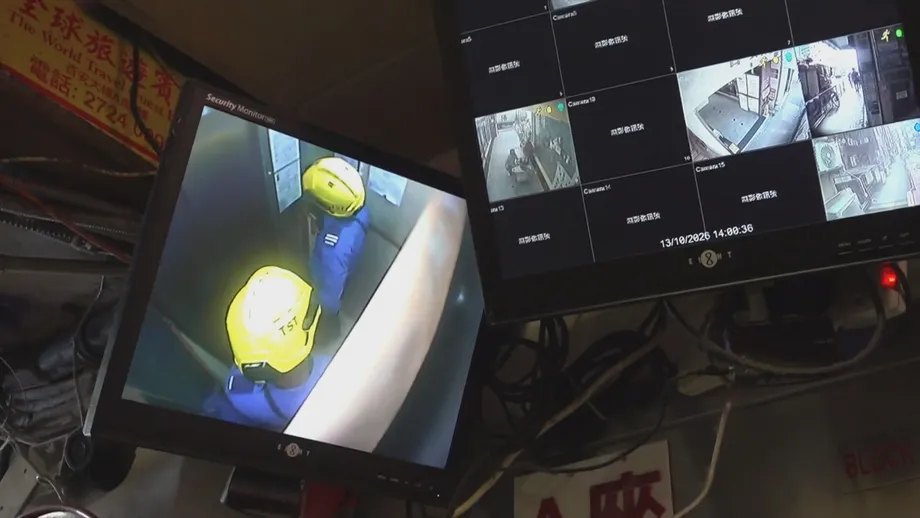
One reported example was Pak On Building on Austin Road in Jordan, where a lift temporarily stopped operating and firefighters attended to inspect it. Fire vehicles were also dispatched elsewhere to support the response. No complete list of affected buildings or number of electricity customers experiencing the dip was given.
Reports Differ on the Final Incident Count
The department's updated figures at 3pm were 179 lift entrapment reports and 40 ringing fire alarms, a combined total of 219 reports. Other accounts gave slightly different totals: one recorded 179 lift reports and 39 false alarms, while another recorded 178 lift reports and 39 alarm reports.
Those combinations produce totals of 218 and 217 respectively. The differences are small, but no explanation was given for them. The 179 and 40 figures are the explicitly timed 3pm update and provide the clearest reference point for the afternoon's final tally.
Terminology also differs. Some accounts describe the alarms as false or erroneously activated, while the department's update refers to reports of fire alarms ringing. The reports do not describe an actual fire resulting from the voltage dip.
The lift figure is a count of reports or cases, not a count of people rescued. It should not be read as meaning exactly 179 people were trapped. No total number of lift occupants was stated.
Rescues Finished, Cause Still Under Investigation
Completion of the emergency response did not settle the cause of the electrical disturbance. CLP said its teams were investigating and following up on the incident, and apologised for the inconvenience to residents.
No investigation findings, repair requirements or measures to prevent a recurrence were announced. There was also no stated deadline for a further update. The explanation of protective systems stopping equipment addresses how disruption could occur, but not what initially caused the voltage to fall.
The confirmed outcome was that a brief voltage disturbance, without a reported interruption to electricity supply, was followed by hundreds of emergency reports and three hospital transfers. Firefighters completed their work by the afternoon update, while the utility's technical investigation remained unfinished.
Key Points
- CLP recorded a brief voltage dip at about 1.09pm on Tuesday on a 400 kilovolt line between Lai Chi Kok and Tsz Wan Shan.
- The Fire Services Department's 3pm update recorded 179 lift entrapment reports and 40 ringing fire alarms.
- Four women aged 68 to 71 felt unwell; three were taken to hospital conscious.
- Firefighters received 77 reports in roughly ten minutes, mainly from Yau Tsim Mong.
- Additional resources and callbacks were activated around 2pm, and all incidents were handled by 3pm.
- CLP said electricity supply was not interrupted. The cause of the voltage dip had not been announced.