All three healthcare clusters affected before afternoon recovery
A network connectivity disruption affected services across all three of Singapore's public healthcare clusters on Oct. 13, beginning at about 7:10am and ending with full restoration at 4:37pm. The interval was approximately nine hours and 27 minutes, although some individual services recovered earlier.
Contents
- All three healthcare clusters affected before afternoon recovery
- What failed, and what continued operating
- How the disruption and recovery unfolded
- NHG Health used alternative payment and registration arrangements
- NUH patients encountered slower pharmacy service and stale queue information
- SingHealth call centres could answer without processing appointments
- Patients reported different experiences as systems recovered
- Mental health support services recovered by noon
- The technical cause remains under investigation
- Key Points
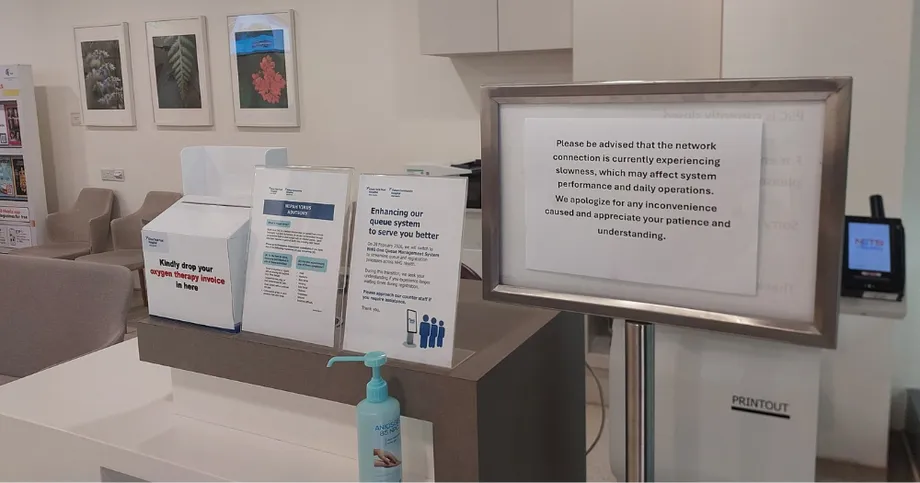
National health technology agency Synapxe said the technical problem disrupted services including appointment bookings through call centres, visitor registration and billing enquiries at institutions under NHG Health, the National University Health System (NUHS) and SingHealth. Some patients also encountered payment difficulties, slower medication collection and unavailable electronic queue displays.
Synapxe said there was no indication of a cyber incident. Its investigation into the technical issue was continuing, and it had not explained the precise cause of the connectivity failure or why services across all three clusters were affected.
NHG Health said patient care was not compromised. Its institutions activated established downtime procedures, allowing emergency care, inpatient care, surgery, medical tests and scans to continue with minimal disruption. That assurance applied to NHG Health's institutions, rather than constituting a detailed assessment of clinical operations across all three clusters.
What failed, and what continued operating
The disruption did not produce an identical experience everywhere. Some call lines could not be reached, while other hospitals could answer calls but could not complete appointment requests. At certain institutions, patients continued seeing doctors even as payment systems, registration machines or queue information were unavailable.
This distinction matters: a working telephone line did not necessarily mean that the appointment service behind it was functioning. Likewise, a stalled queue display did not necessarily mean that consultations had stopped. Accounts from hospitals and patients showed administrative delays alongside continuing clinical activity.
Synapxe, the national agency responsible for supporting public healthcare technology, manages systems including the National Electronic Health Record and the National Billing System. However, it did not identify those named systems as affected in its account of this incident. Its stated finding was a technical issue affecting network connectivity and disrupting some services.
How the disruption and recovery unfolded
Public notices appeared at different times during the morning, followed by separate announcements of local recovery. Those posting times should not be read as the moment each institution first experienced problems.
- About 7:10am: Synapxe said the network connectivity issue began, disrupting some services across the public healthcare clusters.
- 8am: The national mental health support service mindline.sg reported difficulties with its hotline and WhatsApp service.
- 8:59am: NHG Health notified the public that institutional call centre lines were temporarily unavailable. Other accounts rounded this announcement to about 9am.
- About 10:30am: National University Hospital (NUH) posted a notice describing system downtime.
- 11:23am to 12:20pm: NUHS, Singapore General Hospital (SGH) and the National Heart Centre Singapore issued notices. SGH's notice appeared at 11:32am and the heart centre's at 12:20pm.
- Noon: mindline.sg said its services were fully operational again.
- 1:30pm: Woodlands Hospital announced that its call centre lines had been restored.
- 2:37pm: Synapxe publicly confirmed connectivity issues affecting all three healthcare clusters.
- About 3pm: Synapxe said affected services began returning progressively.
- 4:37pm: All affected services were restored, according to Synapxe.
- After 5:30pm: NUHS announced recovery, followed by Synapxe's restoration update at about 5:40pm.
The sequence separates recovery from public notification. The evening announcements confirmed that restoration had already taken place. Woodlands Hospital's earlier recovery also shows that the full disruption period did not describe the downtime of every individual service.
NHG Health used alternative payment and registration arrangements
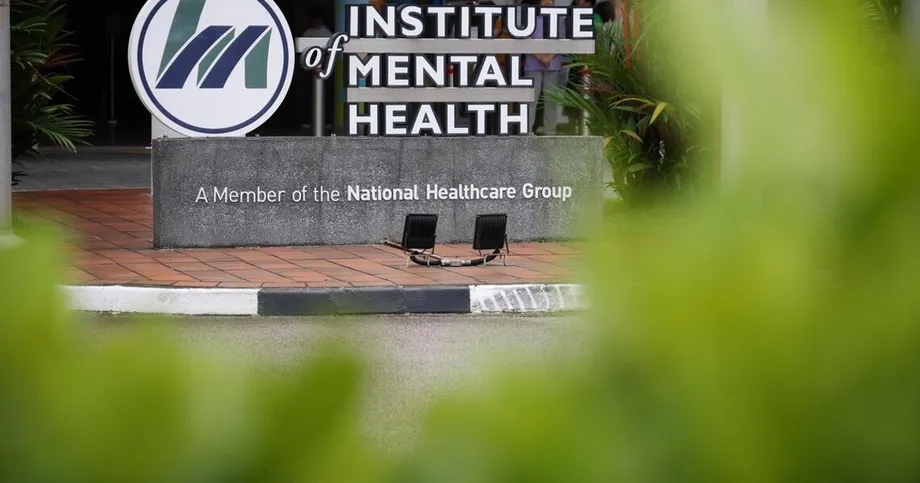
NHG Health oversees Tan Tock Seng Hospital, Khoo Teck Puat Hospital, Woodlands Hospital and Yishun Community Hospital. Its wider network includes 10 polyclinics, the Institute of Mental Health, the National Skin Centre and the National Centre for Infectious Diseases. The cluster reported disruption to services such as call lines and appointment booking, while several hospitals warned of longer waits.
At about 10am, attempts to reach NHG Health's main contact centre, Tan Tock Seng Hospital and Khoo Teck Puat Hospital failed to connect. A call to the Institute of Mental Health went through, illustrating that telephone access varied within the same cluster.
At the National Skin Centre around 11am, the payment system was unavailable. Patients unable to pay for consultations or medication at the clinics and pharmacy were directed to make payment through the NHG Health app instead.
NHG Health said selected online services remained accessible through HealthHub, its own app and AXS. Patients could also seek assistance through institutional websites and live chat. These were alternatives for some tasks, rather than confirmation that every online function was working.
Additional staff and volunteers helped patients register and make payments on site. Pharmacy medication delivery remained available, according to the cluster. These arrangements helped maintain access while routine systems were unavailable.
NUH patients encountered slower pharmacy service and stale queue information
At NUH, pharmacy notices warned of longer medication collection times. A visitor identified only as Mr Zol said at about 2pm that he had been at the hospital since 8am and had waited around 30 minutes to collect medication. His account does not establish that the disruption caused his entire stay at the hospital.
A separate notice at the Kent Ridge Wing pharmacy estimated medication waits of about 60 minutes. Self service kiosks outside the pharmacy carried maintenance notices. The 30 minute wait reported by one visitor and the 60 minute estimate at another pharmacy describe different experiences, not a single hospital average.
Iffah Kamilia Mohammed Zaiful, a 27 year old expectant mother attending NUH's Women's Clinic, said her 2pm appointment was largely unaffected. Her doctor had called earlier to alert her to the disruption. Yet after the consultation ended, the NUHS app still showed her waiting with 17 patients ahead, and the clinic's queue screens were not working.
Her experience illustrates a separate consequence of the outage: the information shown to a patient could lag behind care already delivered. A completed consultation and an unchanged digital queue status could exist at the same time.
Alexandra Hospital also reported a technical disruption affecting multiple systems and warned of longer waits. NUHS, whose institutions include NUH, Alexandra Hospital, Ng Teng Fong General Hospital and eight polyclinics, said it had taken measures to maintain operations.
SingHealth call centres could answer without processing appointments
SGH and the National Heart Centre Singapore reported disruption to outpatient appointment bookings and changes, visitor registration and billing enquiries. SGH said its call centre remained open but temporarily could not process appointment bookings or changes.
Ward visitor registration could take longer than usual. At SGH, a meal service associate described difficulty logging into iPads and said meal orders were entered on hospital computers instead. The employee also reported problems for some visitors using ward gantries, with staff using stickers to identify registered visitors.
Calls to Sengkang General Hospital, Changi General Hospital and KK Women's and Children's Hospital were successful during the disruption. A Changi General Hospital operator nevertheless warned that longer waits might be expected. These accounts reinforce the distinction between reaching an institution and being able to complete every service normally.
By around 3pm, most clinics observed at SGH and the National Heart Centre had no queues, and several patients described straightforward visits. One SGH patient who arrived at about 3pm said she encountered no long queue and completed payment within half an hour.
Patients reported different experiences as systems recovered
Accounts from visits to seven healthcare institutions between 2pm and 5:30pm generally described limited effects for many patients. This was a period when some services were already recovering, so those experiences do not establish how severe the disruption had been earlier in the day.
At Tan Tock Seng Hospital, teacher Roshini Michael said self registration machines were unavailable when she arrived around 1pm. She registered at a counter without a queue, while staff checked visitors before allowing them through two open gantries. When she left around 3:30pm, she said operations were back to normal.
Other accounts described queues at Tan Tock Seng Hospital's appointment counters, consultation areas and pharmacy. Reports also described manual data entry and staff calling queue numbers in person while electronic displays were unavailable. These experiences varied by location and time.
At Khoo Teck Puat Hospital, disruption notices were visible at the outpatient pharmacy and patient services counter around 3:15pm. About 30 patients were reported waiting at the outpatient pharmacy, although one patient who had waited 15 minutes after dental surgery considered the experience normal.
Nearby Yishun Community Hospital had working registration kiosks and gantries during an afternoon visit, with few people at one pharmacy. At Outram Polyclinic, a patient described medication collection as slightly slower than usual. Neither account provides a measure of delays across the wider healthcare network.
Mental health support services recovered by noon
Singapore's 24 hour national mental health helpline and text service, mindline.sg, reported hotline and WhatsApp difficulties at 8am. It said both services were fully operational again by noon, several hours before Synapxe confirmed full restoration of affected healthcare cluster services.
The timing places the mental health service disruption on the same morning, but the reports did not establish whether it arose from the same technical problem. Its four hour interval between the notice of difficulties and the recovery announcement should therefore not be treated as part of a proven common outage.
This is an important limit on the account of the day: simultaneous technical difficulties can be reported together without their connection having been confirmed.
The technical cause remains under investigation
Synapxe identified a technical issue affecting network connectivity, but that description does not explain which component failed or what triggered the problem. The agency had not disclosed why all three healthcare clusters experienced disruption, how many patients were affected or the total number of delayed transactions.
In its restoration update, Synapxe addressed the possibility of a cybersecurity incident:
There is currently no indication that this was a cyber incident.
That statement reports the agency's assessment at the time. It does not provide a completed technical finding. Investigations were still ongoing, and no date for releasing their results was announced.
Synapxe also acknowledged the disruption experienced by patients, visitors and healthcare workers:
We apologise for the inconvenience caused and thank patients, visitors and healthcare staff for their patience and understanding.
The incident exposed how failures in registration, payment, appointment and queue systems can interrupt a hospital visit even when treatment continues. NHG Health's account of maintained clinical care, together with patient reports of stalled administrative systems, shows why restoration of those services matters beyond whether doctors can still see patients.
Key Points
- Services across NHG Health, NUHS and SingHealth were affected on Oct. 13 by a technical issue involving network connectivity.
- The disruption began around 7:10am. Synapxe said all affected services were restored by 4:37pm, approximately nine hours and 27 minutes later.
- Affected functions included appointment booking, visitor registration, billing, some payments and electronic queue information.
- NHG Health said patient care was not compromised and clinical services continued with minimal disruption under downtime procedures.
- Some services recovered earlier, including Woodlands Hospital's call centre by 1:30pm and mindline.sg by noon.
- Synapxe said there was no indication of a cyber incident. The precise technical cause remained under investigation, with no date announced for findings.