A major expansion of urgent psychiatric treatment
South Korea plans to increase intensive treatment beds for acute psychiatric patients from 391 in 2025 to 2,000 by 2030 and designate psychiatric emergency care as an essential medical service under its sixth Basic Plan for Suicide Prevention. The expansion would add 1,609 beds, bringing capacity to slightly more than five times its 2025 level.
Contents
- A major expansion of urgent psychiatric treatment
- Deaths are falling, but the target needs careful reading
- What essential medical status would change
- Higher treatment subsidies and wider counseling support
- A national office to connect emergency response and recovery
- Continuing contact raises a consent issue
- Debt, isolation and pressure at school or work
- AI plans focus on better records and regional warning signs
- Implementation deadlines and public accountability
- Key Points
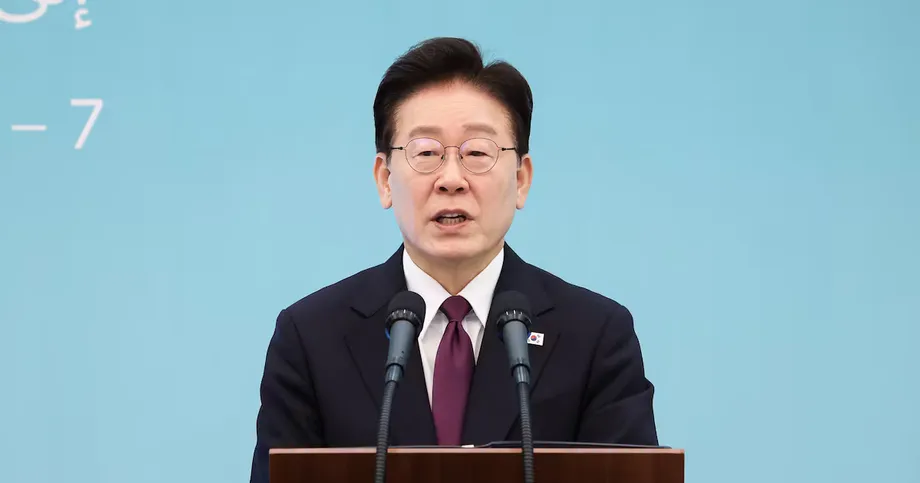
The plan was finalized on October 12, 2026, at the 11th Suicide Prevention Policy Committee meeting at the Government Complex Seoul, chaired by Prime Minister Han Seong-sook. It combines emergency treatment, financial assistance, debt support and more active contact with people at risk, while making central ministries and local governments responsible for implementation.
The Ministry of Health and Welfare's plan announcement sets a target of reducing suicide deaths from 29.1 per 100,000 people in 2024 to 18.9 or fewer by 2030. The government says the rate fell to 27.8 in 2025, but the country still has the highest suicide rate among members of the Organisation for Economic Co-operation and Development.
The sixth plan arrives before the fifth plan, adopted in 2023 for the period through 2027, was due to end. The accelerated timetable follows the increase in deaths in 2024. Its central shift is to connect emergency care with continuing treatment and social support, rather than relying mainly on people in distress to seek help themselves.
Han described suicide prevention as a responsibility shared across government, rather than a task belonging to the health ministry alone.
Suicide is not just an issue for a specific ministry, but a matter that the entire government should take responsibility for and address.
Deaths are falling, but the target needs careful reading
At the Ministry of Health and Welfare's advance policy briefing, Second Vice Minister Lee Hyung-hoon said 14,144 people died by suicide in 2025, a decrease of 728 deaths, or about 4.9%, from the previous year. Those figures put the 2024 total at 14,872.
Provisional figures for January through July 2026 show 7,432 deaths, compared with 8,475 during the same months in 2025. That is a decline of 1,043 deaths, or 12.3%. The briefing also recorded 1,062 deaths in July 2026, down 9.8% from July 2025, and said monthly totals had fallen compared with the corresponding month a year earlier for 10 consecutive months beginning in October 2025.
These measures describe different things. An annual suicide rate expresses deaths relative to population, while the January to July figures are a provisional count covering part of a year. The decline is encouraging, but it does not establish that the new plan caused it, especially because the plan was finalized afterward.
There are two inconsistencies in the official presentation. The announcement describes the 2030 goal as a 33.3% reduction, but a fall from 29.1 to 18.9 is about 35.1%. It also dates the release of the July provisional statistics to September 23, while the briefing gives September 28. Neither difference changes the stated target or the January to July totals, but both warrant clarification.
The ministry cites earlier reductions in Latvia, from 17.7 to 12.7 deaths per 100,000 between 2016 and 2021, and Lithuania, from 27.3 to 18.5 over the same period, as evidence that large reductions are possible. These comparisons support the ambition of the target, not a prediction that South Korea will achieve it.
What essential medical status would change
Designating psychiatric emergency care as essential medical care is intended to support workforce training, incentives for staff in regional services, and investment in facilities and equipment. Beds alone cannot provide treatment without enough trained personnel to operate them.
The government also plans to designate specialized medical centers for people at high risk of suicide, including those who have attempted suicide. Additional payments for urgent psychiatric consultations may be tested through a pilot program. These payments would compensate providers for delivering urgent care, rather than provide a direct cash benefit to patients.
Another proposal would consider indicators for closed psychiatric wards when deciding which hospitals qualify as tertiary general hospitals. These hospitals provide advanced specialist care. Including psychiatric capacity in their designation criteria could make it a more explicit part of hospital planning, although the government has not presented the proposal as an adopted requirement.
Regional psychiatric emergency medical centers will increase from 14 to 17 by 2030. They have separate isolation rooms and observation beds, with psychiatrists and emergency physicians jointly treating patients experiencing psychiatric crises alongside serious physical injuries. This network has a different function from the broader expansion of intensive psychiatric treatment beds.
Higher treatment subsidies and wider counseling support
The maximum treatment subsidy for people who survive a suicide attempt will gradually rise from 1 million won to 1.5 million won, a 50% increase. For patients who have attempted suicide, the annual assistance ceiling for emergency hospitalization will increase from 4.5 million won to 6 million won, about one third higher.
These are support ceilings, not promises that every patient will receive the maximum amount. The increases are intended to reduce the financial burden of treatment, but the plan does not give a complete timetable for each step of the expansion.
The government will also consider wider health insurance coverage for medication used to treat depression that has not responded adequately to treatment. Decisions will depend on evidence of clinical effectiveness, value for money and demand from providers. The announcement does not establish a coverage date or identify a drug that has already been approved under this measure.
Counseling support would extend beyond a narrow definition of family participation. Where relatives cannot take part, patients may be able to designate a trusted friend, colleague or another person they want involved. The government also plans to broaden eligibility and increase reimbursable counseling sessions for people at high risk.
That proposal connects medical care with the person's actual support network. It also sits alongside possible payments for referrals from psychiatric institutions to suicide prevention centers, intended to maintain contact and support after discharge.
A national office to connect emergency response and recovery
A National Suicide Response Office is planned under the Ministry of Health and Welfare, with police and National Fire Agency personnel working jointly. Officials said nearly 1 billion won had been included in the proposed 2027 government budget for the office.
Operations are intended to begin in stages from early 2027. Staffing numbers were still being discussed with the Ministry of the Interior and Safety at the October briefing, and officials cautioned that systems and other preparations would take time.
The office is intended to connect emergency dispatch, immediate protection, treatment and case management. Its planned functions include helping assign psychiatric beds and supporting assessments conducted by video. Joint police and mental health responses would also expand, with consideration given to direct emergency attendance by mental health professionals and legal protections for responders performing their duties.
Hospitalization procedures would be revised to allow public medical transport teams to assist with involuntary admission initiated by guardians. Transport subsidies for patients with low incomes and simpler documentation are also under consideration. These changes concern access and transport procedures; the plan does not describe them as removing legal conditions for involuntary admission.
For people who do not need hospitalization after an attempt, temporary protective care would provide up to 24 hours of counseling, recovery time and connections to further services. A pilot would address the gap between completion of physical treatment and the start of continuing support.
Continuing contact raises a consent issue
The plan increases crisis response centers serving suicide attempt survivors from 93 in 2025 to 100 in 2026 and 103 in 2027. Average staffing at suicide prevention centers is expected to rise from 5.0 employees in 2026 to 7.1 in 2027, a 42% increase.
The need for continuing care is underscored by reported figures that about 7% of mental health professionals at prevention centers attended attempt scenes and that 94.2% of people who attempted suicide refused later counseling. The reporting does not specify the measurement periods or populations behind those percentages, limiting how precisely they can be interpreted.
Research cited in reporting suggests regular treatment and counseling can reduce suicide risk by about 60%, although the study designs and patient groups are not identified. Reported ministry estimates also place suicide risk among people who have attempted suicide far above that of the general population, with figures of 25 times and 22.5 times attached to differently described groups. The distinction between those groups is not explained, so the estimates should not be treated as interchangeable.
At the official briefing, Lee Hyung-hoon acknowledged that refusal of further services is a practical obstacle. Officials said information currently has to be deleted promptly when consent is withheld, restricting later contact. They want a legal basis for prevention workers to contact and offer support to people who decline an initial referral.
This remains a proposed legal change, not an established power. Officials acknowledged possible controversy and said the form of intervention would still need to be developed even after legislation. Information sharing between hospitals also remains an issue, rather than a problem the plan has already solved.
Debt, isolation and pressure at school or work
The plan groups its measures under BASIC: basic safety net, active outreach, structural support, integrated care and community accountability. The framework links emergency treatment with action on debt, poverty, isolation and caregiving burdens.
A national debt counseling number, 1375, operated by the Credit Counseling and Recovery Service, is scheduled to begin operating in October 2026. It is intended to connect people with debt relief and support programs. Other measures address debt adjustment, unlawful collection practices, financial fraud and emergency living expenses for people at high risk.
Support for families carrying care responsibilities includes family leave, daytime and nighttime care, and expanded leave for caregiving. These measures recognize that a psychiatric consultation may be necessary without being sufficient to resolve the pressures contributing to a crisis.
Responsibilities are assigned by population and issue. The Education Ministry will lead measures for students and adolescents, the Justice Ministry for crime victims, and relevant agencies for police, military personnel and firefighters. Labor authorities will address workers facing emotional demands, while the Financial Services Commission will lead debt measures.
The education proposals include social and emotional education, teacher training, a student mental health survey, and more questioning and discussion in classrooms. Asked for evidence that changing classroom culture would reduce suicide, Education Ministry official Kim Jeong-won described it as a broader effort to support student mental health. The briefing did not establish a specific reduction in suicide attributable to that measure or announce a corresponding admissions reform.
Support for families bereaved by suicide was expanded nationwide from June 2026. The plan also provides for their participation through advisory groups and considers a dedicated role to help bereaved families obtain assistance when they need it.
AI plans focus on better records and regional warning signs
The government plans to replace seven broad categories of suicide motives with nine intermediate categories and 27 detailed categories. Records would also allow multiple contributing reasons, rather than requiring a single reason to be selected.
Officials gave examples of distinctions within financial difficulties: housing and living expenses could be recorded separately from investment losses or financial fraud. Allowing several reasons matters because financial strain, mental illness and family difficulties can occur together.
The data would be connected with National Health Insurance information and social security benefit histories to analyze risk factors. Officials said amendments to suicide prevention legislation had created a legal basis for combining information about people who died by suicide with social and economic records.
Seoul St. Mary's Hospital is conducting commissioned research on a model to predict regional suicide risk using social and economic indicators. The stated aim is to identify warning signs before deaths rise and provide preventive assistance to local authorities, rather than wait for an increase and then send a consulting team.
This is work in development, not a demonstrated system capable of predicting an individual's actions. The briefing did not present accuracy results, a completed deployment schedule or detailed operating safeguards. AI would also assist with records for the 109 counseling service and monitoring online information that encourages suicide.
Separately, earlier announced measures would increase the 109 call center workforce from 103 to 200 by October and work with online platforms to display prevention and support information when people search for suicide. The staffing increase was announced as a target, not confirmed in the October briefing as completed.
Implementation deadlines and public accountability
The sixth plan turns previously announced measures into a statutory plan under suicide prevention law. Central ministries and local authorities must prepare annual implementation plans, with the health minister evaluating them and responsible bodies acting on the resulting feedback.
Central government implementation will be checked monthly. Local assessments will consider suicide levels, changes from the previous year and prevention efforts, rather than judge performance only by a single death count. Officials are considering a one year grace period before publishing results, including results for cities, counties and districts.
The main milestones are:
- September 2025: The government introduced its national suicide prevention strategy.
- December 2025: A government coordination body for protecting lives was established.
- June to September 2026: Ministries announced measures across nine policy areas.
- October 12, 2026: The committee finalized the sixth Basic Plan for Suicide Prevention.
- 2027: The national response office is due to begin phased operations, crisis response centers are targeted to reach 103, and prevention center staffing should average 7.1 employees.
- 2030: Intensive psychiatric treatment beds are targeted to reach 2,000, regional psychiatric emergency centers 17, and the suicide rate 18.9 or fewer per 100,000.
Officials offered different accounts of how weaker local performance would be handled. Health ministry officials favored incentives and consulting support, warning that penalties could make reinvestment harder. An official from the Office for Government Policy Coordination said possible consequences were being discussed within existing local government evaluation systems that affect funding allocations. A new, finalized penalty scheme was not announced.
The plan therefore provides measurable targets and a stronger review process, while leaving substantial implementation work unfinished. Staffing arrangements, data access rules, consent legislation, some reimbursement changes and the timing of public assessments still require further decisions.
Key Points
- South Korea aims to expand intensive psychiatric treatment capacity from 391 beds in 2025 to 2,000 by 2030.
- The sixth prevention plan was finalized on October 12, 2026, before the previous plan's scheduled end.
- The suicide rate fell from 29.1 per 100,000 in 2024 to 27.8 in 2025; the 2030 target is 18.9 or fewer.
- Provisional deaths for January to July 2026 totaled 7,432, down 12.3% from the same period in 2025.
- Treatment assistance, counseling eligibility, emergency coordination and temporary protective care will expand.
- A national response office is planned to begin phased operations in 2027.
- AI research will support regional risk prediction, while proposed contact without initial consent requires further legal work.
- Annual implementation reviews and public local assessments will accompany financial incentives and support.