Twenty nine players compete for a historic World Cup place
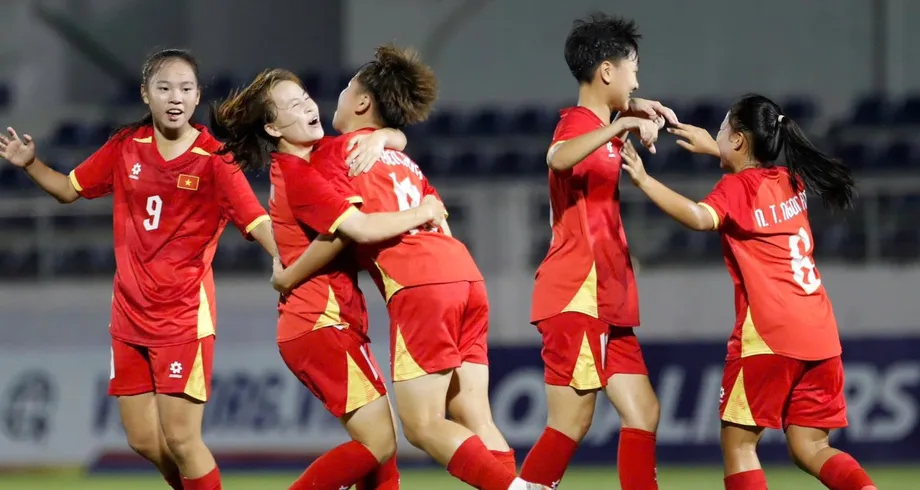
Vietnam coach Cristiano Roland has called up 29 players, including seven newcomers, as the country prepares for its first FIFA U17 World Cup appearance in Qatar in 2026. Drawn in Group G with Belgium, New Zealand and Mali, Vietnam will face opponents from three continents after becoming the only Southeast Asian team to qualify.
Contents
- Twenty nine players compete for a historic World Cup place
- Qualification brought victories and difficult lessons
- An expanded squad without abandoning the core
- Older opponents provide demanding practice
- The route to Qatar and the group schedule
- Eight academies helped build the qualifying team
- Physical growth meets a defined playing style
- Nutrition and recovery become part of preparation
- International experience is the next step, not the destination
- Key Points
The Vietnam Football Federation's squad announcement sets September 20 as the start of training at the Vietnam Youth Football Training Centre. It confirms that Roland is retaining the core of the team that secured qualification at the AFC U17 Asian Cup while opening places to new candidates.
The achievement ends a long absence from the global stage for Vietnamese men's 11 player football. The country's previous appearance at a World Cup in that category was at U20 level in 2017. Nine years later, a younger generation has earned an opportunity to test its progress beyond regional and continental competition.
The immediate task is more demanding than celebrating qualification. Roland must assess a larger squad, improve defensive organisation and prepare teenagers for three group matches in seven days. Planned training camps in South Korea and the United Arab Emirates are intended to provide stronger practice opposition and help the players adjust before reaching Qatar.
Qualification brought victories and difficult lessons
Vietnam's Asian Cup campaign combined two decisive victories with two defeats that exposed different weaknesses. The team beat Yemen, lost to South Korea after taking the lead, and then defeated the UAE to advance from the group and secure a World Cup place.
The South Korea match slipped away in the final 10 minutes. Against the UAE, Vietnam recovered after falling behind and responded again after its opponent equalised. That contrast matters: one match showed the cost of failing to protect an advantage, while the next showed the ability to recover when qualification was at stake.
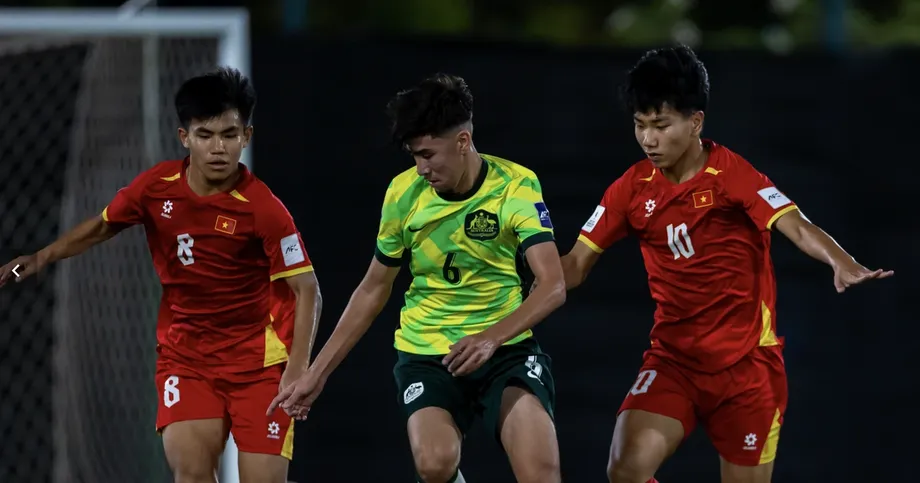
The campaign ended with a 3-0 quarterfinal defeat by Australia. Speaking at the VFF headquarters on May 19 after the tournament, Roland said the players had carried a heavy physical load through successive matches at the Southeast Asian championship and the Asian Cup. He said Australia had played fewer matches and brought in several fresh players.
That was the coach's explanation for part of the performance gap, not proof that fatigue alone determined the result. His assessment nevertheless identifies a practical concern for Qatar: Vietnam must preserve its intensity across a sequence of matches, rather than produce it only in isolated passages.
An expanded squad without abandoning the core
The seven newcomers named by the VFF cover three areas of the team. Goalkeepers Nguyễn Thái Sơn of Hà Nội and Nguyễn Việt Dũng of PVF join defenders Trần Xuân Toàn of Công An Hà Nội, Bùi Trung Hiếu of PVF and Phùng Quang Danh of Thể Công-Viettel. Midfielders Nguyễn Trọng Phong of PVF and Tạ Đình Phong of SHB Đà Nẵng complete the additions.
Seven new players account for about 24% of the 29 player training squad. That is a substantial opportunity to examine alternatives while keeping continuity with the qualifying team. The training list is not a confirmed final World Cup roster, and the VFF announcement does not give a deadline for the final selection.
Roland previously said he selects players according to ability and form, rather than their club. He also explained that approximately 10 days together immediately before the Asian Cup finals had limited how much he could change personnel or tactics. That short final gathering followed a longer preparation process stretching back before qualification.
The World Cup camp gives him another chance to review individual development and combinations between positions. Retaining the established core preserves familiarity, while the new players can compete for places and provide alternatives where the coaching staff sees weaknesses.
Older opponents provide demanding practice
Vietnam drew 3-3 with Hà Nội U19 in a practice match on October 9 at the national youth training centre. Roland gave every player an opportunity to appear, using the match to assess form, tactical adaptation and coordination between positions.
Since assembling in September, the team has also played practice matches against Hà Nội U23, PVF U19, Hà Nội FC and Công An Hà Nội U19. These opponents bring advantages in age, physical strength or experience, making the games useful tests of how quickly Vietnam can make decisions under pressure.
The coaching staff has been working on defensive organisation, transitions and finishing. A transition is the moment immediately after possession changes: a team must either turn a recovery into an attack or reorganise quickly after losing the ball. For a side that presses aggressively, those moments are especially demanding because players may be positioned forward when possession is lost.
The 3-3 draw supplies a result, but not a complete measure of readiness. With all players used and selection still under review, its main value was the opportunity to compare options. Two further domestic practice matches were planned before departure for South Korea; opponents and dates were not specified.
The route to Qatar and the group schedule
The VFF's announcement describes a planned camp in a West Asian country before travel to Qatar. Later reports give a more detailed itinerary: departure for South Korea on October 19, roughly 10 days of training there, followed by approximately 10 days in the UAE. The Korean stage is intended to provide competitive practice, while the UAE stage focuses partly on adjustment to Middle Eastern weather and time differences.
There is a small discrepancy in the reported start of domestic preparation. The federation specifies September 20, as do several accounts, while another gives September 21 as the first training date. These could describe assembly and training separately, but that distinction has not been confirmed.
The reported tournament dates are November 19 to December 13. Vietnam's preparation and group fixtures form the following schedule:
- May 19: Roland discusses the Asian Cup campaign and World Cup preparation at VFF headquarters.
- September 20: The assembly date set by the VFF for the expanded training squad.
- October 9: Vietnam draw 3-3 with Hà Nội U19.
- October 19: Planned departure for a training camp in South Korea, followed by a camp in the UAE.
- November 20: Vietnam open Group G against Belgium.
- November 23: Vietnam face New Zealand.
- November 26: Vietnam play Mali in their final group match.
- December 13: Scheduled conclusion of the tournament.
Reported kickoff times are 20:00 against Belgium, 22:30 against New Zealand and 20:00 against Mali. The timetable does not identify the time zone, so those hours should not be treated as confirmed local Qatar times. Match venues and opponents for the overseas practice games are also not specified.
Eight academies helped build the qualifying team
The 23 players in Vietnam's successful Asian Cup squad came from eight development systems. PVF and Hà Nội supplied the largest contingents. Thể Công contributed four players and Sông Lam Nghệ An, commonly known as SLNA, supplied three. Thanh Hóa, Huế, Nam Định and Ho Chi Minh City contributed one each.
Those figures mean PVF and Hà Nội together supplied 12 of the 23 players, just over half the squad. The remaining 11 came from six other systems. Vietnam's qualification therefore depended heavily on two centres, but also drew on a wider network rather than a single academy.
Individual routes show how several years of training preceded the breakthrough. Nguyễn Lực developed at the VST community football centre before joining Hà Nội in 2022. Quý Vương entered the Hà Nội youth system at 13. Văn Dương, Sỹ Bách and Xuân Hòa trained at PVF, while Minh Thủy and Thành Công began professional training at SLNA in 2020.
Their development followed a period of investment after Vietnam finished runners up at the 2018 AFC U23 Asian Cup in Changzhou. Training systems including PVF, Viettel, Hà Nội, HAGL and SLNA revised programmes and expanded recruitment. The current team's qualification is evidence of progress among these players, though one tournament cannot establish how much each reform contributed.
Physical growth meets a defined playing style
Reported heights show considerable variation within the group. Centre back Thành Công is 1.89 metres tall, defender Mạnh Cường 1.82 metres and forward Lê Trọng Đại Nhân 1.80 metres. Quý Vương is close to 1.80 metres, while Nguyễn Lực is listed at 1.71 metres, Minh Thủy at 1.73 metres and Văn Dương at 1.70 metres.
Some players may still grow, but projections of another two to four centimetres are possibilities, not established outcomes. Height also provides only a partial picture of physical readiness. Repeated running, strength in challenges and recovery between matches are central to the game Vietnam is trying to play.
At the Asian Cup, the team showed coordinated short passing and sustained pressing. Pressing means applying pressure to opponents in possession to restrict their options or recover the ball. Nguyễn Lực offered speed and penetration from wide positions, while Quý Vương provided a defensive midfield presence.
Roland describes his intended approach as combining Brazilian creativity, European tactical discipline and Vietnamese fighting spirit. In practice, he wants players to express themselves without losing their responsibilities within the team's organisation. The late defeat against South Korea and the recovery against the UAE show why both individual initiative and collective control matter.
Nutrition and recovery become part of preparation
At Roland's request, the VFF organised a session on football nutrition and injury prevention for the U17 team. It was led by Nguyễn Ngọc Trâm Anh, who holds a master's degree in sports nutrition from Liverpool John Moores University in the United Kingdom.
The programme covered four areas: sports nutrition in football; eating before, during and after training and matches; injury prevention principles; and recovery and body care. Players received guidance on energy requirements, choosing food according to exercise intensity and recovering after physical exertion.
VFF general secretary Nguyễn Văn Phú said investment in coaching also requires players to acquire knowledge and take responsibility for applying it. He identified speed, strength, endurance, repeated speed and explosive power as priorities in helping players make full use of their training.
This work connects directly with Roland's concerns about fatigue at the Asian Cup. It cannot guarantee freedom from injury or tiredness, but it addresses preparation beyond tactics and selection. Similar education has reached U14 and women's U17 teams, and the federation plans to extend such programmes.
International experience is the next step, not the destination
FIFA chief of global football development Arsène Wenger has argued that tactical learning at 17 can shape a player's style over the following 15 years of a career. He has also supported holding the U17 World Cup annually rather than every two years to give young players more regular international experience.
Wenger's argument focuses on unequal access to that experience. He has said European youngsters play more international matches than players elsewhere, and that an annual tournament can help narrow the difference. Vietnam's qualification creates a concrete opportunity for this generation to encounter different opponents and demands in the same competition.
Roland has cautioned that the World Cup represents a different level and that his team still needs improvement and support. Belgium, New Zealand and Mali will test whether the habits developed during the Asian campaign hold up outside familiar competition.
The longer objective is progression through U20 and U23 football toward the senior national team. Qualification does not guarantee that Nguyễn Lực, Quý Vương, Văn Dương or their teammates will complete that journey. Their next measurable task is to turn preparation into competitive performances in Qatar, then continue developing after the tournament ends.
Key Points
- Vietnam have qualified for their first U17 World Cup and are the only Southeast Asian representative.
- Roland's training squad contains 29 players, including seven newcomers.
- The qualifying team included 23 players from eight academies, with PVF and Hà Nội supplying 12.
- Planned preparation includes camps in South Korea and the UAE before arrival in Qatar.
- Vietnam face Belgium on November 20, New Zealand on November 23 and Mali on November 26.
- Final squad selection, match venues and overseas practice opponents have not been specified.
- Physical recovery, defensive organisation and continued development beyond U17 level remain central priorities.