Treatment expanded as the nutrition crisis worsened
UNICEF and its partners screened 1.3 million children for wasting in Afghanistan in August 2026 and admitted 111,099 for treatment, including 58,891 with severe wasting. At the same time, supplies of specialized nutrition foods faced substantial shortages, and hospital admissions involving severe malnutrition and medical complications were rising.
Contents
- Treatment expanded as the nutrition crisis worsened
- What the August treatment figures establish
- The first two years carry the greatest burden
- Hunger and disease are reinforcing the crisis
- A broad service network faces growing disruption
- Maternal care and prevention need more staff
- Funding shortages threaten treatment supplies
- Clinic closures make care harder to reach
- How the crisis developed and what comes next
- Key Points
The figures in UNICEF's August situation report show a response reaching large numbers of children while struggling to keep pace with need. By July, admissions of children with severe acute malnutrition and medical complications had increased by around one third compared with the same period in 2025.
Young children bore most of the burden. Children under two accounted for approximately 83% of severe acute malnutrition cases, while infants under six months made up nearly 40% of those hospitalized with severe wasting and medical complications. These figures describe severe cases, rather than all forms of childhood malnutrition.
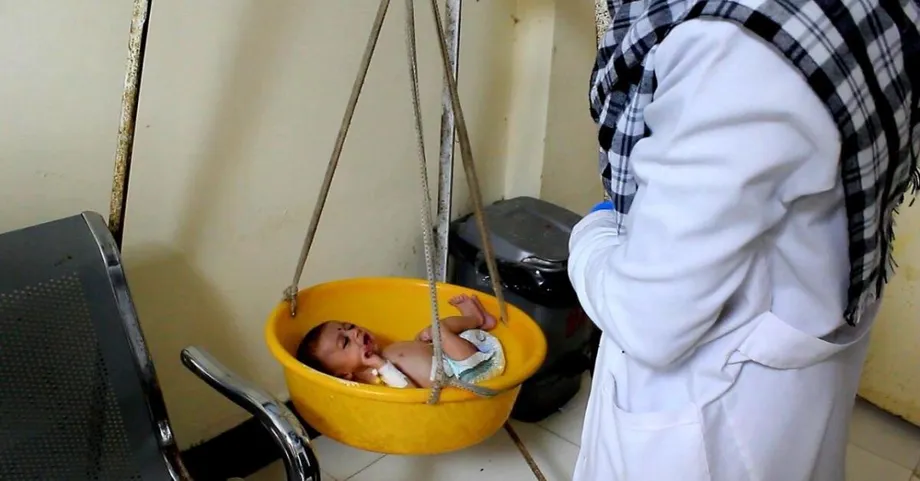
Wasting means a child is too thin for their height, often following inadequate food intake, illness or both. Severe wasting can become life threatening, particularly when accompanied by medical complications. Admission for nutrition treatment does not necessarily mean hospitalization: the response includes treatment outside hospitals as well as care for children who need medical stabilization.
UNICEF Afghanistan Representative Dr. Tajudeen Oyewale described the scale of the crisis at a press briefing at the Palais des Nations in Geneva:
Across Afghanistan, 3.7 million children are suffering from wasting, including around 1 million with life-threatening severe acute malnutrition,
The report's nutrition narrative describes 3.7 million children as being at risk of wasting, while Oyewale's statement and UNICEF's published summary describe them as already suffering from it. That difference in wording matters when interpreting the national estimate.
What the August treatment figures establish
The August report lists 111,099 children admitted for treatment, with 58,891 recorded as having severe wasting and 42,915 as having moderate wasting with a high risk of deterioration. The two listed categories total 101,806, leaving a difference of 9,293 from the stated monthly total. The published figures do not explain that difference.
The monthly admissions were equivalent to about 8.5% of the 1.3 million children screened. This is a comparison of reported screening and treatment activity, not a national prevalence estimate. Screening results depend on where services operate and which children are reached, and admissions are not the same as completed treatment or recovery.
From January through August, UNICEF and its implementing partners recorded 633,332 treatment admissions against an annual target of 1,304,000, or approximately 48.6%. August's 111,099 admissions represented about 17.5% of that cumulative result, showing how much treatment activity was concentrated in the month.
The report separately lists 1,290,435 admissions for the wider nutrition sector over January through August, with a monthly increase of 100,774. Those sector figures and UNICEF's figures should not be added together: UNICEF works within the wider response, and the two reporting lines may overlap. The report does not explain why UNICEF's August increase exceeds the sector's listed increase.
The first two years carry the greatest burden
The 2026 nutrition response plan targets 5.7 million children under five and pregnant and breastfeeding women across 27 provinces with high malnutrition rates. It places particular attention on diets during the first two years of life, when much of the country's acute malnutrition occurs.
The plan says 90% of children under two, approximately 2.1 million, live in child food poverty, meaning they lack sufficiently varied and nutritious diets. Around 1.2 million consume only two food groups. It also reports that one in two children is stunted, a condition involving impaired growth associated with prolonged nutritional deprivation and repeated illness.
For infants under six months, the plan includes screening, breastfeeding assistance, maternal nutrition support, referrals and follow up. It describes these infants as nearly 35% of admissions to stabilization centers, compared with nearly 40% of hospital admissions involving severe wasting and complications in the August report. These are different reported measures, not evidence by themselves of a five percentage point increase.
Hunger and disease are reinforcing the crisis
An estimated 13.8 million people, or 28% of Afghanistan's population, were projected to face Crisis or worse acute food insecurity between April and September 2026. Of these, 2.9 million were expected to face Emergency conditions, approximately one fifth of the projected total facing Crisis or worse.
These classifications come from the Integrated Food Security Phase Classification, known as IPC. Phase 3, Crisis, indicates serious food consumption gaps or coping measures that damage livelihoods. Phase 4, Emergency, describes more extreme conditions. These food insecurity phases are separate from the IPC classifications used to assess acute malnutrition.
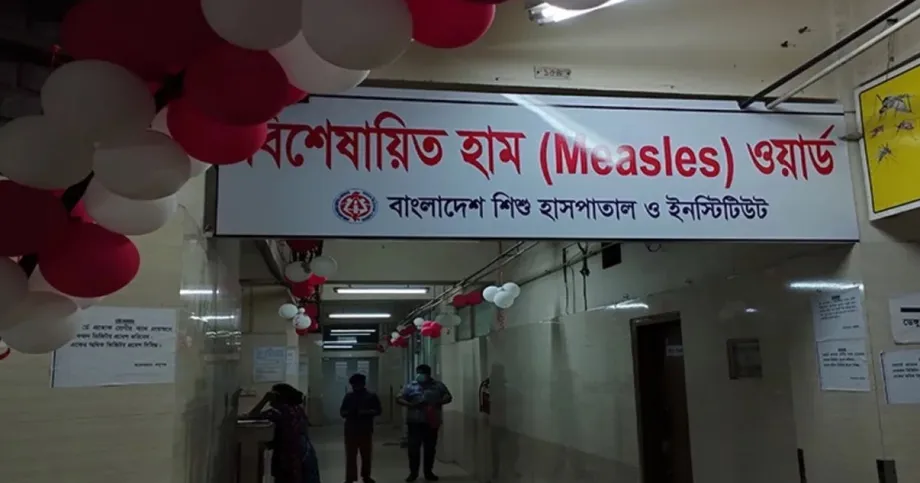
The nutrition plan identifies both poor diets and disease exposure as major pressures. It cites more than 96,000 suspected measles cases in 2025, measles vaccination coverage below 80% in 24 provinces, and diarrhea levels reaching 80% in some provinces. More than half of households lack sufficient water, rising to 75% in the worst affected areas.
Save the Children said, citing UN surveillance, that wasting worsened in two thirds of provinces during the second quarter of 2026 compared with the same period a year earlier, driven by increases in infectious diseases. Illness can reduce appetite and interfere with nutrient absorption, while malnutrition makes children more vulnerable to infection. Food assistance alone therefore cannot replace access to healthcare, vaccination and safe water.
A broad service network faces growing disruption
During August, UNICEF delivered preventive and treatment nutrition services through 3,500 health facilities and 15,000 community health posts. Separately, its published report summary records essential health services for 6.6 million people across all 34 provinces through 2,390 fixed facilities and 16 mobile facilities. These figures describe different service networks and should not be treated as interchangeable facility totals.
UNICEF also supported 149,476 people with safe drinking water and 135,164 with basic sanitation services. Another 433,568 people received information on nutrition, vaccination, disease prevention, mental wellbeing, hygiene and prevention of acute watery diarrhea. The figures measure separate activities and should not be added to produce a count of unique recipients.
Flash floods in August damaged homes, infrastructure, agricultural land, water systems and schools. Assistance also expanded in areas affected by border tensions, population movements and earthquakes. Damage to crops and water supplies adds pressure to households already struggling to feed children, while damaged roads and facilities can interrupt access to treatment.
Maternal care and prevention need more staff
UNICEF's detailed August report records maternal, infant and young child nutrition counselling for 198,350 caregivers. Other reporting gives 189,350, a difference of 9,000. The official report's figure is the stronger basis for describing the activity, although the discrepancy has not been explained.
The agency distributed multiple micronutrient supplements to 121,714 pregnant women. These supplements provide essential vitamins and minerals, but they are not a substitute for sufficient food or antenatal care. UNICEF also trained 80 health workers on revised guidance for preventing and managing wasting and another 103 on maternal, infant and young child nutrition.
The response plan describes substantial gaps in maternal health. Only 27% of pregnant women receive four or more antenatal care visits, and 60% of adolescent girls have iron deficiency anemia. It projects acute malnutrition among nearly 1.2 million pregnant and breastfeeding women.
Monthly admissions for acute malnutrition in 2025 were 13% higher than in 2024, with the sharpest increase, nearly 29%, among pregnant and breastfeeding women. A review in August 2025 also identified insufficient nutrition counsellors across service platforms, especially stabilization centers. The plan calls for trained female and male workers and greater participation by female health staff to address barriers that prevent women from seeking care.
Funding shortages threaten treatment supplies
Of the $1.71 billion requested for the UN's 2026 humanitarian response in Afghanistan, $509.3 million had been funded by August 26, reported as 29.7% of requirements. That left approximately $1.2 billion unfunded. Nearly 22 million people, mostly women and children, required humanitarian assistance during the year.
Within the nutrition response, UNICEF reports that the Afghanistan Nutrition Cluster had secured $130.1 million but still faced a 56% funding gap. A separate nutrition funding table in the same report lists a $125,531,764 gap, or 70%. The narrative identifies the wider cluster response, while the table presents a separate funding line. The two percentages should not be treated as the same budget measure, and the report does not reconcile them in the cited passages.
The shortage also concerns physical supplies. Requirements for ready to use therapeutic food, or RUTF, had a 17% shortfall, equivalent to 210,000 cartons. Ready to use supplementary food, or RUSF, faced a 65% supply gap for the remainder of 2026.
These specialized foods serve different treatment needs. Under Afghanistan's updated protocols, children with moderate acute malnutrition at high risk of deterioration receive therapeutic food, while early moderate cases receive supplementary food. Supply gaps threaten both treatment and efforts to stop less severe cases from worsening. Funding shortages also pay out through closed service centers, suspended assistance, reduced geographical coverage and disrupted supply chains.
Clinic closures make care harder to reach
The nutrition response plan says funding cuts in 2025 closed more than 300 nutrition sites, denying nearly 90,000 children under five and pregnant and breastfeeding women access to services. Save the Children's August 13 statement describes a broader health service contraction affecting 3.70 million people, around half of them children.
The organization cites 445 health facilities suspended or closed by December 2025 and another 150 closed or suspended since January 2026. These health facility counts differ in scope from the nutrition site's closure figures. Save the Children said it had kept 14 supported clinics open with temporary funding, but their continued operation was uncertain.
At one clinic in northern Afghanistan, the organization serves a population of 10,000 and sees more than 100 patients daily. Some patients walk for two to three hours to reach care. Travel to the city hospital can cost about $60, while walking there can take seven hours.
Marva, a nutrition nurse at the clinic whose name was changed to protect her identity, described the access problem:
Before this clinic was established, people had to travel to the district clinic, which could take several hours by donkey or motorbike, or to the city hospital, which was often almost inaccessible.
Save the Children said it operates directly in nine provinces and with partners in another 11. In 2025, it reached more than two million people and successfully treated nearly 5,000 children for severe acute malnutrition. Its clinic figures illustrate what service closures can mean locally, rather than providing a national measure of treatment access.
How the crisis developed and what comes next
The current pressures reflect several overlapping changes, including declining aid, rising admissions and population movements. Save the Children reports that humanitarian aid fell from $3.27 billion in 2022 to $1 billion in 2025, a decline of approximately 69%. It also says more than six million people have returned from Iran and Pakistan, adding demand for services.
- 2025: Funding cuts closed more than 300 nutrition sites, while monthly acute malnutrition admissions rose 13% compared with 2024.
- April to September 2026: Food insecurity projections placed 13.8 million people in IPC Phase 3 or above, including 2.9 million in Phase 4.
- By July 2026: Admissions involving severe acute malnutrition and medical complications were around one third above the comparable 2025 period.
- August 2026: UNICEF and partners screened 1.3 million children and reported 111,099 treatment admissions.
- August 26, 2026: Funding for the $1.71 billion humanitarian response stood at $509.3 million.
The 2026 plan uses surveillance covering 451 sites across all 34 provinces, where more than 18,700 children under five are measured each quarter. It concentrates treatment in areas with the most severe nutritional conditions while combining it with food assistance, water services, immunization and support for maternal and infant feeding.
The immediate unresolved issue is whether enough funding and specialized food can be secured to sustain services through the remainder of 2026. No date is given for closing those gaps. The August totals also do not establish how many admitted children completed treatment or recovered.
Aid organizations are calling for urgent donor support before further services close. The central tension is already measurable: admissions are rising, infants account for a large share of complicated cases, and the response is operating with substantial gaps in both money and treatment supplies.
Key Points
- UNICEF and partners reported 111,099 treatment admissions in August after screening 1.3 million children.
- The listed severe and moderate treatment categories total 101,806, leaving an unexplained difference of 9,293.
- Children under two accounted for about 83% of severe acute malnutrition cases.
- Admissions involving severe malnutrition and medical complications rose around one third by July compared with the same period in 2025.
- UNICEF supported health services for 6.6 million people across all 34 provinces in August.
- Therapeutic food requirements faced a 17% shortfall, while supplementary food supplies faced a 65% gap for the rest of 2026.
- Only 29.7% of the UN's $1.71 billion humanitarian appeal had been funded by August 26.