Rp2.1 trillion in penalties targets owners and market participants
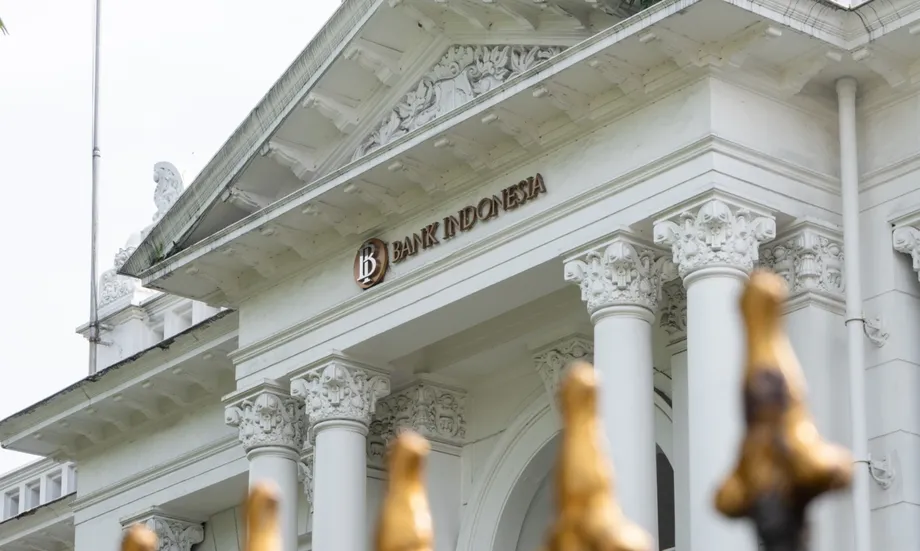
Indonesia's Financial Services Authority, known as OJK, announced Rp2.1 trillion, about $117 million, in administrative fines on October 16, 2026, over alleged violations involving shares of Dian Swastatika Sentosa, Barito Renewables Energy and Petrindo Jaya Kreasi. The regulator clarified that the penalties targeted beneficial owners and other participants in share trading and allocations, rather than the three listed companies themselves.
Contents
- Rp2.1 trillion in penalties targets owners and market participants
- How OJK traced the alleged DSSA trading scheme
- What happened in the BREN and CUAN offerings?
- Why concentrated ownership matters to investors
- The investigation reaches beyond three stocks
- MSCI pressure raises the stakes for Indonesia
- Reforms target ownership disclosure and tradable shares
- BREN and CUAN say operations continue normally
- Key dates and the next enforcement steps
- Key Points
The largest penalties, Rp1.5 trillion, about $83.3 million, concerned transactions in Dian Swastatika Sentosa shares, traded under the ticker DSSA. Another Rp500 billion, about $27.8 million, concerned allocations of Barito Renewables Energy shares, or BREN, while Rp100 billion, about $5.6 million, concerned Petrindo Jaya Kreasi, or CUAN.
OJK's clarification corrected the initial description of $61.2 million in fines against the companies, which had put the DSSA amount at $27.8 million. The fuller rupiah breakdown places the DSSA penalties at three times that amount and accounts for the larger combined total.
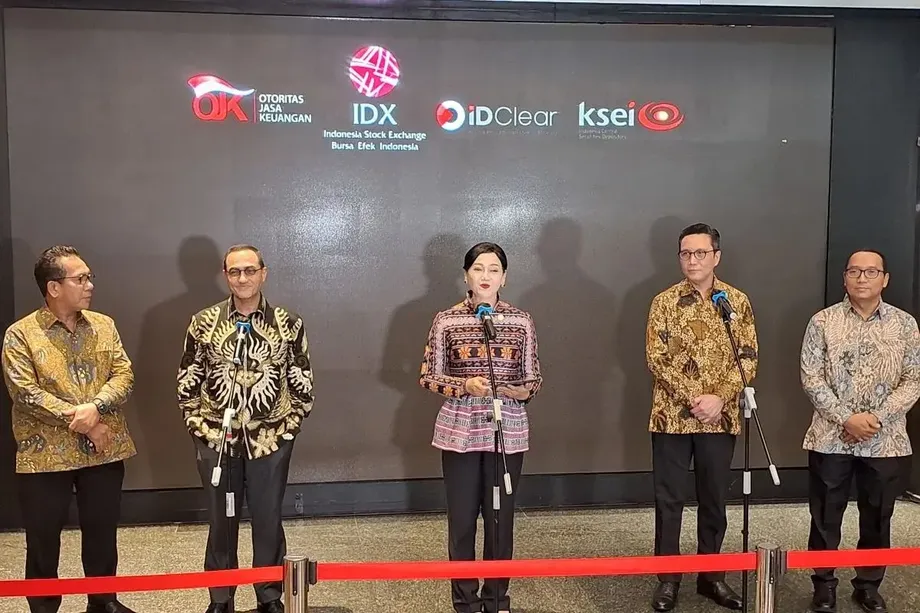
Hasan Fawzi, OJK's executive head of capital market, derivatives and carbon exchange supervision, presented the findings at the Indonesia Stock Exchange in Jakarta. The sanctioned categories included traders, underwriters, parties handling fixed share allocations and ultimate beneficial owners. An ultimate beneficial owner is the person who ultimately owns or controls an investment, even when other people or legal entities appear in its ownership chain.
The announcement brought together two different types of alleged misconduct: coordinated trading that pushed up DSSA's share price, and concealed identities used to obtain large allocations in the BREN and CUAN public offerings. Both cases put the focus on who controlled shares and how those shares reached the market.
How OJK traced the alleged DSSA trading scheme
OJK said individual and institutional clients traded DSSA shares through several brokerage firms in a planned and structured operation that raised the share price. The regulator described the trading examination as covering 2023 to 2026, although a narrower period of 2024 to 2026 was also cited in descriptions of the investigation.
Investigators requested documents from the brokerages and traced money moving among parties connected to the transactions. OJK summoned at least 12 securities company directors, 15 individuals and 11 foreign legal entities as part of that work.
The investigation concerned suspected breaches of Articles 91 and 92 of Indonesia's Capital Market Law, as amended by the Financial Sector Development and Strengthening Law, known as the P2SK Law. Those provisions address market manipulation and trading that creates a misleading picture of market activity or prices.
Ordinary investors look at prices and trading activity to judge whether other buyers genuinely want a stock. Coordinated transactions can distort those signals by making demand appear stronger than it is. OJK said the DSSA transactions produced a substantial price increase and generated unlawful gains.
OJK also said it found violations by securities company directors and suspended individual professional licenses. A license suspension restricts the affected person's ability to perform regulated securities work. The DSSA case accounts for about 71% of the Rp2.1 trillion total, calculated from its Rp1.5 trillion share of the penalties.
What happened in the BREN and CUAN offerings?
OJK's BREN and CUAN examinations focused on initial public offerings, or IPOs, when companies first sell shares to public investors. The regulator said shares had been reserved from the outset for groups connected to the companies' controlling shareholders.
Parties affiliated with those controllers allegedly obscured their identities while obtaining very large allocations. OJK said the result was ownership concentrated within particular groups, leaving fewer shares available for trading in the market.
The investigation centered on fixed allotments, a process through which specified investors receive agreed allocations of shares. Such allocations commonly involve institutions or large investors dealing with an underwriter, the securities firm that helps organize and distribute an offering. OJK's findings focused on concealed identities and allocations directed toward connected parties.
OJK requested information from four securities firms acting as underwriters and three custodian banks, which hold and administer securities for clients. Investigators traced related money flows and summoned at least five securities company directors, representatives of three custodian banks and seven parties involved in fixed allotments.
The BREN and CUAN examinations cited suspected violations of Article 107 of the Capital Market Law and its amendments under the P2SK Law. OJK said it found misleading conduct in share orders and unlawful gains associated with the allocations. Hasan also said investors found to have violated allocation rules had been examined.
Why concentrated ownership matters to investors
BREN and CUAN entered the stock exchange in 2023, but with different proportions of shares offered to the public. BREN listed on October 9, offering 3% of its shares at Rp780 each. CUAN listed on March 8, offering 15.03% at Rp220 each.
CUAN's initial public offering proportion was about five times BREN's, using those figures. The later investigation asks a more detailed question about the distribution: how much of the stock went to investors connected to the controllers, and whether the identities behind those allocations were accurately disclosed.
BREN's ownership figures as of March 31, 2026, showed a specified group of shareholders collectively holding 97.31% of its shares. That leaves 2.69% outside that group by simple subtraction. OJK said the allocation practices it investigated had limited the supply of BREN and CUAN shares circulating in the market.
Investors call shares available for public trading the free float. When that supply is small, a large purchase or sale can be harder to complete without moving the price. Accurate ownership information helps investors understand how much stock is genuinely available and whether apparently separate holders are connected.
The investigation reaches beyond three stocks
OJK placed all three stocks on its High Shareholding Concentration list, known as HSC, which identifies stocks whose ownership is concentrated among particular holders. The regulator's examination of that list extends well beyond DSSA, BREN and CUAN.
Hasan Fawzi, the OJK executive responsible for capital market supervision, described the findings at the Jakarta news conference:
"Of the 61 stocks included on the HSC list, 31 have undergone examinations and have shown indications of potential capital market criminal violations," Hasan said.
The 31 stocks represent about 51% of the 61 on the list. OJK's wording points to a substantial group requiring further enforcement work, including examinations of trading behavior, ownership links and the movement of funds.
OJK said sanctions and enforcement actions had reached 835 parties between January and October 2026. Friderica Widyasari Dewi, chair of OJK's board of commissioners, said capital market reform had been running since January, with enforcement forming part of that effort.
MSCI pressure raises the stakes for Indonesia
The sanctions announcement came amid a warning from global index provider MSCI about Indonesia's market standards. Indonesian stocks ended the session 12% lower, the market's steepest daily fall since 1998.
MSCI raised concerns about opaque ownership, suspected coordinated trading and problems affecting investors' access to the market. Indonesia was classified as an emerging market, but MSCI said in October that it was considering a consultation on standalone status if meaningful progress was not demonstrated by its November review.
MSCI indexes act as investment reference lists. Some funds copy their composition, while others use them to compare performance. Removal from widely followed indexes can require funds tracking those indexes to sell affected holdings, making classification a practical concern for companies seeking international investment.
A standalone classification would place Indonesia outside MSCI's developed, emerging and frontier market groups. MSCI had indicated that a move to frontier status would not adequately reflect the severity of the concerns raised by investors.
DSSA, BREN and CUAN were among six companies removed from the MSCI Indonesia Index in May. The October sanctions therefore arrived after those stocks had already lost their places in that index, while the wider country's classification faced renewed scrutiny.
Reforms target ownership disclosure and tradable shares
Indonesia's response includes disclosure requirements for shareholders holding more than 1% and a minimum free float requirement of 15%. These measures address two practical investor needs: identifying significant owners and ensuring that enough shares are available to trade.
Friderica also described a more detailed system for classifying investors, expanding the categories from nine to 39. More precise categories can help authorities distinguish different kinds of investors and examine patterns in ownership and trading.
MSCI assesses market size, liquidity and accessibility when deciding classifications. Liquidity means how easily investors can buy or sell without causing a large price movement. Accessibility includes whether international investors can obtain dependable information, trade, settle transactions and move money across borders.
OJK said the three cases arose from earlier investigations. Friderica rejected the suggestion that the enforcement announcement had been triggered by MSCI's announcement that morning, explaining that the examinations required a lengthy and comprehensive process. Allegations surrounding the transactions had been discussed for about three years.
The connection between the enforcement cases and the reforms is concrete: disclosure rules address hidden ownership, while free float rules address the supply of shares available to investors. OJK's findings place both issues at the center of the BREN and CUAN allocation cases.
BREN and CUAN say operations continue normally
BREN management said on October 16 that it respected the decision, would cooperate and would comply with capital market rules. The company said its operations and those of its subsidiaries were continuing normally.
BREN also expressed support for Indonesia's capital market reform program under OJK. Its statement said management remained focused on keeping business activities running without disruption.
CUAN said it respected the decisions of OJK and the Indonesia Stock Exchange and was ready to cooperate and provide information needed to implement them. It said operations at the parent company and its subsidiaries continued normally, along with its business, financial and other commitments.
OJK's clarification places the financial penalties on the relevant owners and market participants. The company statements address a separate concern for employees, customers and investors: whether normal business activities would continue while the enforcement decisions were implemented.
Key dates and the next enforcement steps
The cases span the companies' listings, several years of trading examinations and the approaching MSCI review. The main dates are:
- March 8, 2023: CUAN listed on the Indonesia Stock Exchange, offering 15.03% of its shares.
- October 9, 2023: BREN listed, offering 3% of its shares.
- 2023 to 2026: The period generally identified for OJK's DSSA trading investigation, with 2024 to 2026 also cited.
- January to October 2026: OJK said sanctions and enforcement actions reached 835 parties.
- May 2026: DSSA, BREN and CUAN were among six stocks removed from the MSCI Indonesia Index.
- October 16, 2026: OJK announced the Rp2.1 trillion penalties and explained its findings in Jakarta.
- November 2026: The next MSCI market classification review was scheduled.
National Police chief Suyudi Ario Seto said the Criminal Investigation Agency, known as Bareskrim, would follow up information and complaints about suspected capital market offenses. Police would gather evidence before taking legal action.
Suyudi, speaking about the police response at the news conference, said:
"Of course, based on the evidence we collect, we will take firm action to provide legal certainty regarding these issues in the capital market," he said.
OJK did not publish a complete list identifying each sanctioned recipient and the amount assigned to each in the announcement described here. The next steps involve implementing the administrative sanctions, continuing examinations and following up suspected criminal conduct, while the November MSCI review provides the next stated checkpoint for Indonesia's broader reform effort.
Key Points
- OJK announced Rp2.1 trillion, about $117 million, in fines linked to DSSA, BREN and CUAN shares.
- The regulator clarified that beneficial owners and other market participants received the penalties, rather than the three listed companies.
- DSSA trading violations accounted for Rp1.5 trillion; BREN and CUAN allocation cases accounted for Rp500 billion and Rp100 billion.
- OJK alleged coordinated DSSA trading and concealed identities used to secure large BREN and CUAN share allocations.
- The regulator identified potential criminal violations involving 31 of 61 stocks on its concentrated ownership list.
- BREN and CUAN said their operations continued normally and pledged cooperation.
- Police planned to gather evidence, while MSCI's next classification review was scheduled for November 2026.