Japan's next rate decision turns on inflation risk
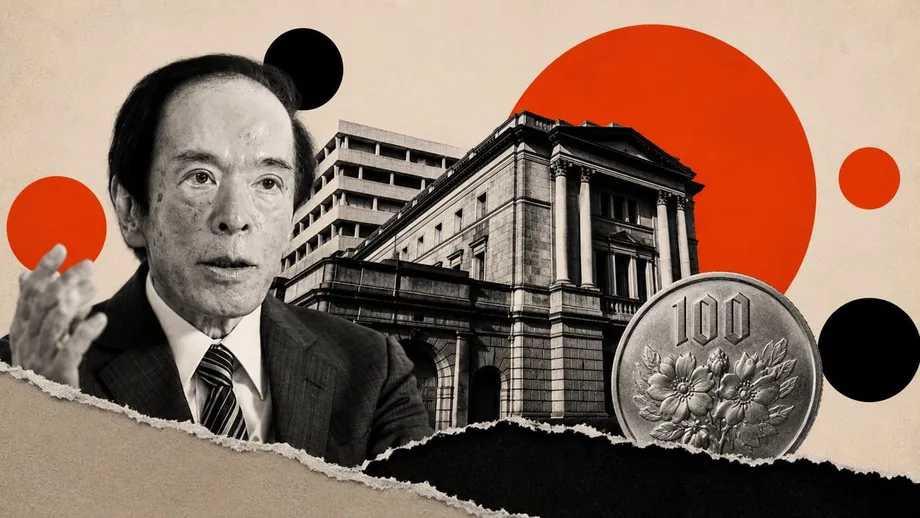
Bank of Japan Governor Kazuo Ueda has reaffirmed that the central bank will keep raising interest rates, with its policy rate at 1.25% and underlying inflation approaching its 2% target. The message puts the pace of further increases at the centre of the October 29–30 policy meeting, following rate hikes in June and September.
Contents
- Japan's next rate decision turns on inflation risk
- How the policy rate reached 1.25%
- Why inflation near 2% can mean more tightening
- Oil costs are spreading through the economy
- Higher rates meet an economy with some buffers
- Why Koeda wants timely action
- Why another immediate hike is less likely
- The yen and AI demand shape the debate
- What the October review must weigh
- Key Points
Deputy Governor Shinichi Uchida delivered Ueda's remarks at the National Credit Union Association meeting on October 16 while the governor attended international meetings in Bangkok. Ueda said financial conditions continued to support economic activity after September's increase, while warning that underlying inflation could rise above the target.
Japan's central bank is trying to balance two pressures. Higher oil and import costs are squeezing household purchasing power and business profits. At the same time, stronger wage growth and more frequent price increases could make inflation persist, giving the BOJ a reason to raise borrowing costs further.
Many BOJ officials reportedly favour holding rates steady in October to examine the effects of the September increase, while keeping a December hike possible. Ueda said the timing and pace of future adjustments would depend on economic conditions, prices, financial developments and the risks surrounding the bank's forecasts.
How the policy rate reached 1.25%
The BOJ's current stance follows a sequence of changes that began in March 2024, when it replaced the large monetary easing framework it had maintained for more than a decade. That framework had sought to encourage borrowing and spending in an economy long troubled by weak price growth.
Ueda's June 3 speech recorded the policy rate at 0.75%. Subsequent increases in June and September brought it to the 1.25% level described in October. The figures refer to different stages of the tightening cycle.
- March 2024: The BOJ changed its longstanding monetary easing framework.
- June 3, 2026: Ueda described a policy rate of 0.75% and explained the risks from rising oil prices.
- June 2026: The BOJ raised rates again.
- September 18, 2026: The bank increased its rate by 0.25 percentage points, three months after the previous hike.
- October 16: Ueda reaffirmed the intention to continue raising rates.
- October 29–30: The BOJ is scheduled to review policy and release updated economic projections.
September's move accelerated the pace of increases. Ueda described the change at his press conference as a new stage in policy, according to Nomura Research Institute's September policy analysis.
Why inflation near 2% can mean more tightening
Ueda's concern is increasingly about keeping inflation stable around 2%, rather than simply bringing it up to that level. Underlying inflation means the more persistent movement in prices after allowing for temporary influences, such as a sudden jump in energy costs or a government subsidy.
The BOJ expects wages and prices to rise together at a moderate pace. Workers receiving higher wages can support spending, while businesses facing higher labour costs may raise prices. The bank wants that process to settle around its target, without allowing a lasting acceleration.
October's message builds on Ueda's June assessment. At that time, he expected underlying inflation to become broadly consistent with 2% between the second half of fiscal 2026 and fiscal 2027. The median forecast among the nine Policy Board members put consumer inflation excluding fresh food at 2.8% for fiscal 2026, with inflation expected to exceed 3% for part of the year.
Policymakers will discuss at the coming meeting whether to update their description of underlying inflation as approaching 2%. Ueda said economic activity and prices were broadly following the bank's forecasts, making the size and persistence of future price pressures central to the next decision.
Oil costs are spreading through the economy
Japan depends on the Middle East for more than 90% of its crude oil, Ueda said in June. Mineral fuel imports amounted to about 3% of nominal gross domestic product in the previous year. Higher fuel prices therefore send more Japanese income overseas, leaving less available for domestic spending and investment.
Ueda traced how an oil shock moves beyond petrol and electricity. Petroleum products feed into chemicals, synthetic resins and fibres. Higher costs then reach plastics, transport and electricity bills, before spreading to products and services such as cars, construction, hotels and restaurants.
Past experience suggested that the full process could take roughly a year. Ueda warned that businesses might now pass costs through more quickly because wage and price decisions had become more active. Changes in electricity pricing contracts and trading rules were also affecting how quickly costs reached customers.
April's producer price index, which measures prices in transactions between businesses, rose 4.9% from a year earlier, its fastest increase in two years and eleven months. By September, Nomura Research Institute noted that WTI crude futures were trading around $100 a barrel. Sustained energy costs would add to the pressure on the BOJ to prevent a broader rise in inflation.
Higher rates meet an economy with some buffers
Japanese companies entered the oil shock with historically high accumulated profits, according to Ueda's June assessment. Those earnings provide some room to maintain investment and wage increases even as imported materials become more expensive.
Wage settlements also give households support. Results compiled by the Japanese Trade Union Confederation, known as Rengo, showed agreed wage growth of around 5% at both large and relatively small companies in the annual spring negotiations. Ueda described this as the third consecutive year of steady increases.
Consumer sentiment had become more cautious from March, but spending had remained resilient in the data Ueda discussed in June. Credit card spending showed no sign at that point that the deterioration in confidence had become a decline in consumption. Government measures to reduce energy bills were another source of support.
Higher interest rates create a different pressure on households and firms as loans are renewed or borrowing costs adjust. Ueda nevertheless said financing remained supportive. In June, he noted that companies more often cited labour shortages and expensive materials than interest costs as obstacles to investment. October's remarks maintained the assessment that financial conditions remained accommodative after September's hike.
Why Koeda wants timely action
BOJ board member Junko Koeda gave a forceful argument for further increases in a speech to local leaders in Kumamoto on the Thursday before Ueda's October 16 remarks. She said the bank needed to respond to price risks while financing conditions remained supportive.
"Given that there have been considerable upside risks to prices in addition to continued accommodative financial conditions, the bank should not become overly cautious about raising the policy interest rate," Koeda said.
Koeda also pointed to the neutral interest rate, an estimated borrowing rate that neither speeds up nor slows down the economy. The BOJ's estimated range is 1.1% to 2.5%, wide enough to leave substantial room for disagreement about where policy should settle.
Koeda described her own assessment of that level:
"My view is that the level of the neutral interest rate is considerably above 1%," she said.
At 1.25%, the policy rate sits near the bottom of the BOJ's estimated range. Its distance from the top is 1.25 percentage points. Koeda's assessment points to room for further tightening, although she said she had no specific pace in mind when asked about an October increase.
Why another immediate hike is less likely
September's increase drew opposition from two of the nine Policy Board members, who preferred leaving rates unchanged. Ueda also cautioned that increases at consecutive meetings, or a larger move of 0.5 percentage points, could cause substantial adjustments in bank lending and asset markets.
Nomura Research Institute interpreted those comments as a reason to expect continued tightening without an immediate series of larger moves. Its September analysis projected another increase in December 2026 or January 2027, followed by a slower pace.
The institute forecast an eventual policy rate of 1.75% to 2.0%, reached in the second half of 2027 or in 2028. It also described a faster route if oil stayed expensive, potentially taking the rate to 1.75% in the first half of 2027. Those are the institute's forecasts; the BOJ has left its next increase dependent on incoming evidence.
October market pricing showed a similar preference for waiting. Tōtan Research's October 16 afternoon estimate put the chance of an October hike at 5% and a December hike at 77%. Another cited overnight swap estimate put the probabilities at 5% for October and 87% by December.
The yen and AI demand shape the debate
Ueda's discussions with G7 and G20 policymakers in Bangkok brought another source of price pressure into focus: demand connected to artificial intelligence. Strong investment in computing and related infrastructure is supporting economic activity while adding demand for equipment, energy and other resources.
Japan is benefiting through exports and production. Ueda's June speech identified resilient exports to the United States and Asia, supported by demand connected to AI, alongside rising production of machinery and electronic parts. In October, he said some international policymakers appeared more optimistic about that demand than the BOJ had expected, although the discussions had not changed its baseline outlook.
The exchange rate matters because a weaker yen makes imports priced in foreign currencies more expensive. Ueda identified currency movements, AI demand and Middle East developments as factors affecting the timing and pace of future hikes. The yen showed little immediate reaction to the October remarks, trading around 158 per dollar.
US Treasury Undersecretary Erin Browne urged Japan to adjust monetary policy to reflect its departure from deflation. Federal Reserve Chair Kevin Warsh described inflation as a common challenge for central banks. The Fed's October 27–28 decision comes just before the BOJ meeting and could influence Japan's debate through its effect on the yen.
What the October review must weigh
The BOJ's October 29–30 meeting will test whether its growth and inflation outlook still fits an economy facing expensive energy, rising wages and strong demand in some export industries. Updated quarterly projections will give policymakers an opportunity to explain how those forces have changed since the previous review.
Ueda's June baseline assumed that Middle East tensions would ease, oil prices would decline relatively smoothly and major supply disruptions would be avoided. He expected growth to slow temporarily in fiscal 2026 before strengthening moderately from fiscal 2027. Prolonged disruption would instead mean weaker growth alongside higher inflation, making the policy decision more difficult.
The BOJ is also reducing its purchases of Japanese government bonds, another step away from its earlier easing policies. The plan described in June called for monthly purchases to fall by about 200 billion yen each calendar quarter, reaching 2.1 trillion yen in March 2027. That programme operates alongside changes in the short term policy rate.
For borrowers, the next decision affects how quickly financing becomes more expensive. For households facing higher prices, the central issue is whether wage gains can protect purchasing power while inflation settles near 2%. Ueda's message is that further increases remain part of the plan, with the next move governed by the evidence rather than a fixed timetable.
Key Points
- Ueda reaffirmed further rate hikes in October 16 remarks delivered by Deputy Governor Shinichi Uchida.
- The policy rate stands at 1.25% after increases in June and September.
- The BOJ sees underlying inflation approaching 2% and is concerned about a possible overshoot.
- Oil prices, wages, AI demand and the yen will influence the pace of tightening.
- Market estimates put the chance of an October hike at 5%, with a December increase viewed as more likely.
- The October 29–30 policy review will include updated economic projections.