A cheaper food bill, with the funding still unsettled
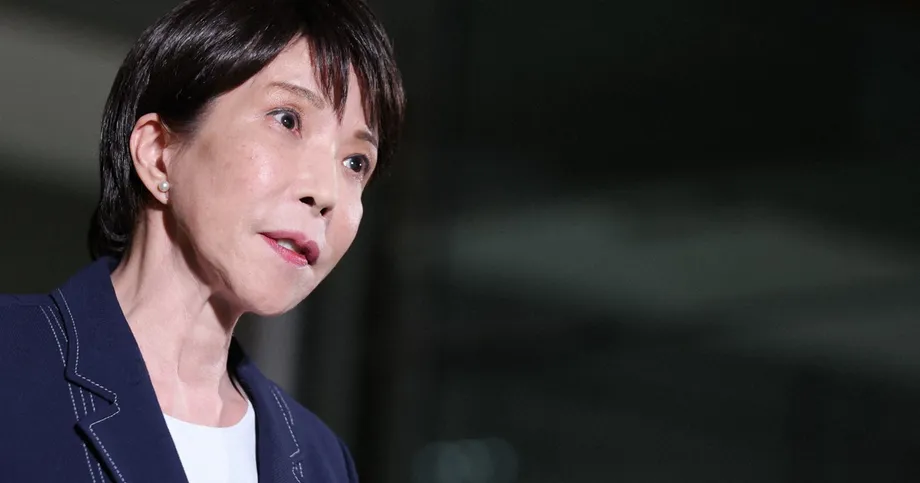
Japan's government has submitted legislation to cut the consumption tax on food and beverages from 8% to 1% for two years starting in April 2027. The package, including accompanying cash assistance, would require about ¥5 trillion a year, or roughly ¥10 trillion over its planned duration. Prime Minister Sanae Takaichi has promised to find the money without relying on deficit financing bonds, but has yet to identify specific funding measures.
Contents
- A cheaper food bill, with the funding still unsettled
- How the two years of relief would work
- What ¥36,000 means for a household
- Why social security is at the center of the dispute
- Local governments also need replacement money
- The spending search has produced limited savings
- Farmers and restaurants face different pressures
- Cash payments are the opposition's alternative
- The 2029 transition leaves some households waiting
- Interest costs put pressure on the same budget
- Political disputes could complicate passage
- Key Points
At a House of Representatives Budget Committee meeting on October 13, opposition lawmakers pressed Takaichi over that gap. Komeito lawmaker Hiromasa Nakano challenged the government to explain how it would replace a tax that helps pay for social security. Takaichi again pointed to reviews of spending and revenue rather than a completed financing plan.
The government estimates that the tax reduction alone would lower central and local revenue by about ¥4.3 trillion annually. The roughly ¥5 trillion figure includes the accompanying financial assistance. Proposed support for farmers could add around ¥200 billion, widening the budget demands beyond the central package.
For households, Takaichi puts the estimated benefit from the tax cut at about ¥36,000 per person a year. For the government, the difficult task is replacing revenue while maintaining pensions, medical care and other services, supporting businesses affected by the change, and persuading investors that borrowing will remain under control.
The legislation was submitted on October 9. Its passage is Takaichi's top priority for the extraordinary parliamentary session, but important choices about benefit eligibility, payment amounts and replacement funding are being left to later government decisions and budget negotiations toward the end of the year.
How the two years of relief would work
Takaichi set out the policy sequence in her July 30 food tax statement, published by the Prime Minister's Office. The food tax reduction would serve as a temporary bridge to a more targeted system of payments linked to income.
The proposed 1% rate would apply from April 2027 through March 2029. Early payments linked to income would begin from June 2027 onward, using information already held by public bodies. A fuller support system for people with low and middle incomes who are working would start in April 2029, when the food tax would return to 8%.
The bill includes income based support payments, with eligibility and amounts to be set by government ordinance. An ordinance is a rule issued by the government under authority granted by legislation. A Cabinet task force would arrange the cash benefit.
Takaichi's February election pledge concerned accelerating consideration of a zero food tax for two years. She subsequently chose 1%, saying businesses could adjust their systems more quickly than they could for a zero rate. Payments for selected recipients would offset the remaining tax burden.
- July 30, 2026: Takaichi presented the proposed 1% rate and the transition to payments linked to income.
- October 5: She made passing the tax legislation her top parliamentary priority.
- October 9: The Cabinet approved the bill and submitted it to the Diet.
- October 13: Opposition lawmakers pressed the government over replacement funding.
- April 2027: The proposed food tax reduction would begin.
- June 2027 onward: Early payments linked to income would begin.
- April 2029: The food tax would return to 8% as the fuller benefit system starts.
What ¥36,000 means for a household
Takaichi described the ¥36,000 annual saving as a mechanical calculation. Spread evenly across a year, it is about ¥3,000 a month per person. Actual savings would depend on how much eligible food a household buys and how retailers set prices.
Takaichi, explaining the government's household estimate, acknowledged the uncertainty around shop prices:
Retail prices can change due to various factors, and it is difficult to provide a firm outlook. The burden on households is expected to be reduced by around 36,000 yen per person.
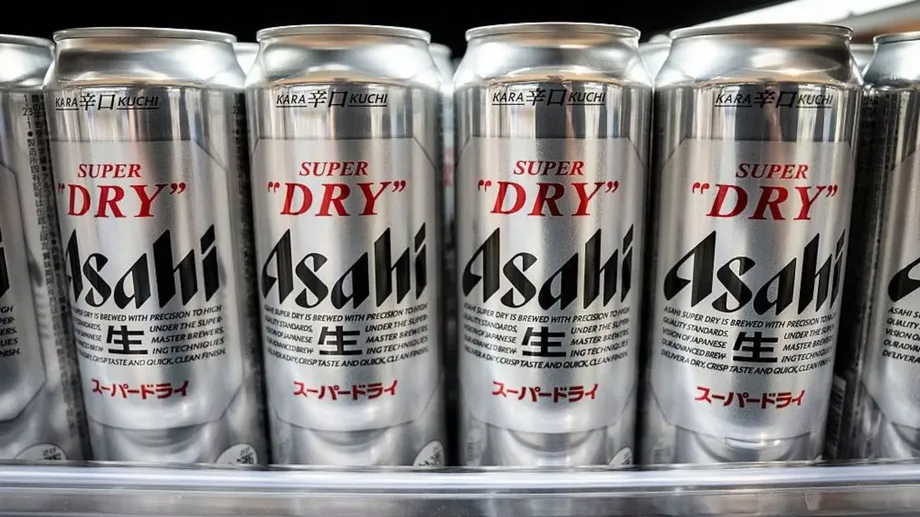
A simple example shows the tax effect. Food priced at ¥1,000 before tax costs ¥1,080 at an 8% rate and ¥1,010 at a 1% rate, a saving of ¥70 if the price before tax stays unchanged. Rising ingredient, transport or wage costs could affect the final price independently of the tax reduction.
The lower rate would reach shoppers across all income groups. The accompanying payments would concentrate additional help on eligible people with low and middle incomes. Those two routes, broad relief at the checkout and targeted cash assistance, explain why the package costs more than the tax reduction alone.
Why social security is at the center of the dispute
The Ministry of Finance's consumption tax explanation states that national consumption tax revenue is ¥26.7 trillion in the fiscal 2026 budget. Since fiscal 2014, that revenue has been allocated to four categories: pensions, nursing care, medical care, and support for children and childcare.
Those four categories total ¥34.6 trillion in the fiscal 2026 initial budget. National consumption tax revenue is therefore ¥7.9 trillion below their combined cost. The government already needs other funding alongside consumption tax receipts to pay for these services.
The ministry's tax allocation guidance explains the legal framework. Article 72-116 of the Local Tax Act directs relevant local consumption tax revenue toward social security measures. Article 22 of the Public Finance Act and Article 15 of the Budget, Settlement and Accounting Order provide the framework for specifying the uses of consumption tax revenue in the budget's general provisions.
The guidance says consumption tax revenue, apart from an amount corresponding to one percentage point of local consumption tax, is allocated to social security. It also states that the revenue is insufficient to cover the four social security spending categories.
Takaichi said in July that replacement funding would prevent a hole in social security finances. The budget negotiations must turn that assurance into a combination of spending changes and revenue measures large enough to replace the lost receipts.
Local governments also need replacement money
Takaichi estimated in July that the food tax reduction's effect on local finances, including the local tax portion and statutory transfers to local governments, would be about ¥1.6 trillion. The funding problem therefore extends beyond the national treasury to prefectures and municipalities.
The current reduced rate for eligible food and beverages is 8%, comprising a national portion of 6.24% and a local portion of 1.76%. Alcohol and restaurant dining are excluded from that reduced rate. Japan's standard consumption tax rate has been 10% since October 2019.
Takaichi also addressed proposals to reduce resident tax. She said raising the basic deduction for individual resident tax to ¥500,000 would require about ¥3 trillion and would affect local finances permanently, compared with the temporary food tax measure's approximately ¥1.6 trillion local impact.
The comparison explains her preference for temporary food tax relief over that resident tax proposal. Local authorities would still need reliable replacement resources while the lower food tax is in force.
The spending search has produced limited savings
Finance Minister Satsuki Katayama is leading a spending review known as Japan's version of DOGE, a reference to the United States' Department of Government Efficiency initiative. Ministers and deputy ministers met on October 9 to strengthen scrutiny of subsidies, special tax preferences and funds holding unused money before the fiscal 2027 budget is compiled.
By the end of August, ministries had proposed abolishing only three of the 121 tax preferences under review, about 2.5% of the total. Identified subsidy reductions amounted to approximately ¥17 billion, just 0.34% of the package's ¥5 trillion annual funding requirement.
Katayama said the ministries' earlier checks were insufficient and called for a stronger effort. The government is now examining more than 200 funds with balances exceeding ¥7 trillion. Candidates include the Beyond 5G Fund for communications technology and the Space Strategy Fund.
These funds hold money assigned to particular policies, often across several years. Recovering idle balances would provide money when it is returned to the treasury; replacing annual tax revenue requires resources for each year of the relief program. Negotiations will determine which balances can be released and which remain necessary for existing projects.
Takaichi also identified about ¥9 trillion in fiscal 2026 revenue outside taxation, including receipts from the foreign exchange special account and payments from public bodies. She proposed examining special accounts and funds, reviewing subsidies and tax preferences, and reassessing spending on previous measures against rising prices. Specific funding allocations are expected during budget compilation toward year end.
Farmers and restaurants face different pressures
The government is considering payments equal to 5.4% of sales before tax for approximately 800,000 farmers, with forestry and fishing businesses also covered. The proposed program would cost around ¥200 billion and be included in the fiscal 2027 initial budget.
The payments would address income losses among smaller producers as the food tax changes. Farmers with annual sales of ¥10 million or less, whose consumption tax payments are fully exempt, could still have lower take home income after receiving the proposed assistance.
Consumption tax normally works by allowing a business to subtract tax paid on purchases from tax collected on sales. The Ministry of Finance explains this mechanism in its public guidance. Takaichi acknowledged in July that agricultural producers unable to receive refunds through this system would need consideration, with support to be developed through the budget process.
The Japan Foodservice Association has raised a different concern. Restaurant dining would remain taxed at 10% while eligible food purchases fall to 1%, increasing the gap from two percentage points to nine. The association has warned that restaurants could lose customers and has sought measures such as meal vouchers.
Takaichi said the government would examine restaurant effects and consider budget support for cash flow. Producer compensation and restaurant assistance create further demands alongside household relief, making the final funding total dependent on the measures adopted.
Cash payments are the opposition's alternative
Komeito leader Mitsunari Okamoto has urged Takaichi to reconsider using roughly ¥10 trillion over two years for the tax reduction and accompanying benefits. His alternative is to distribute the money directly.
Okamoto described the scale of an equal payment to citizens:
Hypothetically, if ¥10 trillion were distributed equally to all citizens, it would come out to about ¥80,000 per person.
Takaichi argues that cash programs take time to deliver, while the food tax reduction could begin in April. In July, she cited the ¥20,000 payment per child approved in the previous year's supplementary budget, saying some municipalities expected to start paying it only at the end of July 2026.
The planned early income based payments would use information available after resident tax assessments in June 2027. The fuller system needs additional information, including the income of spouses with high earnings and details of dependent children aged 16 to 18.
The ruling coalition lacks an outright majority in the House of Councillors, making opposition support important. A senior government official indicated that the administration hoped to secure backing by accepting opposition proposals on benefit eligibility and payment amounts. Negotiations over who receives assistance are therefore closely tied to negotiations over passage.
The 2029 transition leaves some households waiting
Takaichi has committed to restoring the food tax to 8% after two years. She said in July that an economic conditions clause allowing the reduction to continue was unnecessary, and that the new benefit system would be considered alongside the tax changes in legislation.
The government's intended replacement focuses on people with low and middle incomes who are working. Takaichi said most eligible workers would receive support exceeding the benefit from the food tax reduction once the fuller payment system begins.
Eligibility thresholds, payment amounts and the detailed funding plan remain unsettled. These decisions matter especially for households that receive broad tax relief during the first two years but may fall outside the later worker benefit.
Takaichi said support for people with low incomes who want to work but are outside the payment system would be examined before full implementation, with measures where possible starting in fiscal 2029. For older people who are not working, she pointed to continued consideration involving existing pensions, with conclusions due by 2030, when the next pension law revision is planned.
The longer reform is described as a refundable tax credit. Such a system can reduce a person's tax bill and provide a payment when the support exceeds the tax owed. Takaichi said the eventual combination of payments and tax credits would remain under consideration.
Interest costs put pressure on the same budget
Takaichi's funding pledge comes as Japan faces rising borrowing costs. The International Monetary Fund projects government debt at roughly 204% of gross domestic product in 2026. GDP measures the value of goods and services produced in the economy.
The IMF's 2026 country report warned against the proposed consumption tax reduction, describing it as:
an untargeted measure that would erode fiscal space and add to fiscal risks.
Fiscal space means the government's room to spend or respond to an emergency without putting its finances under excessive strain. Japan's debt servicing costs already account for about a quarter of the fiscal 2026 budget. Under the Finance Ministry's scenario of 3% nominal economic growth, interest payments are projected to rise from ¥13 trillion in fiscal 2026 to ¥21.6 trillion in fiscal 2029, an increase of ¥8.6 trillion.
Former foreign minister Takeshi Iwaya, a critic of the tax proposal within the Liberal Democratic Party, warned about the connection between fiscal confidence and household prices:
The risk is very high. If the market reacts negatively, the yen will weaken further and import prices will rise.
Former defense minister Taro Kono has also warned of higher interest rates and a weaker yen. Japan's benchmark government bond yield for borrowing over 10 years was around 2.85% during trading described in the debate. Higher yields make new borrowing more expensive, while a weaker yen increases the yen cost of imported goods.
Takaichi has pledged to limit new government bond issuance to around ¥40 trillion in the fiscal 2027 budget. She is also pursuing a ¥370 trillion public and private investment target across 17 strategic areas through fiscal 2040. About 90% of project financing is expected from private sources. Her strategy depends on stronger investment, jobs and incomes producing more tax revenue while annual borrowing remains controlled.
Political disputes could complicate passage
Takaichi devoted about 60% of her October 5 opening policy speech to budget and measures against rising prices. The year end budget must also accommodate a new investment framework and planned revisions to three national security documents.
Agriculture Minister Kazuo Yana's conduct has added another dispute to parliamentary business. He withdrew and apologized for remarks suggesting that road budgets had been reduced for municipalities whose leaders did not support him in an election. The transport ministry said allocations reflected project priorities and construction schedules, and that an inquiry from Yana had not affected them.
Yana has also faced questions about a reported free shuttle bus for election supporters. He said he was checking the facts. Opposition parties are considering a censure motion in the House of Councillors, while Takaichi has rejected demands to dismiss him and instructed him to explain his conduct.
The immediate test for the food tax proposal remains the budget: the government must identify replacement money, settle the benefits and business assistance, and secure enough parliamentary support before the planned April 2027 start.
Key Points
- The proposed food tax would fall from 8% to 1% for two years starting in April 2027.
- The tax reduction would cost about ¥4.3 trillion annually; accompanying payments bring the package to roughly ¥5 trillion a year.
- The government has promised to avoid deficit financing bonds but has not specified replacement funding.
- Takaichi estimates household relief at ¥36,000 per person annually, with actual savings depending on purchases and retail prices.
- A spending review covers more than 200 funds holding over ¥7 trillion, but early identified savings were limited.
- Proposed farmer compensation could add around ¥200 billion to budget demands.
- The food tax would return to 8% in April 2029 as the fuller income based benefit system begins.