A mining payout puts savings and public investment in competition
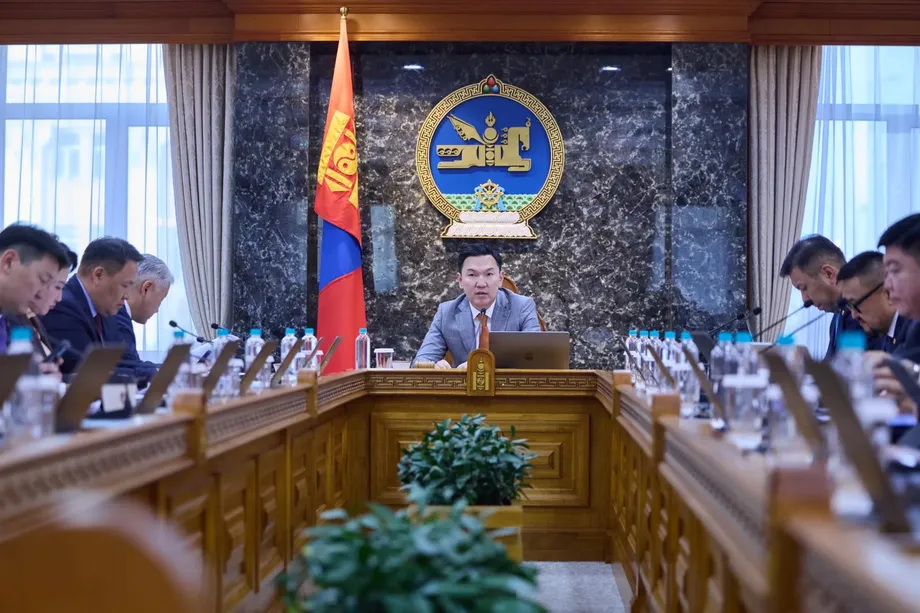
Mongolia is asking citizens how to use an expected 3 trillion tugrik in Oyu Tolgoi dividends in 2027, with Prime Minister Uchral Nyam-Osor proposing to save one third and spend the rest on electricity, schools, border crossings and production. The consultation runs through e-Mongolia and the E-Zasag digital platform from October 14, 2026, at 09:00 until October 28 at 22:00.
Contents
- A mining payout puts savings and public investment in competition
- How revised mine terms could bring dividends forward
- The dates leading to the public consultation
- Saving one third or putting everything into citizens' accounts
- Electricity and heating take the largest investment share
- Regional schools, dormitories and cleaner heating
- Production and border crossings complete much of the list
- A larger budget puts the dividend under pressure
- Other energy plans show the scale of competing demands
- Key Points
The government has included the expected income and investment proposals in its draft budget for 2027. Citizens' responses will be forwarded to a working group of the State Great Khural, Mongolia's parliament. The consultation therefore feeds into a budget process in which lawmakers must consider both the spending proposals and an accompanying bill covering social and basic infrastructure needs.
Uchral proposes putting 1 trillion tugrik into the accumulation fund under the National Wealth Fund Law. Another 2 trillion would support public investment. He has argued that Mongolia should use its mineral wealth carefully, avoid spending that pushes up prices, and leave future generations an inheritance rather than debt.
The opposition Democratic Party's parliamentary group wants a different approach. Its members argue that the law requires dividends from companies owned by the state to go into savings accounts held in citizens' names. Their calculation puts the full dividend at about 835,000 tugrik per citizen.
The choice reaches beyond a list of construction projects. Mongolia is deciding how much expected mining income should become personal savings and how much should pay for shared services. That decision comes while inflation is reported at 12.5 percent and the government is seeking a substantial increase in public spending.
A dividend is a payment a company distributes to its shareholders from profits. Mongolia's budget proposal counts on receiving income attached to the state's Oyu Tolgoi shares, following negotiations to reduce the project's financing and management costs and bring distributions forward.
How revised mine terms could bring dividends forward
Mongolia and Rio Tinto agreed on September 11 to amend the Oyu Tolgoi shareholders' agreement after almost two years of negotiations. The revised financial terms are intended to make dividends available sooner, with at least 3 trillion tugrik in expected income included in Mongolia's budget for 2027.
The shareholder loan interest rate is to fall from SOFR plus 6.5 percentage points to SOFR plus 4 percentage points. SOFR is a benchmark interest rate. Adding a margin to it determines how much a borrower pays, so the change reduces that margin by 2.5 percentage points.
The management fee is also to be halved. Mongolia estimates combined cost reductions of about 30 trillion tugrik, including roughly 22 trillion in shareholder loan interest and 8 trillion in management and overlapping costs. Lower charges would leave more money within the project for other financial commitments and shareholder distributions.
The September agreement was also described as bringing Mongolia 13 trillion tugrik in benefits. The budget focuses on a smaller, specific amount: the anticipated 3 trillion tugrik dividend for 2027. Working group negotiations over the dividends were still continuing when the spending plans were discussed; a final payment schedule and the detailed treatment of the larger benefit estimate have not been announced.
The dates leading to the public consultation
The dividend proposal follows a series of changes to Mongolia's wealth fund policy and its financial relationship with Oyu Tolgoi. The main dates are:
- 2024: Parliament passed legislation establishing Mongolia's sovereign wealth fund framework.
- February 2026: The government reached a preliminary agreement with companies to allocate 60 percent of benefits from strategic mineral deposits to the wealth fund.
- September 10, 2026: Mongolia signed a memorandum with BlackRock Financial Markets Advisory to explore sales of shares in enterprises owned by the state.
- September 11, 2026: Mongolia and Rio Tinto agreed to revise Oyu Tolgoi's financial terms.
- September 15, 2026: Parliament opened its autumn session, with the budget among its major tasks.
- October 14, 2026, at 09:00: The public consultation on dividend spending opened.
- October 28, 2026, at 22:00: The consultation closes, with results to be sent to a parliamentary working group.
The government decided to seek public input after presenting the proposed investments at a cabinet meeting. The projects are already part of the draft budget, making the consultation a chance to influence proposals under parliamentary consideration.
Saving one third or putting everything into citizens' accounts
Uchral's proposed 1 trillion tugrik contribution to the accumulation fund would preserve about 33.3 percent of the expected dividend. The remaining 66.7 percent would go toward social services and basic infrastructure. A sovereign wealth fund is a public fund that holds and manages national wealth, often using income from natural resources.
Democratic Party lawmakers argue that the National Wealth Fund Law directs the dividend into individual savings accounts instead. Their estimate of about 835,000 tugrik per person describes the allocation they support, rather than a payment approved for distribution.
The February preliminary agreement to place 60 percent of benefits from strategic deposits in the wealth fund adds another policy commitment to the debate. That arrangement covers a wider category of mineral benefits, while the current consultation concerns the expected Oyu Tolgoi dividend and its proposed use in 2027.
The September memorandum with BlackRock Financial Markets Advisory places the wealth fund discussion alongside a broader effort to reform enterprises owned by the state. Its framework explores selling shares in domestic and international markets. Questions about saving mineral income are therefore being considered at the same time as questions about how public companies should be financed and managed.
For households, the competing proposals offer different kinds of benefit. Money recorded in personal savings accounts gives citizens an individual stake in mineral earnings. Investment in power, heating and education directs some of those earnings toward services used by communities.
Electricity and heating take the largest investment share
The government's accompanying infrastructure bill assigns about 40 percent of the proposed 2 trillion tugrik investment package to energy. The spending proposal identifies 789.7 billion tugrik for a new Thermal Power Plant VI with a capacity of 300 megawatts and repairs and upgrades at existing stations.
The new plant is proposed beside Thermal Power Plant III, whose equipment is also scheduled for renewal. A megawatt measures power capacity. The 300 megawatt figure describes the new station's intended generating capacity, while the 789.7 billion tugrik allocation covers several energy works rather than that plant alone.
The government also asks whether stalled heating station projects in 10 provincial centres should continue. An earlier description listed nine provincial stations and proposed financing 30 percent of their completion costs from dividends. The plans under consultation therefore need a precise project list when lawmakers settle the allocation.
Mongolia's energy pressures extend beyond electricity. The country imports more than 95 percent of its refined petroleum products from Russia, and fuel shortages during the summer and autumn of 2026 prompted talks with China National Petroleum Corporation. September discussions covered imports of 10,000 tonnes of refined petroleum, 4,000 tonnes of jet fuel and 3,000 tonnes of diesel.
Fuel supply and electricity generation require different investments. The proposed thermal station addresses power capacity, while purchases from China would diversify supplies of transport and aviation fuel.
Regional schools, dormitories and cleaner heating
Education would receive about 29 percent of the 2 trillion tugrik investment package. The detailed proposals include 257 billion tugrik for schools following the Cambridge curriculum, specialised secondary schools and dormitory accommodation with 300 beds across six rural regions.
An earlier plan described two Cambridge curriculum schools and one specialised secondary school in each region. The accompanying budget proposal also lists 15 new dormitories for regional schools and schools offering international programmes. Dormitories provide accommodation for pupils who live too far away to travel to school each day.
Another 315.7 billion tugrik is proposed for 100 schools intended to use less energy, incorporate modern technology and operate without their own boiler houses. The consultation describes converting schools to this model, while the accompanying budget description refers to building 100 green, smart schools.
The two named education allocations total 572.7 billion tugrik. That is about 28.6 percent of the proposed 2 trillion tugrik investment package, closely matching the stated 29 percent education share. The figures show that school buildings, accommodation and energy improvements form one of the largest planned uses of the dividend after power infrastructure.
The regional emphasis matters to the distribution of benefits. The proposal directs education investment beyond the capital and combines classroom provision with accommodation, allowing the spending debate to address both where schools are located and how pupils can reach them.
Production and border crossings complete much of the list
Agricultural production and manufacturing that replaces imports would receive 82.2 billion tugrik. The proposed activities include factories producing veterinary medicines and vaccines, along with leather processing. Replacing imports means producing goods domestically that Mongolia currently purchases from abroad.
The government also proposes 170.8 billion tugrik to increase capacity and export access at the Arts Suuri, Khavirga and Khangi border crossings. An earlier outline referred to upgrades at two crossings, while the consultation proposal names three. These facilities are places where goods pass through customs and cross the national border.
The five specified investment amounts, covering energy, two education programmes, production and border crossings, add up to 1.6154 trillion tugrik. With the 1 trillion earmarked for savings, the named allocations total 2.6154 trillion, leaving 384.6 billion of the expected dividend outside those five itemised investment amounts.
The broader budget description also identifies health and environmental spending among the remaining categories. The itemised figures therefore give citizens a substantial view of the programme, while the final budget will need to set out the complete distribution of the proposed 2 trillion tugrik investment allocation.
A larger budget puts the dividend under pressure
The government's budget submission places expenditure for 2027 at 43.6 trillion tugrik, while another description of the proposal gives a total of 41.3 trillion and a deficit of 2.3 trillion. The expenditure submission is described as 10 trillion tugrik above the amount approved for 2026.
Using those expenditure figures, the approved 2026 amount was 33.6 trillion tugrik, making the proposed increase about 29.8 percent. The expected 3 trillion tugrik Oyu Tolgoi dividend would equal roughly 6.9 percent of the proposed 43.6 trillion in spending. It is a substantial new income stream within a much larger budget.
Inflation of 12.5 percent gives Uchral's warning about spending and prices immediate relevance. Inflation means that the prices households pay are rising. Construction and other public spending also require workers, equipment and materials, so the timing and size of the programme matter alongside the choice of projects.
Democratic Party lawmakers have described the budget expansion as directed toward the 2027 election. Parliament is also operating amid divisions within the ruling Mongolian People's Party, whose 68 legislators are described as split into blocs of 30 and 38. A recent failure to reach the required quorum, the minimum attendance needed to conduct parliamentary business, illustrates the political difficulty facing the budget process.
Other energy plans show the scale of competing demands
The Erdeneburen hydropower project provides another measure of Mongolia's infrastructure push. The Office of the President announced that construction was 40 percent complete following a visit in September. The project, supported by a Chinese loan of about $288 million, is intended to supply Khovd, Bayan-Ulgii, Uvs, Zavkhan and Govi Altai provinces.
Deputy Prime Minister Dorjkhand Togmid also announced interest in data centres in August, linking them to expanded renewable electricity generation. Data centres house computers that store and process digital information, creating demand for reliable power and water for cooling.
Brookings estimates cited in discussion of the initiative put daily water consumption at 300,000 gallons for a typical data centre and as much as 5 million gallons for a large facility. An OECD study in 2025 highlighted Mongolia's water scarcity and uneven distribution of water resources. Such plans would place further demands on infrastructure alongside the stations, schools and factories proposed for dividend funding.
The immediate decision remains the allocation for 2027. Citizens have until October 28 at 22:00 to submit views through e-Mongolia or E-Zasag, after which the parliamentary working group will receive the results. Lawmakers must then consider how the savings proposal, investment bill and wider budget fit together.
Key Points
- Mongolia expects 3 trillion tugrik in Oyu Tolgoi dividends in 2027 following revised financing and management terms.
- The government proposes saving 1 trillion tugrik and investing 2 trillion in public services and infrastructure.
- Energy would receive about 40 percent of the investment package and education about 29 percent.
- Democratic Party lawmakers argue that the full dividend should go into savings accounts held in citizens' names.
- The public consultation runs from October 14 to October 28, 2026, with results going to a parliamentary working group.
- The dividend allocation forms part of a wider budget debate involving rising expenditure, inflation and political divisions.