Eleven companies seek entry into Nepal's power market
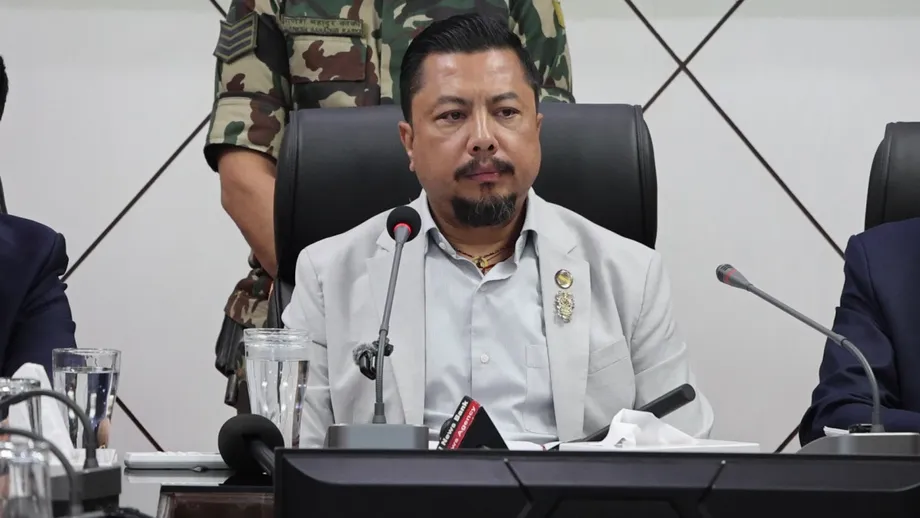
Nepal is preparing preliminary approvals for private electricity traders, with 11 companies already seeking Letters of Intent and the government working toward issuing documents before Dashain. Energy, Water Resources and Irrigation Minister Biraj Bhakta Shrestha says the policy arrangements are in their final stage, alongside changes to power purchase agreements and a larger electricity trading connection with India.
Contents
- Eleven companies seek entry into Nepal's power market
- A budget promise meets a legal process
- India's rules will shape private exports
- What traders would pay to use the grid
- Power purchase agreements would favor useful supply
- Deadline relief covers 27 projects
- Transmission expansion connects plants to buyers
- Storage and renewable energy join the reforms
- Irrigation and flood recovery share the agenda
- Key Points
At a Wednesday ministry briefing in Kathmandu, dated Ashoj 28 in Nepal's calendar, Shrestha reviewed six months of work. He announced extended commercial operation deadlines for 27 hydropower projects totaling 540.47 megawatts and an agreement with India to raise electricity import capacity from 1,000 MW to 1,400 MW and export capacity from 1,100 MW to 1,650 MW.
Private companies would gain a route to find buyers and sell electricity rather than depend solely on the Nepal Electricity Authority (NEA) to purchase their output. The ministry is bringing together generation, transmission, trading and domestic consumption, seeking to turn investment in power plants into electricity that can reach paying customers.
The immediate step is to issue Letters of Intent (LOIs) or No Objection Certificates (NOCs). Full trading licenses require an Electricity Act amendment and supporting regulatory arrangements. Companies would then need transmission access, commercial agreements and, for exports, clearance under the rules governing electricity trade across borders.
Shrestha's target concerns the preliminary documents before Dashain, with further decisions on power purchase agreements expected within days. Final licensing and export access have no announced completion date. NEA board member Anshu Kiran Shahi estimates that the legal and technical work for private exports could take at least one to two years.
A budget promise meets a legal process
Finance Minister Dr Swarnim Wagle announced private participation in international electricity trading on May 29, 2026, while presenting the national budget for fiscal year 2026/27. Shrestha's preparations now concern the practical steps needed to give companies a working route into that market.
Nepal has pursued this change for several years. In May 2022, the energy ministry was seeking an amendment because the Electricity Act, 1992, did not permit private electricity trading. The law ministry had rejected an earlier attempt to proceed through a transmission directive and guidelines because the necessary authority was missing from the law.
Section 29 of the Bill to Amend and Integrate Existing Electricity Laws would have allowed Nepali private companies to trade electricity domestically and internationally. At that time, the bill had been awaiting action in the National Assembly since mid-July 2020. The ministry also considered another amendment route and an ordinance.
The policy has developed through several stages:
- February 2021: India introduced procedures requiring Nepali companies seeking to sell electricity there to obtain an export license from Nepal.
- May 2022: Nepal's energy ministry pursued legal amendments after its proposed directive approach was rejected.
- June 2025: The Electricity Regulatory Commission approved a draft directive for open access to the grid.
- May 29, 2026: The national budget announced private participation in international electricity trading.
- Before Dashain: Shrestha aims to issue preliminary documents to prospective private traders.
The Electricity Act amendment process has advanced in Parliament. The Department of Electricity Development is accepting LOI applications without a cap or quota, while the government finalizes minimum capital, bank guarantee and commercial requirements. An NEA subsidiary has already received approval to trade, and private firms are seeking their own licensing route.
India's rules will shape private exports
India is central to Nepal's export plans, including sales intended for Bangladesh, because electricity must travel through Indian transmission infrastructure. Private traders therefore need arrangements in both Nepal and India, covering recognition of the trading company, access to the network and permission for the transaction.
Shahi says Indian rules currently recognize the NEA as Nepal's authorized trading entity. Nepali private firms need formal recognition before they can sell electricity to India or send it through India to another country. He says negotiations between the two governments would be needed to secure that access.
The ministry has begun exploratory discussions with Indian counterparts. Meanwhile, prospective traders can identify buyers and prepare commercial plans through the LOI process. Trading would require separate decisions on electricity volumes, transmission capacity, grid access and clearance across borders, as well as agreements specifying who buys the power and how payment is secured.
Private companies have previously made plans that depended on these permissions. Nepal Power Exchange Limited signed an agreement with India's Manikaran Power Limited on January 10, 2022, under which Manikaran agreed to purchase 500 MW and become an investment partner, subject to an export license.
Ganesh Karki, then a vice president of the Independent Power Producers' Association of Nepal (IPPAN), explained why a license mattered to negotiations with overseas customers:
Foreign buyers won't trust us if we don't have an export licence,
Nepal Infrastructure Bank also proposed a power trading subsidiary and discussed partnerships with Indian and Bangladeshi companies in 2022. The current licensing preparations address a commercial demand that has existed for years: companies want authority to negotiate sales and take responsibility for finding a market for their electricity.
What traders would pay to use the grid
The Electricity Regulatory Commission has set grid access charges for fiscal year 2026/27 at NPR 413,000 per MW per month for medium and long duration access, and NPR 0.57 per unit for short duration access. A unit means one kilowatt hour, the electricity used by a device drawing one kilowatt for one hour.
These fees are called wheeling charges. They pay for carrying electricity through a transmission network. A private generator and a customer could agree on a sale while using existing grid infrastructure to move the electricity between them, rather than building a dedicated line for every transaction.
The June 2025 draft had proposed lower charges: 39 paisa per unit for short duration access and NPR 283,842 per MW per month for medium and long duration access. The later rates are about 46 percent higher in each case. These are network charges; traders must also account for the purchase price of electricity and other commercial costs.
The 2025 draft proposed minimum transactions of 5 MW for domestic trade and 10 MW for trade across borders. Eligible facilities included hydropower plants of at least 5 MW connected to a grid operating at 33 kilovolts or above, and captive plants of at least 1 MW. A captive plant produces electricity mainly for its owner's use.
The draft divided contracts into access lasting from 24 hours to one year, more than one year to five years, and more than five years. It prioritized domestic demand before exports, with exceptions for government permitted projects and exports through the NEA.
The commission is finalizing six operating procedures. Earlier provisions assigned implementation to the NEA's System Operations Department, including publication of procedures and agreement drafts within 120 days of directive approval. Metering, electricity scheduling, payment settlement and rules for deviations between promised and delivered power are part of the work needed to operate trading.
Power purchase agreements would favor useful supply
More than 16,000 MW of proposed projects are waiting for power purchase agreements (PPAs), according to the October 2026 reform update. A PPA is a contract setting the terms under which a buyer purchases a project's electricity. Developers need predictable revenue arrangements to plan construction and financing.
A subcommittee led by NEA board member Anshukiran Shahi has submitted proposed criteria for opening new PPAs. The recommendations cover technical readiness, access to transmission infrastructure and financial closure, the point at which a project's financing arrangements are secured. Implementation awaits an NEA Board decision.
Shrestha says the proposed approach would prioritize projects that meet high demand on dry season evenings, contribute electricity during dry months, maintain stable monthly production and have transmission access. Projects would also receive priority where electricity exports can be arranged by the start of commercial operation.
Those criteria connect the timing of electricity production to the system's needs. A hydropower project's annual output matters, but electricity is also needed at particular hours and during months when river flows are lower. A plant that supplies those periods can help the system in ways that its installed capacity alone does not describe.
Shrestha says further decisions will consider the state's financial obligations, private investors' interests and economic effects. That follows a dispute over the fiscal year 2025/26 budget proposal to use take and pay contracts instead of take or pay contracts. Broadly, take and pay links payment to electricity actually taken, while take or pay can require payment for an agreed amount even when the buyer does not take it.
IPPAN chairman Ganesh Karki has welcomed the start of reforms while pressing for faster PPA decisions. Developers had expected stalled agreements to be completed within 180 days and criticized the lack of progress after six months.
Deadline relief covers 27 projects
The NEA has extended the Required Commercial Operation Date (RCOD) for 27 projects totaling 540.47 MW in the first phase of relief. The RCOD is the agreed deadline for a plant to begin commercial operation. Delays can place a developer at risk of breaching its contract.
Shrestha's announcement and the detailed reform breakdown identify 540.47 MW; a higher figure of 4,540.47 MW also circulated for the same 27 projects. The detailed breakdown places the extensions within a construction pipeline of 320 projects totaling 8,292 MW.
The authority has divided those 320 projects into four categories based on construction progress and PPA obligations. Category C projects face Notices of Default, formal warnings concerning unmet contractual duties. The extensions are being directed toward projects approaching completion rather than applied uniformly across the pipeline.
Developers have faced delays linked to floods, landslides, missing transmission lines, local obstructions and economic difficulties following COVID-19. Revised deadlines give qualifying projects more time to reach operation, while the classification process ties relief to progress.
Nepal added 561 MW to the grid against a target of 942 MW in the previous fiscal year. That was about 60 percent of the target, leaving a gap of 381 MW. The figures show why the next task is completing plants and connecting them to the network alongside changes to contracts and licensing.
Transmission expansion connects plants to buyers
The Hetauda section of the Hetauda-Dhalkebar-Inaruwa transmission line, operating at 400 kilovolts, is nearing completion. Shrestha says the NEA plans to energize it after Dashain. Energizing a line means putting it under voltage so it can enter service.
Construction of the Bahrabise-Lapsiphedi line at 400 kilovolts is complete. The Bahrabise and New Khimti substations have also been completed and partly brought into operation. Substations control electricity flows and change voltage levels so different parts of the network can connect.
The Markichowk-Bharatpur line at 220 kilovolts, the Dhalkebar-Balganga line at 132 kilovolts, and the Lalbandi-Salempur line at 132 kilovolts have entered operation, along with related substations. Work has started on the Balkot and Dahachowk substations and the Chandrapur-Sukhdevchowk and Lahan-Sukhipur lines. The ministry's six month review targets completion of 12 additional transmission lines within the current fiscal year.
Private investment is being pursued through the West Seti transmission line at 400 kilovolts, approximately 145 kilometers long and estimated to cost NPR 20 billion. A separate company has been registered for the project under a public private partnership. The NEA has also advanced competitive bidding involving private and international firms for four transmission lines.
Nepal and India's agreed capacity increase would add 400 MW for imports, a rise of 40 percent from 1,000 MW, and 550 MW for exports, a rise of 50 percent from 1,100 MW. Traders would still need the relevant network access and transaction approvals to use the expanded connection.
Storage and renewable energy join the reforms
The ministry is preparing an amendment to the Electricity Rules, 1993, to give reservoir hydropower projects licenses lasting 50 years. Reservoirs store water, allowing plants to manage when they generate electricity more flexibly. Shrestha says longer licenses would encourage investment in projects that support continuous supply and help control flooding downstream.
The ministry is also working on purchase rates and guidelines for Battery Energy Storage Systems (BESS). Batteries can store electricity when production is available and supply it later, helping the grid manage changing solar output and demand. Discussions on the rates are continuing.
The six month review records 693 kilowatts from micro and small hydropower projects, 841 kilowatts from solar minigrids and rooftop solar installations totaling 18,575.30 kilowatts at institutions. It also records installation of 315 solar irrigation pumps, linking electricity development with agricultural use.
The Renewable Energy and Energy Efficiency Bill has been registered in the House of Representatives, while the Water Resources Bill has been submitted to the Cabinet. Draft electricity and irrigation bills are undergoing consultation. Consumer tariff guidelines and transmission charge calculation standards have been issued, with an open access directive for transmission and distribution also prepared.
Irrigation and flood recovery share the agenda
Sikta has added 13 kilometers of canal, extending irrigation to 1,300 hectares. Contracts have been signed for 11 of its 27 tenders, and construction has begun. Other additions include 1,155 hectares at Mahakali, 610 at Badkapath, 600 at Babai and 150 at Rani Jamara Kulariya. Together, these five projects have added irrigation coverage for 3,815 hectares.
The ministry aims to complete Babai and the Bheri-Babai Diversion Multipurpose Project within the next two fiscal years. Fresh tenders for Sunkoshi Marin's civil construction have passed technical evaluation and reached financial evaluation, with contract signing targeted within days. Water flow monitoring using remote measurement technology has begun at Rani Jamara Kulariya and Rajapur.
Flood recovery remains part of the electricity program. An Emergency Restoration System has been installed on the damaged Kohalpur-Surkhet line. Shrestha says NEA employees and technicians maintained electricity supply despite serious damage to the national transmission system.
Six families of NEA employees missing after the August 26 floods in Rasuwa and Nuwakot have received relief. The NEA Board approved NPR 500,000 immediately for each family, plus half the starting basic salary associated with the employee's position for six months.
The ministry has extended flood forecasting for major rivers from three to five days and flash flood forecasting for smaller rivers from 24 to 48 hours. Forecasts describing likely effects are operating in 15 local government areas and being tested in another 16. These measures accompany the effort to restore infrastructure and reduce disruption to electricity and irrigation services.
Key Points
- Eleven companies have applied for Letters of Intent, with preliminary documents targeted before Dashain.
- Full private trading licenses require legal amendments and regulatory arrangements; exports also require Indian recognition and clearance.
- New PPA criteria prioritize project readiness, transmission access and reliable supply during periods of need.
- The detailed reform breakdown gives 540.47 MW for the 27 projects receiving deadline extensions.
- Agreed transmission capacity with India would rise to 1,400 MW for imports and 1,650 MW for exports.
- Grid access charges for fiscal year 2026/27 are NPR 0.57 per unit for short duration access and NPR 413,000 per MW per month for medium and long duration access.
- Transmission construction, storage rules and completed power plants are essential next steps in turning the policy into electricity sales.